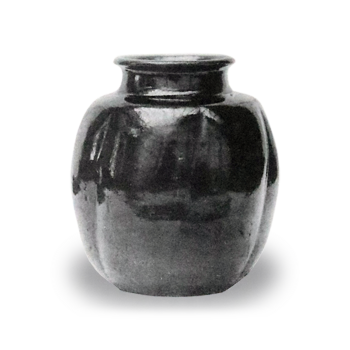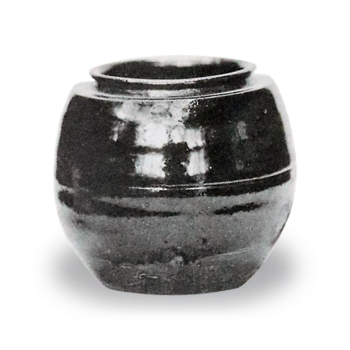
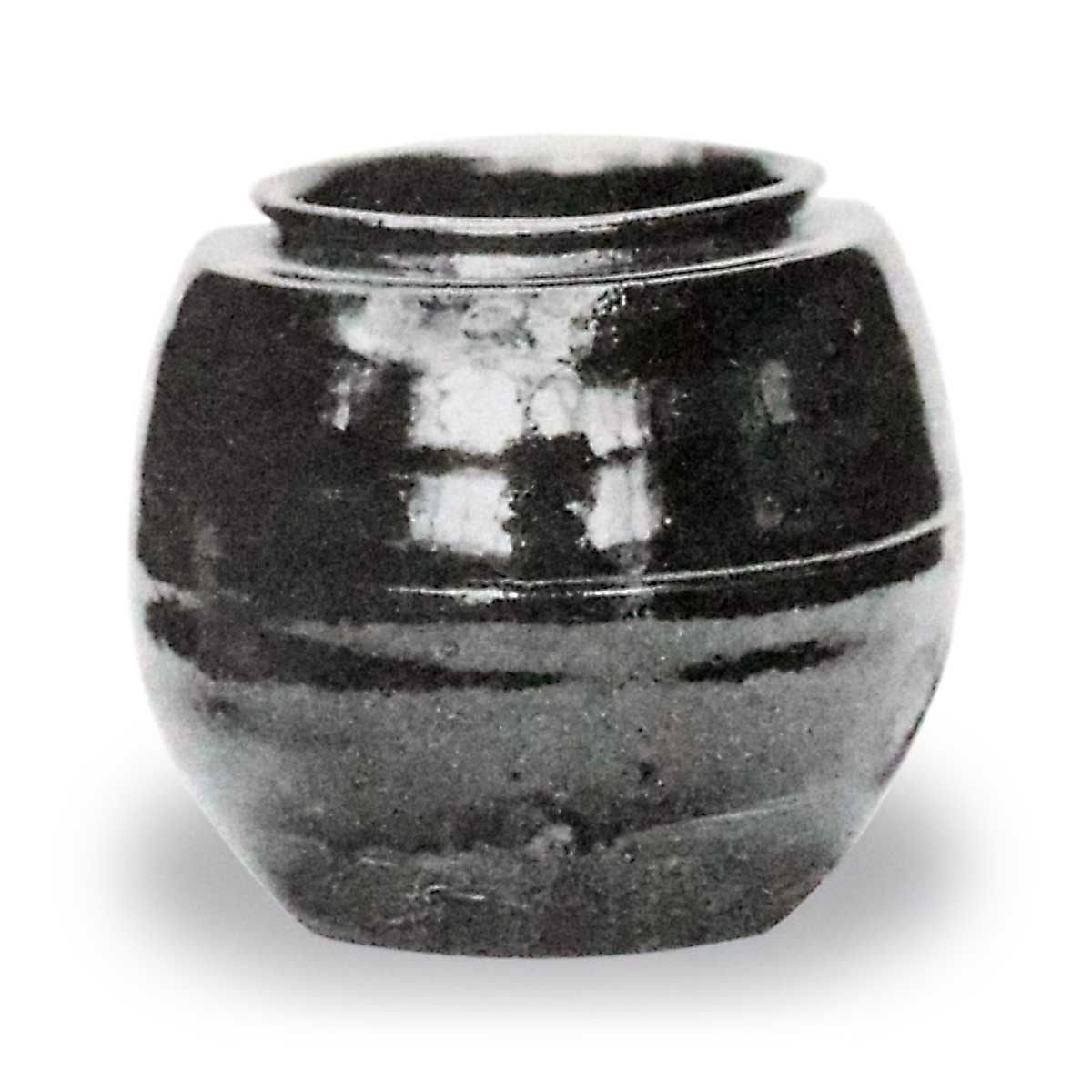
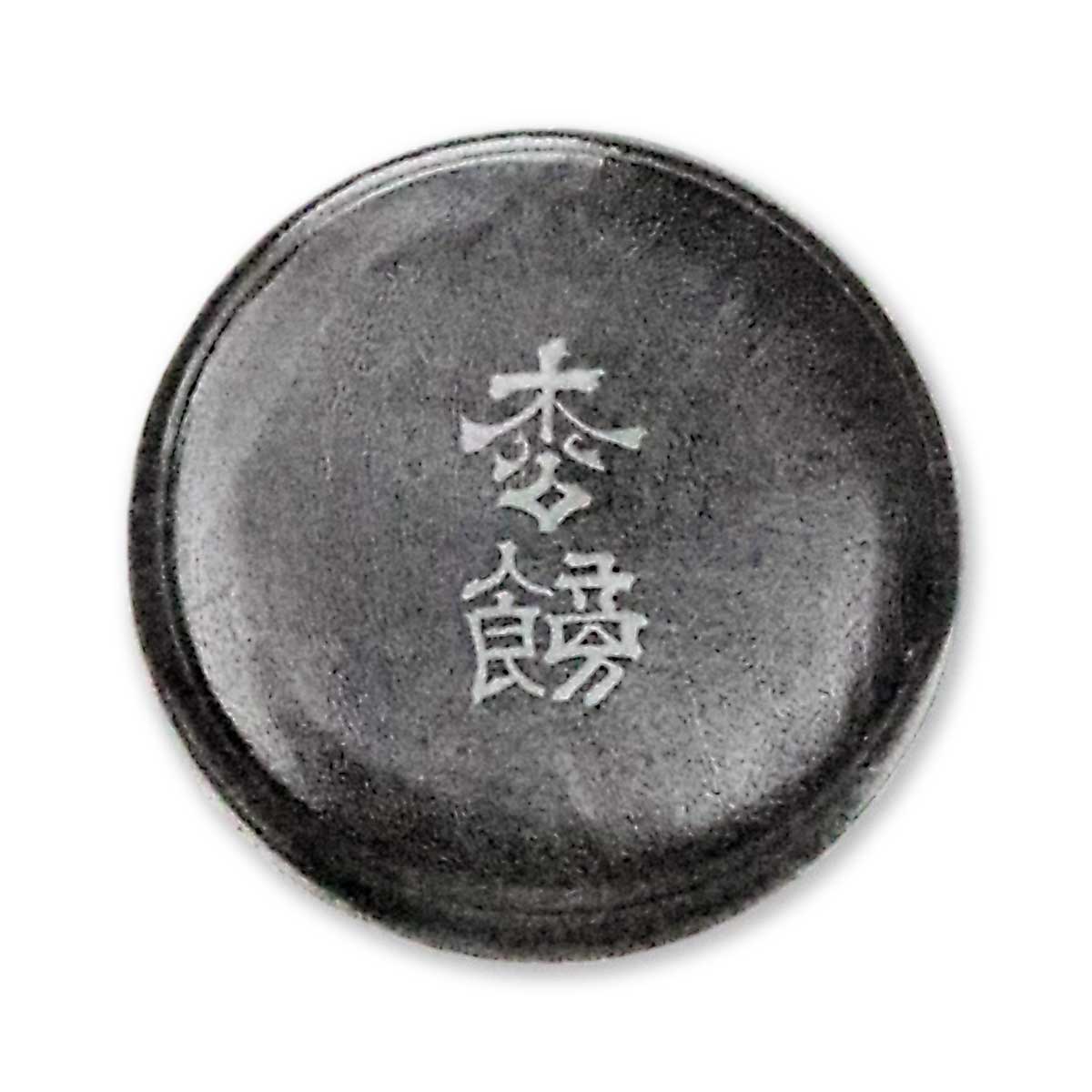
A Chinese tea caddy currently in the collection of Mr. Yoshio Takahashi (Hōian) in Tokyo.
Origin of the Name
Although it is listed as “Muto Katatsuki” in the record Shokameiki-shū, the exact origin of this name is unknown. It is speculated that there is a record in the Tsuchiya family’s inventory of a Seto tea caddy inscribed with the name “Matsukazari,” and because its shape resembled a “mortar” (usu), it was named by associating it with the Japanese New Year customs of “pounding mochi (in a mortar)” and “pine decorations.” Since this tea caddy is also short in height, has a wide mouth, and is slightly mortar-shaped (usuzō), it is likely that it was similarly named “Matsukazari.”
Modern Conversion of Dimensions and Weight
Height: Approx. 7.3 cm (2 sun 4 bu 2 rin)
Body Diameter: Approx. 8.2 cm (2 sun 7 bu 2 rin) at the band (horizontal line)
Mouth diameter: approx. 5.5 cm (1 sun 8 bu)
Base diameter: approx. 4.8 cm (1 sun 6 bu)
Rim height: approx. 0.5 cm (1 bu 5 rin)
Shoulder width: approx. 0.8 cm (2 bu 5 rin)
Weight: approx. 149 g (39 monme 8 bu)
List of Accessories
There are two lids; there is no nest (kago). Crafted by the ivory artisan Tachizen. The storage pouch is made of white chirimen silk with a brown cord.
There are two types of protective covers (pouches): “Dark Tea-Colored Donshu Manji Cloisonné” and “Tea-Colored Kinran T-Shaped Cloisonné.”
Hikiya is made of ironwood and is inscribed with “Pine Ornament” in gold powder. The pouch for Hikiya features a Chinese floral pattern.
The inner box is made of untreated paulownia wood. The outer box is a black-lacquered “kabuse-bako” (lidded box) with maki-e applied to the chamfered edges.
Further on the outside is a large outer box made of paulownia wood with a Shunkei lacquer finish and a lock, and on the very outside is a plain white paulownia wood master case.
Characteristics of the “Matsu-kazari (Muto) Katatsuki” as seen in various tea ceremony texts
In the Shokake Meiki Shu, it is listed as the “Muto Katatsuki” and is noted to have been owned by Mizuno Dewa-no-kami. The dimensions are recorded in detail, noting that “it features a ‘snake-scorpion glaze’ (scaly kiln-change). The clay is white with traces of thread-cutting; the bottom is flat-bottomed with firing cracks and spatter. Hikiya is made of ironwood, and the lid is inscribed with ‘Pine Ornament’ in gold powder.”
It is also listed as “Pine Ornament” in the Bian Bunko, which describes nearly identical characteristics: “It has a snake-scorpion glaze on the shoulder; the clay is white and board-formed, with firing cracks on the bottom.”
Provenance
It is believed that this tea caddy was originally owned by a person named “Muto,” but its detailed provenance is currently unknown. Consequently, there are no clues as to when it came into the possession of the Mizuno Dewa-no-kami family (including the Yuki Domain). However, in the spring of 1918 (Taisho 7), through the mediation of the calligraphy appraiser Kobitsu Ryonin, it passed directly from the Mizuno Viscount family into the hands of Mr. Takahashi Hōan (the current owner).
Academic Inspection Report (Appraisal Record) from the Taisho Era
The rim is rounded, and the flared edge is somewhat deep. The foot is low, and the shoulder line is sharply defined and powerfully arched, almost as if it might cut one’s hand. A single, somewhat thick horizontal line runs around the body, which swells out roundly like a drum.
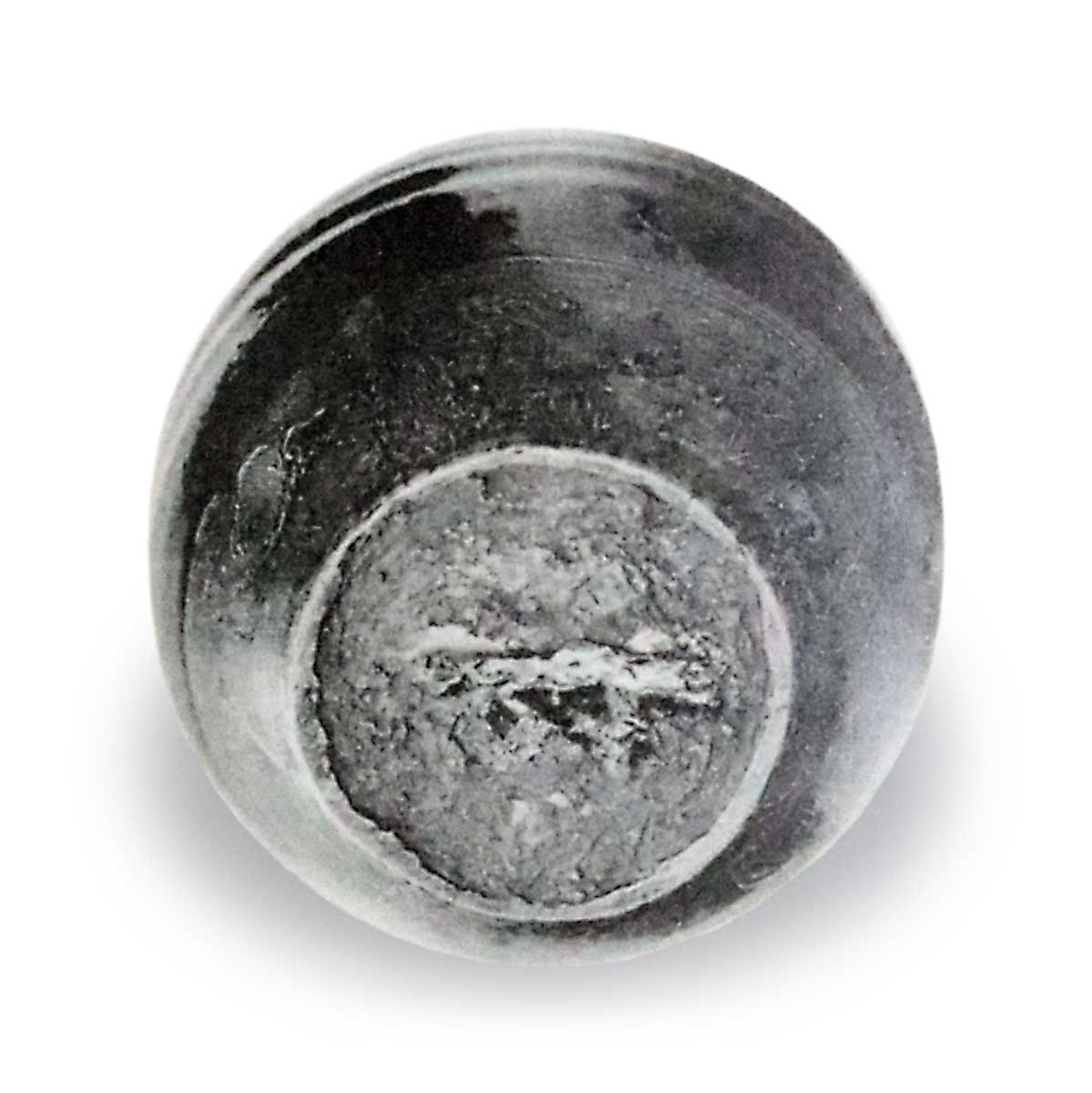
The unglazed clay (body) is visible from the rim downward. The base is flat, with a slightly raised rim, and the interior surface has some variation in height. The overall craftsmanship is extremely refined.
The entire piece is covered in a dark amber glaze with a beautiful, lustrous sheen. In the area below the shoulder where the glaze is darker, there are spots that take on a slight “snake-scorpion” hue, and next to them is a small area where the yellow glaze has lifted (glaze lift). A hint of this snake-scorpion color can also be seen in the glaze pooling at the base, where the clay meets the glaze.
The clay body is off-white with an extremely fine grain, and fingerprints are scattered here and there. Above the firing crack (a crack formed during firing) in the center of the inner bottom, black amber glaze has splattered out in a horizontal line. Overall, the wheel marks are shallow, and both the glaze color and the quality of the clay are exceptionally beautiful. Aside from a small chip on the rim and a horizontal firing crack extending toward the center of the base, the piece is entirely intact.
Inside, the glaze covers the rim, and shallow wheel marks run over the off-white clay below it. The center of the base features a large swirl pattern. The black amber glaze flows down from the rim of the mouth to the area around the swirl on the bottom; a tea caddy with such an interesting interior view is a rare find even among this type of tea caddy.
Its low height, wide mouth, and shape somewhat resembling a “mortar” are likely the reasons it was named “Matsukazari.”