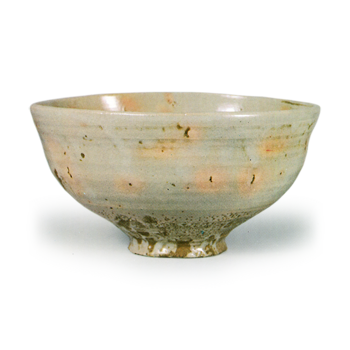
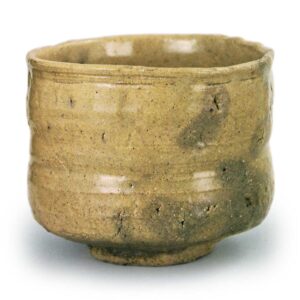
Height: 7.7 cm
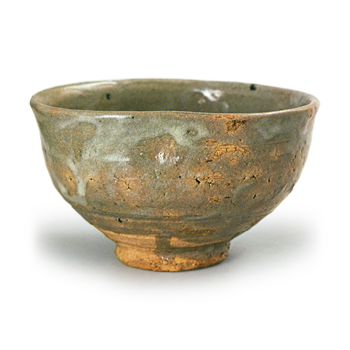
Mouth diameter: 11.5–13.0 cm; Foot diameter: 5.1 cm
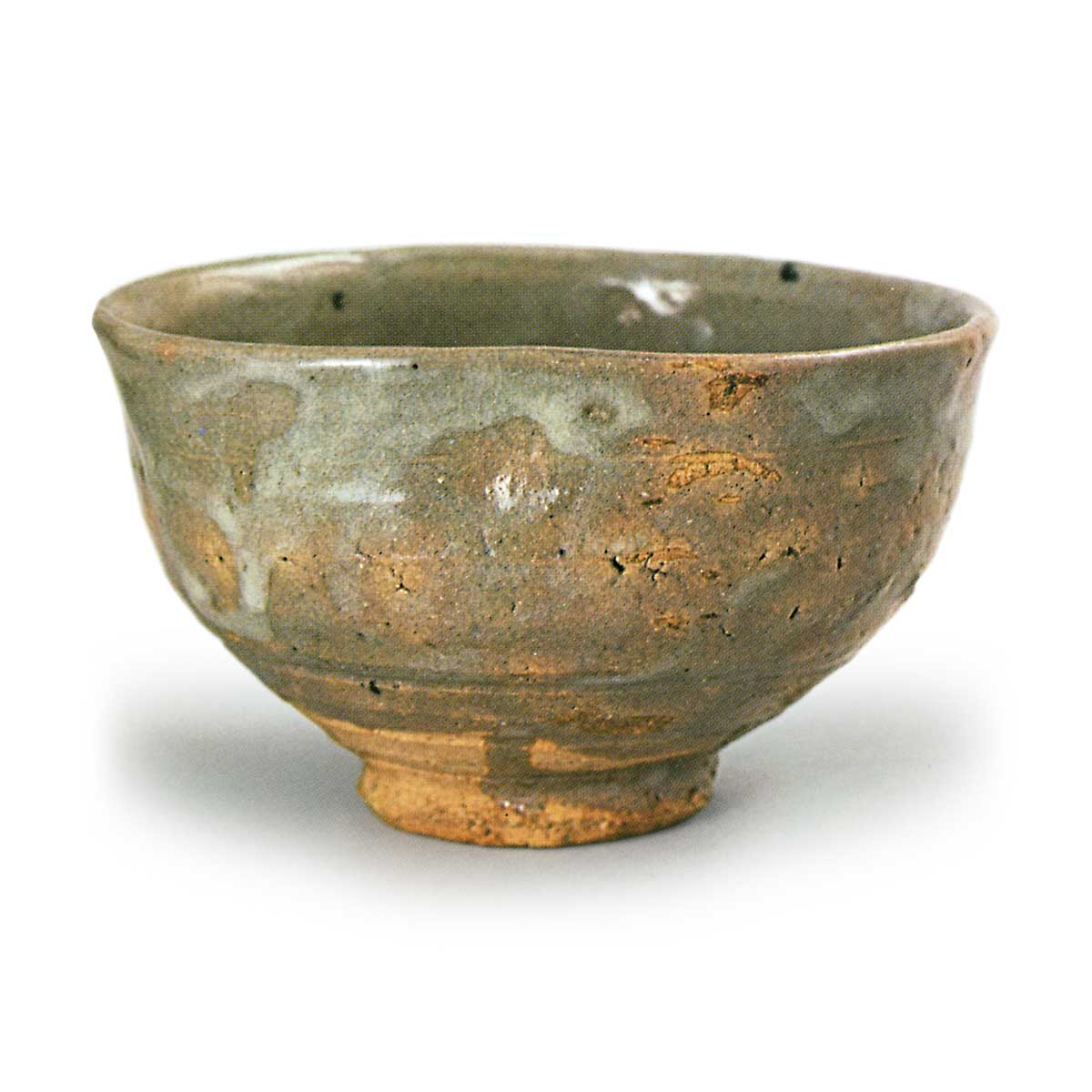
Height: 9.2 cm, Mouth Diameter: 10.0 cm, Foot Diameter: 4.9 cm
Although these tea bowls differ in both form and glaze, the box lid is inscribed by Hozon himself with “Kawabayaki Tea Bowls, Chūfuku, Cylindrical, Two Pieces,” and the underside of the lid bears the inscription “Mark: Made by Zen’ichirō,” indicating they were stored in the box as a pair. Both bowls bear the two-character “Kawabayaki” mark stamped on the side of the foot, and very few works exist with this mark. Hozon stayed in Ōtsu on his way back to Kyoto from Edo in the fourth year of the Kaei era (1851), where he fired what is known as Konan-yaki; these tea bowls were also fired at that kiln.
As Hozon simply labeled the tea bowl in Figure 1 as “Chūfuku,” it is made in a modest, unadorned bowl shape. However, the gray glaze applied unevenly to the slightly reddish white clay creates an interesting effect with its glaze runs. The foot is carved small, with a portion cut away to create a split foot.
The tea bowl in Figure 2 is a small, cylindrical bowl with a slightly tapered body; the rim is also warped into a triangular shape, and the body and rim feature hand-molded-style variations. The low-carved foot has been hollowed out shallowly and widely on the inside. Although the same clay body is used as in the previous bowl, a thin, transparent, withered-leaf-colored glaze covers the entire surface except for the foot, with grayish glaze patterns appearing in places.