Accessories
Box: Paulownia wood; Inscription: Matsudaira Fumai
Provenance
Kōnoike family – Hatakeyama Memorial Museum
Dimensions
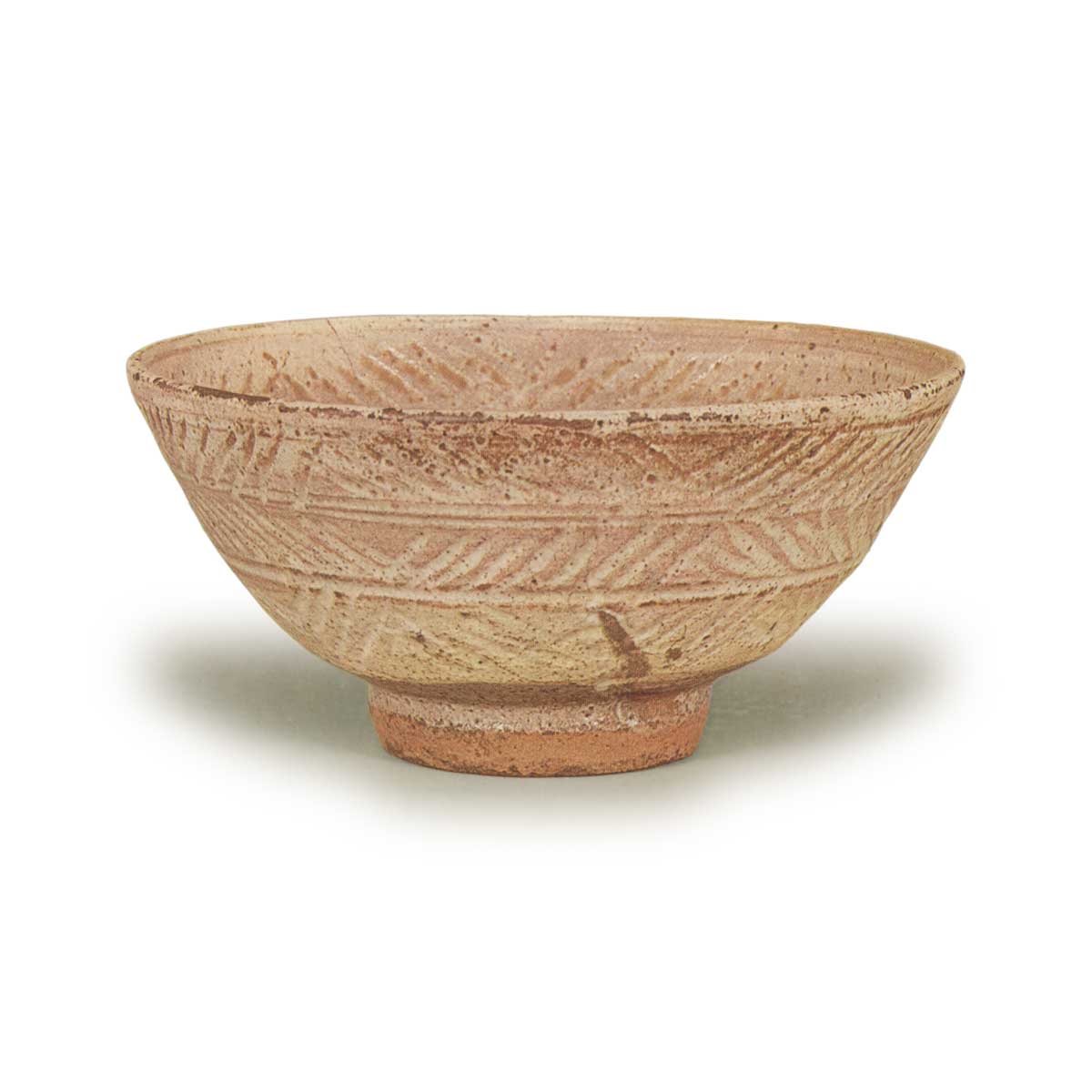
Height: 6.7–7.0 cm; Diameter: 14.6 cm; Weight: 315 g
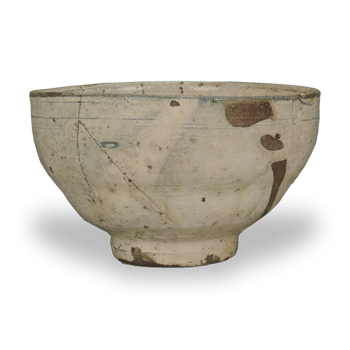
The oldest Goryeo tea bowls to be used for tea are of the “Unkaku Kyogen Hakama,” “Ido,” and “Funiki-Hake-Moku-Mishima” types, as evidenced by surviving artifacts and tea ceremony records.
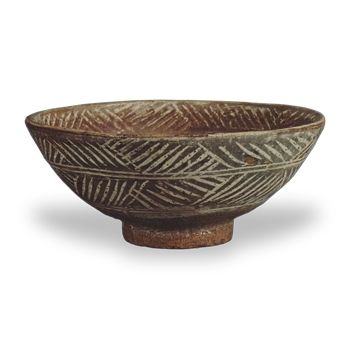
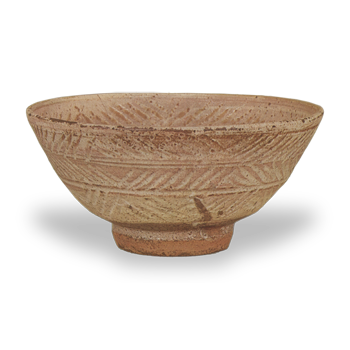
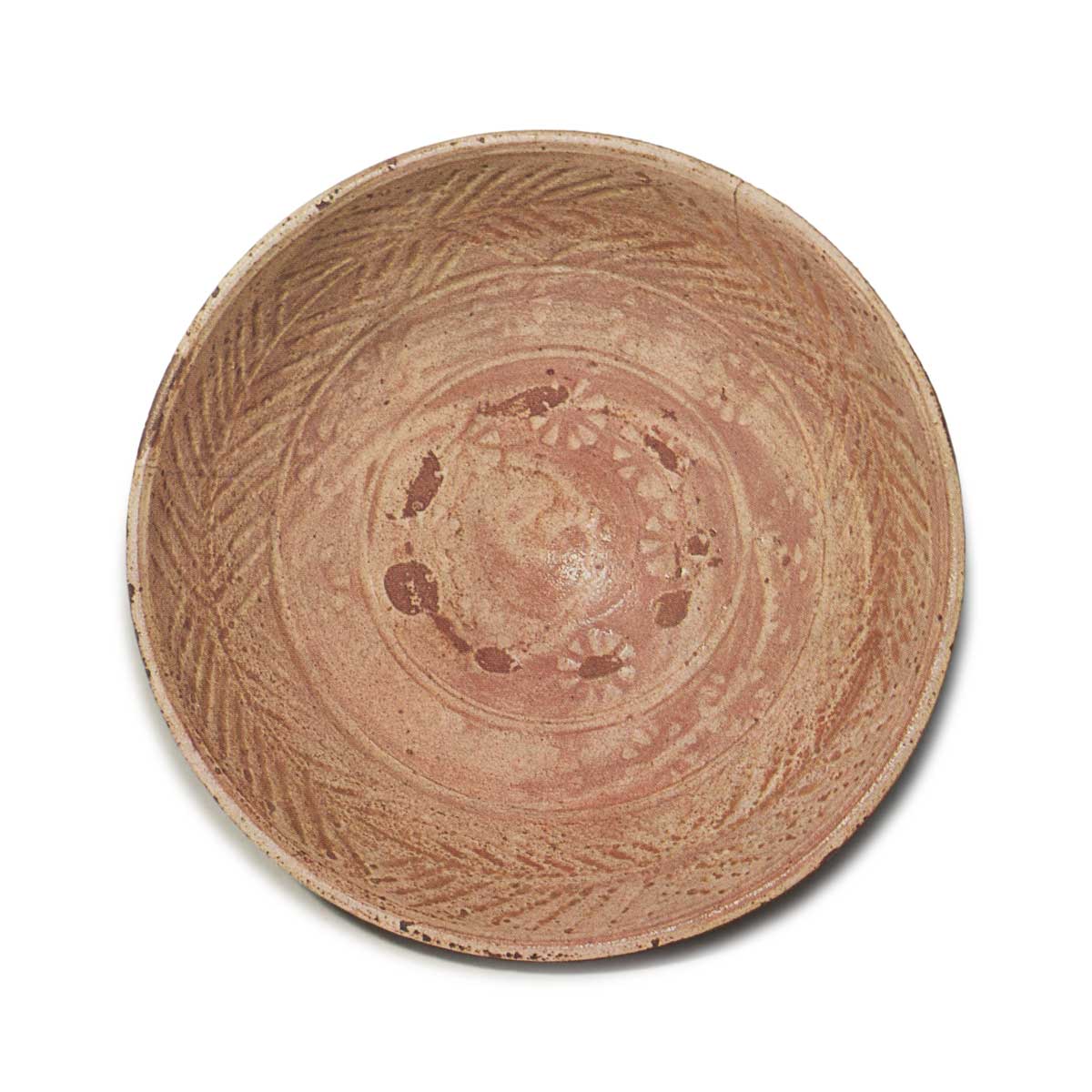
However, the “Carved Mishima” featured here, despite bearing the name “Mishima,” does not belong to the category of ancient Mishima bowls. While all early Korean tea bowls, led by the ‘Well’ type, originated as utilitarian ware on the Korean Peninsula and were later elevated to tea bowls for Japanese tea ceremonies, the Carved Mishima tea bowl was originally created as a tea bowl specifically for tea, making it a broad-sense “original” piece. The development of Japanese wabi-cha tea ceremony culture underwent two major shifts in “preference” during the Momoyama and early Edo periods: the Rikyu-Oribe period and the Oribe-Enshu period. Among the Goryeo tea bowls used at the time, those commissioned by Japanese tea masters were called “gohon,” and even among these gohon tea bowls, there were differences based on the preferences of the masters, and it is believed that the dates of their arrival in Japan may vary.
During the Keicho era, among the Shino tea bowls produced in Mino, there are works that replicate this carved Mishima design, suggesting that this type of carved Mishima bowl was prevalent at that time. Carved Mishima tea bowls typically feature cypress fence patterns and floral patterns in engraved inlay. Those with floral patterns on the interior (mimikomi) are called “uchihana,” while those with floral patterns on the exterior are called “sotohana.”
There are various colors resulting from firing, such as bluish and reddish tones, and works like this tea bowl, which are reddish, are particularly prized because they beautifully highlight the young green color.
(Written by Murayama Takeshi)