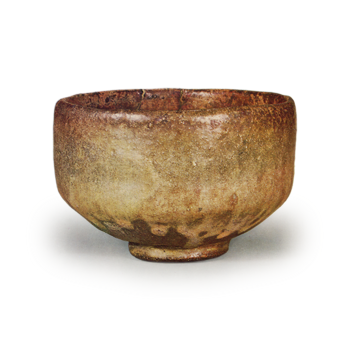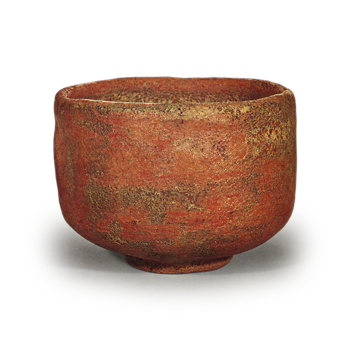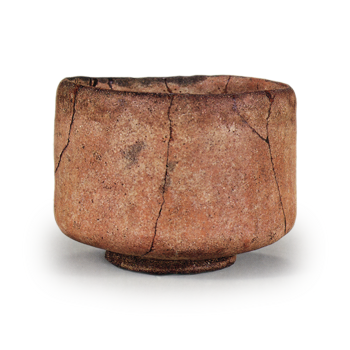
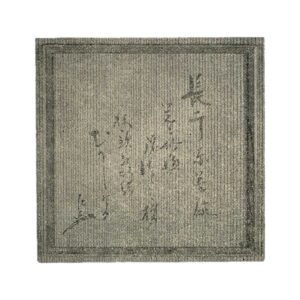
Akaraku, famous product
Accessories
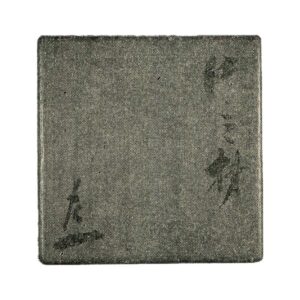
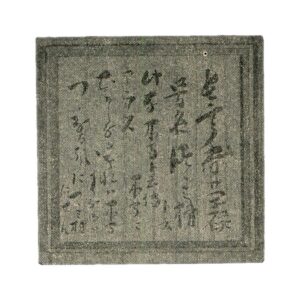
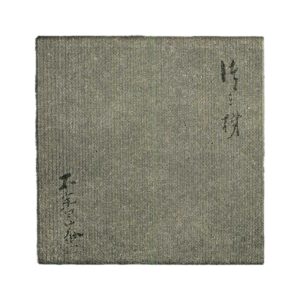
Inner box: Paulownia, white wood, inscription by Kakuzai Sōsaku, same inscription on the underside of the lid
Middle box: Cypress, white wood, inscription by Jushin Sōsaku, same inscription on the underside of the lid
Outer Box: Paulownia, White Wood, Inscription by Ichirō Sōshitsu, Cover, Tea Ground Stone Pavement Junko
Transmission
Goto Sōban — Hyōgo-ya Seijirō — Genbun 3rd year, Osaka — Seto Kyūzōemon — Mitsui Saburōsuke — Osaka — Tsuda Kyūbei, known as Suikei — Fujita Hikosaburō
Listed
Kojin Meibutsu Ruishu, Meibutsu Chawan Shu, written by Tominaga Gen, Tea Ware Names and Shapes, Honcho Toki Kagaku, Kan’yu Gohitsu, Daimeibutsu Chawan Ruishu, Kushinroku, Taisho Meiki Kagami
Dimensions
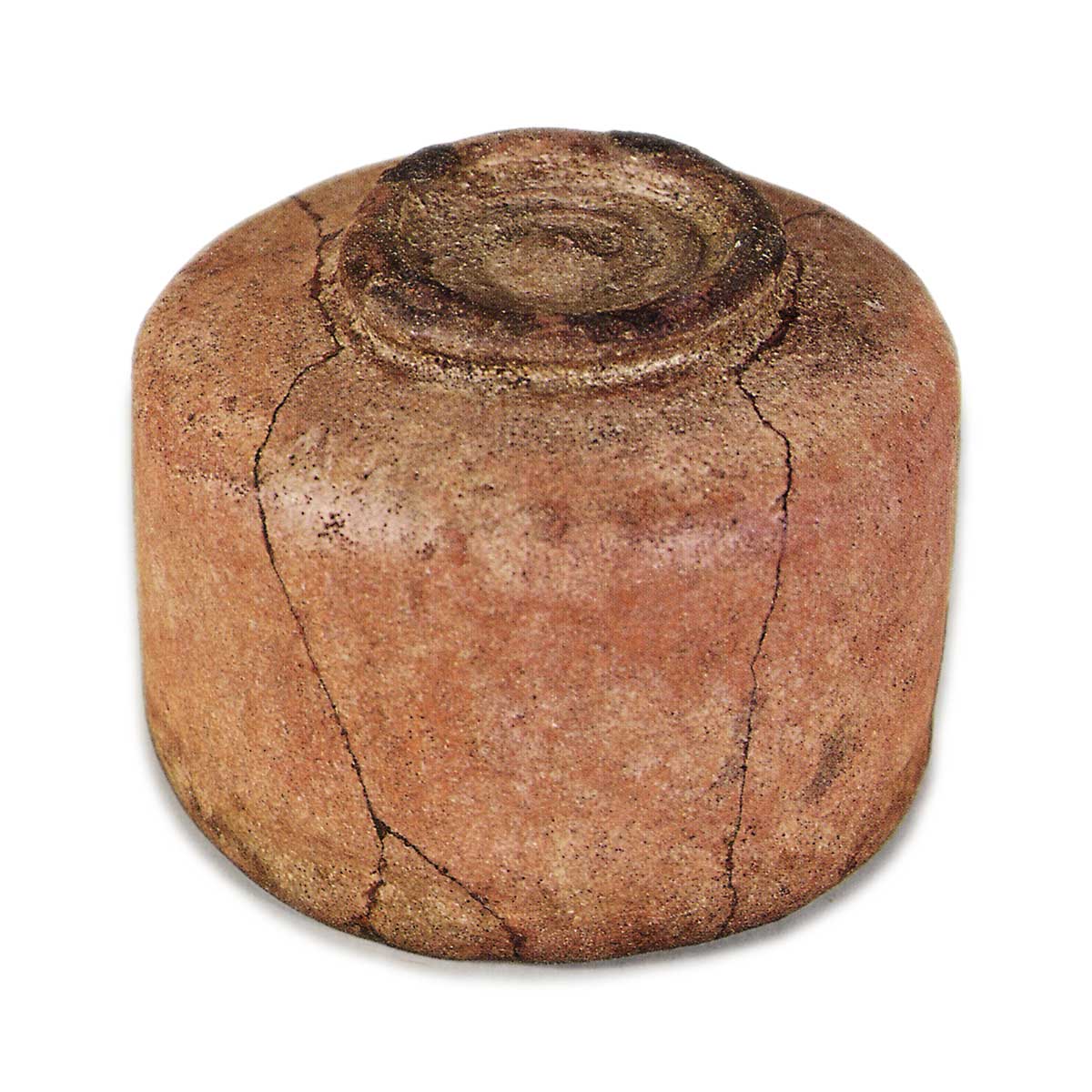
Height: 7.7–7.9 cm, Mouth diameter: 10.2 cm, Foot diameter: 5.4 cm, Same height: 0.8 cm, Weight: 322 g
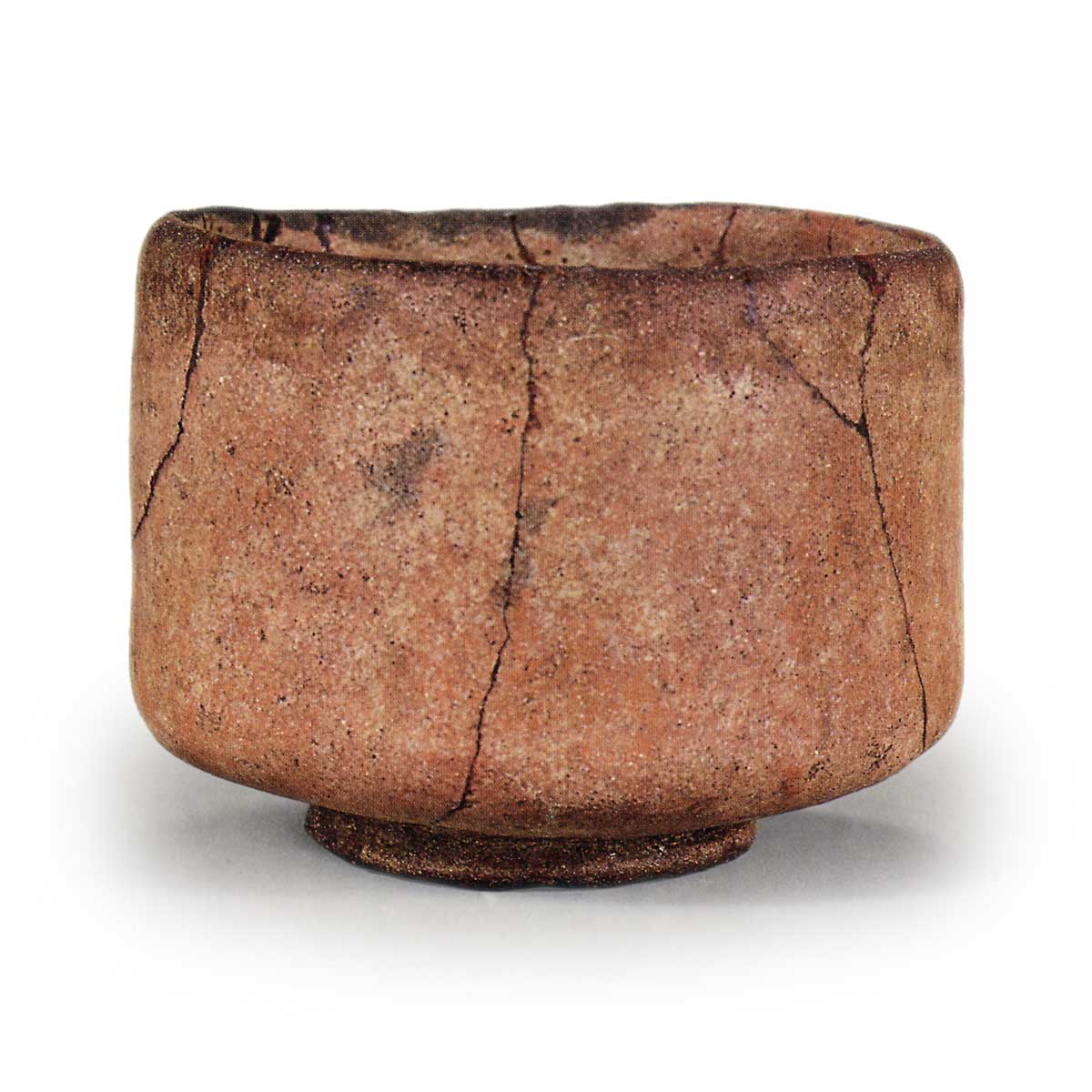
The inscription “Hōgaki” is by Kakukaku-sai, and its origin is recorded in Kakukaku-sai’s box inscription. It reads, “This is said to be a wooden guardian, but it is not a wooden guardian. The one from long ago was a wooden guardian, but the one now is wrapped in persimmons.” According to this, it seems to have been called a wooden guardian at one time.
The body is thickly molded, the shape is round and slightly embracing, showing gentle undulations and a waistline. The foot is large, with a helmet-shaped protrusion inside, and the incision at the edge of the foot is deep. This style is one of the distinctive types of Nagajiro tea bowls.The red clay is covered with a glaze that is slightly translucent, resulting in a uniform white mottled appearance. This is a characteristic of Nagajiro’s red tea bowls, and the glaze has no luster, especially around the high foot and the rim, giving it a particularly austere and rustic flavor. Although it has a large crack, this adds to its rustic charm. There are five eyes on the high foot.