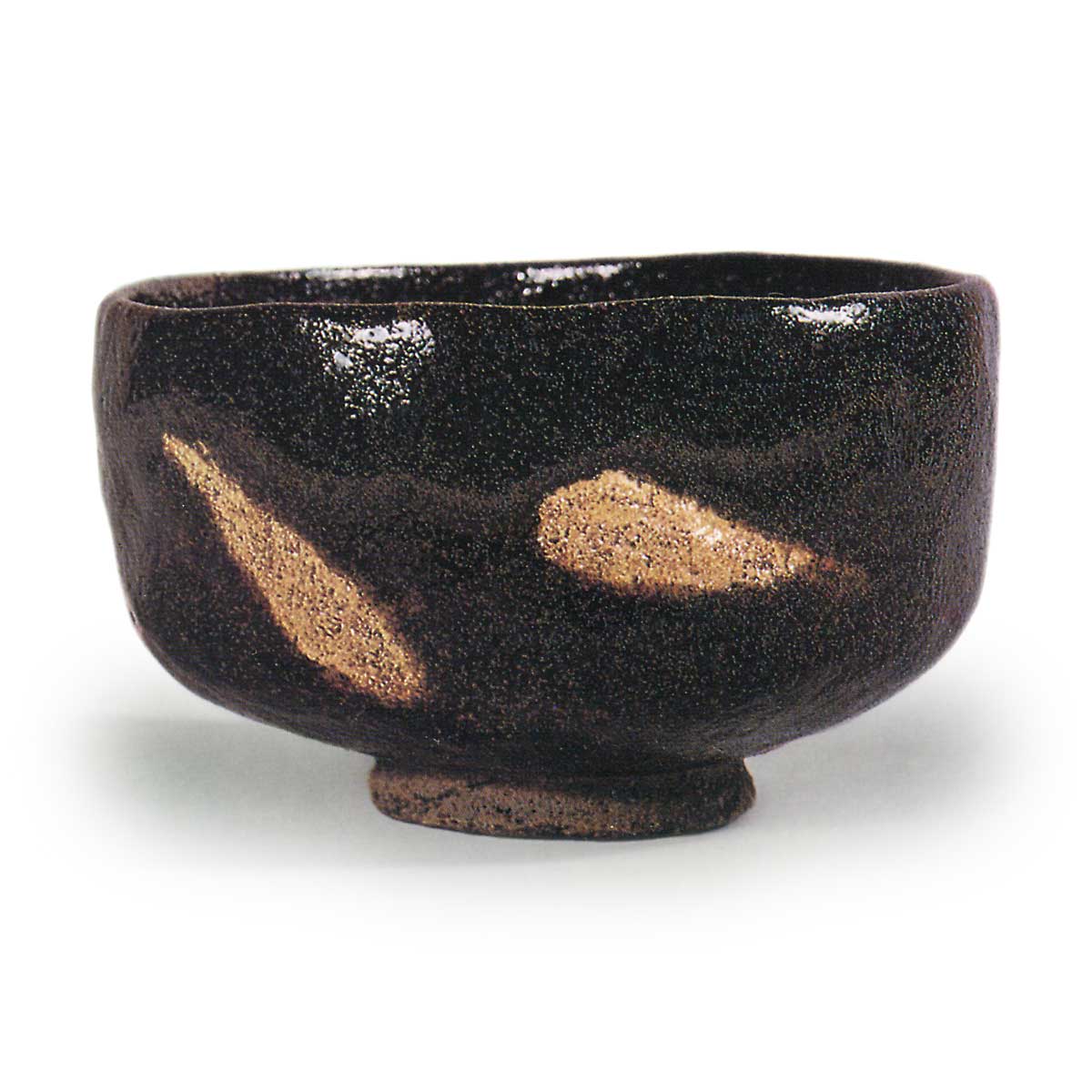
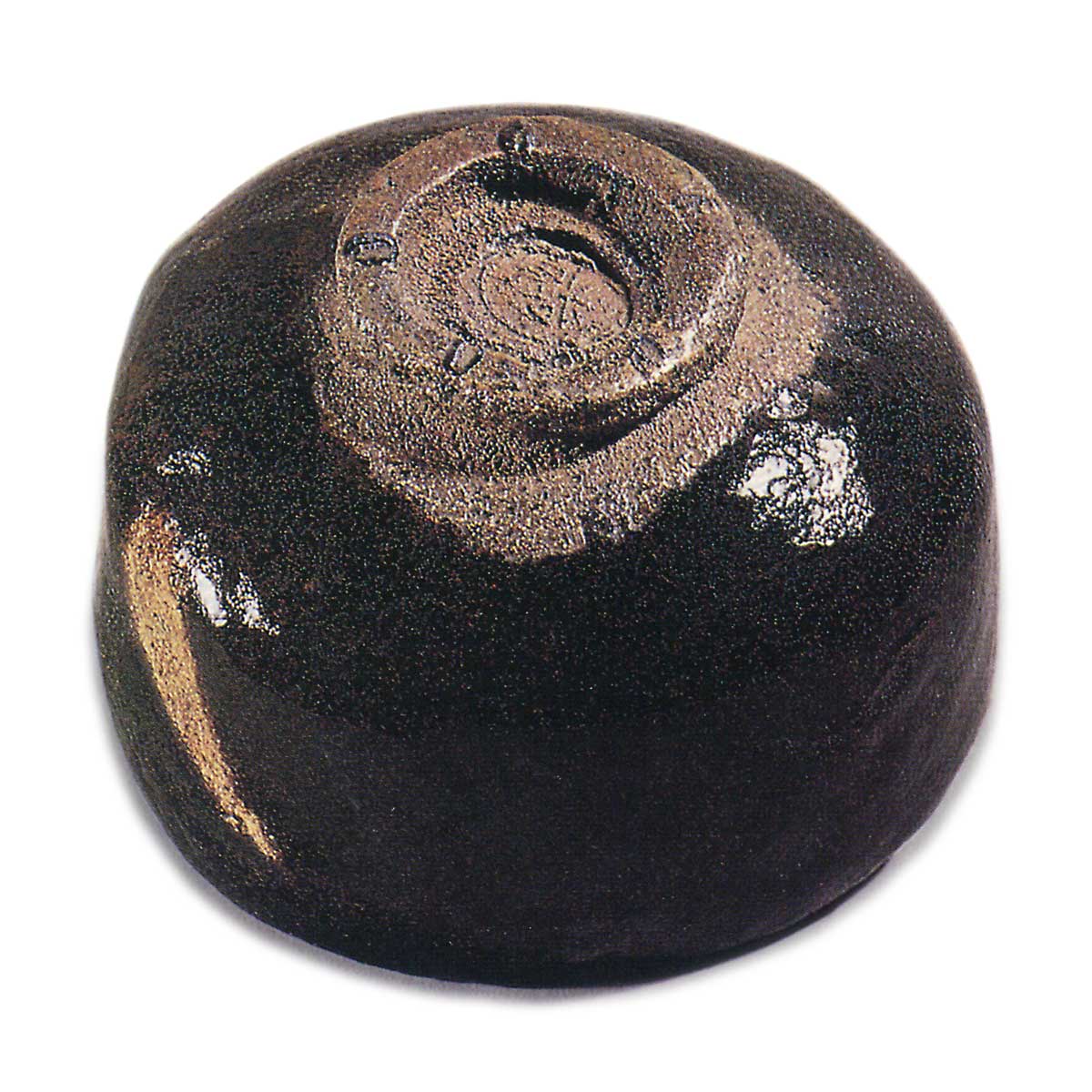
Height: 7.8 cm; Mouth diameter: 12.2–12.5 cm; Foot diameter: 5.5 cm
Fujita Museum of Art
On the underside of the inner box lid, Kakukaku Saiharaso has inscribed “Nonkō-yaki Black Tea Bowl, Inscription: Chidori, Left (Seal)”; on the outer box, Hirase Rōkō of Osaka—a former owner of this tea bowl and one of the foremost connoisseurs of the early Meiji period—has inscribed “Made by Chitori Dōnyū.” The Hirase family were wealthy merchants in Osaka who went by the name Chigusa-ya, and it is presumed that this tea bowl had been in their collection prior to Rokō’s ownership. However, it entered the collection of Heitarō Fujita following an auction of the Hirase family’s holdings in 1903 (Meiji 36), and was transferred to the Fujita Museum of Art after World War II.
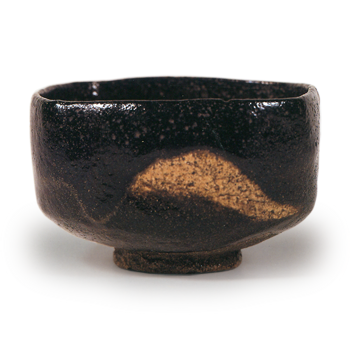
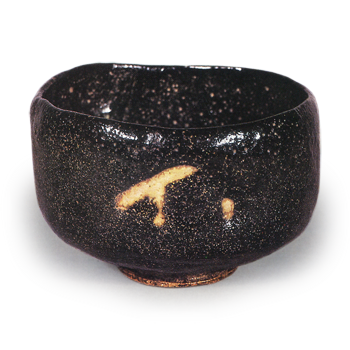
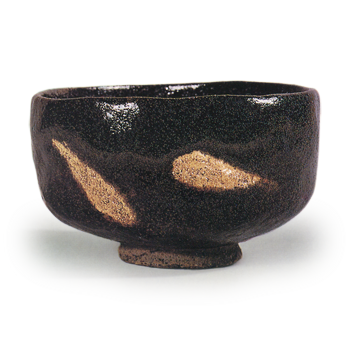
This tea bowl is larger than a standard “masu” size, and its rim is slightly oval in shape. The rim is a typical clam-shell style, and the interior is remarkably spacious. The rounded form from the waist to the side of the foot reveals Dōnyū’s characteristic touch, while the foot spreads outward in a figure-eight pattern from the edge to the base, which is nearly flat. The interior of the footring reveals a rough, earthy texture with traces of trimming; near its center, the “Raku” mark is stamped clearly at a slight angle, and the impression is more vivid than that on “Masu.” Black glaze covers the entire bowl, leaving only the footring and its immediate surroundings exposed, while a curtain glaze encircles the upper exterior of the body and the interior. It is said that the name “Chidori” (Plovers) was given because two triangular patches of unglazed yellow clay, created by the glaze not adhering, were interpreted as the footprints of plovers. There are marks from a clamp on the rim, and five traces of black glaze remain on the footring. One of the “Nonko Seven Varieties.”