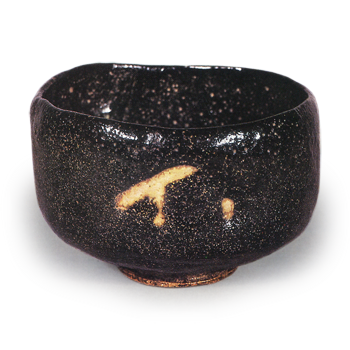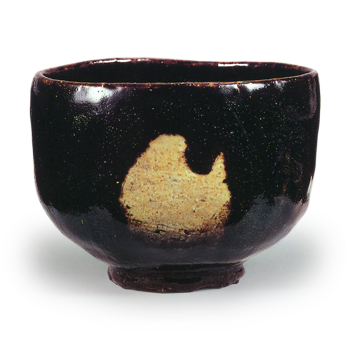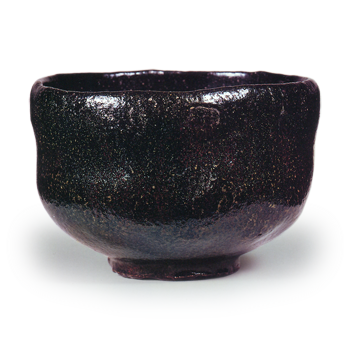
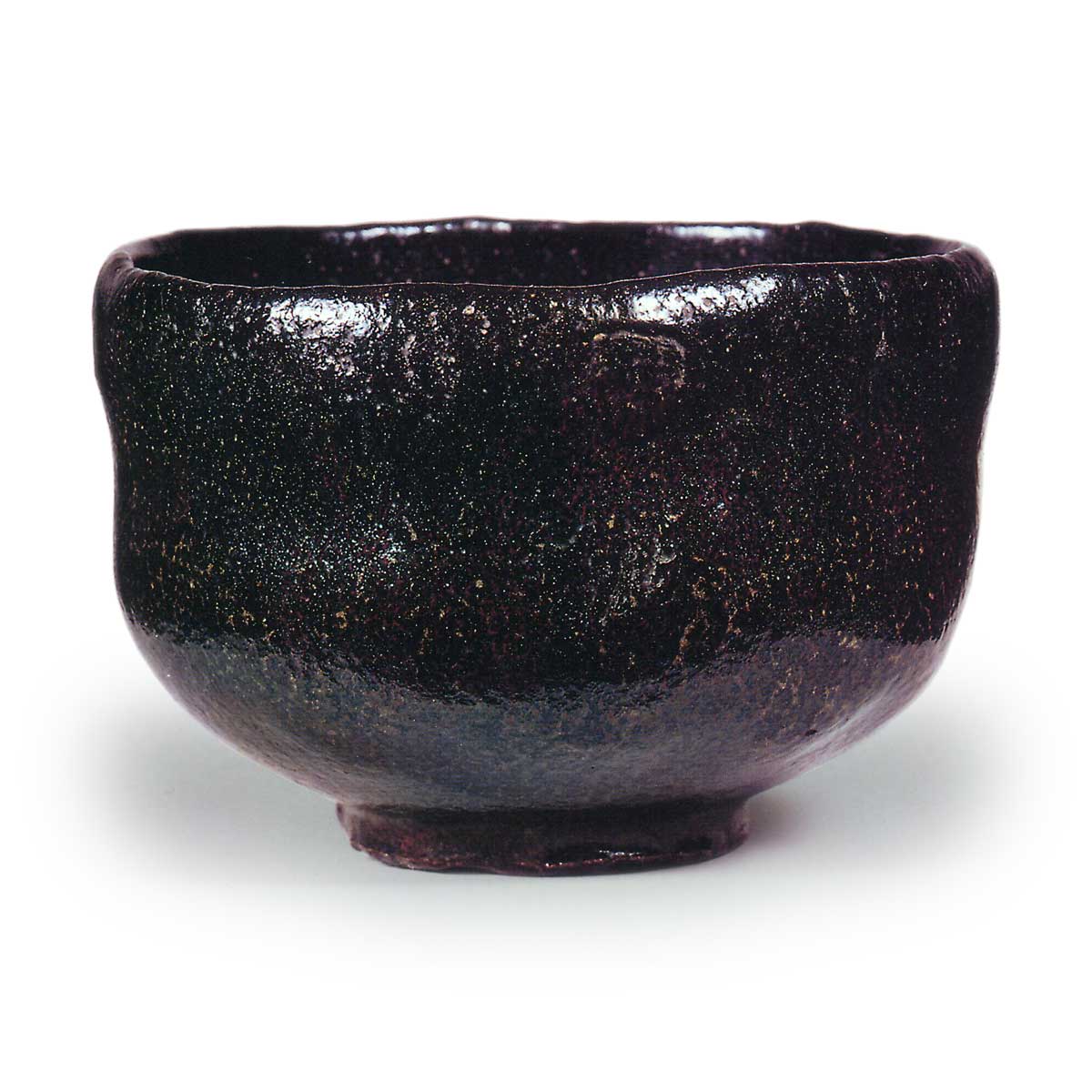
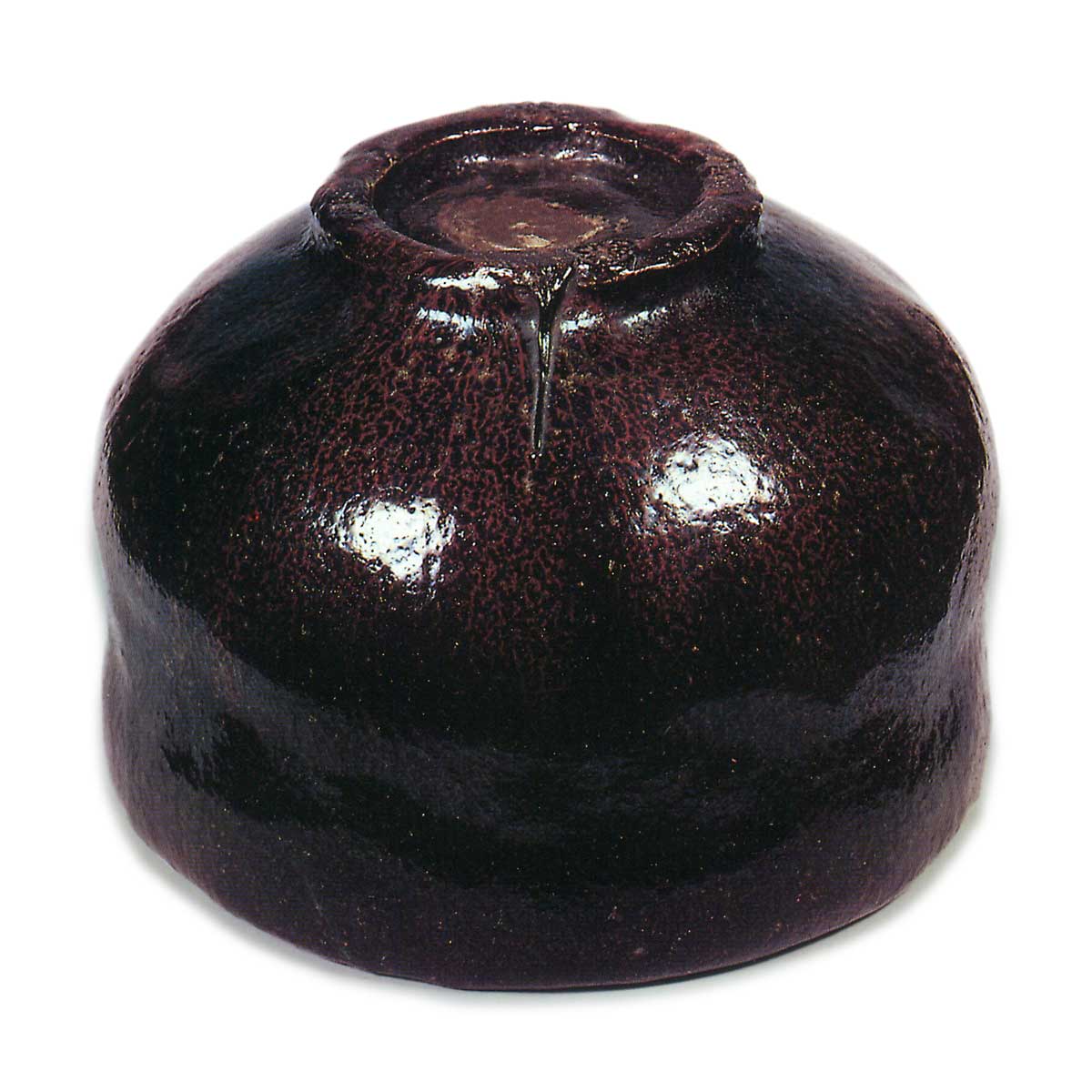
Height: 8.7 cm; Mouth Diameter: 11.4–12.3 cm; Foot Diameter: 5.8 cm
Fushin-an
On the underside of the inner box lid, Kōsō Sōsa has inscribed “Inazuma, Sō (signature)” in magnificent calligraphy. This is arguably a rare masterpiece among Kōsō’s box inscriptions. Since Dōnyū was active during the era of Sōtan and Kōsin, this can truly be described as a typical Raku tea bowl: a work by a contemporary Raku potter with a box inscription by the contemporary Kōsin. The inscription “Inazuma” undoubtedly derives from the vermilion glaze appearing like rays of light within the black glaze; such glazing is rare in Dōnyū’s work.
The inside of the inner box lid bears the inscription “Nonkō Black Tea Bowl, Takusai (seal),” while the inscription on the outside of the outer box lid, “Nonkō Lightning, Fusin-an,” is by Ryōryōsai. On the underside of the same lid, Rokkōsai has written in definitive calligraphy: “This Lightning Tea Bowl, passed down through the Fusin-an lineage, has an inscription on the outside of the box by Ryōryōsai (seal).” A treasured piece passed down from Fusin-an since the time of Kosen, this deep tea bowl—which Fusin-an uses only for special tea ceremonies—features a body that rises slightly outward from the waist to the rim. The clam-shaped rim is slightly curved inward, and the body is slightly tapered. The foot is large, with a flat base and deeply carved sides; however, because the glaze is thickly applied all the way to the base, the line from the edge of the foot to the waist flows smoothly. The interior of the foot is deeply carved and rounded; although unmarked, a small, crescent-shaped patch of bare clay is visible.
What makes this tea bowl striking is the appearance of deep and light vermilion kiln-change patterns within the glossy, jet-black glaze covering both the interior and exterior; in particular, the vermilion glaze around the lower rim is vivid. While vermilion glaze is typically considered a characteristic of the black Raku works by Ichin, the eldest son of Dōin, it appears that this technique was already in use during Dōin’s later years. I have also observed two or three other pieces, such as “Kotaka” (Fig. 5152), that feature vermilion glaze. “Inazuma” is a unique piece among Dōin’s black Raku works. It is one of the “Nonkō Seven Varieties.”