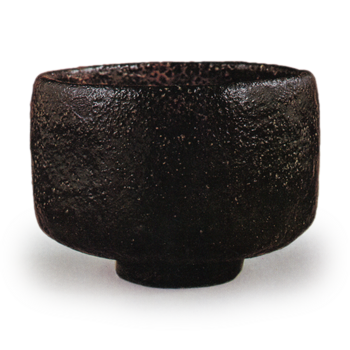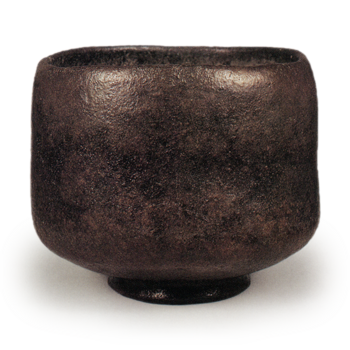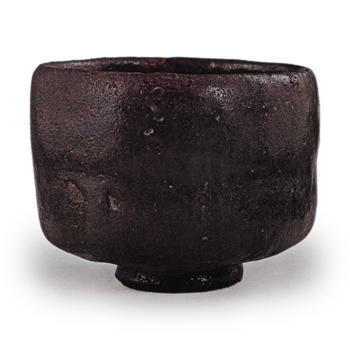
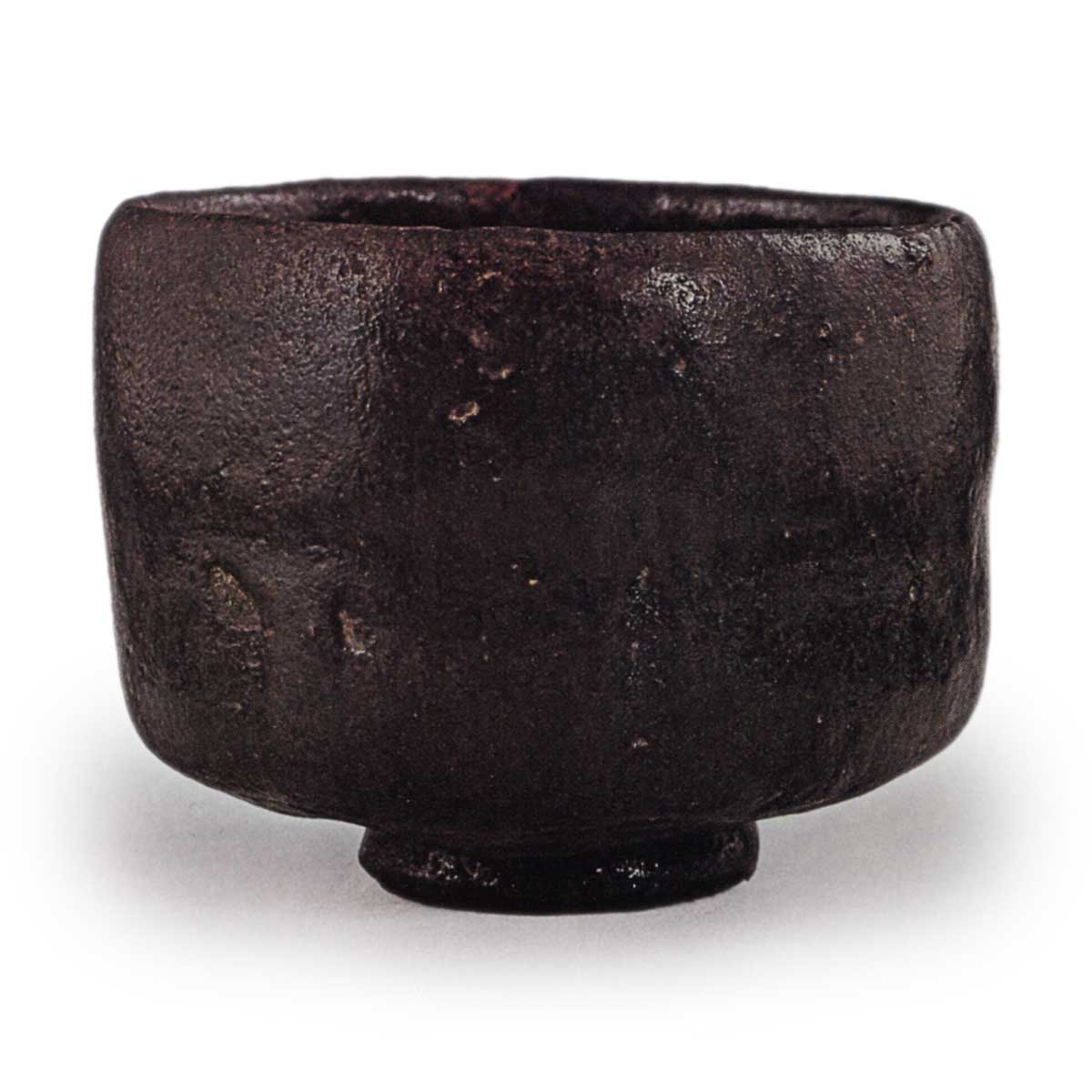
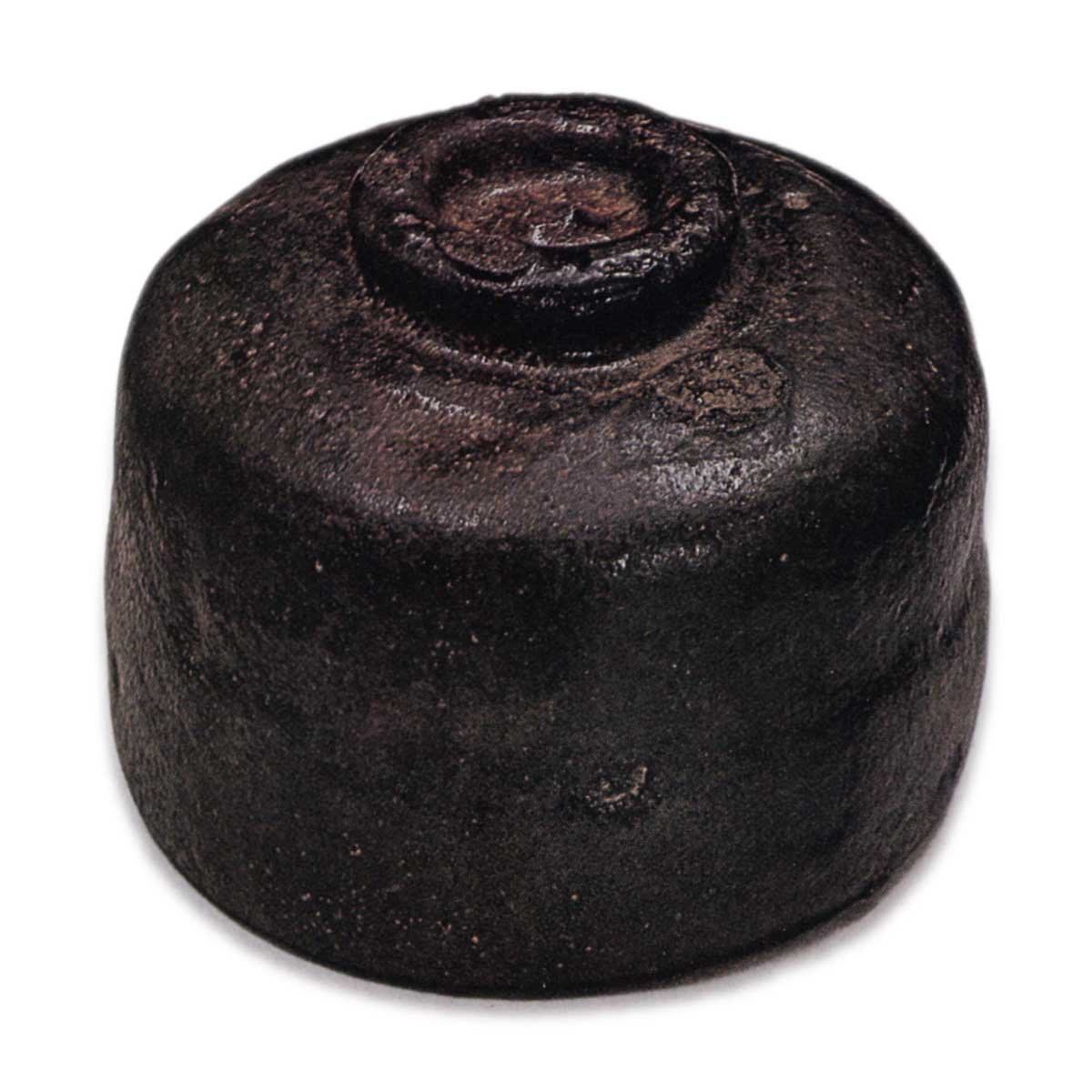
Height 8.4 cm, mouth diameter 10.8 cm, base diameter 4.9 cm
This bowl was named “Momohanabo” because it belonged to a monk of a temple named Momohanabo, who is believed to have been a student of Rikyu. According to “Raku Ware Famous Tea Bowls,” there was a temple called “Momohanabo” in the upper part of Kitano Nanabonmatsu Monzen Dori in Kyoto, where Rikyu’s favorite tea ceremony was held. On the front of the lid of the inner box, “Chojiro, black tea bowl, Momohanabo” is written, and on the back, “Momohanabo, Jisen Sotanrai Youken (Hanaseki)” is written by Fujimura Youken, a student of Sotan. It is inferred from this that the bowl was transferred from Momohanabo to Sotan, and then to Youken. On the inside box, Naosai of Kankyuan wrote “Chojiro ware for Youken, Momohanabo. Later, in 1930, it came into the possession of Terada Sukesaemon, an Omiya in Osaka, and then Morii Ryozon, and remained in the family for a long time, but after World War II, it left the family.
It was owned by Terada Sukesaemon of Ozaka in 1942, and then by Morii Ryozon, but left the family after World War II.
The body is slightly tightened and the waist is taut. The height is small and slightly high, but rounded, and the width of the whorl helmet inside the height stands up. The brownish black glaze is quite thick but melts smoothly and well, and the glazed surface is outstanding among Chojiro wares. It is a duplicate of Akaraku’s “Jirobo,” and is also close to “Kitano Kuro” and “Makomo.