Accessories
Box: Tsumori-nuri lacquer finish; Label; Inscription; Official seal
Lid interior: Basket inscription; Calligraphy by Bunnyo-shonin
Provenance
Oda Nobunaga → Toyotomi Hideyoshi → Nishi Honganji Temple
Dimensions
Height: 3.9 cm
Mouth diameter: 7.5 cm
Weight: 50.5 g
Kamakura-bori artisans, arriving with Zen monks, settled in Kamakura and primarily crafted Buddhist ritual implements. This incense container is likely one such piece. This is supported by the inscription on the box’s paper label, which states “Kanshōshi” and the artisan’s name.
The transmission from Oda Nobunaga to Toyotomi Hideyoshi, then to Nishi Honganji, is recorded by Bunnyo Shōnin on the box. Records of tea ceremonies also indicate it was once used in ceremonies at the Nishi Honganji temple.
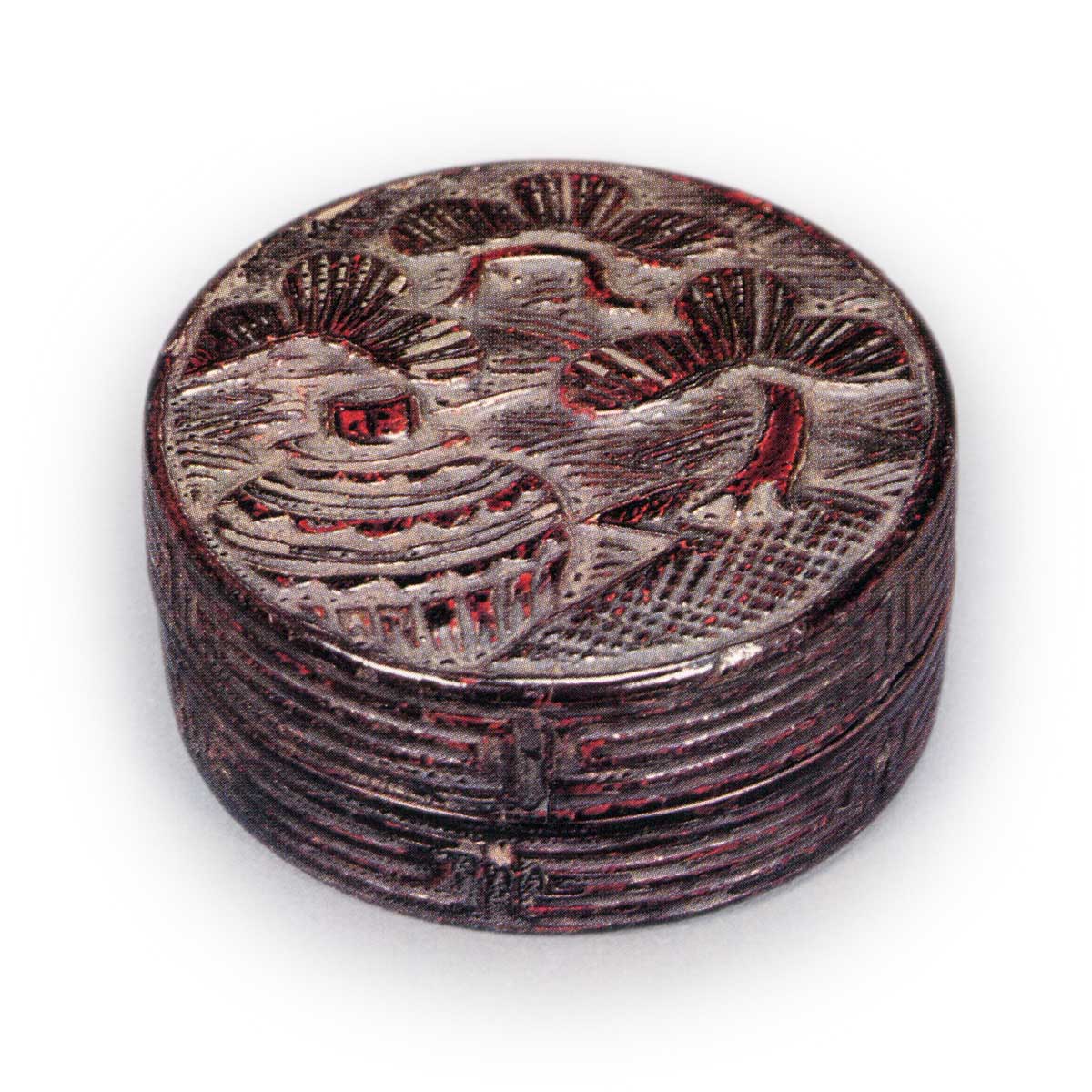
The body and lid joint of this incense container clearly shows it was originally used as a glazed incense container by Zen monks. Specifically, glazed incense containers were portable, so their joints were made to fit tightly.
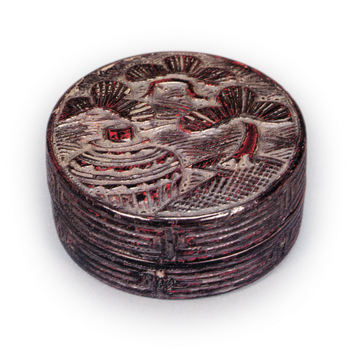
The painting depicts a pine tree and a sake bottle, based on the story of Bai Juyi’s “Xinyang River” often seen on Kamakura-period incense boxes. Its ancient patina proves it to be the oldest known example of this type.
The fact that both the exterior and interior are perfectly preserved attests to the certainty of its provenance.