


Provenance
Oshu Jūichiya Koide Shōbei—Yokohama Mogi Family—Yokohama Haru Sankei (1921)
Record
Famous Artifact Appraisal Book by Kikuniya Hikojiro, “Idle Window Miscellany,” “Taisho Masterpiece Guide”
Dimensions
Height: 9.6–10.1 cm, Mouth diameter: 11.5 cm, Foot diameter: 6.5 cm, Same height: 0.9 cm, Weight: 374 g
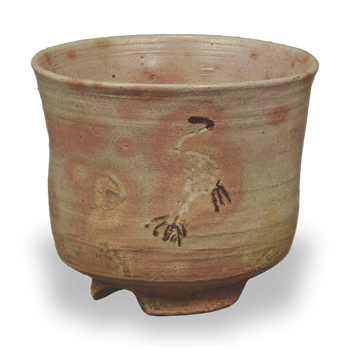
The Standing Crane is the most famous of the original tea bowls from the Busan Kiln, and when one mentions original tea bowls, the Standing Crane immediately comes to mind. Due to its popularity, it was repeatedly produced afterward. The first version is particularly distinguished as the “original hand.” The legend that the original Standing Crane was painted by Tokugawa Iemitsu for the celebration of Hosokawa Sanzae further elevated the reputation of the Standing Crane tea bowl.The opening of the Kamon-ya Wakan in Busan is said to have been in the 16th year of the Kan’ei era, and this piece is likely from the early days of the kiln.
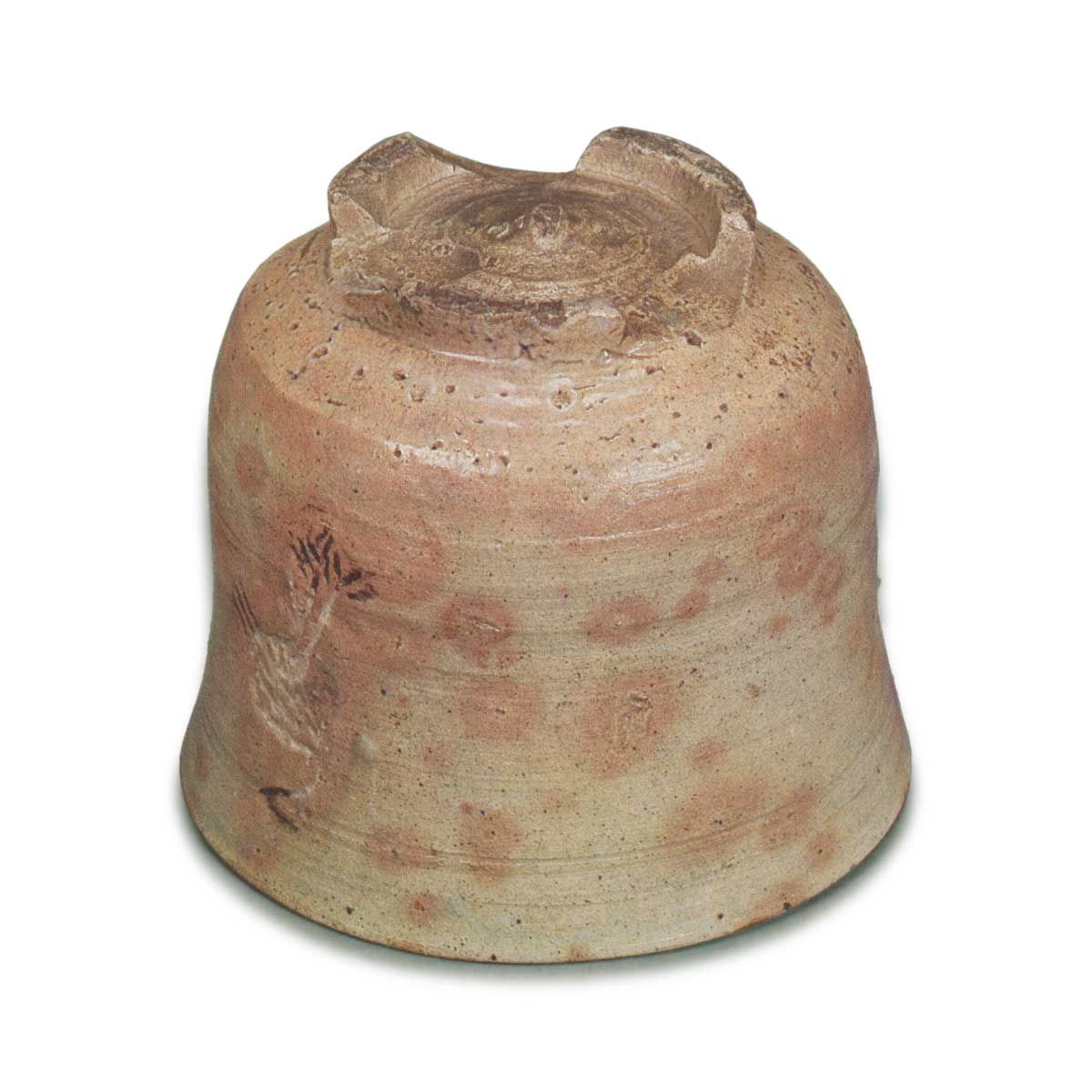
While Hon-te Tachikaku is rare, this particular piece is from the Elevenya collection in Nagoya and is considered the finest example of Hon-te. It has a thin, cylindrical shape with a slightly curved rim, and the body shows traces of the potter’s wheel, with a slightly tight and varied texture.The overall color is a pale persimmon with a slight bluish tint, adorned with beautiful deer spots and fire patterns. The front and back of the body feature pressed crane designs, creating a white and black inlay pattern. The interior also features deer spots across the surface, with beautiful fire patterns between them. The foot is divided into three sections, with a helmet-shaped stand and gentle side supports.

