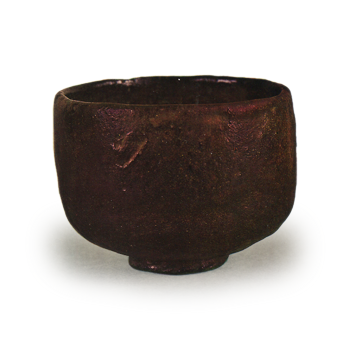
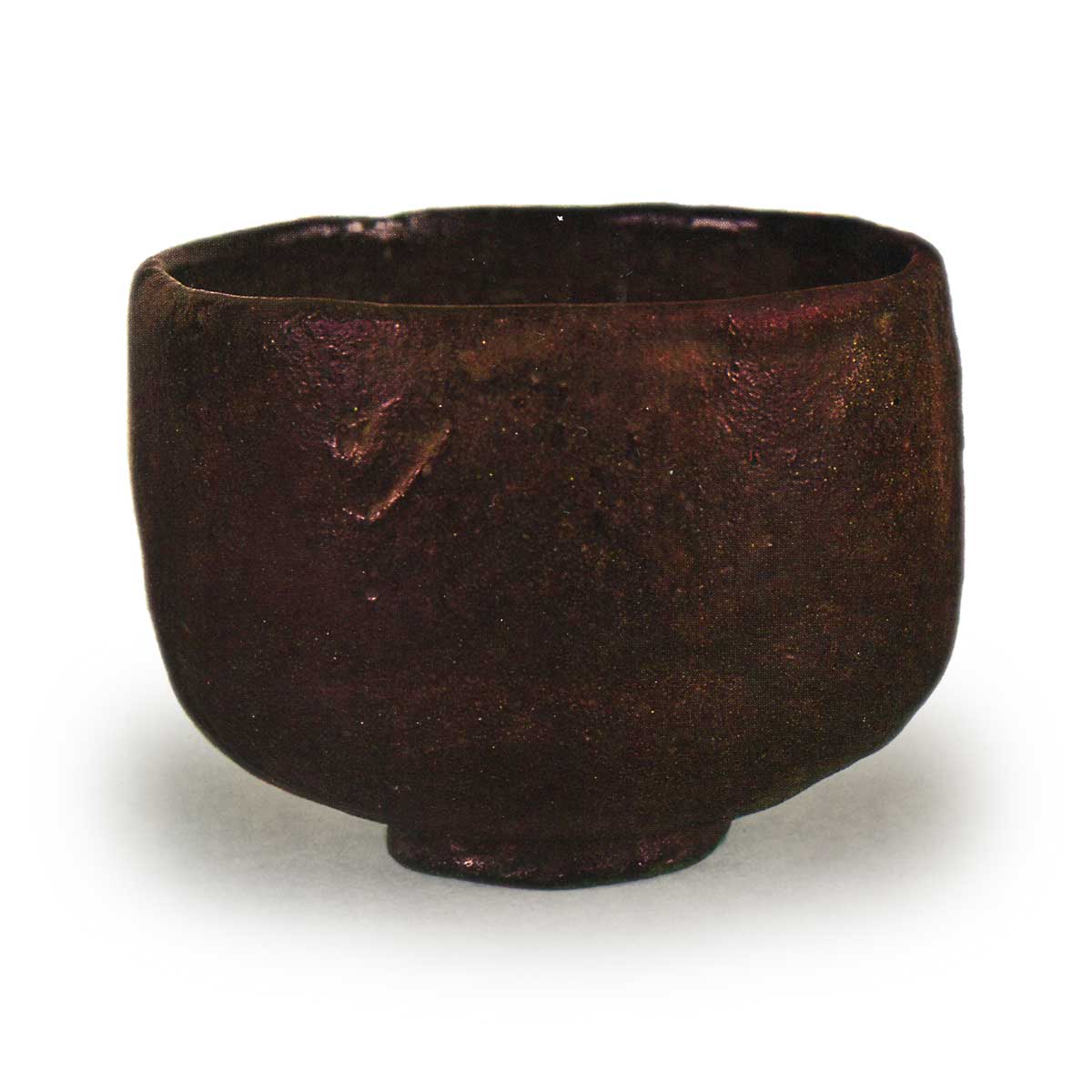
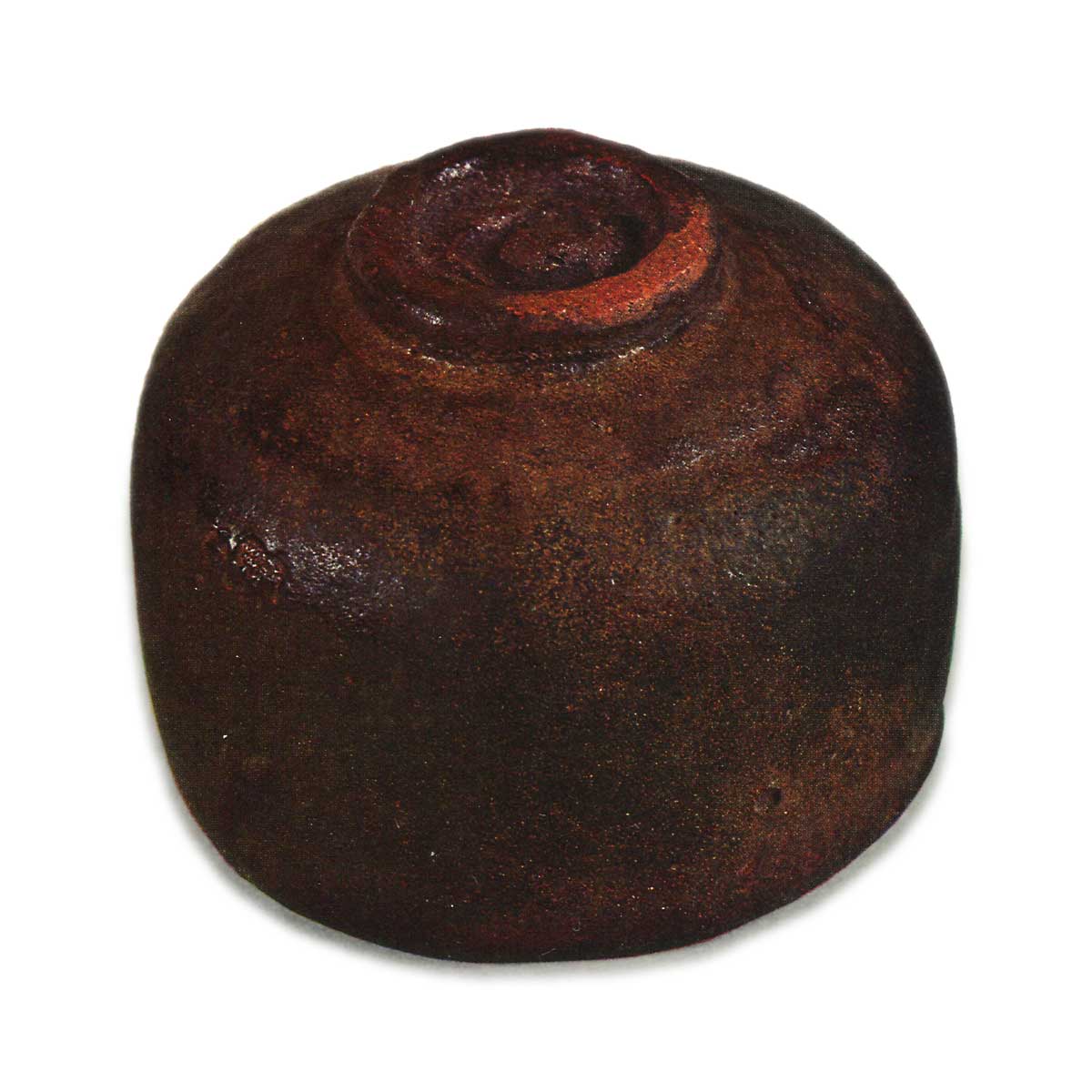

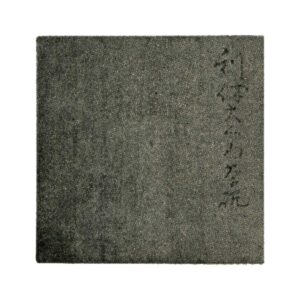
Kuro-raku, Rikyu Seven Types, Famous Item, Important Cultural Property
Accessories
Inner box: Paulownia wood with black lacquer finish, same lid with red lacquer inscription, signed by Etsuzan Sōsaku
Outer box: Paulownia wood with white lacquer finish, signed by Zuiyū Sōsaku
Cover: Tang-style pure silk
Provenance
Sen Rikyū → Sen Shōan → Sen Sōtan → Goto Shōsai → Etsuzan Sōsaku → Omotesenke → Mitsui Jōtei → | Kōnoike Family
Recorded
Collection of Famous Items Throughout the Ages, by Tomonaga Gen, Tea Utensils: Names and Forms, Inner-fired Longjiro Tradition, Collection of Tea Ceremony Utensils, Collection of Famous Items, Collection of Raku-fired Famous Tea Bowls, Collection of Famous Tea Bowls, Examination of Japanese Pottery, Casual Notes from a Leisurely Residence, Guide to Tea Bowls and Tea Trays, Record of Famous Items from Enshu, Fushimiya Soryu’s Illustrated Collection of Famous Tea Bowls, Manji Era, Kaga-ya Sōzō’s Notes Kōnoike Zōchō, by Kusama Wagaku; Tea Utensils: A Collection of Illustrations of Famous Pieces; A Collection of Tea Utensils: A Guide to Appraisal; A Collection of Tea Utensils from Ancient and Modern Times; A Guide to Famous Tea Utensils from the Taisho Era
Dimensions
Height: 8.5 cm; Mouth diameter: 10.7 cm; Foot diameter: 4.8 cm; Height of foot: 0.8 cm
This is the most famous of the seven types of Rikyu-marked tea bowls. The “Daikoku” mark is likely a reference to “Kokuro.” While the ‘Hayafune’ has a slanted edge at the base, the “Daikoku” has a gently rounded shape, giving it a more serene appearance characteristic of Rikyu’s preferences.
The black glaze has a slight luster on the exterior but a tea-glazed texture on the interior. Near the rim, there are scissors marks, and on the base, the glaze is chipped, revealing the raw clay of the Jurakudo red earth. Inside the base, the swastika design is particularly striking.