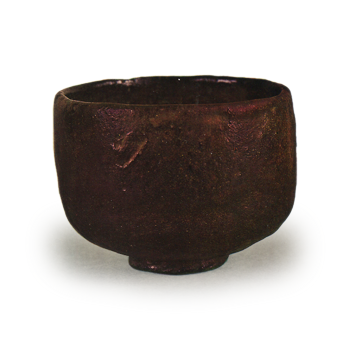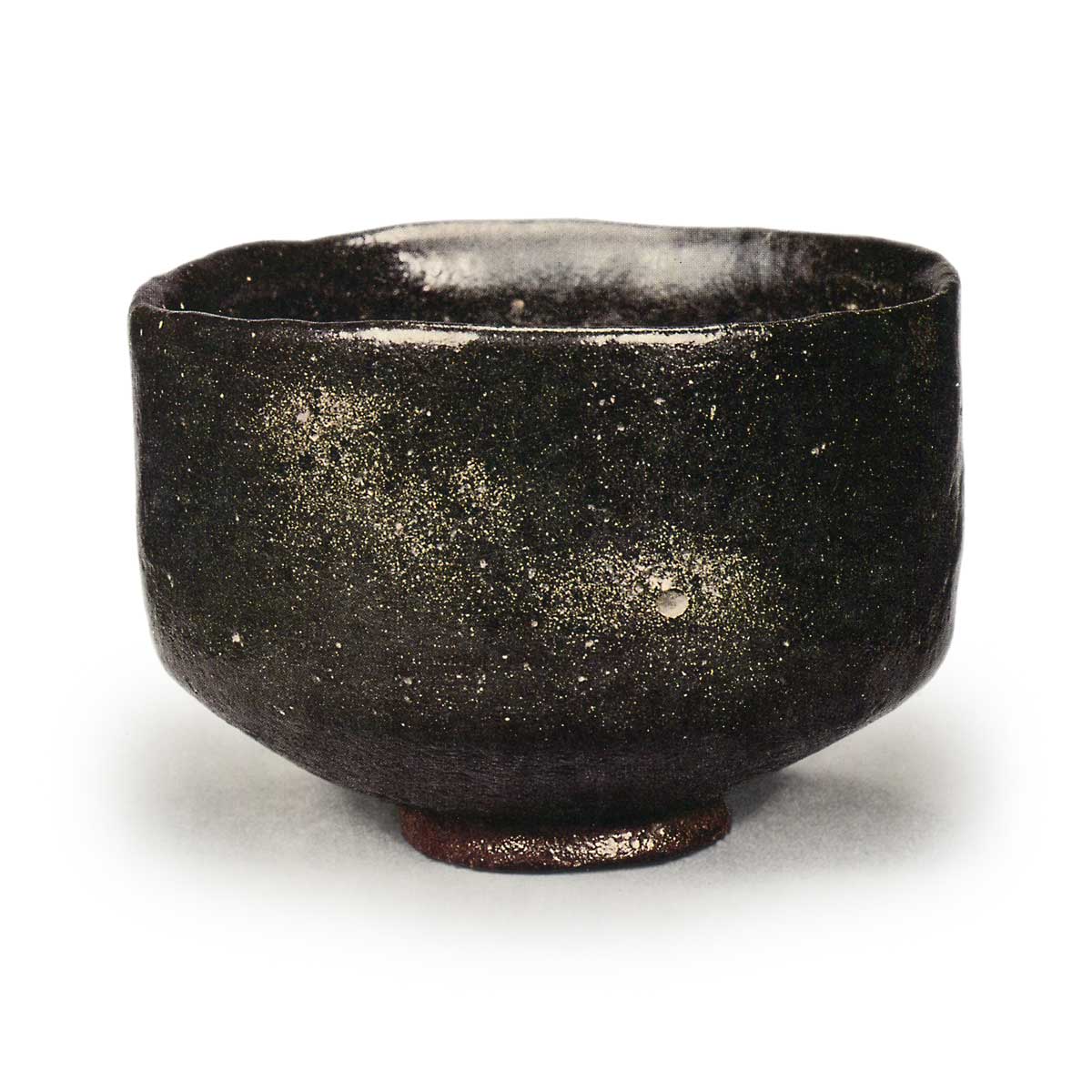


Kuro-raku, one of the seven types of Rikyu, famous item, Important Cultural Property
Accessories
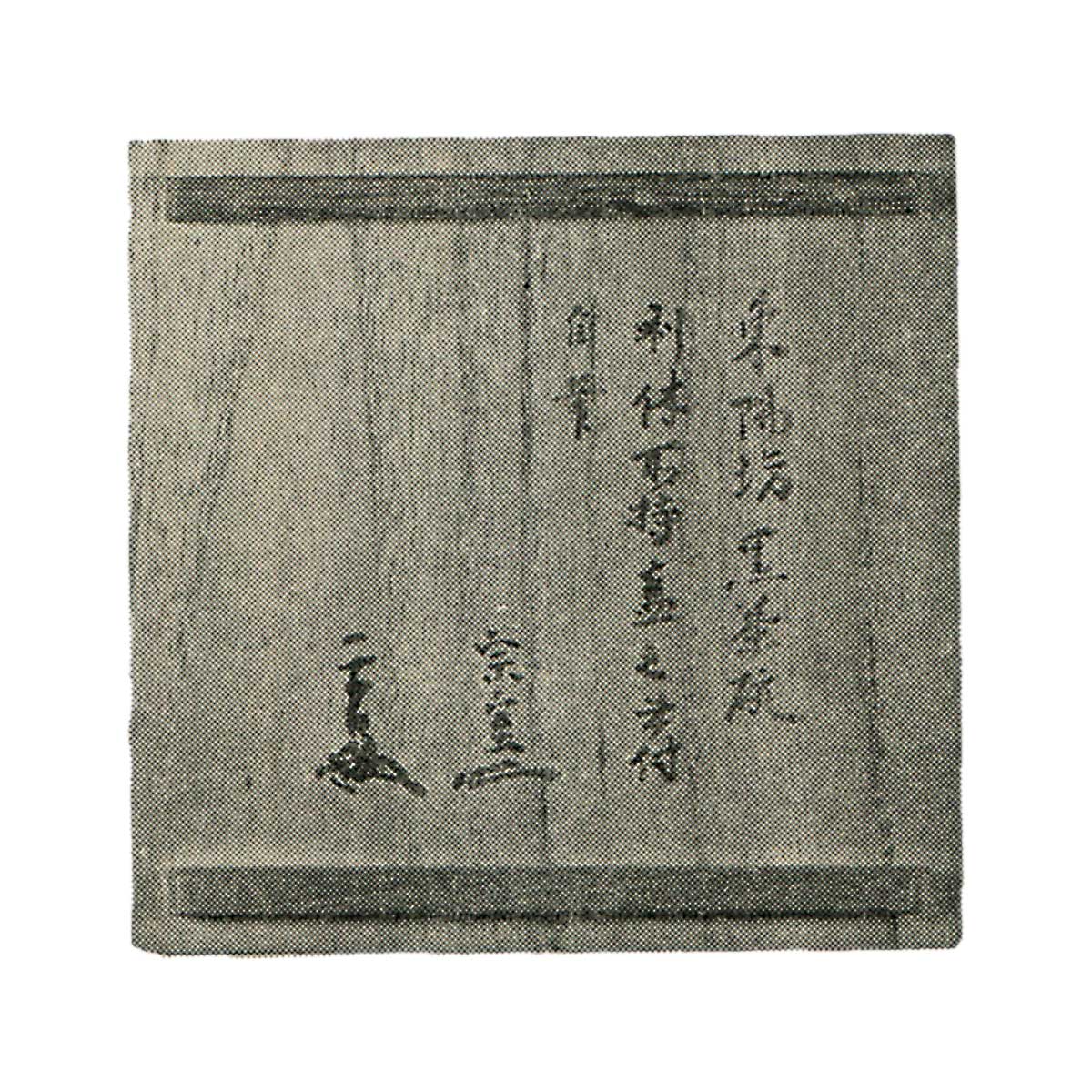
Inner box, paulownia wood, inscription by Sen no Rikyu
Same lid, inscription by Rikyu, inscription by Sensō Sōshitsu
Outer box, black lacquer, sticker
Same lid underside: Medicine bag paper sticker, dimension sheet
Attached document: One copy
Transmission
Rikyu disciple Toyo-bo — Takeda Kyōsen Hōin — Kōnoike Dōoku (Genroku 10) — Man’en 1st year, Dōoku’s descendant returned to the Kōnoike family through an auction at Kyoto’s tool shop Nakamitsu
References
Kojin Meibutsu Ruiju (Collection of Famous Objects from Ancient and Modern Times), Chaji Dan (Discussions on Tea Ceremony), written by Tominaga Gen, Chaki Meikei Hen (Chapter on Tea Utensils), Chaji Hyoroku (Secret Records of Tea Ceremony), Kankyo Gohitsu (Random Notes from a Leisurely Room), Senke Chukou Meibutsu (Famous Objects of the Sen Family), Kusama Kōike Kokusho (Notes by Kusama Kōike), Uchiyaki Kamado Chōjirō Den (Biography of Chōjirō, Master of the Inner Kiln), Chawaka Kanwa (Random Talks by the Tea Window), Kansō Zatsuki (Random Notes from a Leisurely Room), Chaji Hyoroku (Secret Records of Tea Ceremony), Rakuyaki Meibutsu Chawan Shū (
Height: 8.3–8.5 cm, Mouth diameter: 12.2 cm, Foot diameter: 4.7 cm, Same height: 0.6 cm, Weight: 360 g
One of the seven types of Rikyu-marked tea bowls, this piece was given by Rikyu to his disciple Toyo-bo, a monk at the Shinjudo Temple in Kyoto, hence its name. The shape resembles a fast-moving boat, a representative style favored by Rikyu. The glaze has a rare luster for Nagajiro’s work. The foot is also unique, with a wide base resembling a tatami mat. It comes with a Rikyu inscription and a box inscribed with “Toyo-bo,” making it a particularly significant piece among Nagajiro’s tea bowls.