


Kurogama, Nonkou Seven Types
Accessories
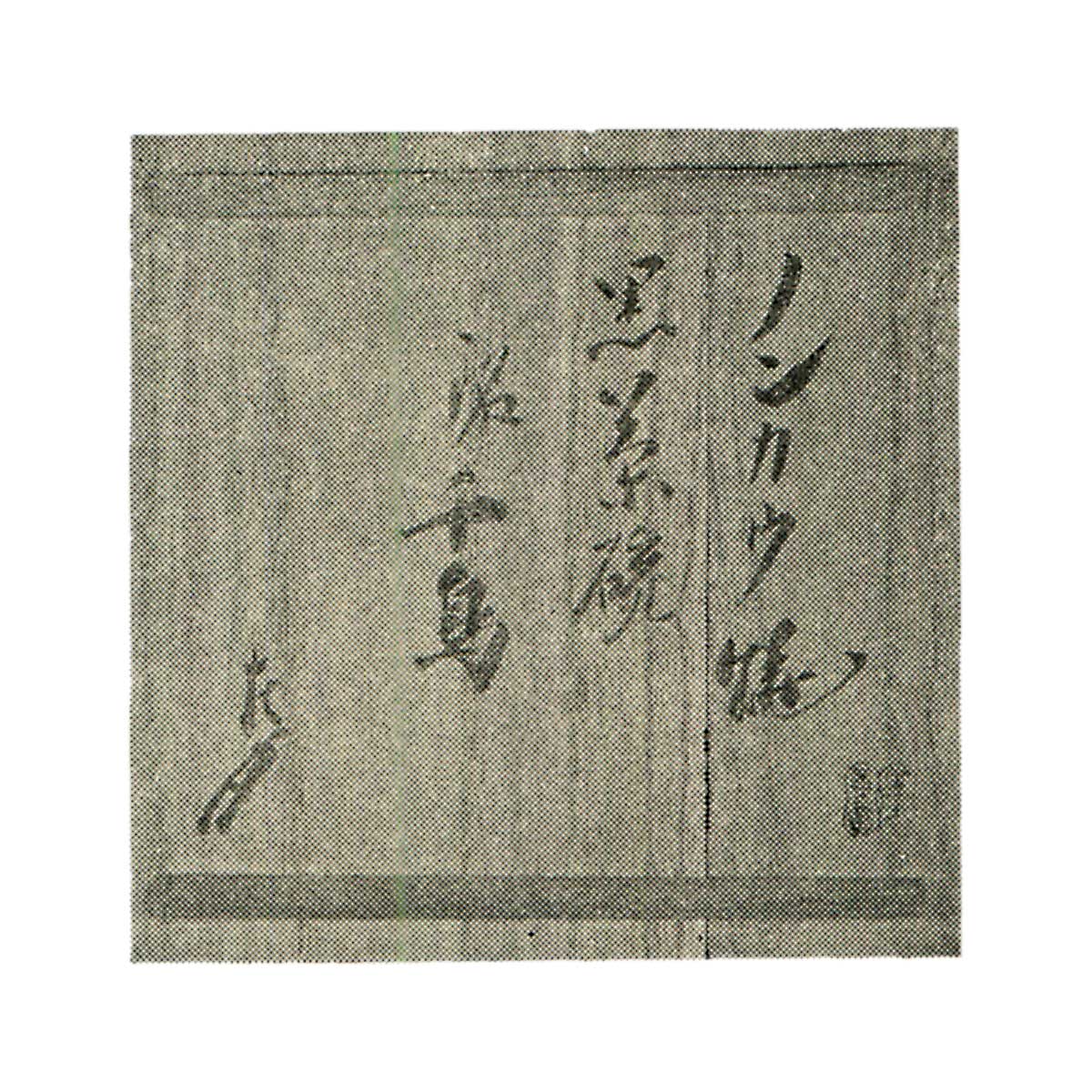
Inner box: Paulownia, white wood, with inscription on the back by Kakuzai Sosa
Outer box: Paulownia, white wood, with inscription by Hirase Ruka
Provenance
Osaka, Chigusa-ya Hirase Ruka – Fujita Denzo
References
Japanese Ceramics: A Critical Study, Miscellaneous Notes from a Leisurely Window, Stories of Unearthed Paintings and Antiques, Fujita Family Art Collection Catalog, Taishō Masterpieces Catalog.
Dimensions
Height: 7.5–7.9 cm, Mouth diameter: 12.3–12.5 cm, Foot diameter: 5.4 cm, Foot height: 1.0 cm, Weight: 328 g.
Owner
Fujita Museum of Art, Osaka.
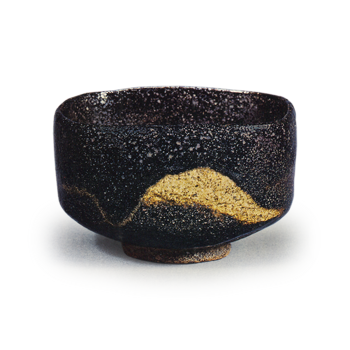
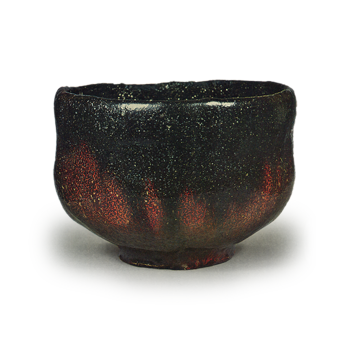
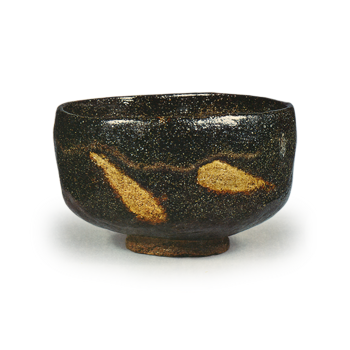
Along with the masu, this is one of the seven most famous Nonkou tea bowls. The name Chidori no Hara no Sou was given because its triangular shape resembles the chidori (plover) painted by Korin.
It is a light and delicate piece with a slightly flared rim and a white clay base. It is coated with a jet-black Nonkou glaze with a beautiful luster, and the glaze hangs elegantly on both the inside and outside.There are two unique yellow spots on the front, creating a scene of reeds reminiscent of chidori. The bowl is wide, which is another characteristic of Nonkou. The foot is similar to that of a masu, with a sharp inner curve, showing the brilliance unique to Nonkou. There is a raku seal on the inside of the foot, which is very impressive, but even among Nonkou, seals on the base are particularly prized.
The clay is covered with a thin water glaze, and the base is flat with five eyes, which are covered with black glaze, a characteristic feature of Nonkou tea bowls. There are scissor marks on the rim. The glaze design adds to the subtlety of the workmanship, bringing out the characteristics of Nonkou.