

National Treasure
Accessories
Inner box, paulownia wood, white wood, inscription, seal of Hon’ami Kōetsu
Deed of transfer, one sheet
Certificate, one copy
Provenance
Hon’ami Kōetsu—brought as a dowry when his daughter married into the Hikitaya family—Himeji, Sakai Gagaku-no-kami Tadakazu
Record
Honcho Toki Koshō, Chakai Manroku, with additional notes by Kuro Kōetsu, written by Kusama Waraku, Meibutsu Zui, Kushinroku, Kansō Zatsuki, Taisho Meiki Kan.
Dimensions
Height: 8.5 cm, diameter: 11.6 cm, foot diameter: 5.4 cm, height: 0.5 cm
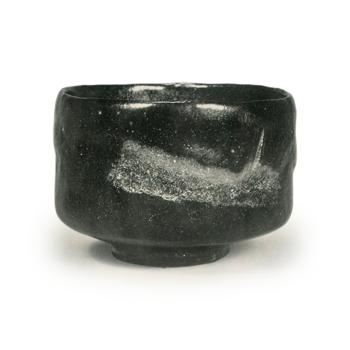
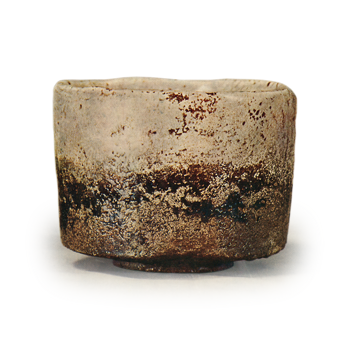
This is considered the finest example of Kurokawa’s tea bowls. The inscription “Fujisan” (Mount Fuji) is said to represent the snow-capped peak of Mount Fuji, or alternatively, to signify “unparalleled excellence.” It is also known as the “furisode tea bowl” because it was wrapped in a furisode kimono and brought as a dowry by Kurokawa’s daughter when she married.
It has a square shape with a cut edge, and the body, foot, and sides of the foot are carved with a chisel. The base is white clay with a thick white glaze, and the lower half is charred and turned grayish black, creating a unique appearance.
Above all, the bowl’s elegant design evokes the noble character of its creator, Kōetsu, and its rare provenance and exquisite box make it a masterpiece worthy of its name.