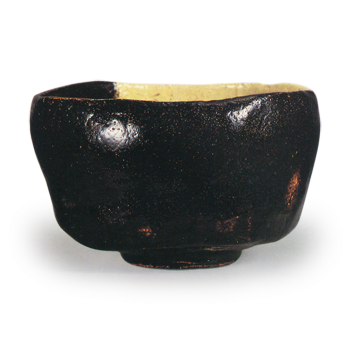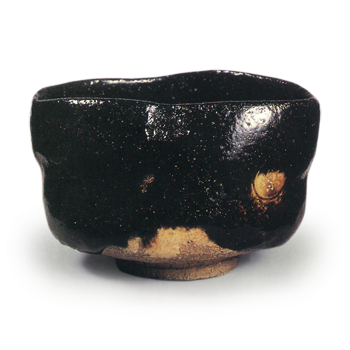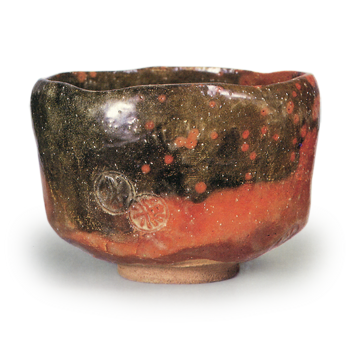
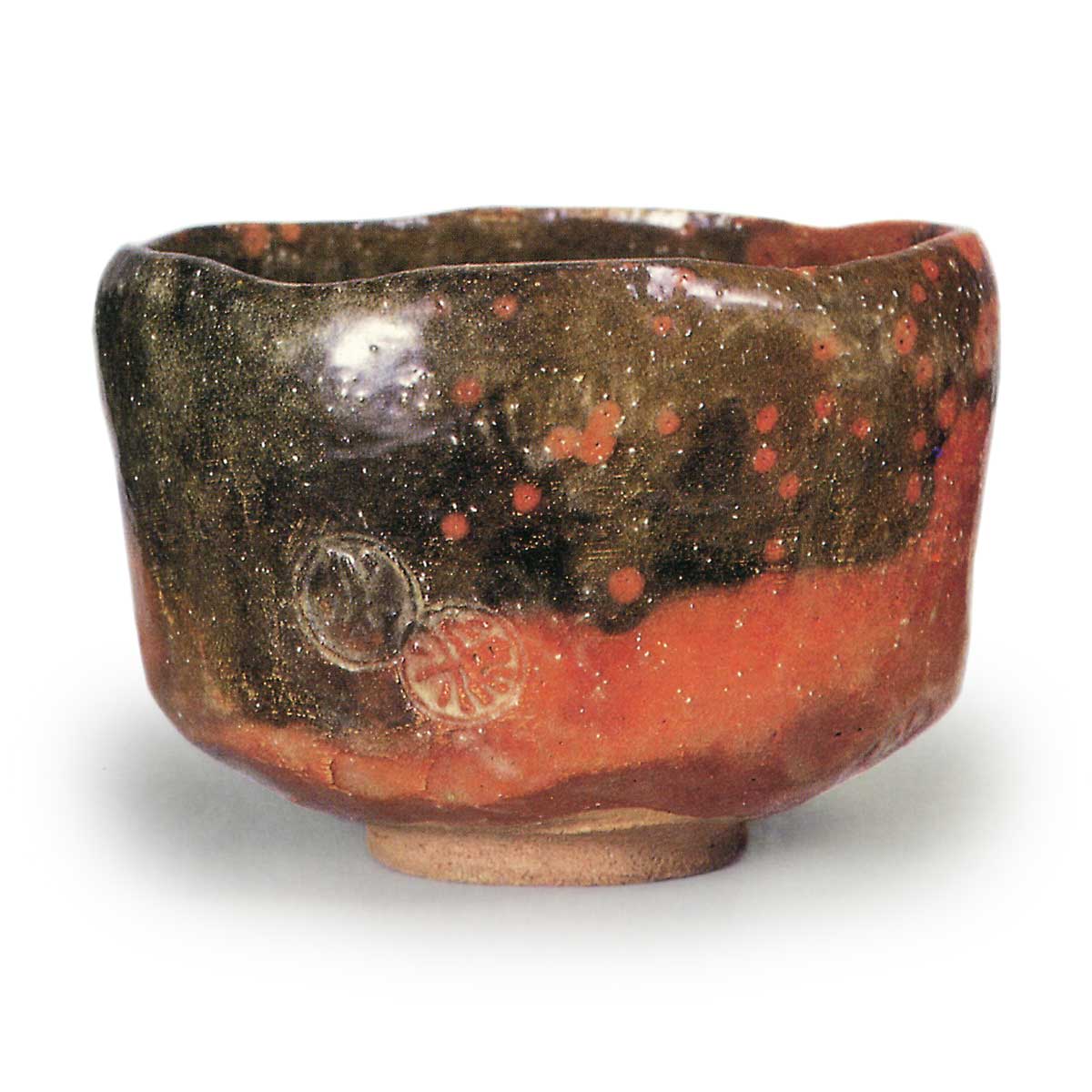
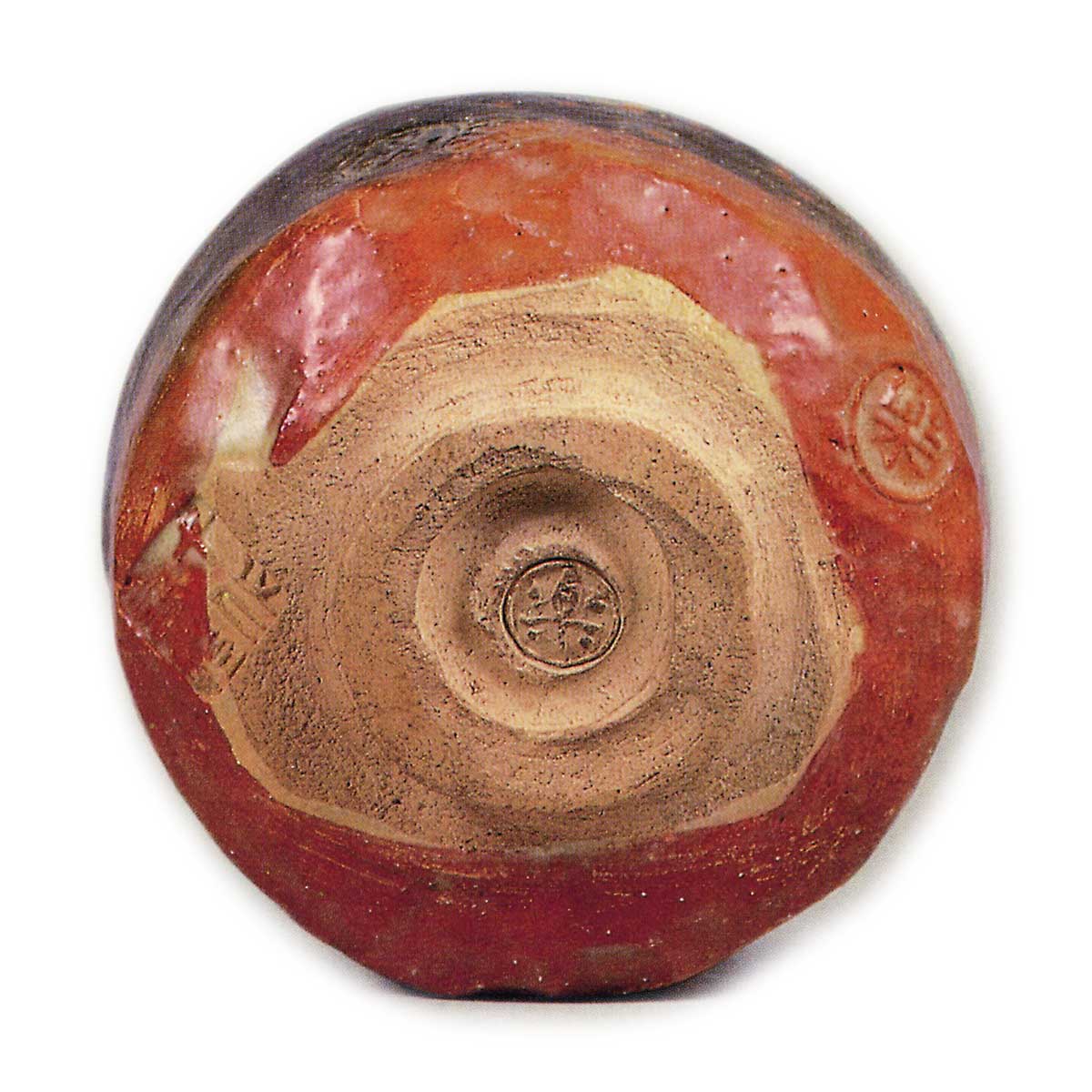
Height: 8.7 cm; Mouth diameter: 11.4 cm; Foot diameter: 5.2 cm
Raku Museum
This is a typical example of Dan-iri red Raku passed down through the Raku family, known as an “in-zushi” tea bowl.
The bowl rises with a slight flare from the waist to the rim, and the rim, shaped like five peaks, curves inward. The body and waist feature extensive use of the “kō” technique, and this style, which exudes a sense of power, is a characteristic of the “Iri” style. The footring is also somewhat tall, with a seal stamped in the center, leaving the clay exposed. A deep green fire-change pattern appears from the rim to the body, while the rest is fired to a bright red Raku, creating a vivid effect with red speckles scattered throughout the fire-change.
One seal is stamped on the interior, five on the exterior, and one on the footring. These represent all the seals Irī used during his lifetime: the seal commonly known as the “Mokuraku” seal on the waist, the “Raku Small Seal” in clerical script and the “Raku Seal” in running script (the “Suikō” seal) linked together on one side of the bowl’s lower rim, the large clerical script ‘Raku’ seal on the other side of the lower rim, the running script seal (known as the “Inkyū-ban”) at the center of the foot, and a square seal reading “Jūdai Kikai” on one side of the waist. Since he began using the “Inkyo-ban” seal after shaving his head and adopting the name “Inkyo” at the age of 51 in the second year of the Koka era, this tea bowl was likely made during the final nine years of his life, leading up to his death at the age of 60.