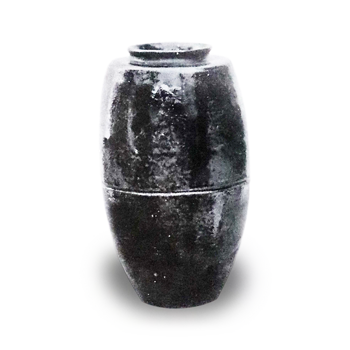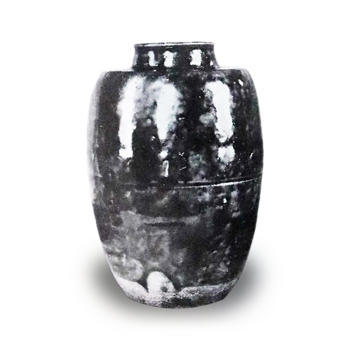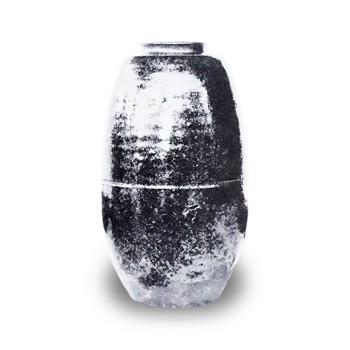
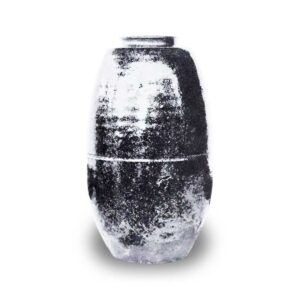
Old Seto—Daimeibutsu—Collection of Count Tadamichi Sakai
Name
This name derives from the fact that it was owned by Hasegawa Sōjin, who lived in Shimogyo, Kyoto. Sōjin served Oda Nobunaga and Toyotomi Hideyoshi through tea ceremonies. The Kokin Chajin Keifu lists him as a disciple of Murata Jukō, while the Chajin Taikeizu records him as a student of Takeno Jōō. According to unofficial historical records (folk histories), “Hasegawa Sōjin, commonly known as Genzaburō, He served Nobunaga and, during the Incident at Honnō-ji, sent a messenger to inform Hideyoshi. During Hideyoshi’s reign, he was granted a fief of 10,000 koku. He was appointed Gyōbu-kyō Hōin and took the title Shikibu-shōyū. Upon his death, he petitioned the Tokugawa Shogunate to have his fief divided among his three sons.”
Dimensions
Height: approx. 12.42 cm (4 sun 1 bu)
Body diameter: approx. 7.42 cm (2 sun 4 bu 5 ri)
Mouth diameter: approx. 3.48 cm (1 sun 1 bu 5 ri)
Base diameter: approx. 4.24 cm (1 sun 4 bu)
Rim height: approx. 0.52 cm (1 bu 7 rin)
Shoulder width: approx. 0.45 cm (1 bu 5 rin)
Weight: approx. 189 g (50 monme 4 bu)
Accessories
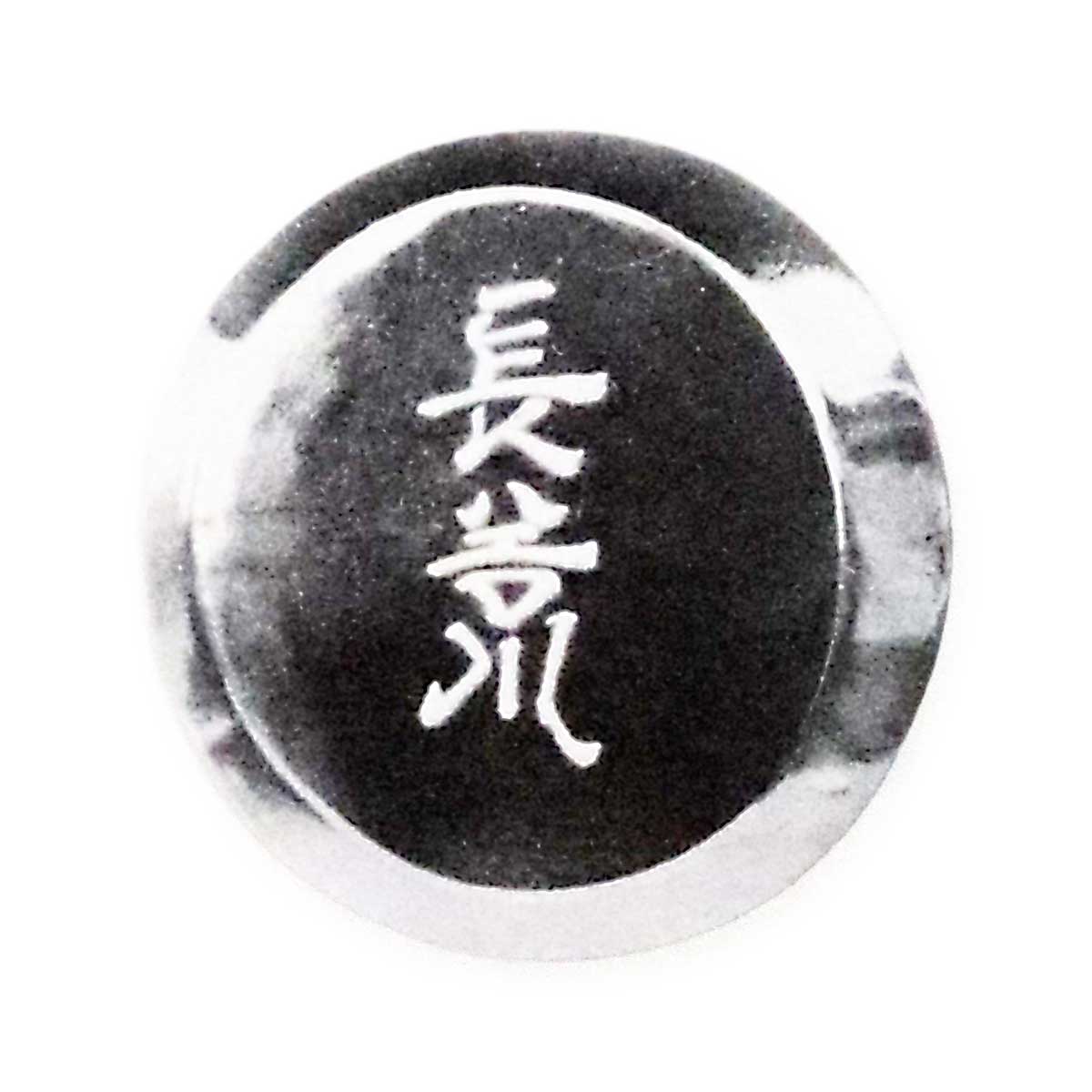
・Lid: 1 piece (Suga: an ivory lid with gold leaf or similar applied to the underside)
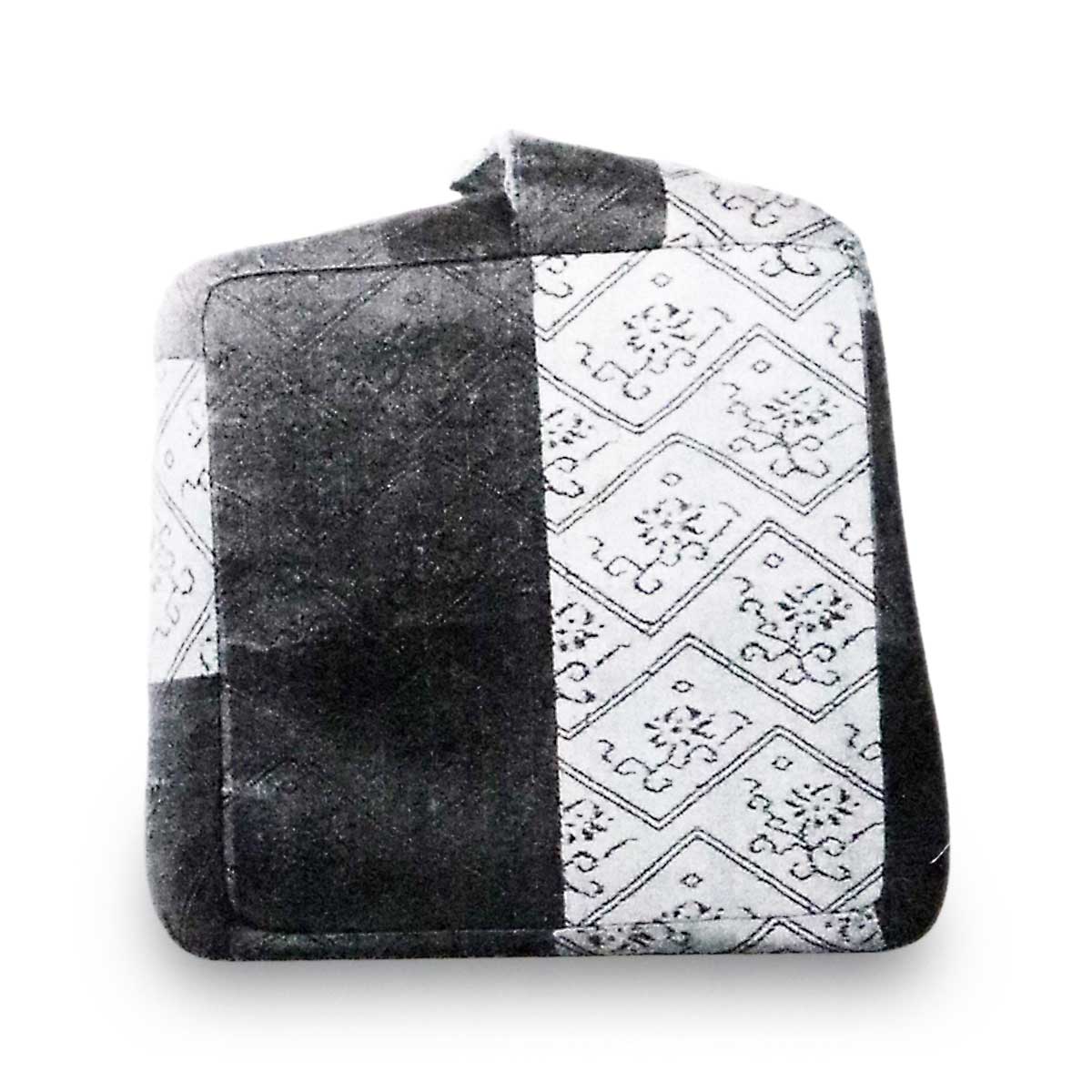
・Storage pouch (Omono-bukuro): white chirimen silk; cord is a purple “otsugari” (a type of knot)
・Covers (pouches): 3
1. Harada-gire: Cord tied in a “Kuzureki” style (lining: Tamamushi)
2. Inaba-Wakasa: Cord tied in an “Enshū-cha” style (lining: Tamamushi)
- Shimizu-gire: Cord tied in the Enshū-cha-style knot (lining: Kaiki)
・Storage box: Unfinished paulownia wood box
(Inscription on the box: “Hasegawa Koseto Bag”)
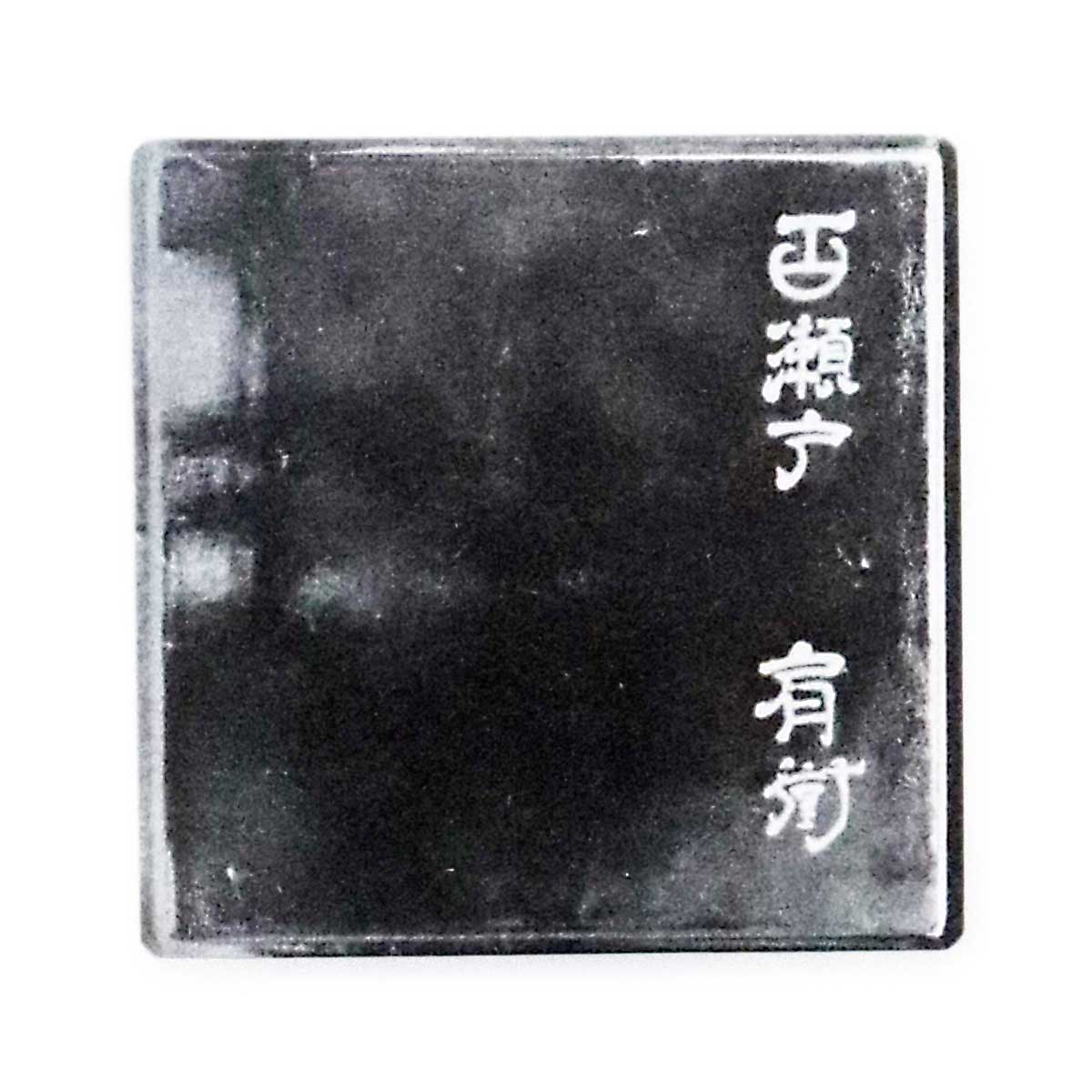
・Hikiya (wooden outer container for the tea caddy): Black lacquer finish (a type of Tame-nuri), with characters in gold powder
(Inscription on the box: “Hasegawa,” in the hand of Chaya Soko)
Pouch for the Hikiya: Dark tea-colored ground with the character for “longevity” (Jū) woven into the fabric; lining is peach-colored cloud-and-crane satin (Unkaku-dansu); cord is Enshū-cha braided cord
・Inner box: Black ji-nuri lacquer, gold-powder lettering, with metal fittings (kanmae) on the front
(Inscription on the box: “Kose-to Katatsuki,” written by Chaya Sōko)
・Outer box: New, unfinished paulownia wood box
・Accompanying document (written note): 1 copy
“The Hasegawa Katatsuki is the second of the three ‘Ōseto tea caddies.’ The other (Ōseto) one is the Hirano Katatsuki, which had long been in the possession of Chaya Shirojirō. He received it as a gift upon taking up his post as Kyoto Shoshidai (Governor of Kyoto). Since he paid the equivalent of 20 oban coins to acquire it, it should be understood that he received this Hasegawa Katatsuki as a gift upon his retirement (or request for leave) from official duties.”
Miscellaneous Notes
Katatsuki, from Shimogyo, Kyoto; Hasegawa Sōji.
(From the Higashiyama Go-mono Uchi Betsuchō)
[24]
Hasegawa Katatsuki
Exhibited at the Kitano Daichayū on October 1, Tenshō 15 (1587).
Owned by Hasegawa Munehito. Recorded as “Katatsuki Sego.”
(From Illustration of the Kitano Daichayū, held by Kitano Shrine)
The Hasegawa Katatsuki, along with the Ikoma Katatsuki and the Hirano Katatsuki, is one of the “Three Great Oseto” Meibutsu.
(From Kansei 2nd Year Diary and Notes)
The Oseto tea caddies (the four pieces: Muragumo, Ikoma, Hasegawa, and Kamiya Katatsuki) are inextricably linked to oral traditions (secret teachings), and one should learn about them through these teachings.
(From Chronicles of Tea Caddies)
Hasegawa Katatsuki. Oseto. Long ago, Kōra Bungo purchased it for 250 gold coins; it is now in the collection of Chaya Shirojirō (Shirojirō). It has been sought after by generations of the Chaya Sōko family and stands 4 sun 1 bu (approx. 12.42 cm) tall.
(From Doubts Regarding the Way of Tea: Notes from Between the Clouds)
Hasegawa. Kōra Bungo purchased it for 250 gold pieces; later, Chaya Sōko acquired it and still possesses it today. Jijisaya. Along with Hirano, Ōseto (handed down from the Lord of Kashiwa and the Kaga Maeda family), and Ikoma, it is one of the “Four Great Ōseto of the Realm.”
(From Sekken-sō by Toda Ro’in)
Hasegawa tea caddy. Old Seto. Owned by Chaya Shirojirō.
(From Famous Meibutsu of the Sen Family’s Revival)
Hasegawa. Ōseto. Originally owned by Hasegawa Saburōbei; currently owned by Chaya Shirojirō. Weight: 51 monme (approx. 191.25 g). The box is black lacquered. Old Seto. The handle is black lacquered. (Includes the characters “Hasegawa,” dimensions, and an illustration of the tea caddy).
(From Illustrated Catalog of Meibutsu by Kusama Waraku)
March 21, Meiji 29 (1896): Memorial tea ceremony marking the 250th anniversary of the death of Sōfu Kōji (Kobori Enshū). Host: Kobori Shōkai.
Guests: Ōta Sōtoku, Kizuka Sōgi, Date Heibei, and a certain Maeyama
Hanging Scroll: A horizontal scroll bearing the two large characters “孤桂” (Kokkei), a calligraphic work by National Preceptor Dōtō
Flower Vase: Single-layered cut bamboo (made by Sōfu, inscribed with “邪”); flowers: Nizaemon camellia
Tea Jar: Old Seto Hasegawa Katatsuki. The pouch is a Kiyomizu-kirī style; two additional replacement pouches are included
Tea Bowl: Mishima Konbuki (with an inscription by Kanamori Sōwa)
(Note) Kobori Masakatsu, the host of this tea gathering, borrowed the Hasegawa Katatsuki from the Sakai family for use on this occasion.
(From Kokin Chayūshū)
History of Ownership
This tea caddy was originally owned by Hasegawa Sōjin, a resident of Shimogyō, Kyoto, and was exhibited at the Kitano Grand Tea Ceremony on October 1, Tenshō 15. Subsequently, Kōra Bungo purchased it for 250 gold pieces; it later came into the possession of Chaya Shirojirō (Nakajima Sōko) and was passed down through generations within that family. Sakai Tadatomi, lord of the Wakasa-Obama domain, acquired it while serving as Kyoto Shoshidai (Governor of Kyoto), and since then, it has been a family treasure (shimono) of the Sakai family.
Record of Actual Viewing
On April 25, Taisho 8 (1919), I had the opportunity to view this piece in person at the residence of Count Sakai Tadamichi in Yarai-cho, Ushigome Ward, Tokyo.
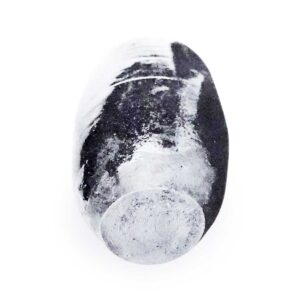
The rim is tight, the shoulders are sharply defined and powerfully flared (katatsuki), the body is tall, and a single thick, sunken ridge runs around the body.
There is one repair (mending) on the rim. Beneath the ridge on the body, there is a single small hole resembling a wormhole. Overall, the purple glaze is dotted with black glaze; particularly within the areas where the black glaze has pooled thickly (pools), flashes of purple glaze are visible, presenting a magnificent, marbled appearance (a highlight). From the lower rim (near the base) downward, the grayish-brown clay body is visible, and the height of this exposed section is uneven. The thread mark (separation mark) on the base is thin; within it, there is one small stone crack (a mark where a stone has burst), and there are several instances of kiln sticking (marks where the piece adhered to a neighboring one in the kiln). The shape, glaze color, and craftsmanship are exceptional, and it most closely resembles an “Ikoma Katatsuki.” The only differences are that this Hasegawa Katatsuki has a slightly narrower rim than the Ikoma and a slightly higher koshiki (the raised rim below the mouth). Both are sturdy and substantial, making them magnificent tea caddies with a majestic presence.