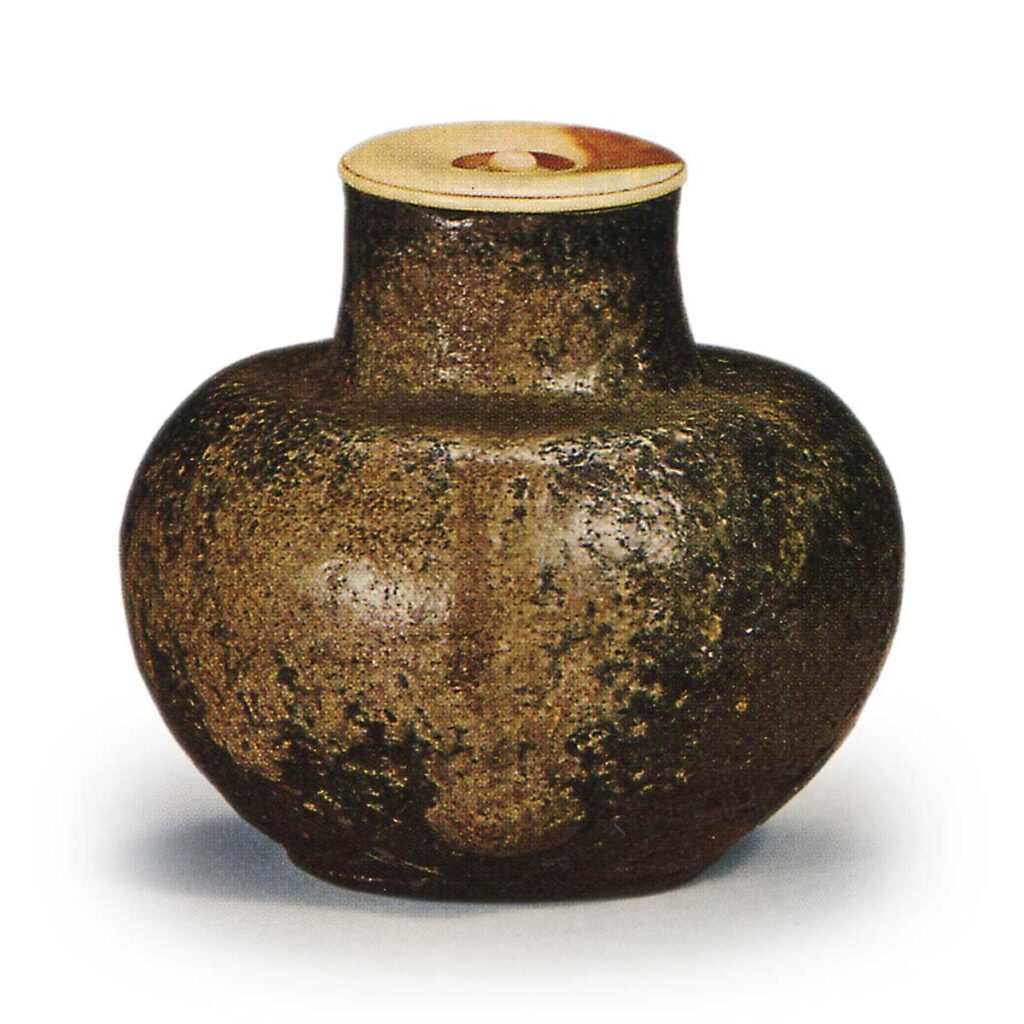
Ibe, Revival Meibutsu
Accessories
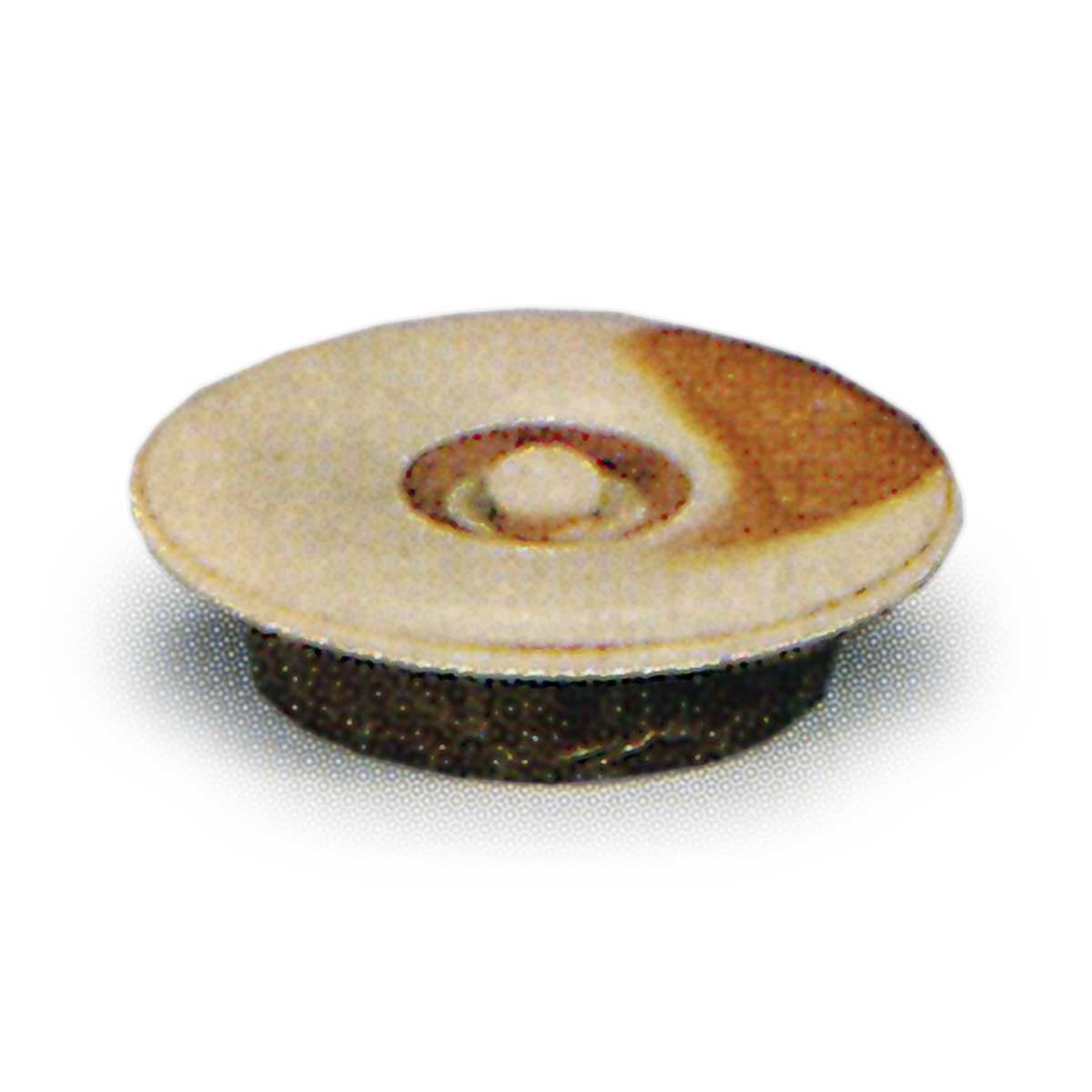
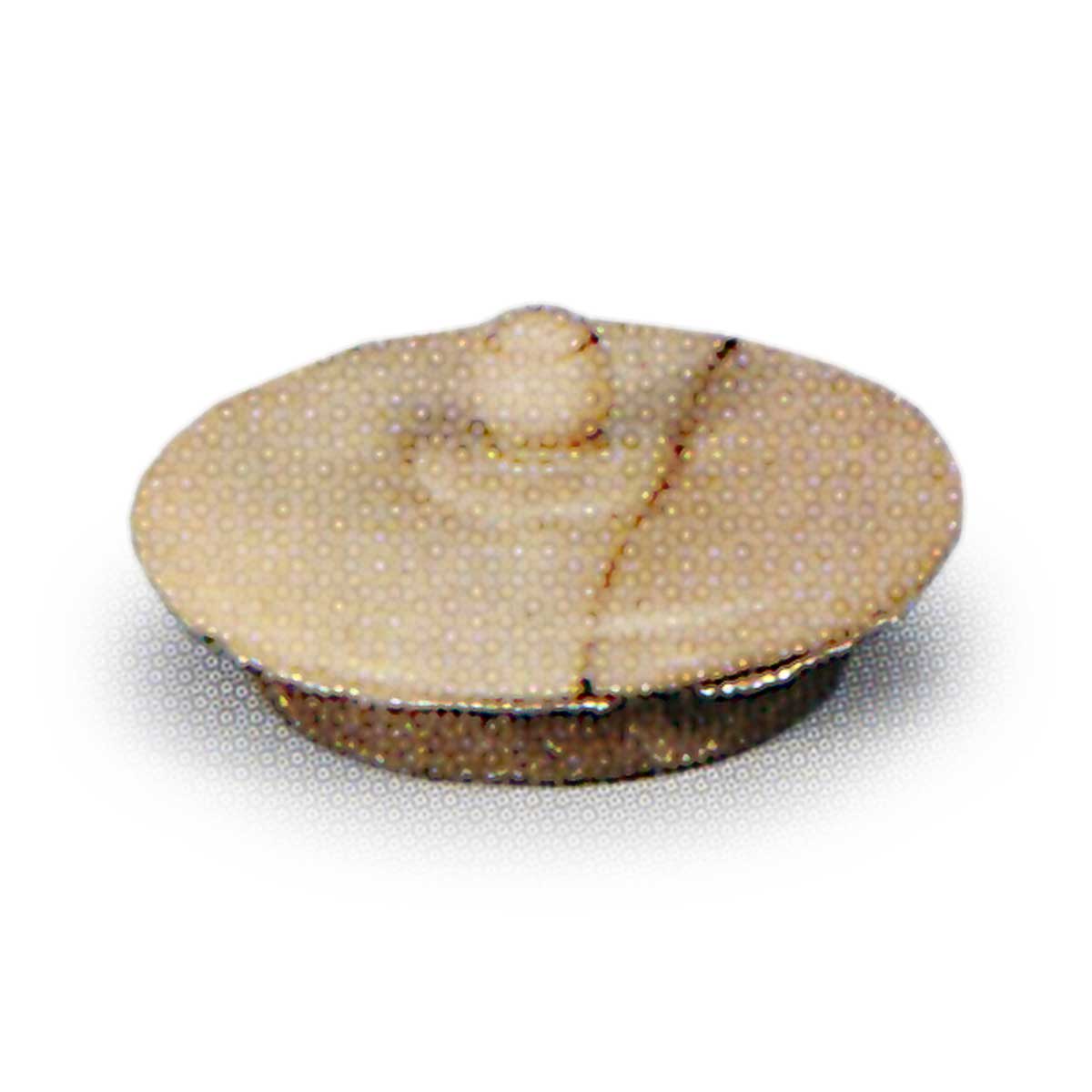
Lids: 2 (Inner: 1) Nest
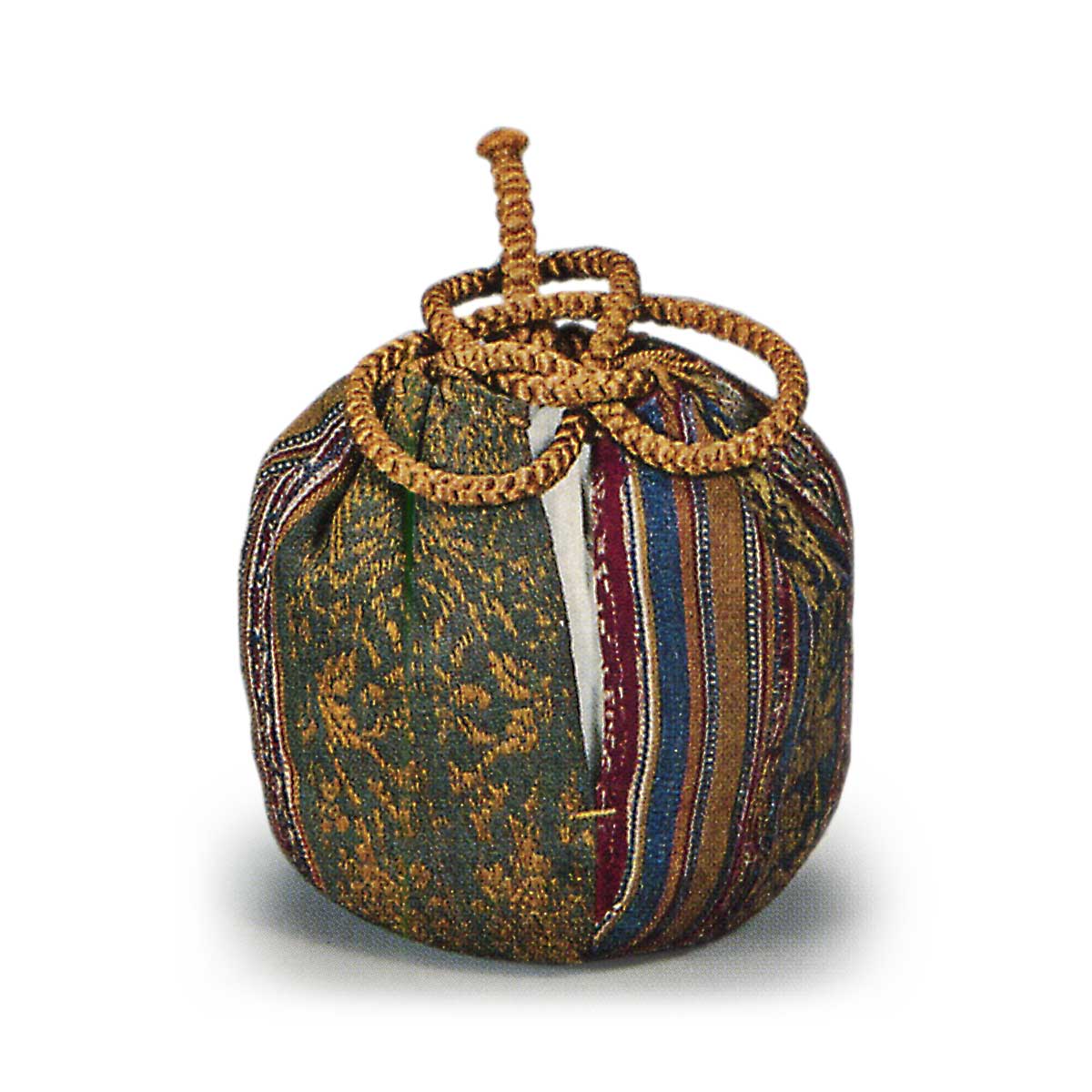
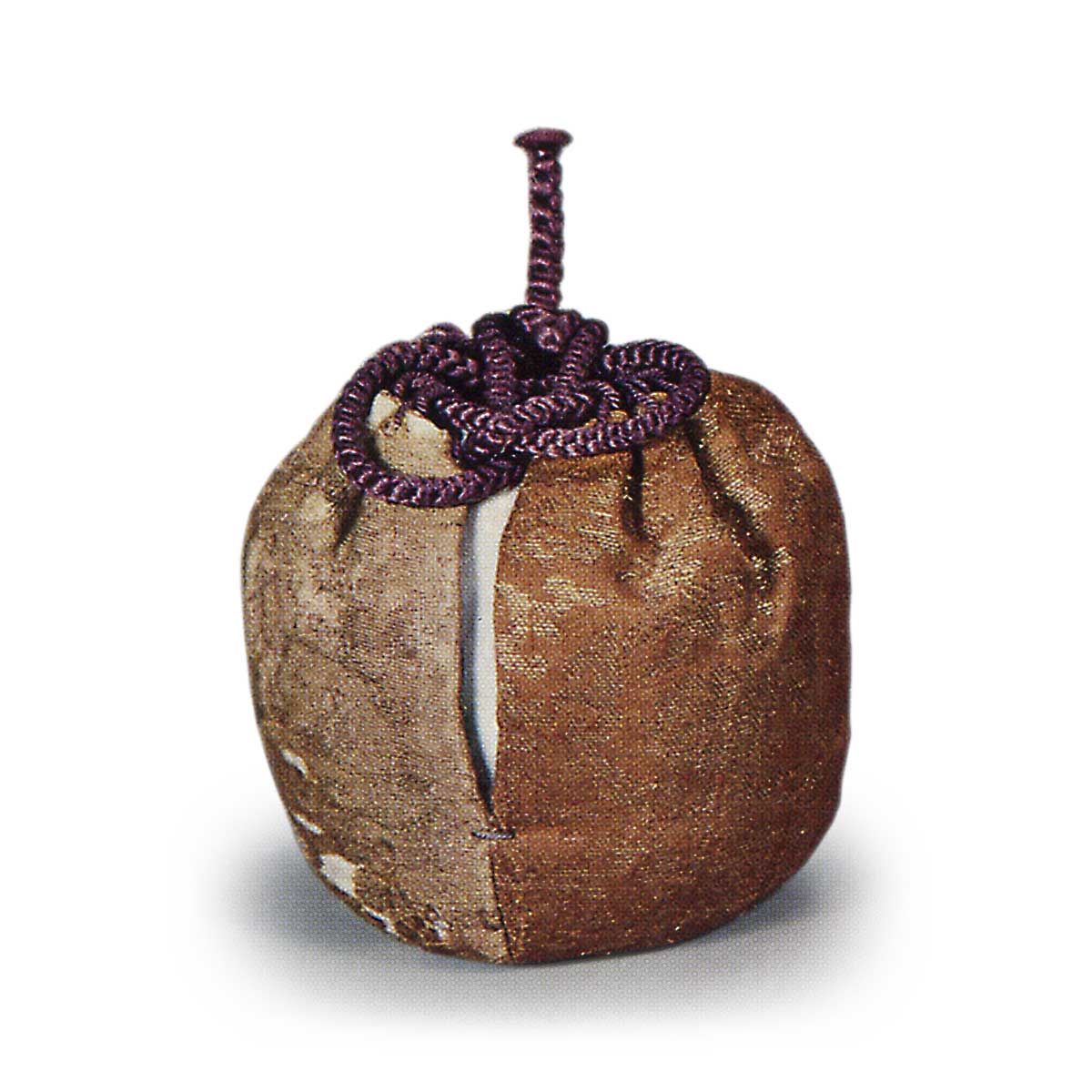
Cover: 3 Cover Boxes: 2 Paulownia, Black Scratch-Finish Lacquer, Vermilion Lacquer Inscription: Paulownia, Black Scratch-Finish Lacquer, Inscription
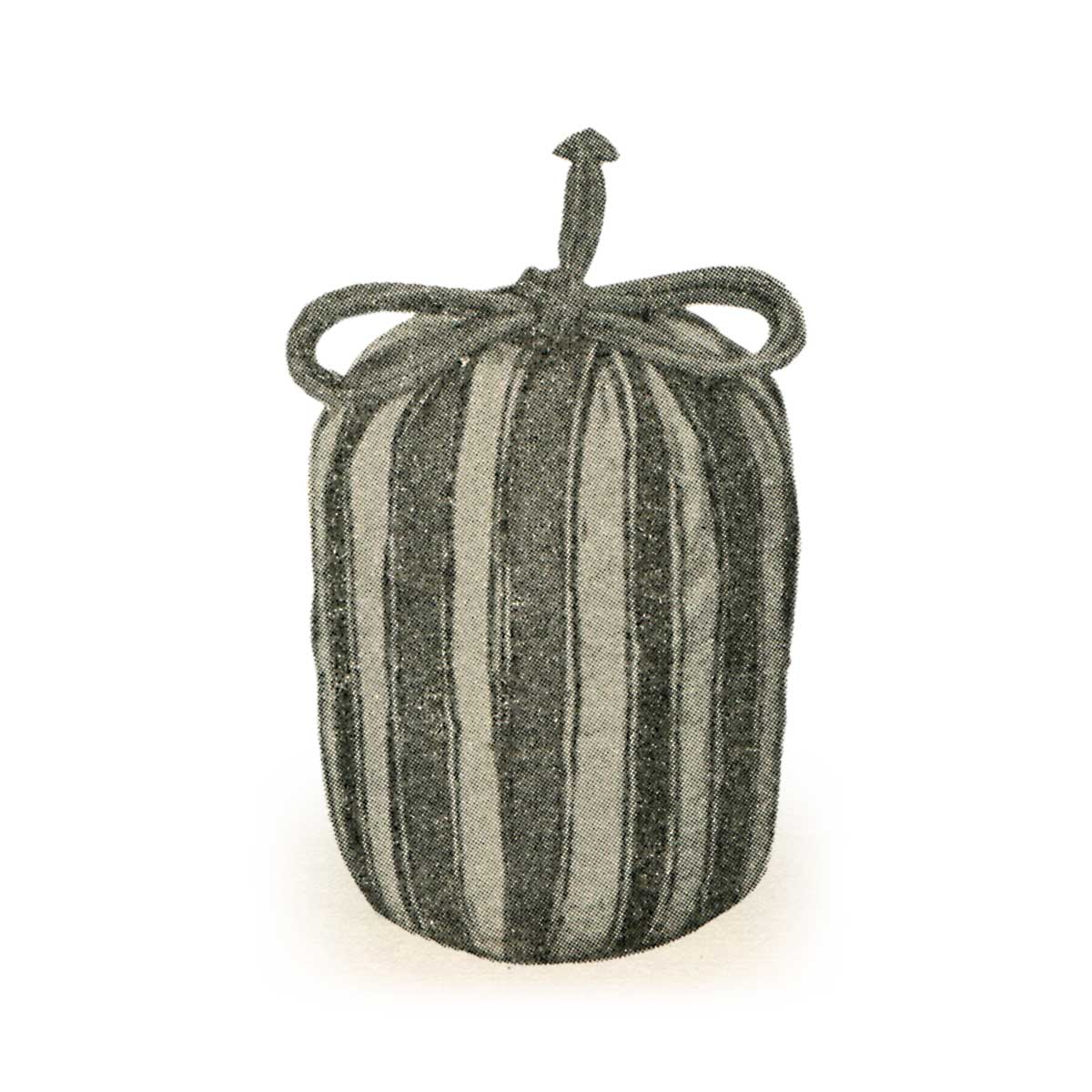
Hikiya: 1 Hikiya Cover: Vertical Stripe Sarasa
Inner Box: Paulownia, Black Scratch-Finish Lacquer, Gold Powder Characters, Inscription
Outer Box: Inscription by Matsudaira Yukikawa
Transmission History
Jyumyoin → Hosokawa Etchū-no-kami → Matsudaira Norimura → Hotta Sagami-no-kami → Matsudaira Fumai
Recorded In
Kokin Meibutsu Ruishu, Meibutsu-ki, Shokke Meiki Shū, Rinpō Kamiryū, Meibutsu Mokuri Monjo, Kokin-roku, Fushimiya Kokusho, Matsudaira Fumai Den, Daien-an Chakai-ki, Hōi-an Bunko Kō Dai-kyū-gō
Dimensions
Height: 6.3 cm, Mouth Diameter: 2.2 cm, Body Diameter: 6.5 cm, Base Diameter: 3.4 cm, Weight: 98 g
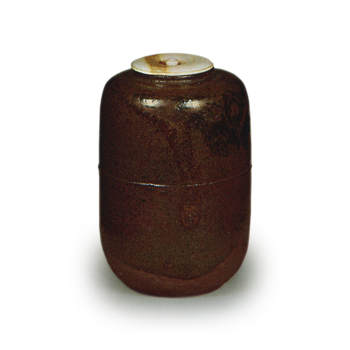
A round jar-shaped tea caddy is rare from the Bizen Ibe kiln, and alongside Seki-dera, these two are cited as Meibutsu.
Who could have commissioned this fine tea caddy, shaped like a Chinese ware piece, from the Bizen kiln known for its rough, unrefined work? Perhaps it was Enshū.
That the sesame glaze fell and settled so splendidly over such a large portion of this piece, in a Bizen kiln where glazing was not expected, is seen as a remarkable example of achievement within a kiln where human intervention should have been impossible. Beyond these two tea caddies, it is thought that the kiln contained an unimaginable number of tea caddies, suggesting a strangely perfect firing.
Three dust covers are included. All are well-matched.
Matsudaira Yukikawa was a master of the tea ceremony, renowned for his refined taste and artistic sensibility.