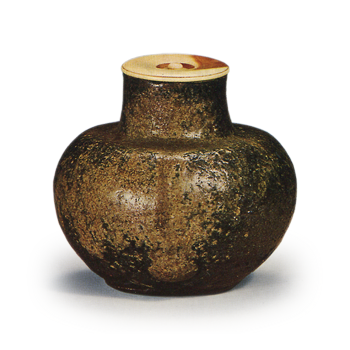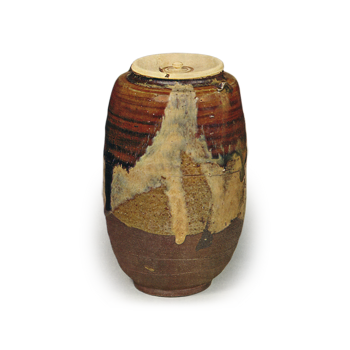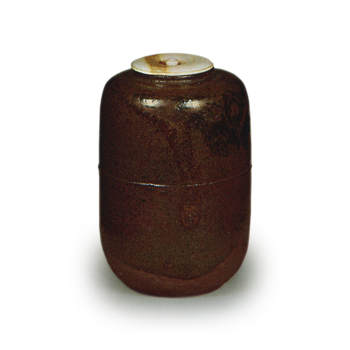
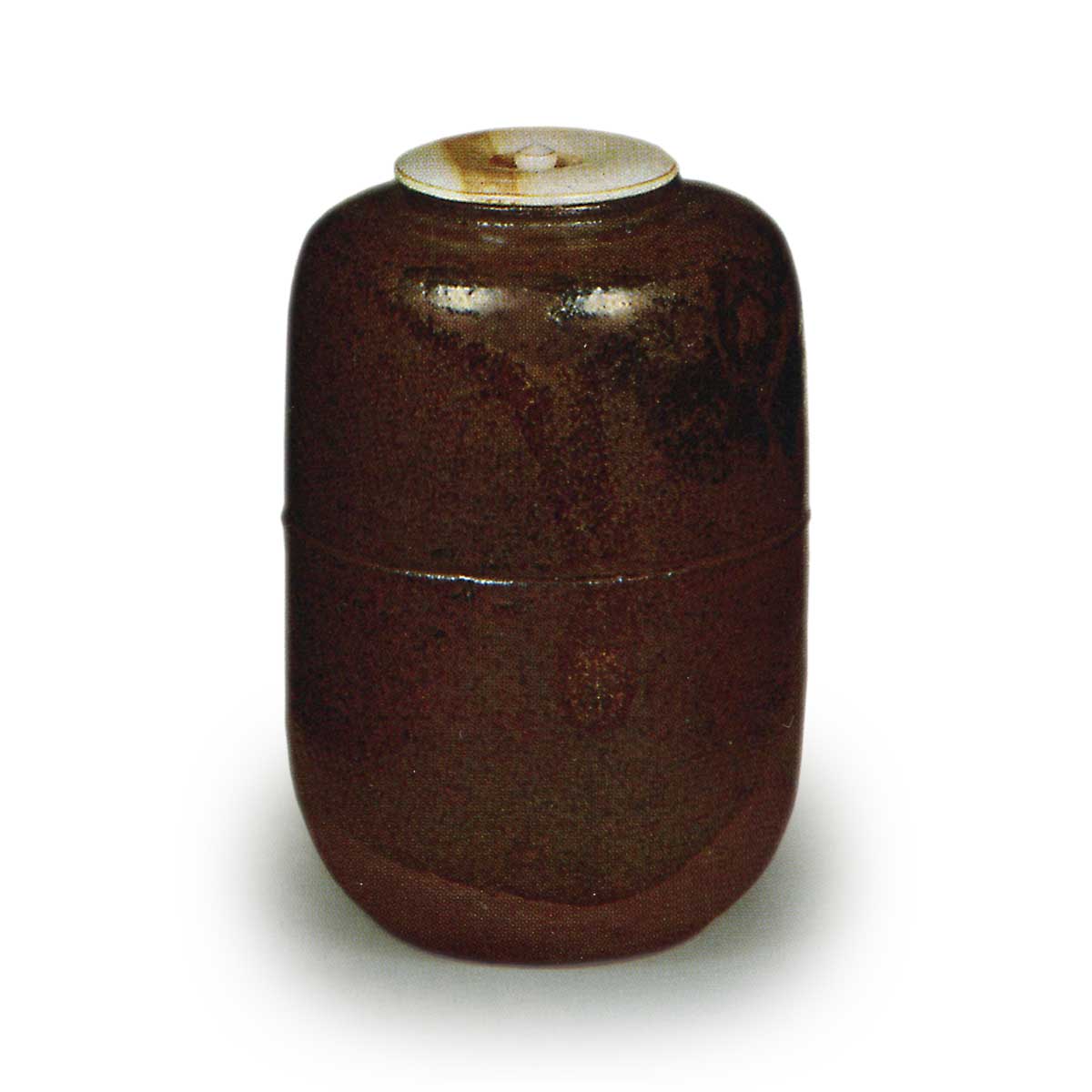
Takatori, Meibutsu of the Middle Period
Accessories: Lid, one nest
Lid Box: Paulownia, unpainted wood; Inscription: Brushwork by Matsudaira Fumai
Four Covering Cloths: Covering Cloth Box: Paulownia, unpainted wood; Inscription: Brushwork by Matsudaira Fumai
Hikiya: Persimmon
Inner Box: Paulownia, unpainted wood; Inscription: Brushwork by Kobori Enshu
Outer Box: Paulownia, unpainted wood; Inscription: Brushwork by Matsudaira Fumai
Provenance
Kobori Enshū → Itakura Ise-no-kami → Tanuma Shudō → Matsudaira Fumai
Recorded In
Unshū Zōchō (Unshū Inventory), Kokon Meibutsu Ruishū (Collection of Famous Objects Through the Ages), Meibutsu Ki (Record of Famous Objects), Meibutsu Mokuri Monjo (Notes on Appraising Famous Objects), Meibutsu Ki Furoku (Appendix to the Record of Famous Objects), Mokuri Sō Furoku (Appendix to the Notes on Appraisal), Kamio-ke Dogu Meisai Ki (Kamio Family Utensil Inventory), Kankyū Gūhitsu (Random Notes from Leisure Hours), Shokke Meiki Shū
Dimensions
Height: 7.5cm Mouth Diameter: 2.7cm Body Diameter: 5.0cm Base Diameter: 3.0cm Weight: 72g
Though Kobori Enshū had several tea caddies fired at the Takatori kiln in his distinctive cut shape and selected for Meibutsu, kiln records indicate thousands were actually produced.
This hand-pillow-shaped tea caddy differs from the typically admired pieces with many striking features. Its wabi glaze is applied delicately, and the cascading glaze pattern stops midway on the body, just beyond a single indentation at the waist. Enshū selected this piece from among many caddies for its quiet, almost mysterious appearance.
The choice of cover cloths, specifically selecting Meibutsu like Tomita-kiru and Taishikanmichi, and pairing them with a red-haired cloth of distinctive texture, is another unexpected combination likely reflecting Enshū’s taste.


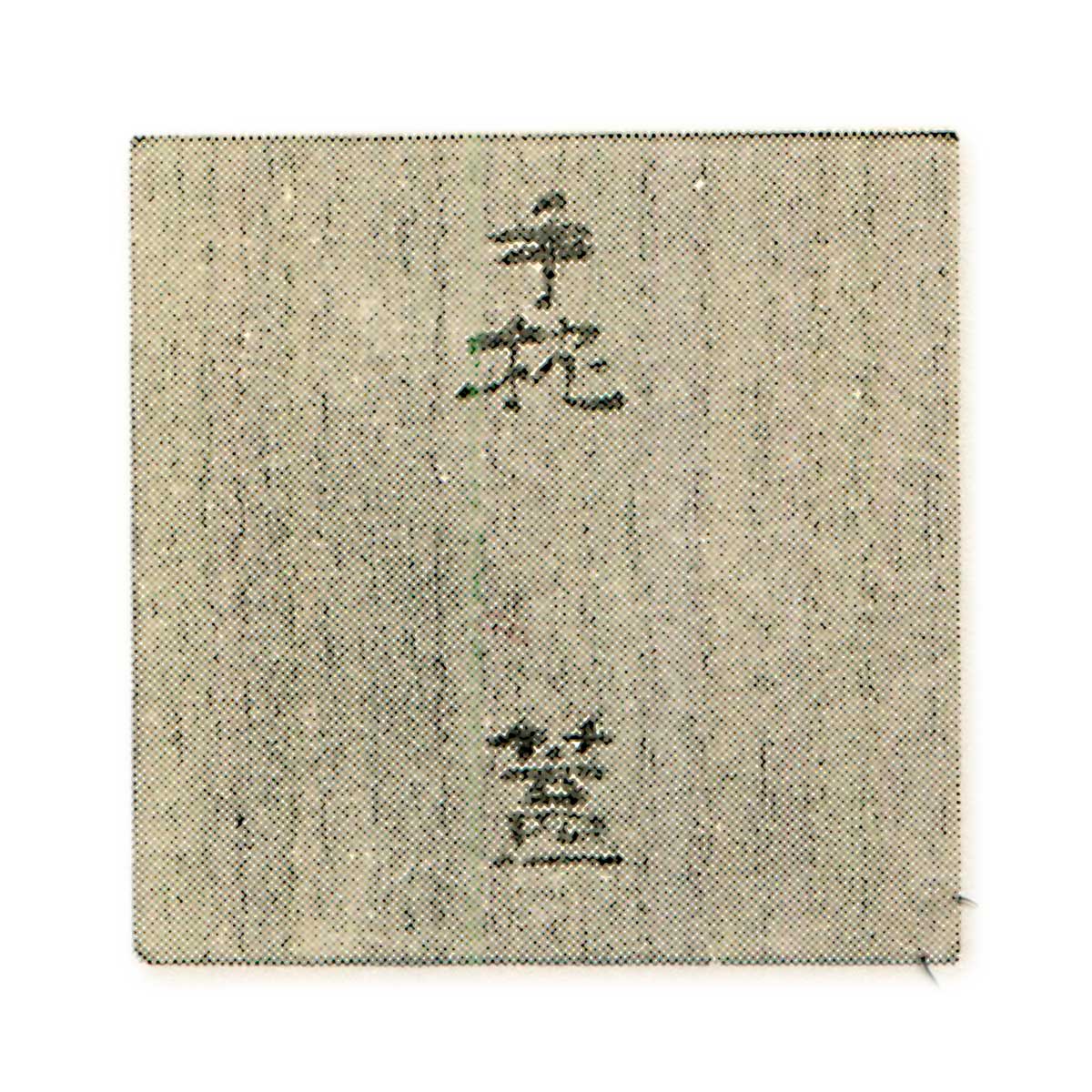
Inscription: Written by Kobori Enshū
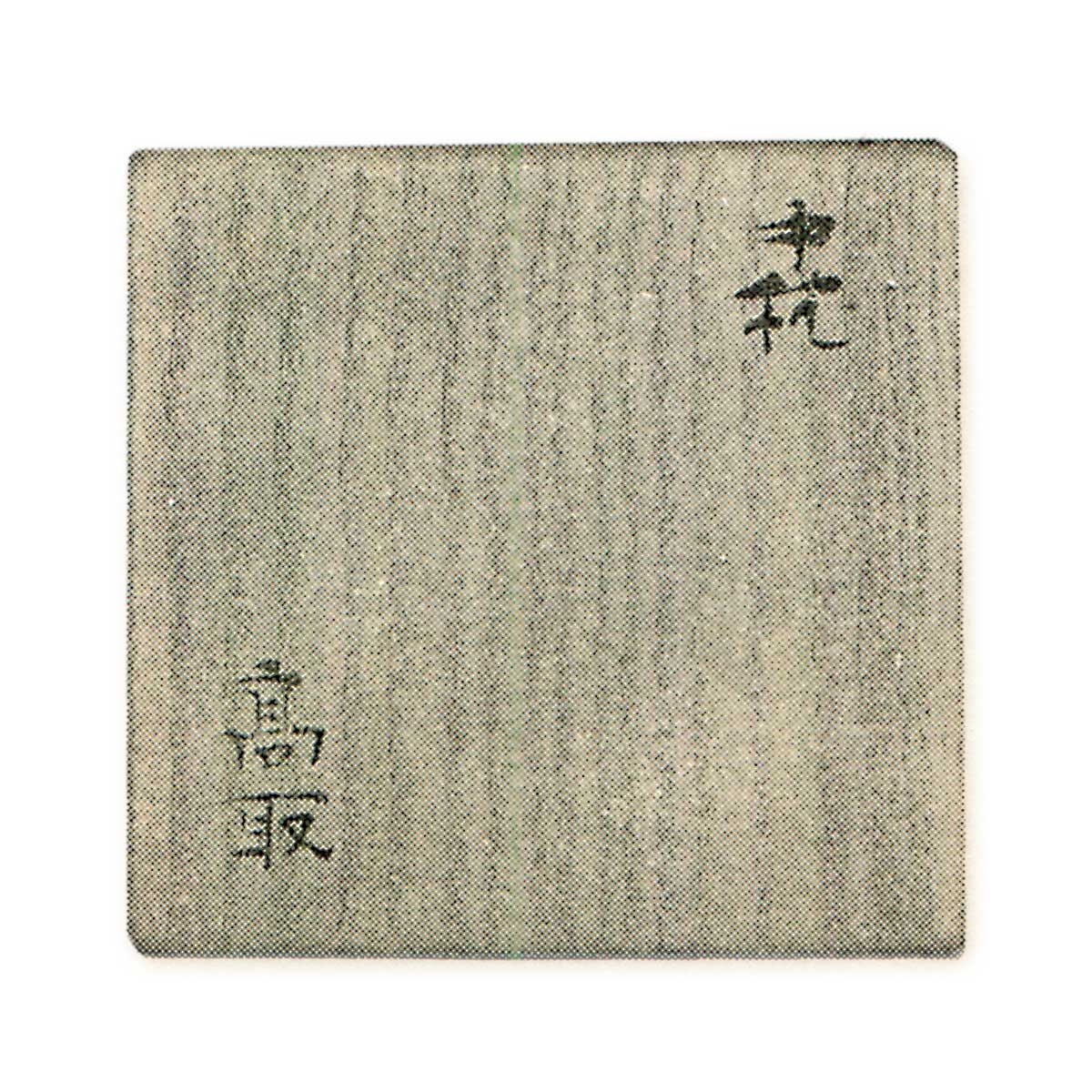
Inscription: Written by Matsudaira Fumai
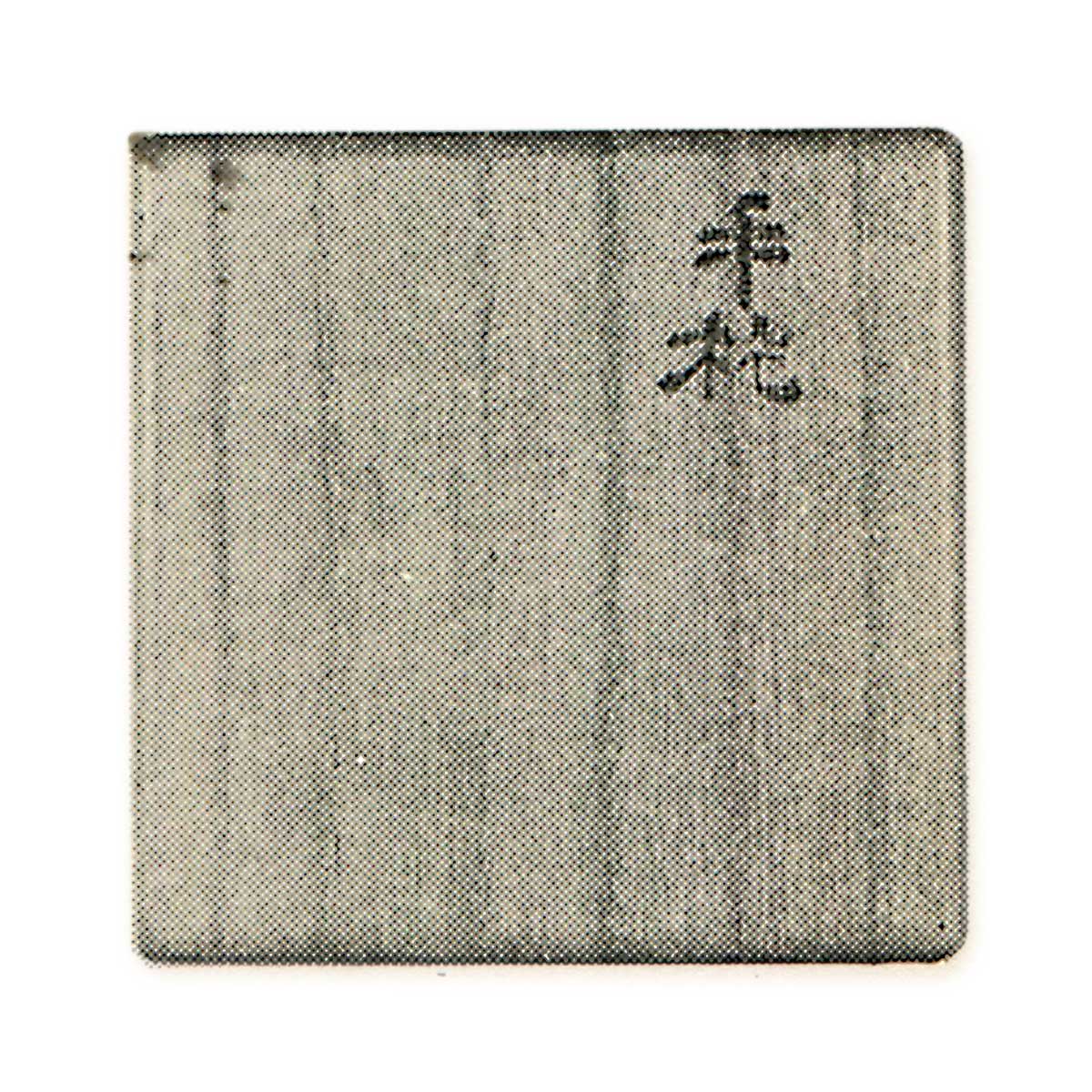
Inscription: Written by Matsudaira Fumai
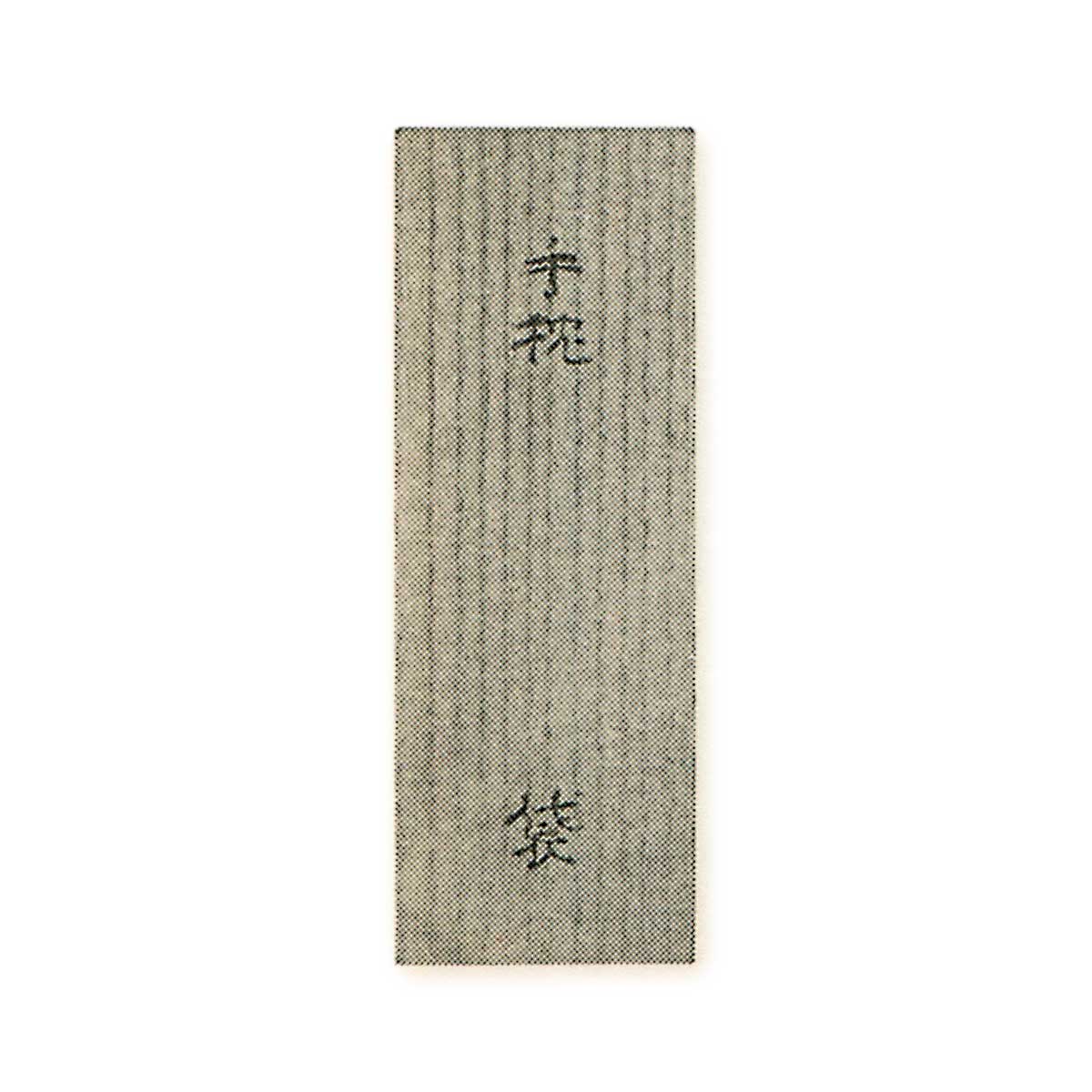
Inscription: Written by Matsudaira Fumai