14th century
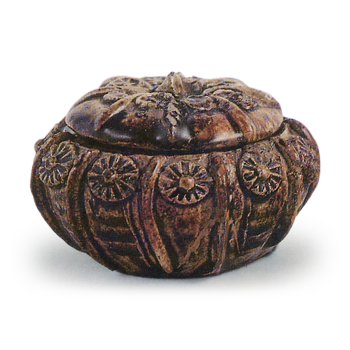
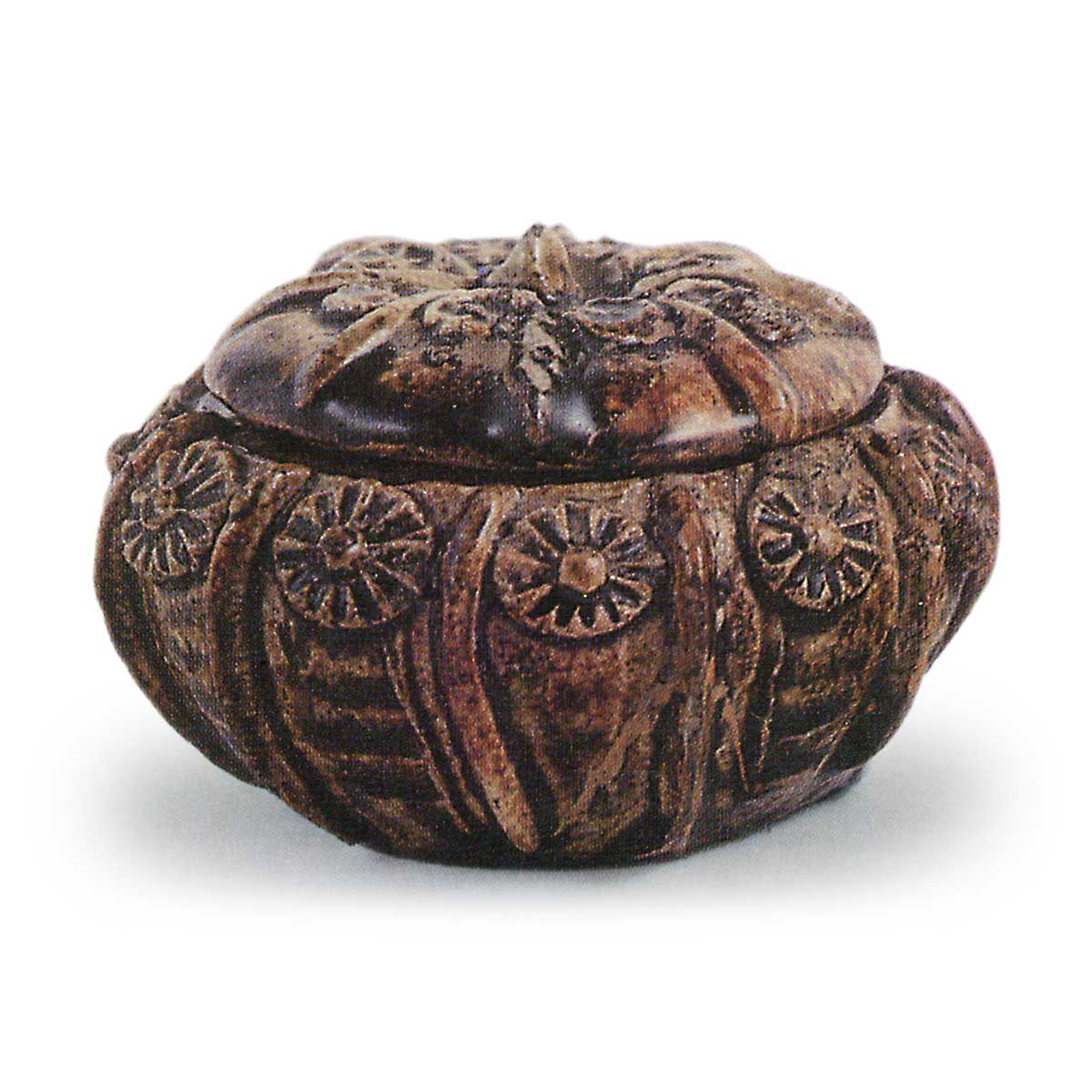
(Left) Excavated from Kilgadou Kiln, Seto City, Aichi Prefecture, Japan
Total height 5.5cm, mouth diameter 3.05cm, body diameter 8.4cm
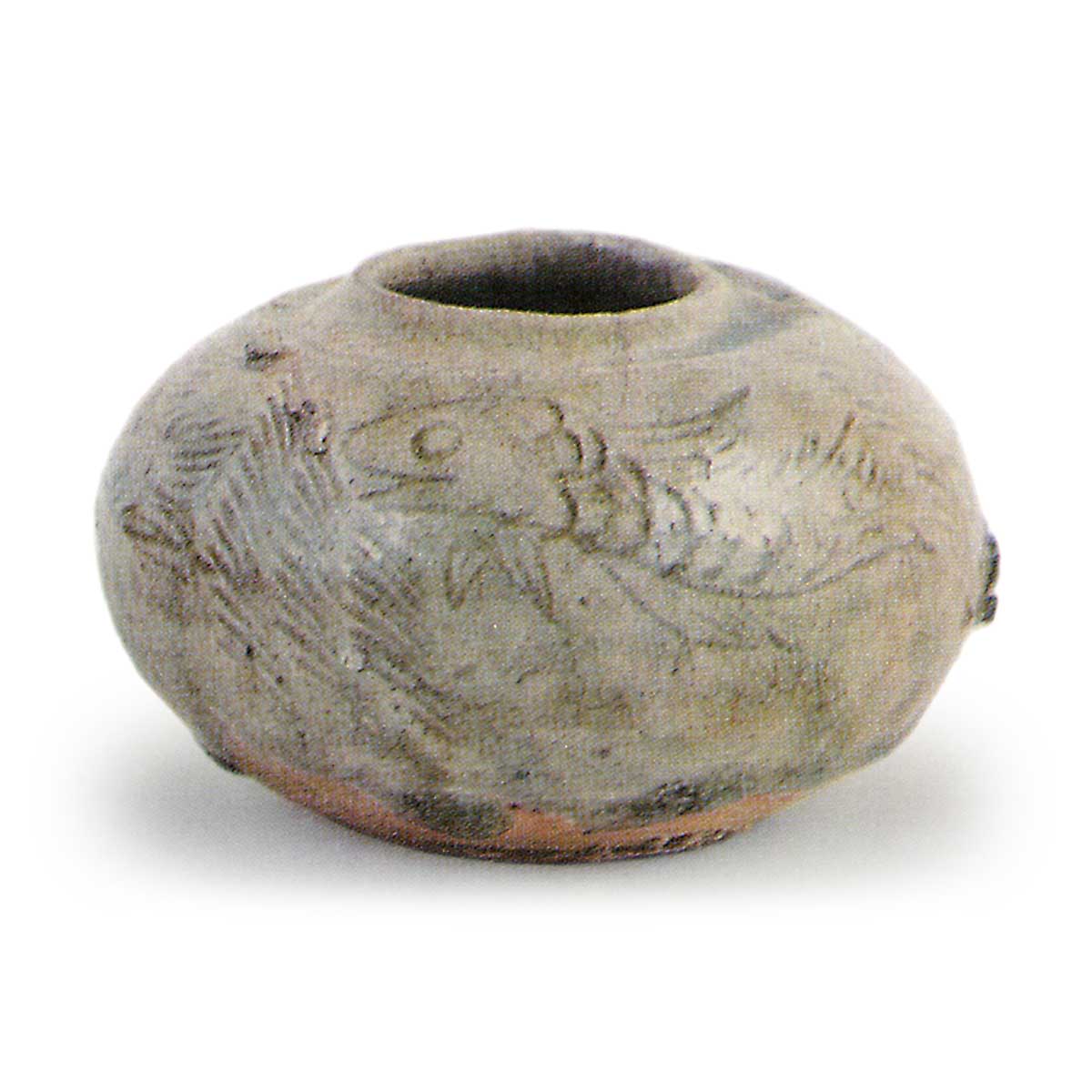
(Right) Excavated from Haibara, Haramachi, Seto City, Aichi Prefecture, Japan
Total height 4.4cm, mouth diameter 2.9cm, body diameter 6.3cm
The iron-glazed joint on the left is a relatively large piece decorated with pasted floral motifs from the peak of Koseido at the end of the Kamakura period (1185-1333). The body of this water-glazed vase has large folds. Twelve thin clay cords are pasted vertically on the body, and a chrysanthemum flower design made in a mold is pasted between them. The lid has a pointed tip in the center of the upper surface, and eight clay cords are pasted in a radial pattern with a chrysanthemum flower design in between them. The iron glaze has a brownish-brown color, and the recessed shafts have a blackish-brown luster, giving them a varied appearance.
The right goshi has lost its lid, but judging from the concavity of the shoulder, it goes without saying that a lid was made for it. It has a painted fish wave pattern on the shoulder. The design consists of three fish motifs in a familiar brushwork, with a wave pattern filling in the gaps between the three fish motifs. The design is typical of the fish wave pattern of the late Kamakura period. The ash glaze has a vivid light green color and is very effective.