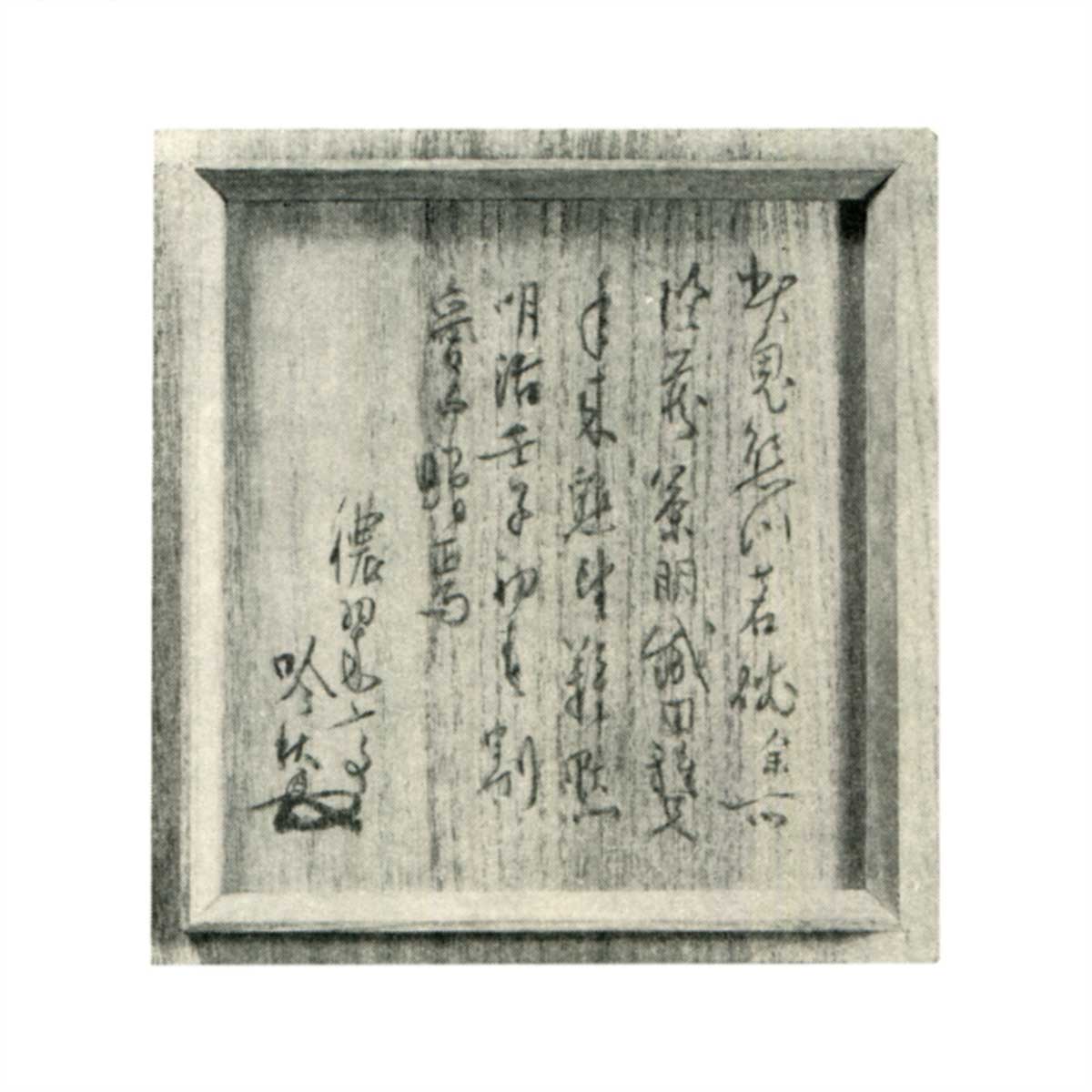
Attachment Box, calligraphy by Kobe Bunzaemon
Attributed to Kobe Bunzaemon of Bishu – Oda Tokubei (late Meiji era)
Dimensions
Height: 7.6-8.5cm Bowl diameter: 12.2-13.2cm Stand diameter: 5.0cm Height: 0.8cm Weight: 340g
The name Kumagawa comes from the port of Sobaepo, Kumagawa County, South Gyeongsangdo. This was the base for trade between Japan and Korea during the Muromachi period (1336-1573), and certain types of tea bowls brought in by ship from this port were referred to as “Kumagawa wari no chawan” or “Kumagawa no chawan” (tea bowls from Kumagawa).
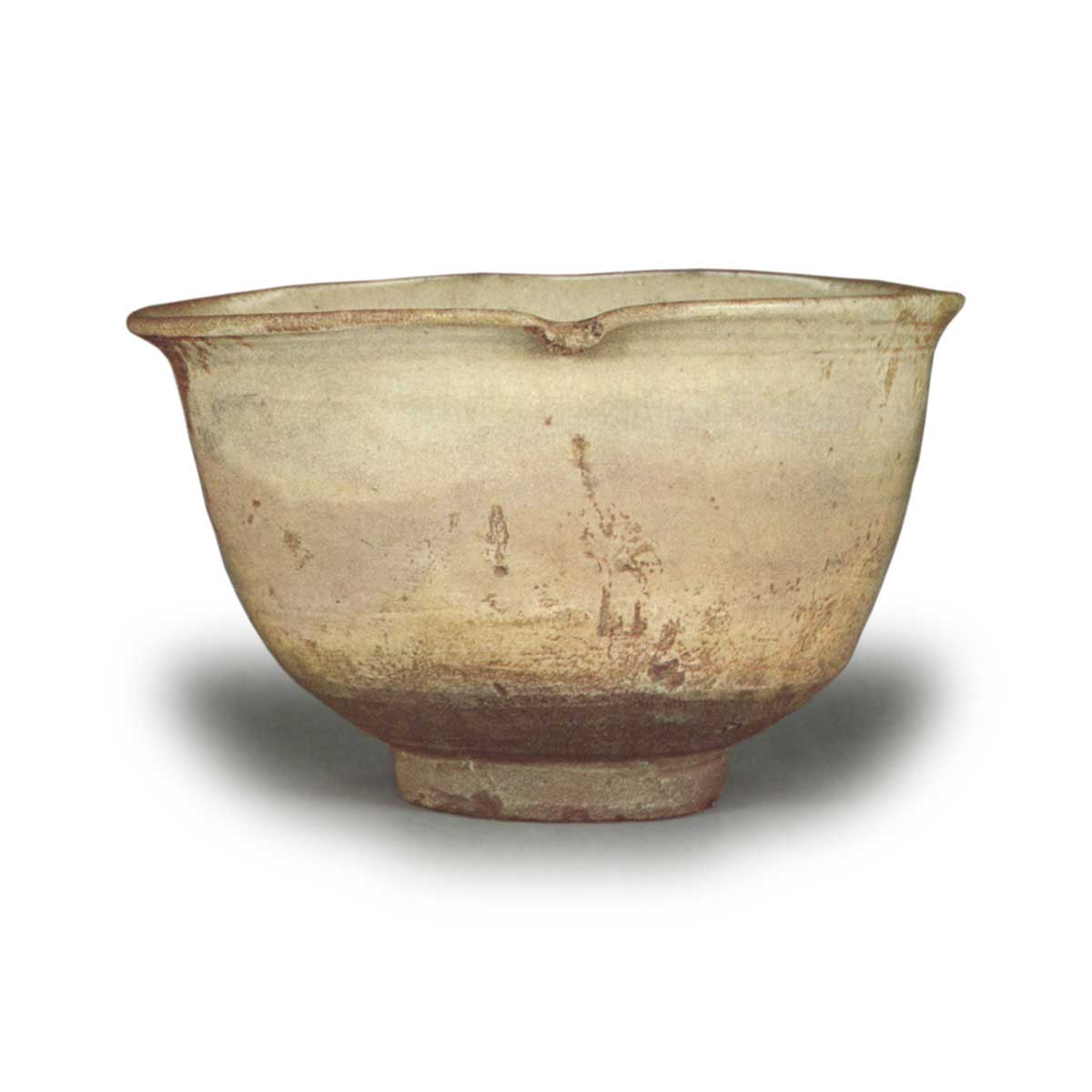
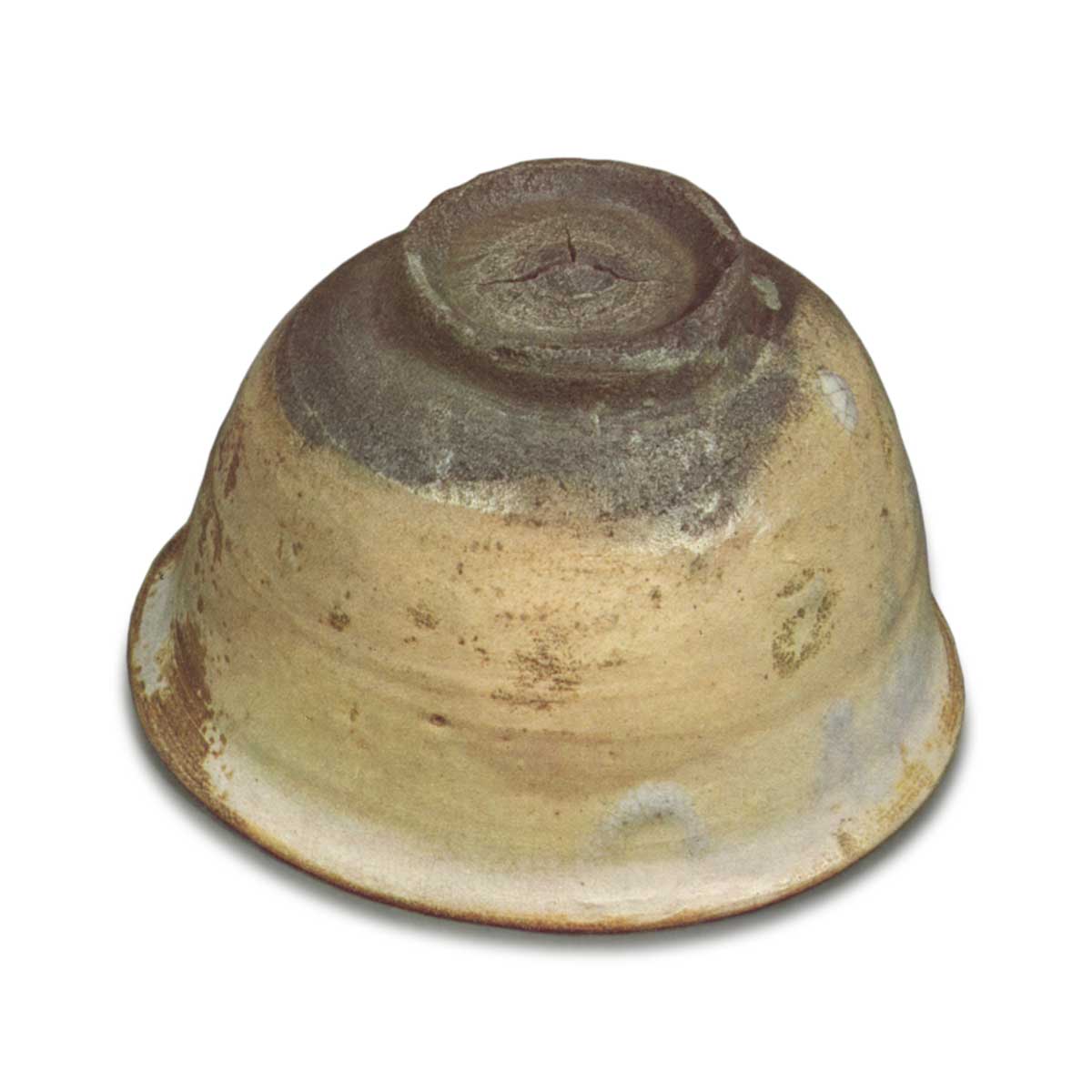
The bowls are usually made of iron-rich clay similar to that of Japanese karatsu, and are usually plump and warped at the edges. Since a yellowish glaze is applied to this bowl with a ladle, the glaze sometimes breaks, and this is called “hima” (fire), which was prized by tea masters. The reason why this tea bowl is called “Onikumagawa” is because it has a stronger and more dynamic style than the next Makumagawa (meaning “authentic Kumagawa”).
The large and imposing height and the creases in the chiseled surfaces are the hallmarks of Onikumagawa. There is a twist like a pinch out on the rim, and the roughness of the glaze surface can be seen under the twist, which looks like a standing crane, hence the name “Tachitsuru.
箱 题款 神户文左卫门笔