Dimensions
Height: 10.2 cm, Mouth diameter: 13.3 cm, Foot diameter: 7.7 cm, Foot height: 0.9 cm, Weight: 710 g
Collection: Umezawa Memorial Museum, Tokyo
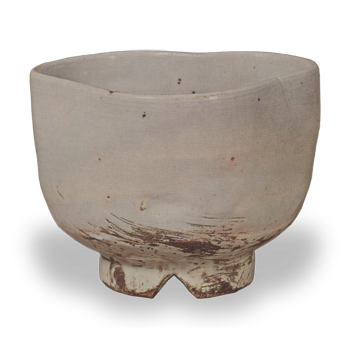
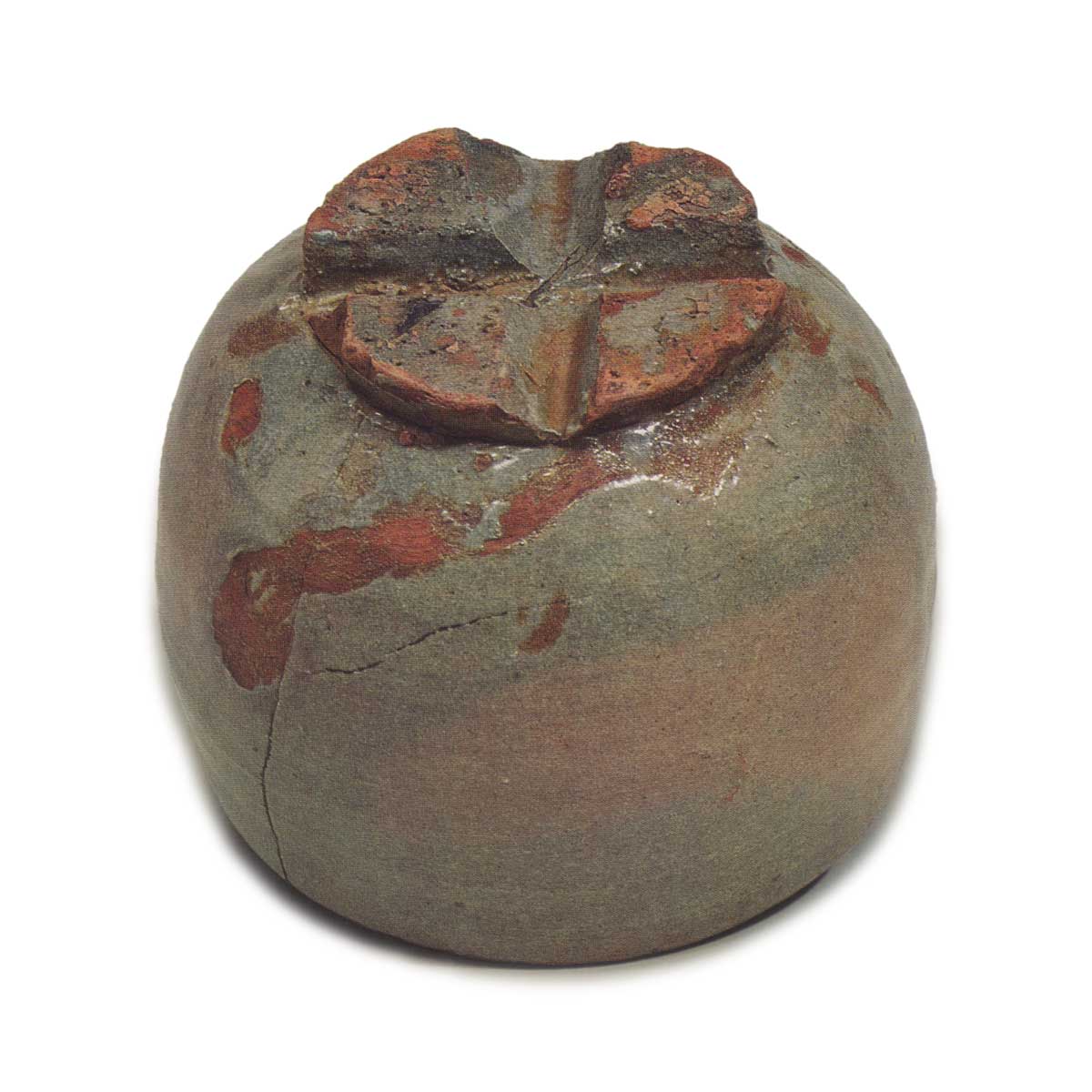
Among Korean tea bowls, those with a large, cross-shaped split in the foot are called “high-split foot tea bowls.” In Korean pottery, cutting the foot is commonly seen in ritual vessels, but the high-split foot tea bowls adopted in Japanese tea ceremony are almost entirely tea bowls in terms of status, with little of the character of ritual vessels.
Nine notable examples of high-pedestal tea bowls are introduced in the “Taishō Meiki Kan” (Taishō Era Masterpieces Catalog).
High-pedestal tea bowl, Daimyō-mon (Tokugawa family, Yagyū-gō), High-pedestal tea bowl, Daimyō-mon (Wakashū Sakai family), High-pedestal tea bowl, Daimyō-mon (Unshū Matsudaira family), Yūgeki (Kusumatsu family), High-pedestal tea bowl (Banshū Sakai family), Hariya high-pedestal tea bowl (Kato family), Tōan (Matsuura family), Wakagata-dai Kōnoike family, Nakawari Mōri family,
Wakagata-dai tea bowls first appear in tea ceremony records during the Edo period, specifically in the Hisashige Kai-ki within the Matsuyakaiki, from Keichō 9 (1604) to Keian 3 (1650), and during the Kan’ei era.However, not all high-footed tea bowls mentioned in tea ceremony records are of the same type as today’s surviving examples; some likely included those with a high foot with a standing cut.
Today, tea bowls referred to as “high-pedestal” are predominantly of the Kumagawa-shaped, sturdy-textured type, featuring bold and robust high-pedestal cuts, and possess a distinctive atmosphere that warrants classification as a separate category.
The bowl introduced here, with its generous form and powerful high pedestal, can be considered one of the finest examples of high-pedestal tea bowls.
(Text by Murayama Takeshi)