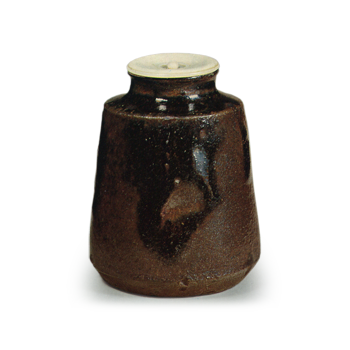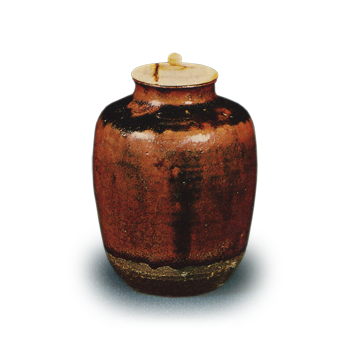
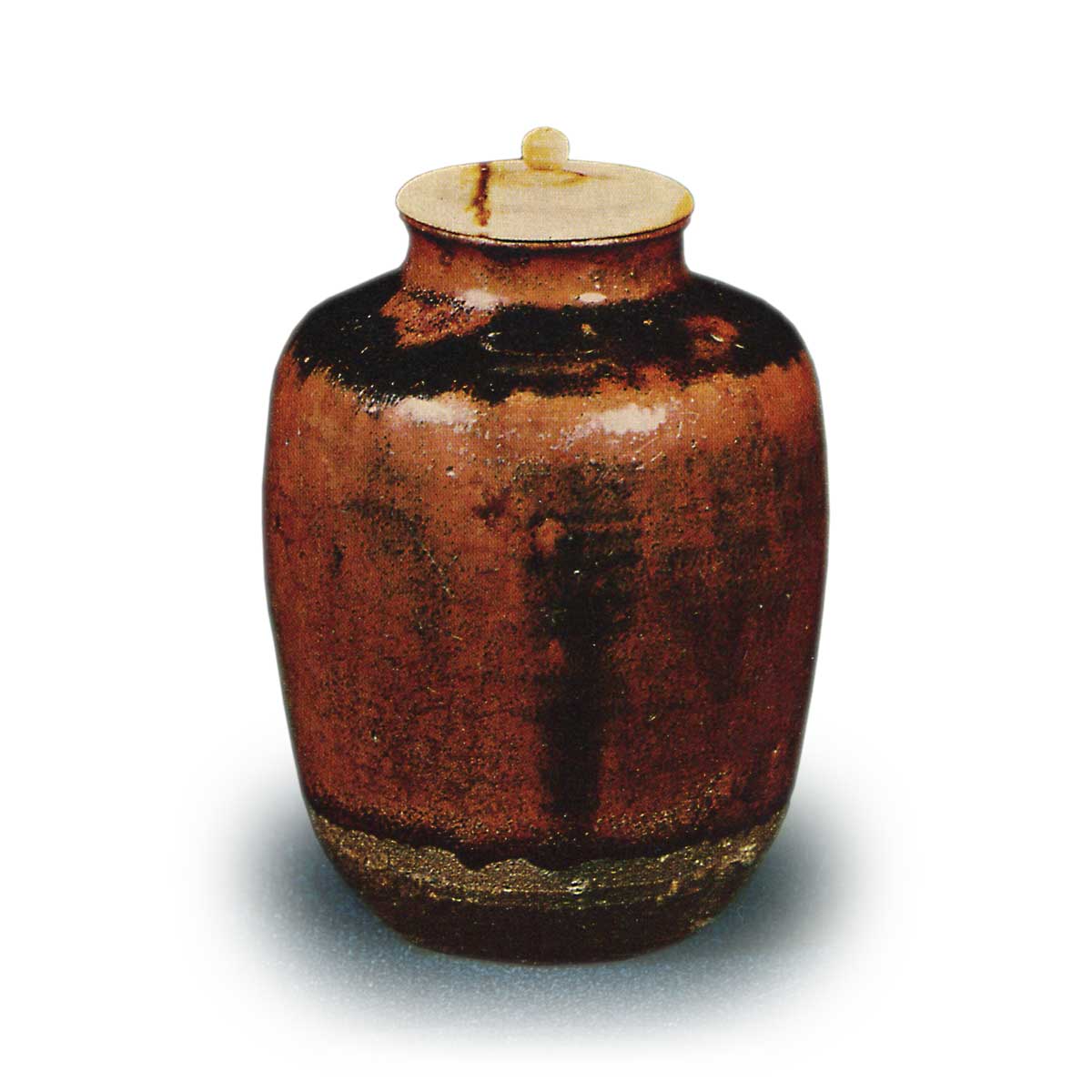
Kinkasan Asukagawa Model Poem Revival Meibutsu
Accessories
Lids: Three; Main Lid: One; Nest: Two; Replacement Lids: Two; Nest: Cover: Five
One Hikiya, Shōmoku, Inscription, by Kobori Enshū; Body, Carved Inscription, Inscription, by Kobori Enshū and Priest Kōgetsu; Tang Wood Inlay Square Tray
Inner Box, Paulownia, Shunkei Lacquer, Gold Powder Characters, Inscription, by Kobori Enshū
Accompanying Item, One, by Sakai Kūin
Transmission
Kobori Enshū – Sakai Tadakatsu
Recorded
Sōyūki: Book on Appraising Famous Tea Containers; Kokon Meibutsu Ruishū: Written by Matsudaira Fumai; Seto Ceramics Origins; Tea Utensil Appraisal Collection; Appraisal Notes; Biography of Matsudaira Fumai; Enshū Shūi; Kobori Masakazu Meeting Records; Enshū Hyakuei Chayū; Sōhō Chayū Dogūki; Matsuya Nikki: Compiled by Yamaguchi Yasukata, Samurai of Wakashū Domain; Gyōkei-roku; Imperial University Historical MaterialsReference Books: Hosokawa Family Gyokuro Collection, Takeno Shokudan, Imperial University Historical Materials, Catalog of Sakai Tadakatsu’s Remains, Kobori Imperial Remains Utensils, Taisho Meiki Kan
Dimensions
Height: 8.1cm, Mouth Diameter: 3.1cm, Body Diameter: 6.2cm, Base Diameter: 4.0cm, Weight: 149g
Sakai Kūin was a disciple of Enshū, renowned for his tea ceremony skills. It is said Enshū presented this tea caddy to Kūin as a token of gratitude for his exceptional support. Tea caddies of this type feature uniformly gentle shoulder lines, with a slightly narrower base creating a soft silhouette.A reddish-brown glaze covers the entire body, with black glaze appearing across the shoulder area. A single, slightly thinner cascade glaze forms a pattern on the front, while glaze with a hint of gold accumulation is visible around the base. Consequently, one theory suggests that tea caddies with this shoulder black glaze were also called “shoulder black hand” (kakurote).The clay appears to be of the Kinka-yama type, with a slightly coarse texture. One example bears the kiln mark “Kyoto Asuka,” indicating it was fired in Kyoto. This is documented in Bessho Kichibei’s records, confirming the existence of a Kyoto-based maker.
Five tea caddies, all beautifully matched in the Enshu style, clearly indicate they were particularly treasured.
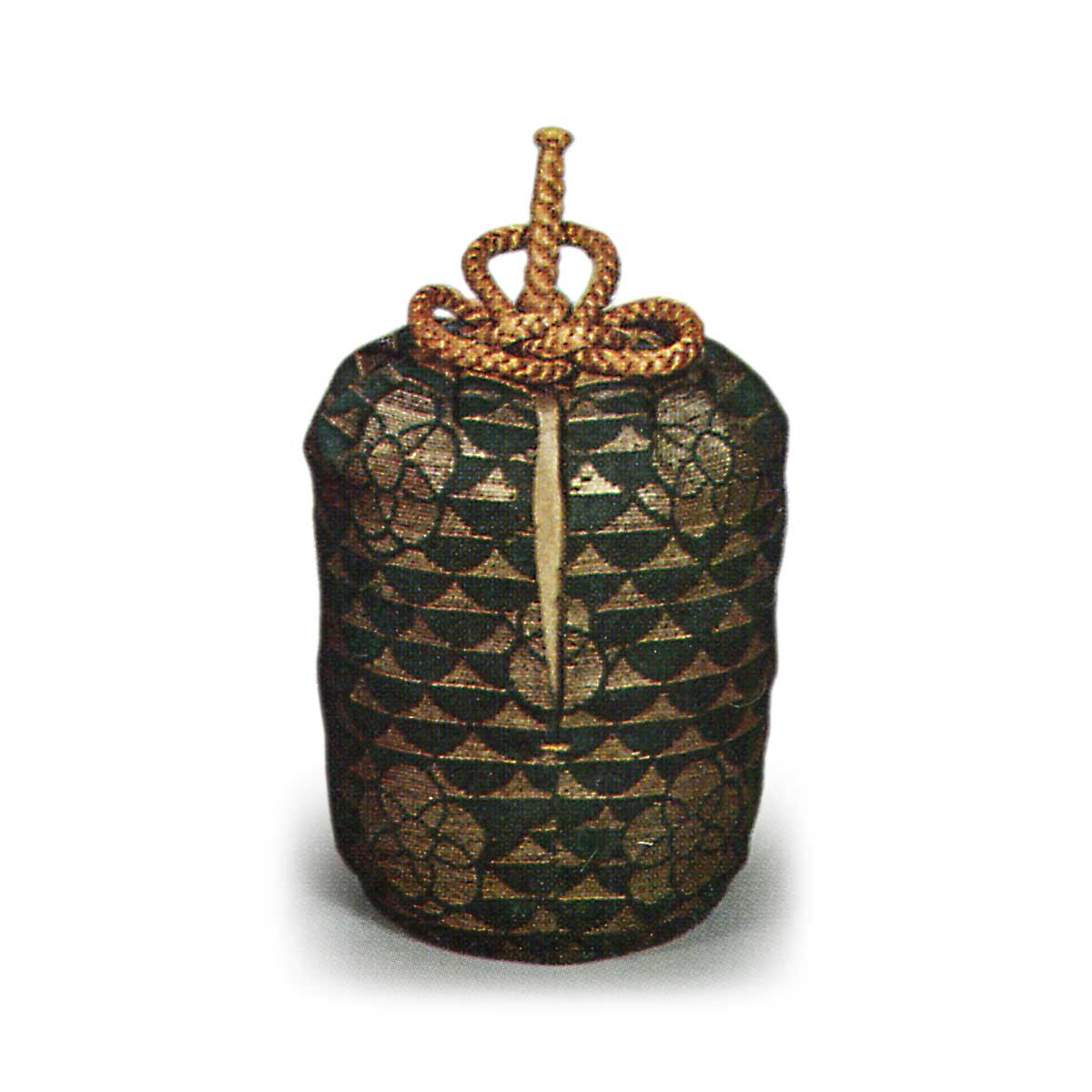
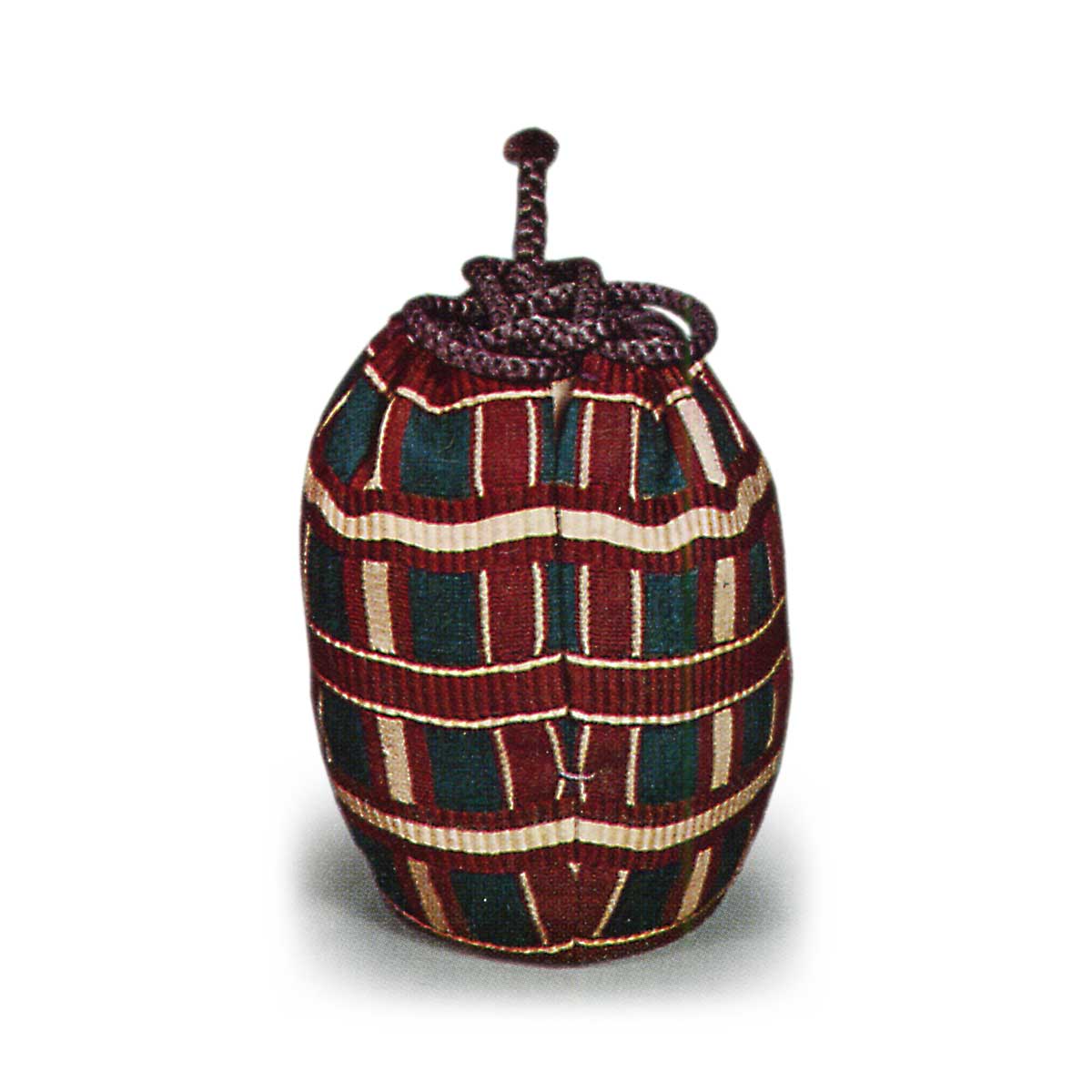
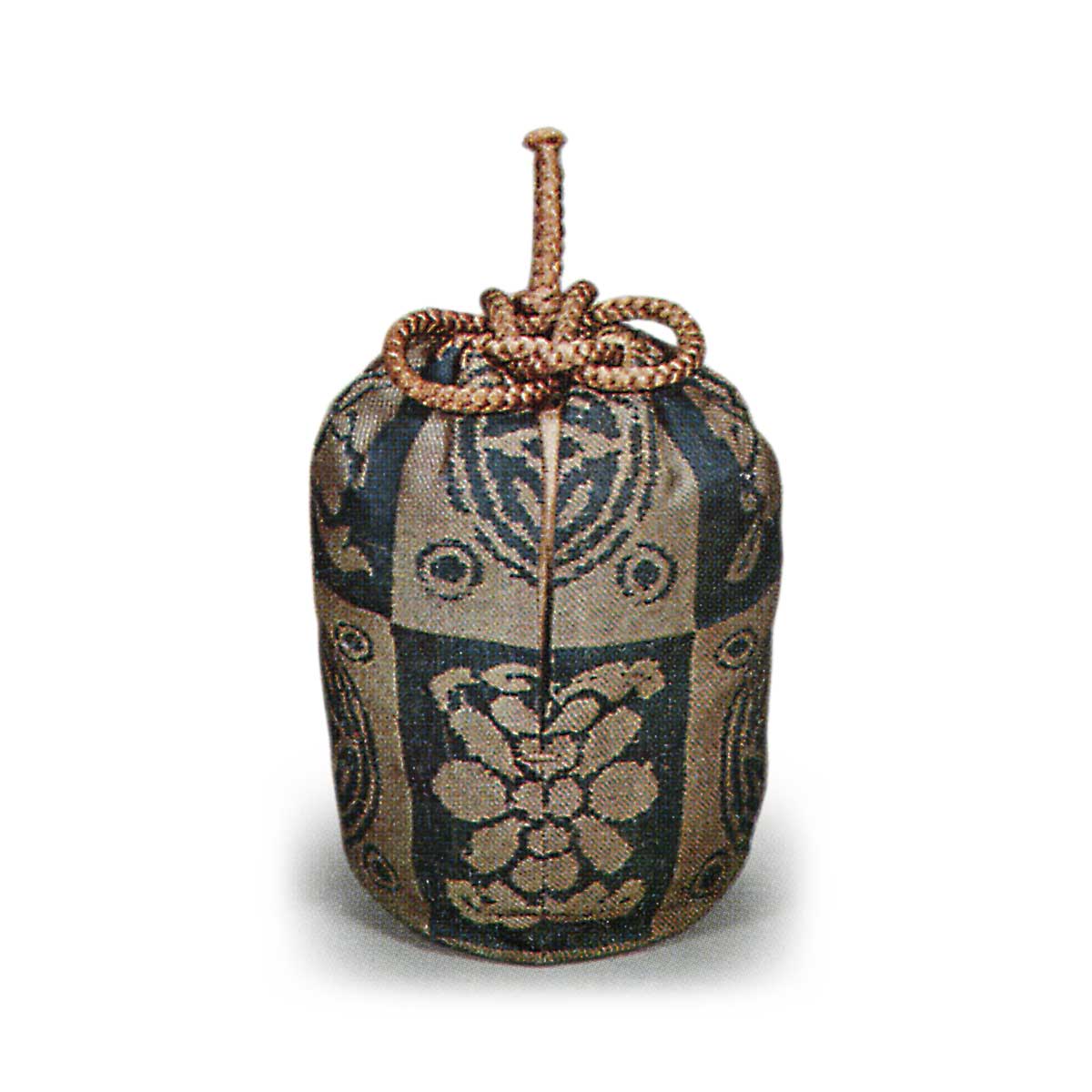
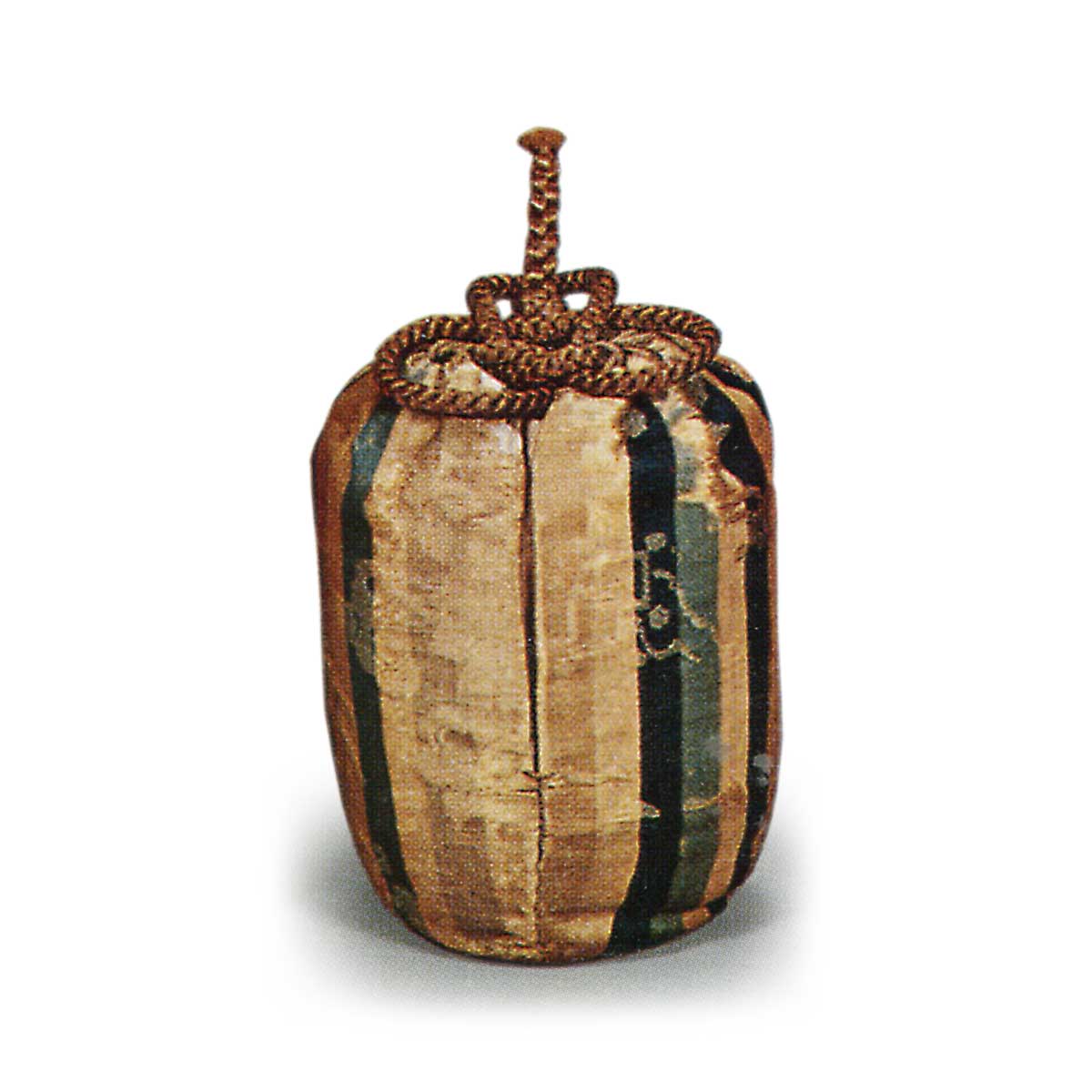
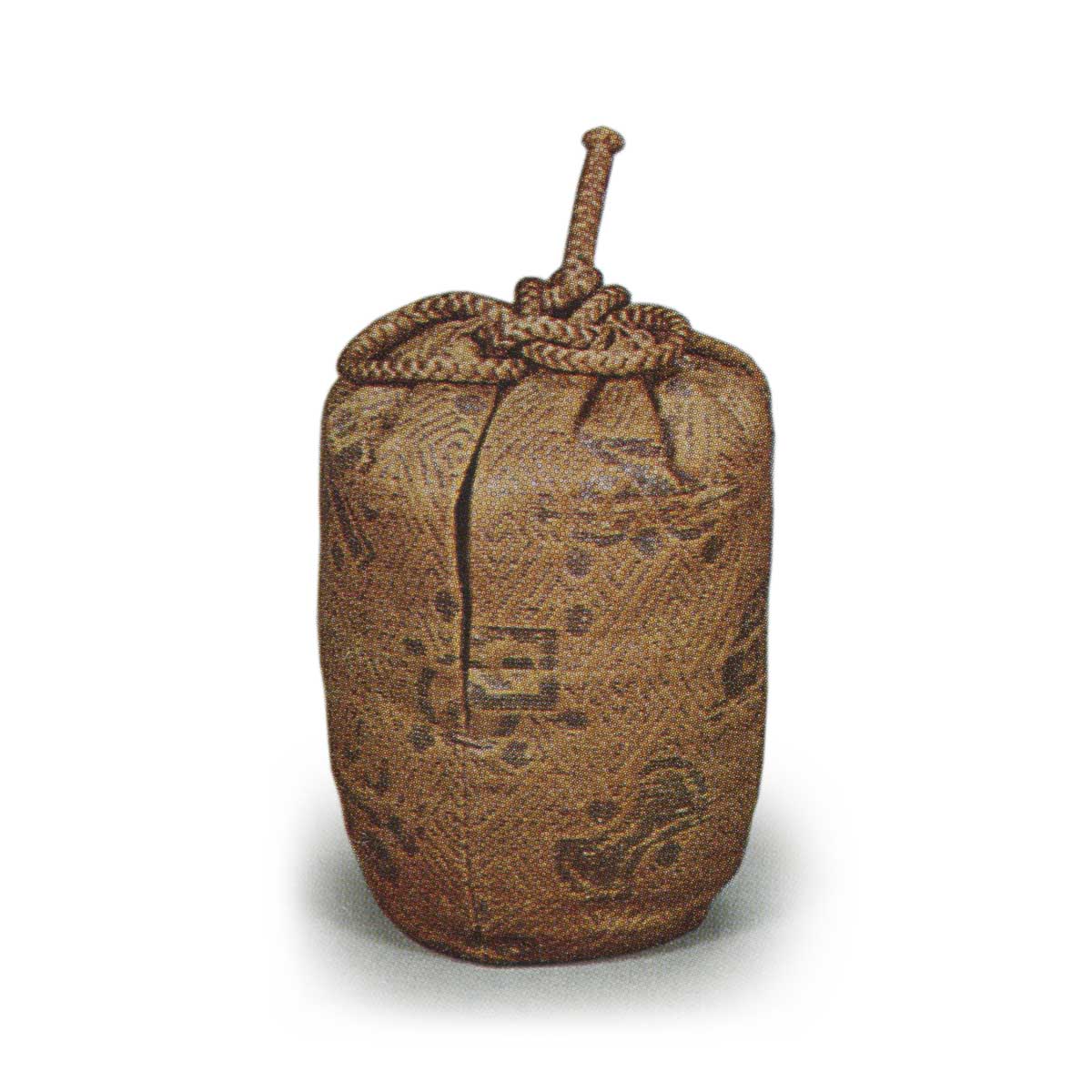
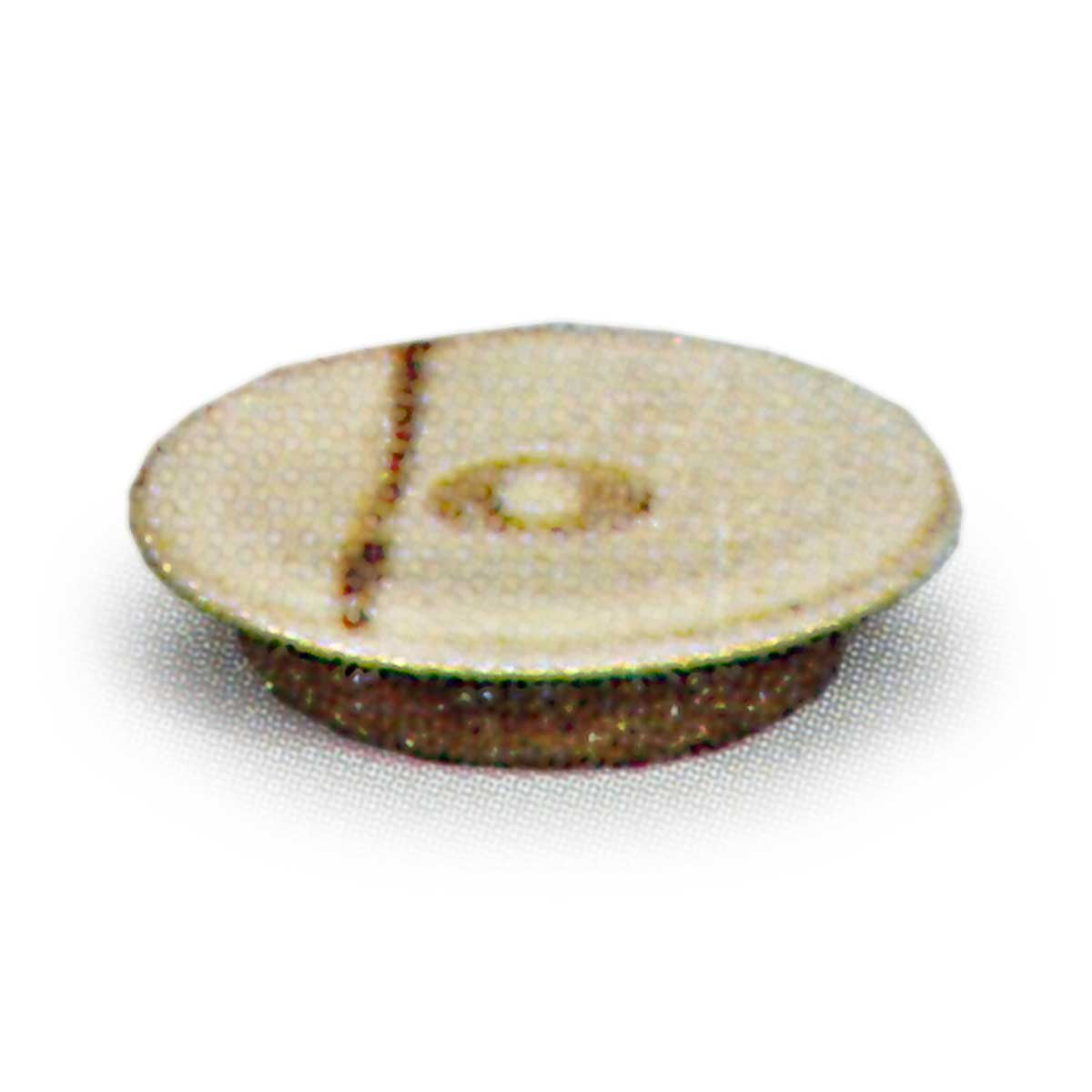
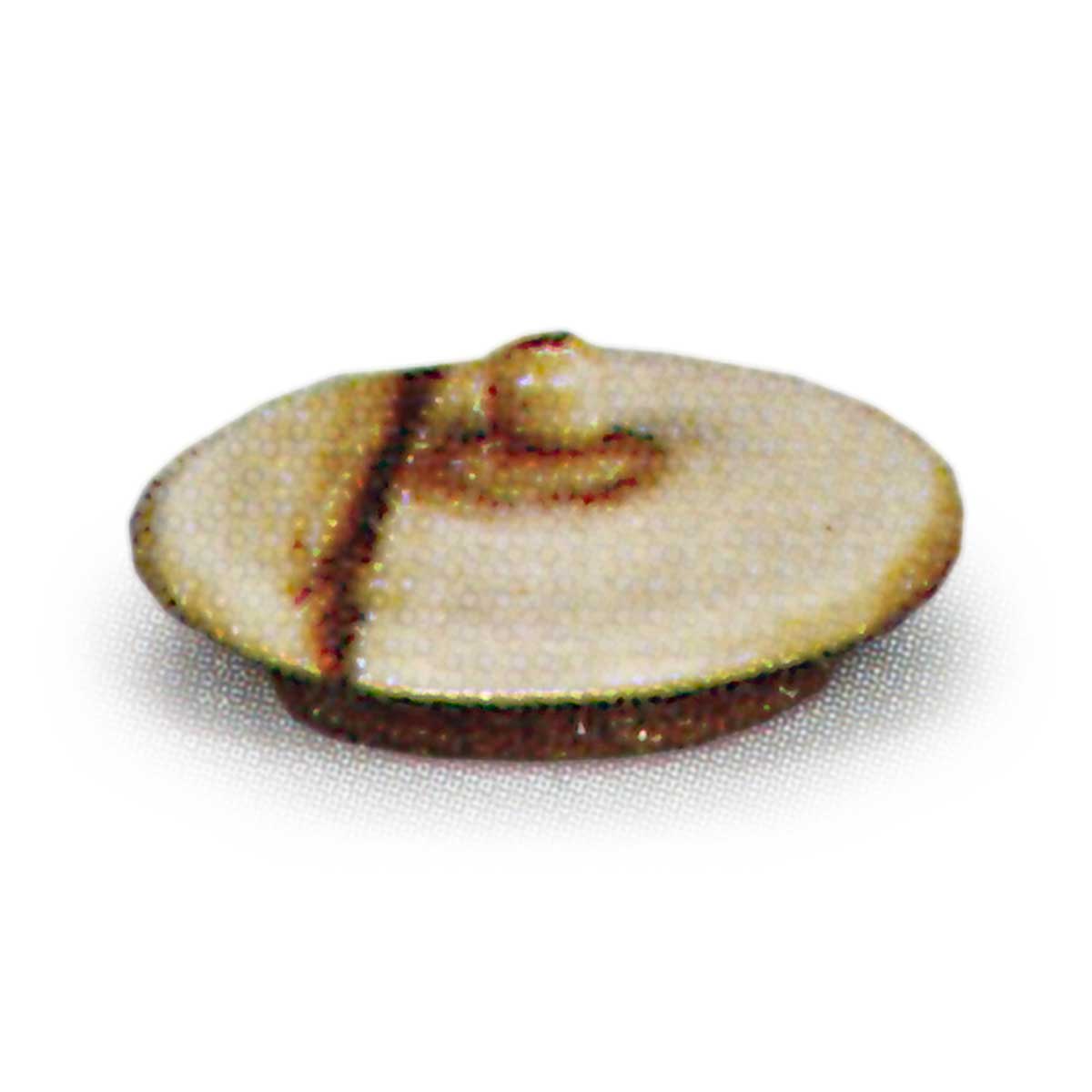
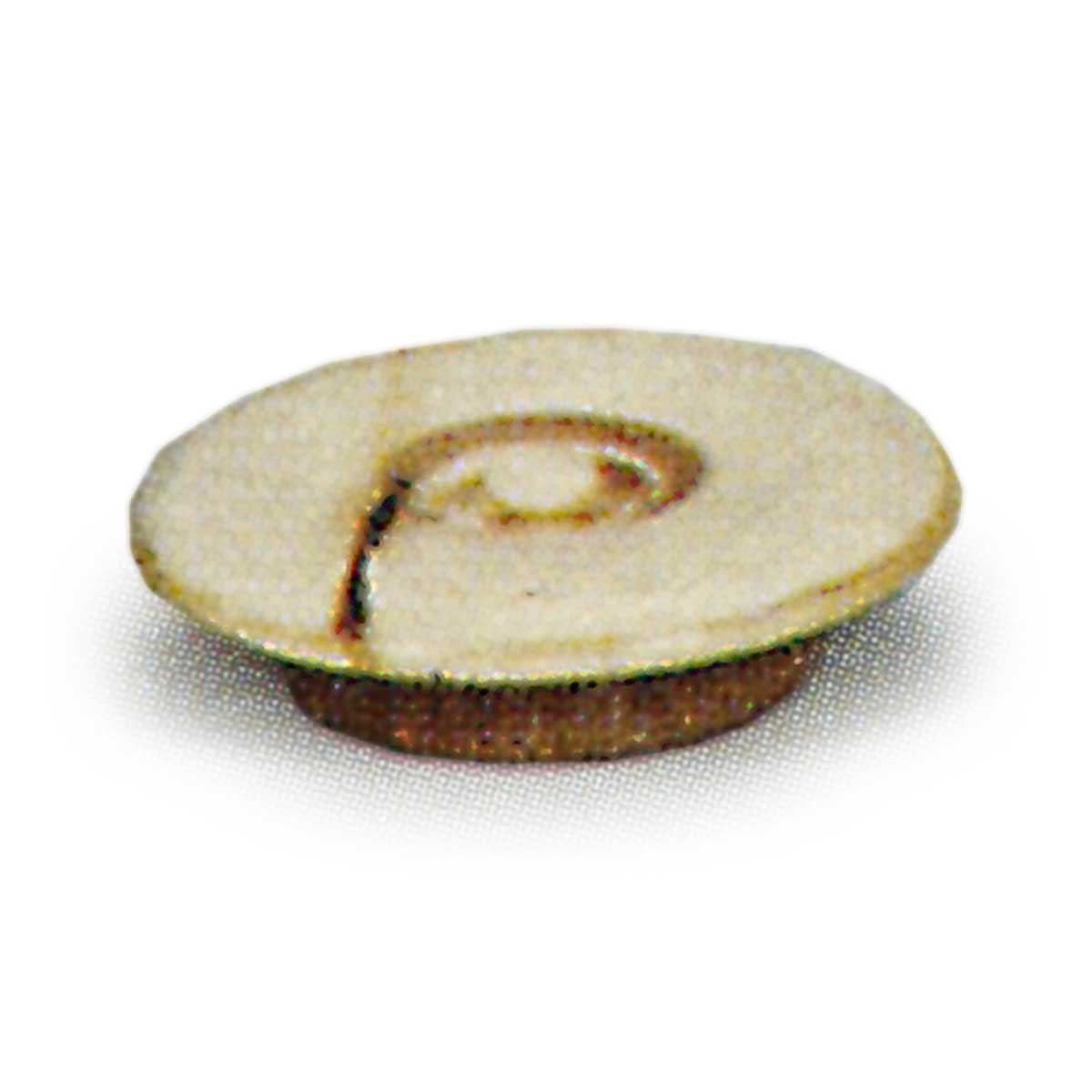
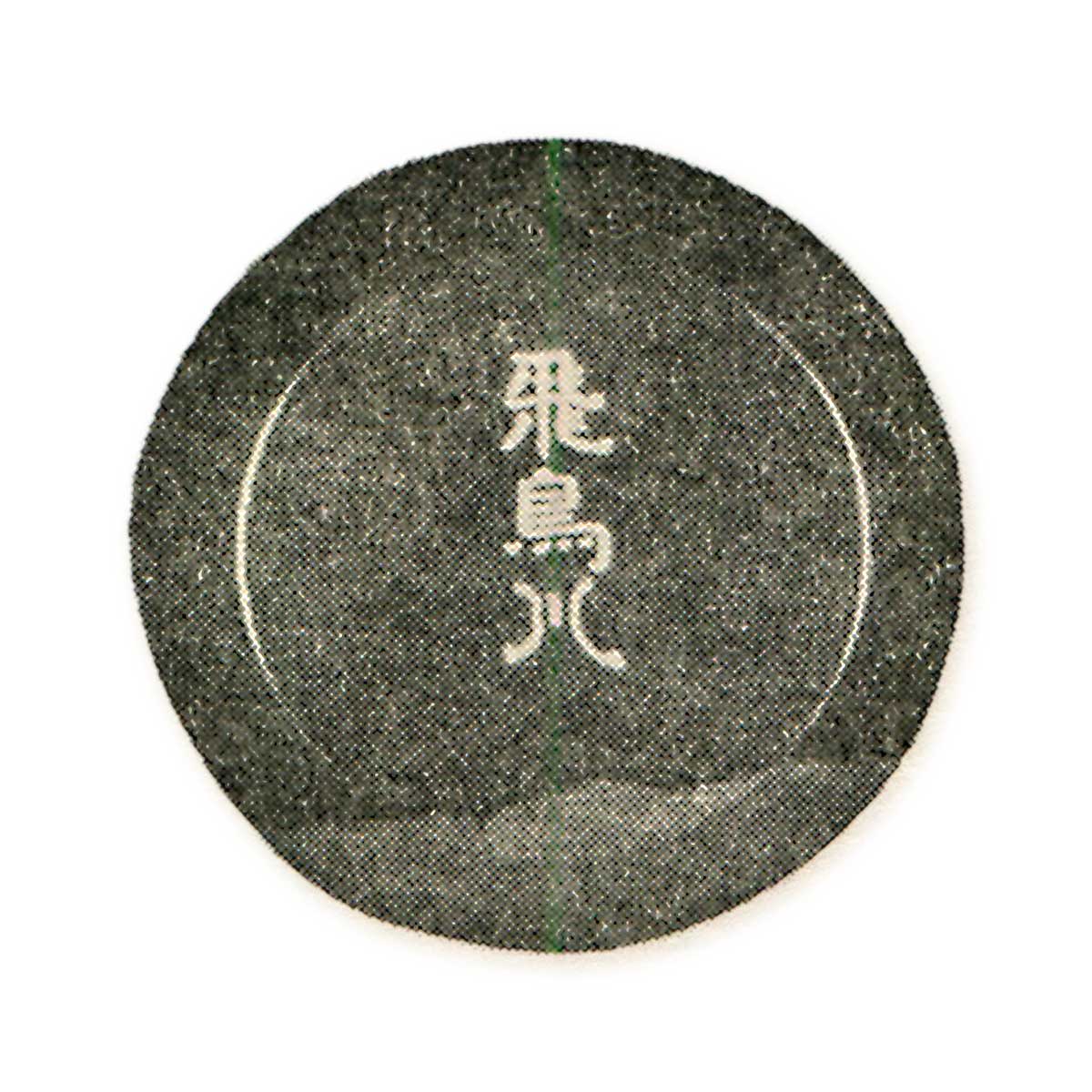
Inscription, Kobori Enshū’s brush
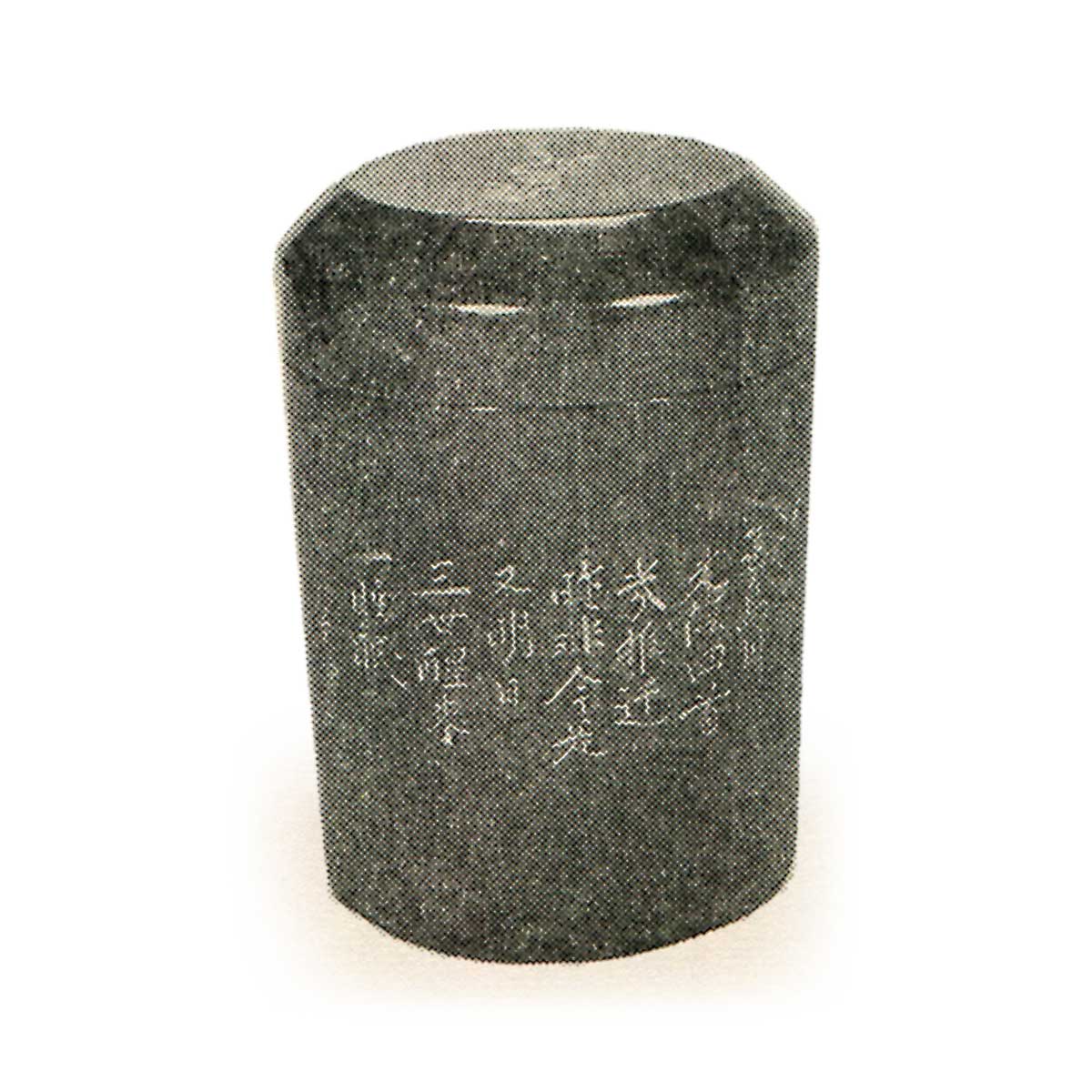
Inscription, Egetsu Osho’s brush
The swift current does not stop
At Asuka River.
Looking back on time
How many detours.
Yesterday’s wrong, today’s right
And tomorrow again.
Three lifetimes awake
One sleep.
The yawner
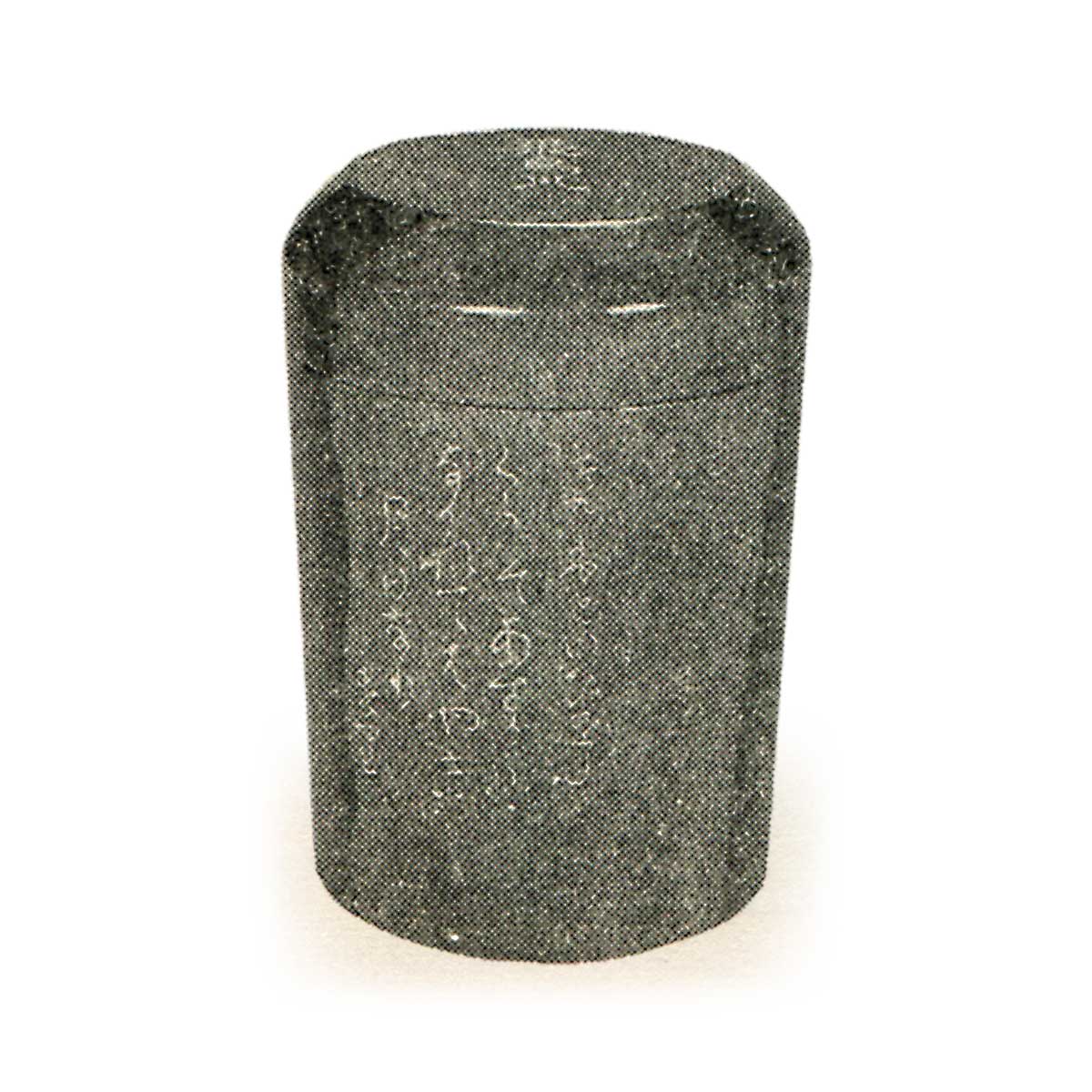
Inscription by Kobori Enshū
Yesterday, they say, yesterday
Living by Asuka River
How swiftly
The days pass.