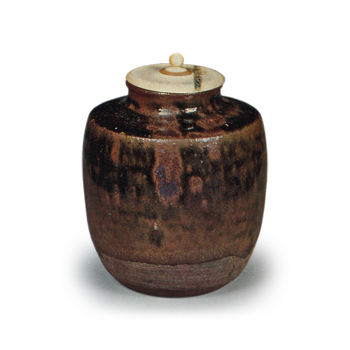
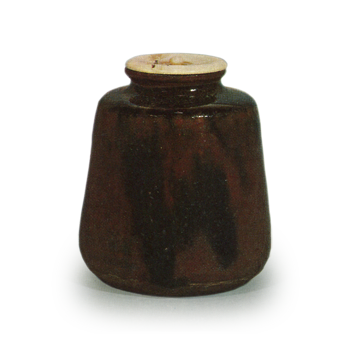
Kinkasan Fujinami Model Song, Revival Meibutsu
Accessories
Lid, one nest; Lid box, paulownia wood, white lacquer, inscription by Matsudaira Fumai
Four covers, Cover box, paulownia wood, white lacquer, inscription by Matsudaira Fumai
One handle, Hikiya, rosewood, wisteria flower inlaid gold, carved characters, carved green patina, by Kobori Enshu
Inner Box: Black lacquer with gold and silver powder characters, inscription by Kobori Enshū
Same Lid Lining Paper: Inscription by Kobori Enshū
Outer Box: Paulownia, white wood, inscription by Matsudaira Fumai
Provenance
Kobori Enshū → Inaba Mino-no-kami → Inaba Tango-no-kami → Tsuchiya Sagami-no-kami → Kyoto, Mitsui Family → Hotta Sagami-no-kami → Matsudaira Fumai
Recorded in
Kokin Meibutsu Ruiju (Collection of Famous Objects Through the Ages), Meibutsu Ki (Record of Famous Objects), Chaki Zushomoku Sho (Book of Tea Utensil Dimensions), Chaki Mokuri Monjo (Book of Tea Utensil Appraisal Notes), Fushimiya Nikki (Fushimiya Notes), Meibutsu Chaki Zu (Illustrated Famous Tea Utensils), Kobori-ke O-imono O-dogu (Kobori Family Heirlooms and Utensils), Compiler Unknown, Kyoho 5th Year (1720) Memo, Fushimiya Memo, Fushimiya Handwritten Record, Osaki-sama O-dogu Dai O-tegaki (Osaki-sama Ut
Height: 7.4cm Mouth Diameter: 3.4cm Body Diameter: 6.3cm Base Diameter: 4.2cm Weight: 139g
This tea caddy is attributed to the Kinka-yama kiln, but there are no other known pieces by the same maker. It is even said to be the lone crane among a flock of chickens. But is it truly from the same kiln?The ‘Bessho Kichibei Denki’ contains entries suggesting it may be from another kiln. Regardless, its glaze presentation possesses a unique character, achieving a rare and splendid appearance—likely the reason it was selected by Enshu.
The clay is also finely ground, with no comparable pieces from the same kiln, and it is elegantly crafted with a shoulder-striking design.
Four shifuku (dust covers) are included. Though varying in type, they maintain the refined quality favored by Enshu, achieving fine harmony.The design by the Hikiya is also rare: a substantial mount with a pattern of blooming wisteria flowers carved across the entire surface of the rosewood, finished with inlaid gold.
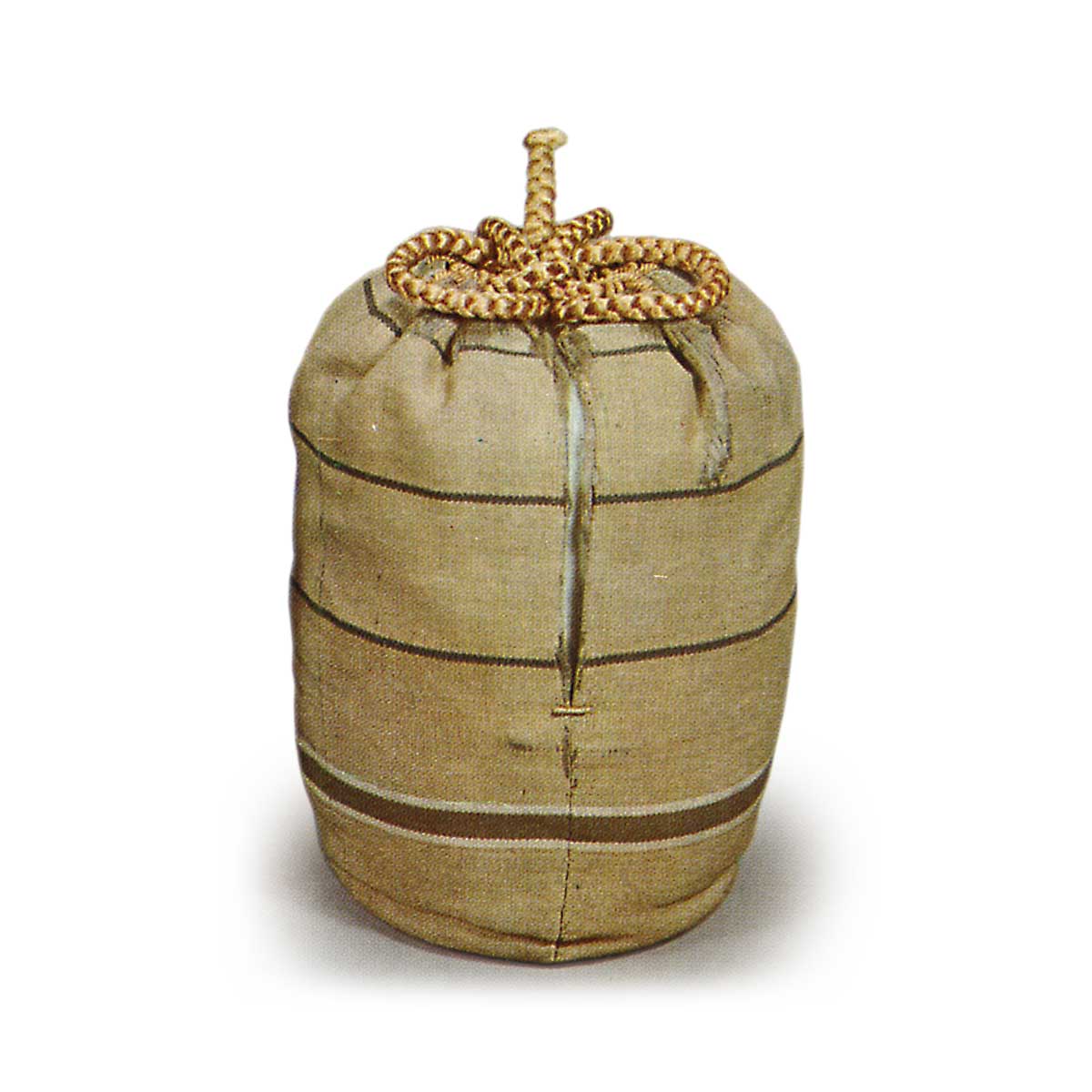

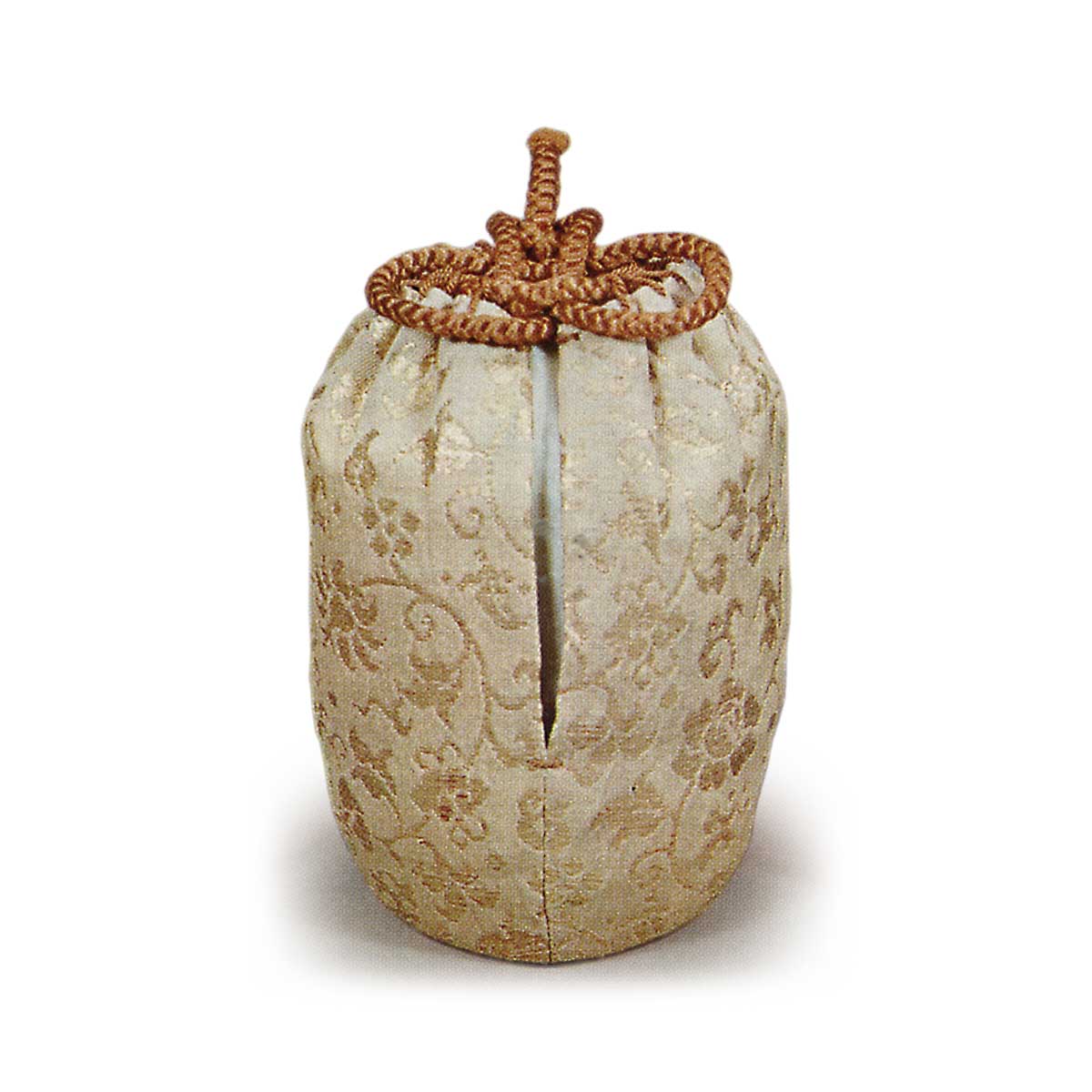
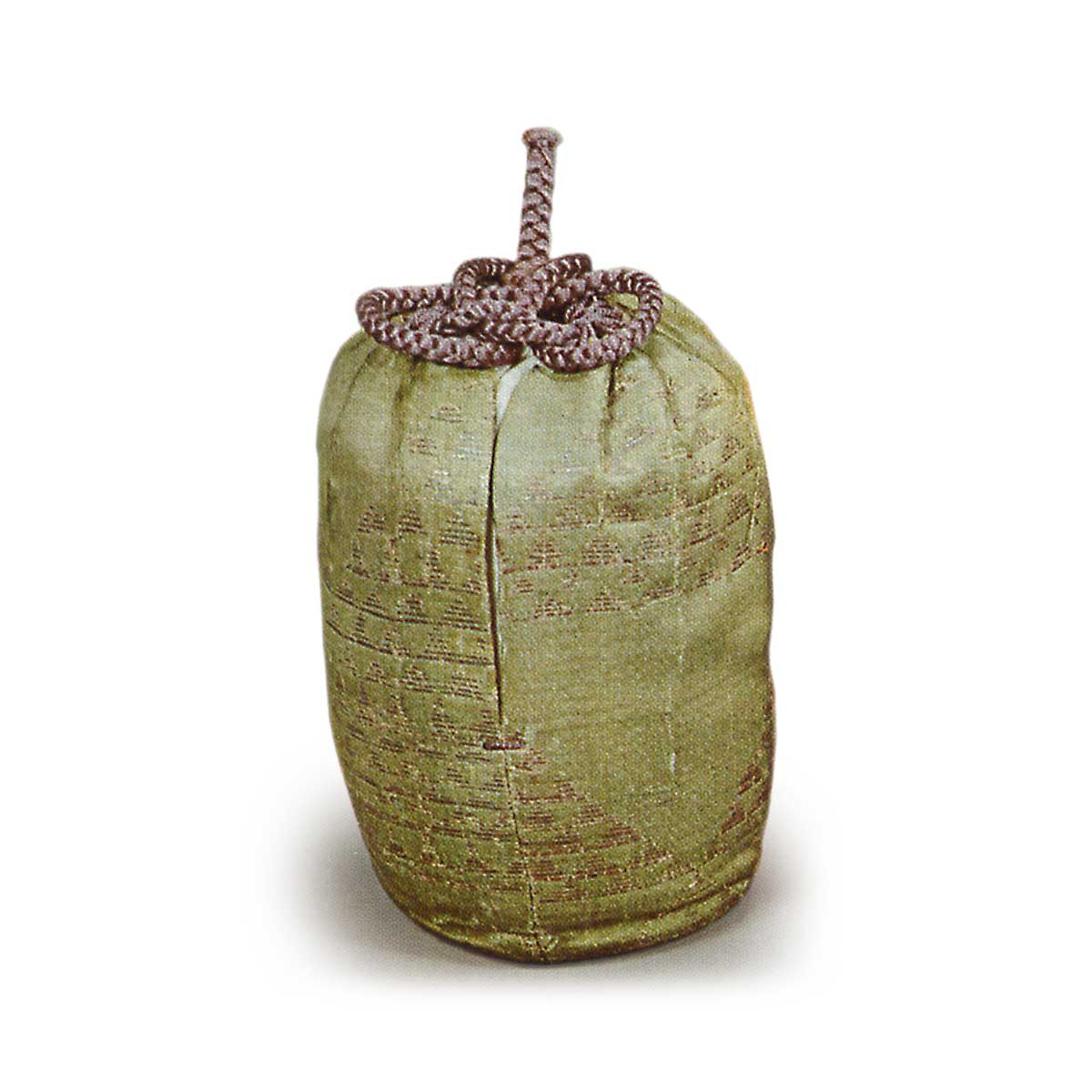
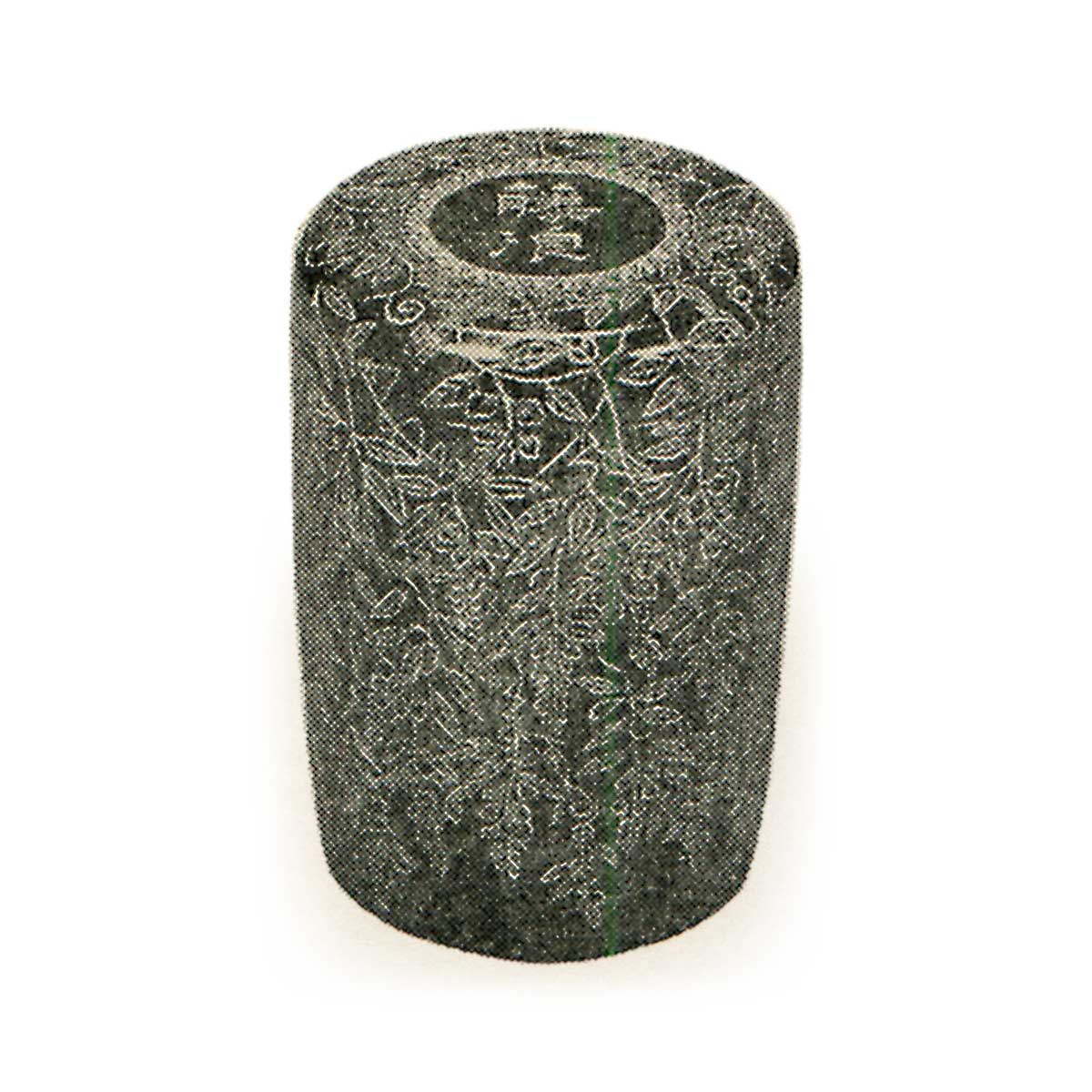
Frame Carved with Blue Inlay Inscription by Kobori Enshu

Inscription by Kobori Enshu
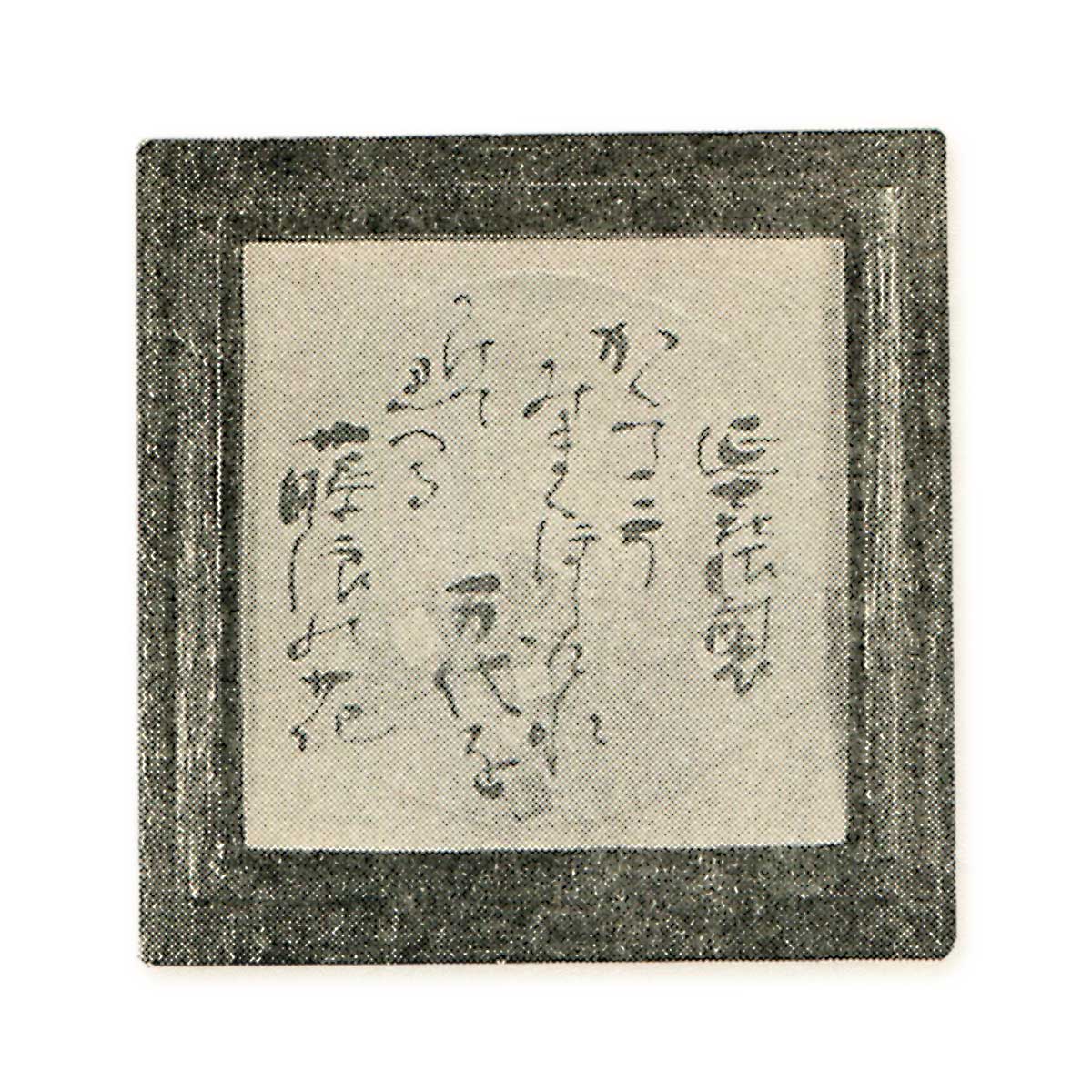
Inscription by Kobori Enshu
Imperial Poem of Engi
Thus it is
I longed to see
Through countless ages
Enduring patiently
The waving flowers of the wisteria