
Transmitted by the Kishū Tokugawa Family
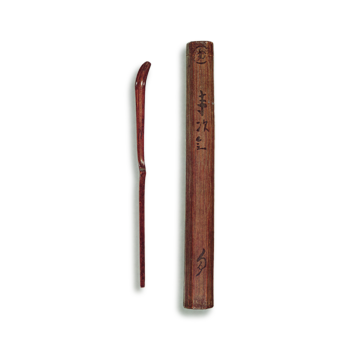
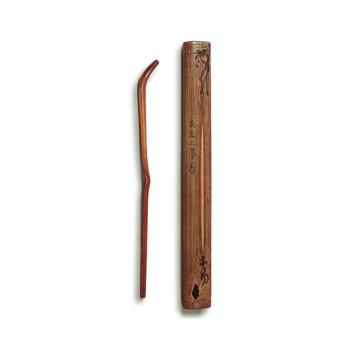
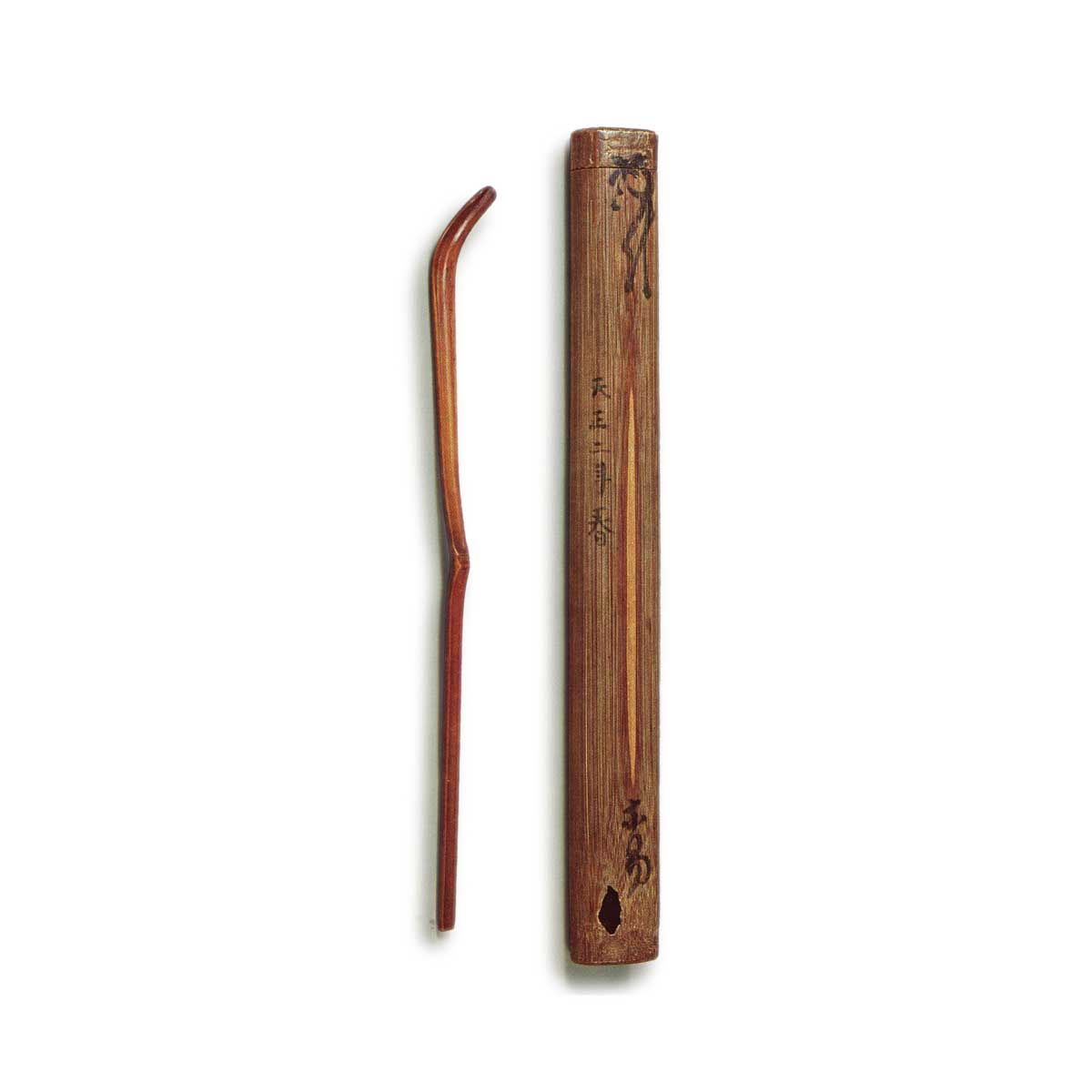
Tea Scoop
It can be called perfect as a Rikyū-style piece. With its sharp tip, high waist, and dignified form, it gives the impression of encountering Rikyū himself. Though made of old bamboo, it is a rare and beautiful scoop, undoubtedly a well-seasoned work from the Sōeki period.
Case
A genuine case, sealed with a kerabon seal at the mouth. The deep grooves create a distinctive pattern. Near the bottom, the name “Sōeki” is inscribed, which is rare. Due to its exceptionally thin construction, it has developed a hollow spot. Cases from Rikyū’s era are all thinly made and prone to damage; those reinforced with armor or wrapped in cherry bark are invariably of superior quality. The inscription “Spring of Tenshō 2” is also highly prized. This year was during Nobunaga’s lifetime. The Nobunaga Kiroku records that on October 28th of the same year, Nobunaga invited seventeen merchants from Sakai to Myōkōji Temple for a tea gathering, specifically noting “Tea Master Sōeki.” At this time, Rikyū was 54 years old, in his mature period.
Accessories
Inner Box: Paulownia, unfinished wood. Inscription: Written by Kakukusai Gansō (signature only).
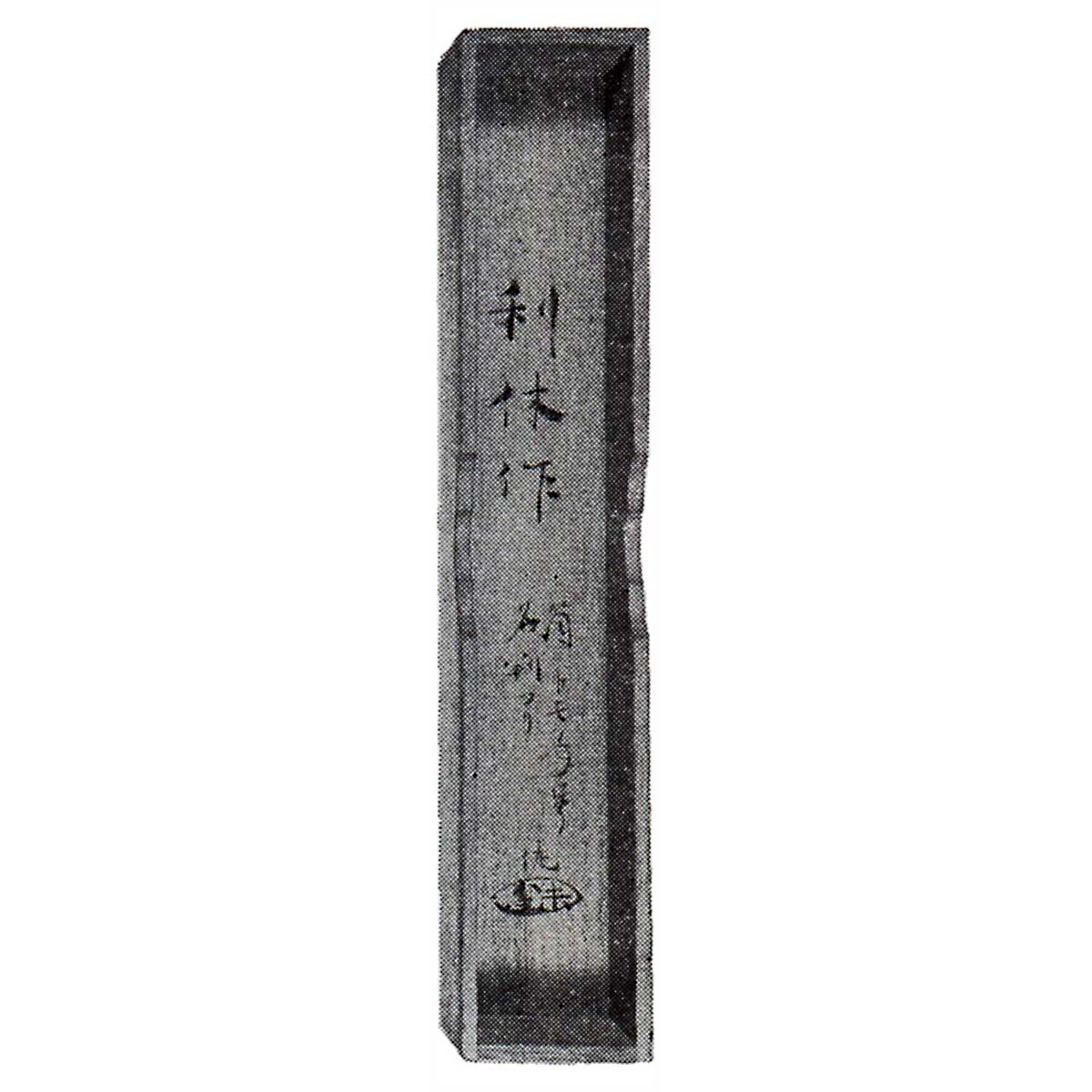
Same Lid Interior: Inscription by Sui Ryū-sai Sōsai “Made by Rikyū. Cylinder and name stamp with year mark. Sō (signature)”
Inner Box: Cypress, unfinished wood, so-called Kishū box. Inscription by Jōshin-sai Sōsai
“Seal: Imperial Ladle. Rikyū. Cylinder and name stamp with year mark. Sui Ryū Kakukaku box inscription. Sō (signature)”
Attached scroll: Written by Daitokuji Shunsaku Hoshi
Certificate of authenticity: Written by Daitokuji Makusō Hoshi
Published in
Three Hundred Selected Tea Scoops
Dimensions
Tea scoop
Length: 17.4 cm
Width: 0.5–0.95 cm
Thickness: 0.25 cm
Tube
Length: 20.3 cm
Diameter: 2.3 cm


Accompanying Scroll: Written by Daitoku-ji Temple’s Priest Shunsaku.
Teaspoon made by Sen no Rikyū, treasured by the Sen no Sōsa family. At times presented to Lord Kii, who cherished it for many days. Later, it was bestowed upon Sōsa, who requested I record this matter. I said, “What comes from you returns to you. What more is there to say?” Though I could not refuse his insistent request, I hastily composed this small verse. What comes from you returns to you. Accept each thing as it is. Thirsty, drink; yet know contentment. Need not ask about Zhao Zhou’s tea.
Former Daitoku Monk Shun’saku Sōkō (two seals)