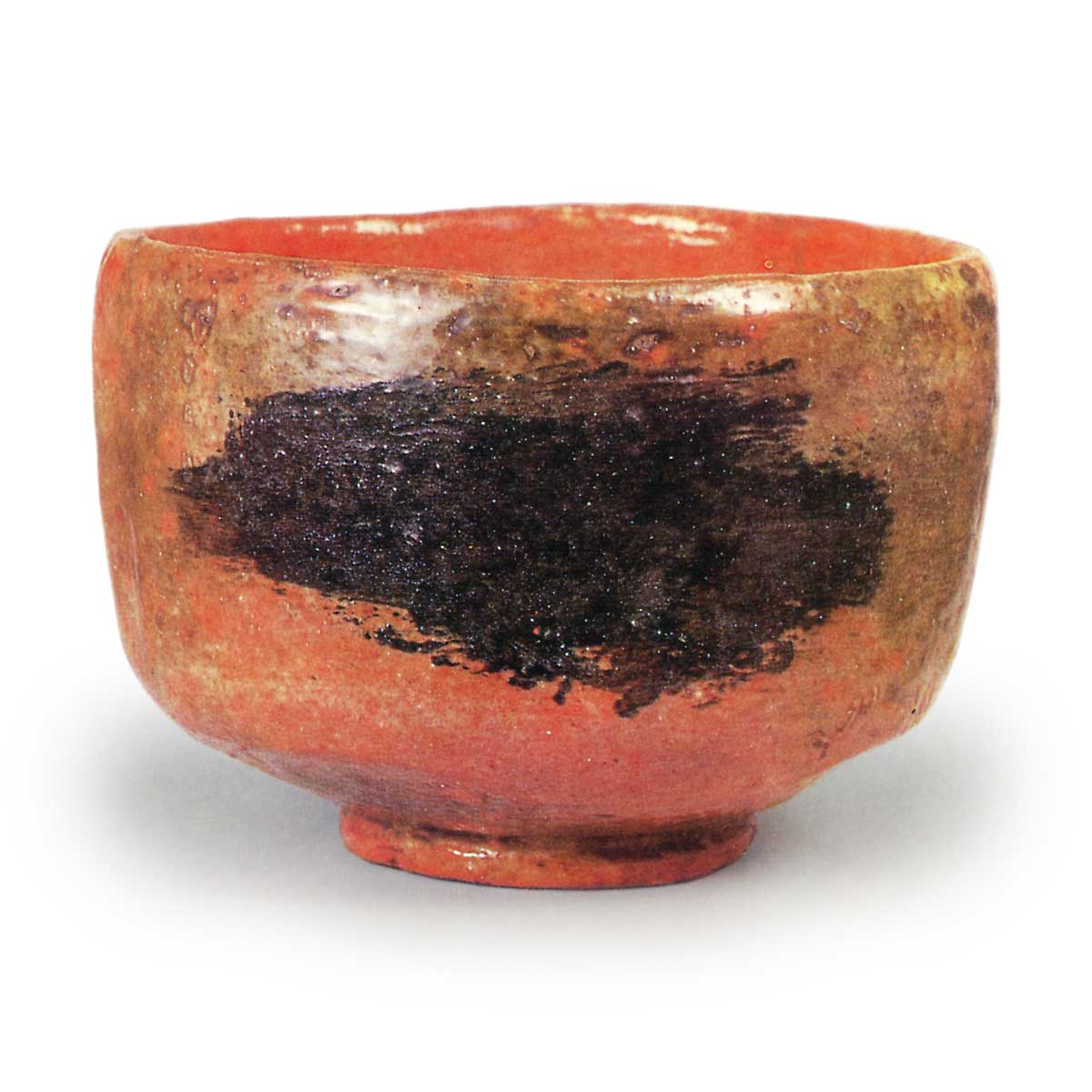
Height: 9.0 cm, Mouth Diameter: 11.8–12.2 cm, Foot Diameter: 5.9 cm
On the front of the inner box lid is the single character “Nue,” and on the underside of the lid is the inscription “Nonkō Red Tea Bowl, Name: Kakunsa (seal),” both written by Kakukaku Saigen Sō. Furthermore, Sōetsu, the grandson of the former owner Sōzen Hisada, briefly recorded the provenance on the outer box lid: “Nue tea bowl” on the front, and on the back, “Passed from Sōzen to Funaki Sōkawa; from Kawa to Ogawa Jio-maruya; returned to the Hisada family at the request of Priest Tanrei of Seun-ji Temple, who asked for it to be returned—Hyakutama (signature).” It is presumed that after being owned by Hanzōan Hisada Sōzen, it passed to Funaki Sōkawa and then to the Jio-maruya herbal pharmacy in Ogawa, Kyoto; through the mediation of Priest Tanrei, it returned to the Hisada family, before moving to Fushin-an. In 1891 (Meiji 24), during the era of Rokurōsai, it was transferred to the Mitsui family of Shōmachi, who have held it ever since.
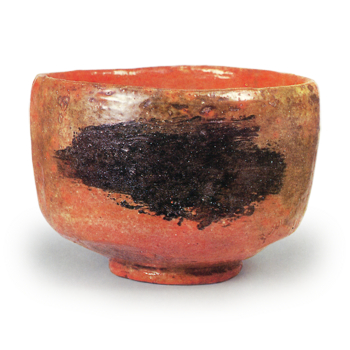
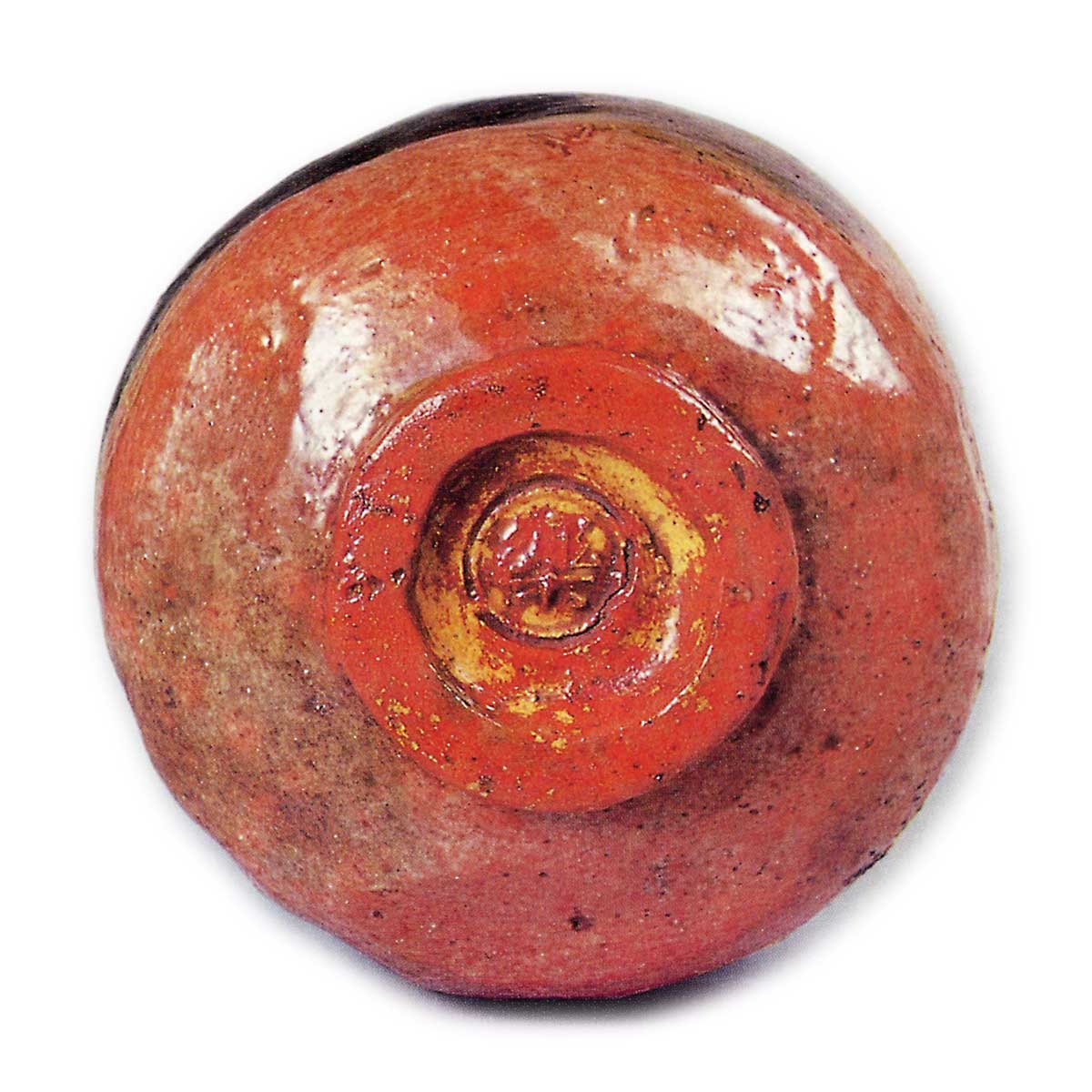
This is the most highly regarded of the “Seven Types of Nonkō” red tea bowls, and its form can be considered the quintessential example of the style. It is a large tea bowl with a rounded waist, a body that is slightly bulging and flares outward, and a rim that curves slightly inward; it has a large foot and a wide base. The interior features an oval tea pool, and the “Raku” mark is clearly stamped inside the foot. Although the bowl has a relaxed and generous form, subtle vertical ridges are added to the body, and flat chamfered edges are applied on three sides near the footring to create variation. This is a red Raku piece made by applying yellow clay to the body and covering it completely with white glaze; however, the glaze surface exhibits variations in shade, and there are also instances of “fire variation” where red mottling appears on a pale green background. The large black spots, resembling brushstrokes and serving as the basis for the inscription “Crane,” are said by the 13th-generation Raku Kichizaemon to be accidental scorch marks. It is believed that he named the piece after likening these marks to the ominous clouds that appeared during the subjugation of Minamoto no Sanemi.
The foot rim is a vivid red, and there are areas inside the foot where the color has shifted to yellow.