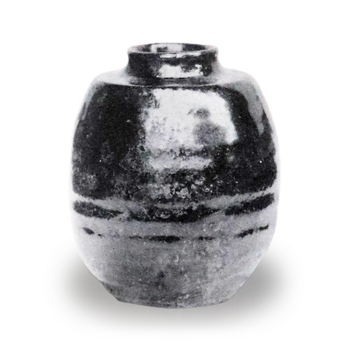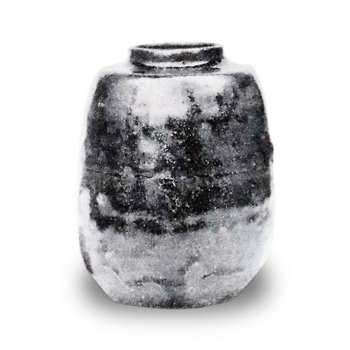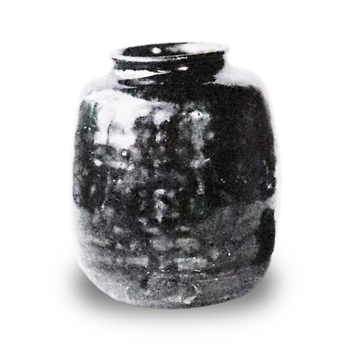
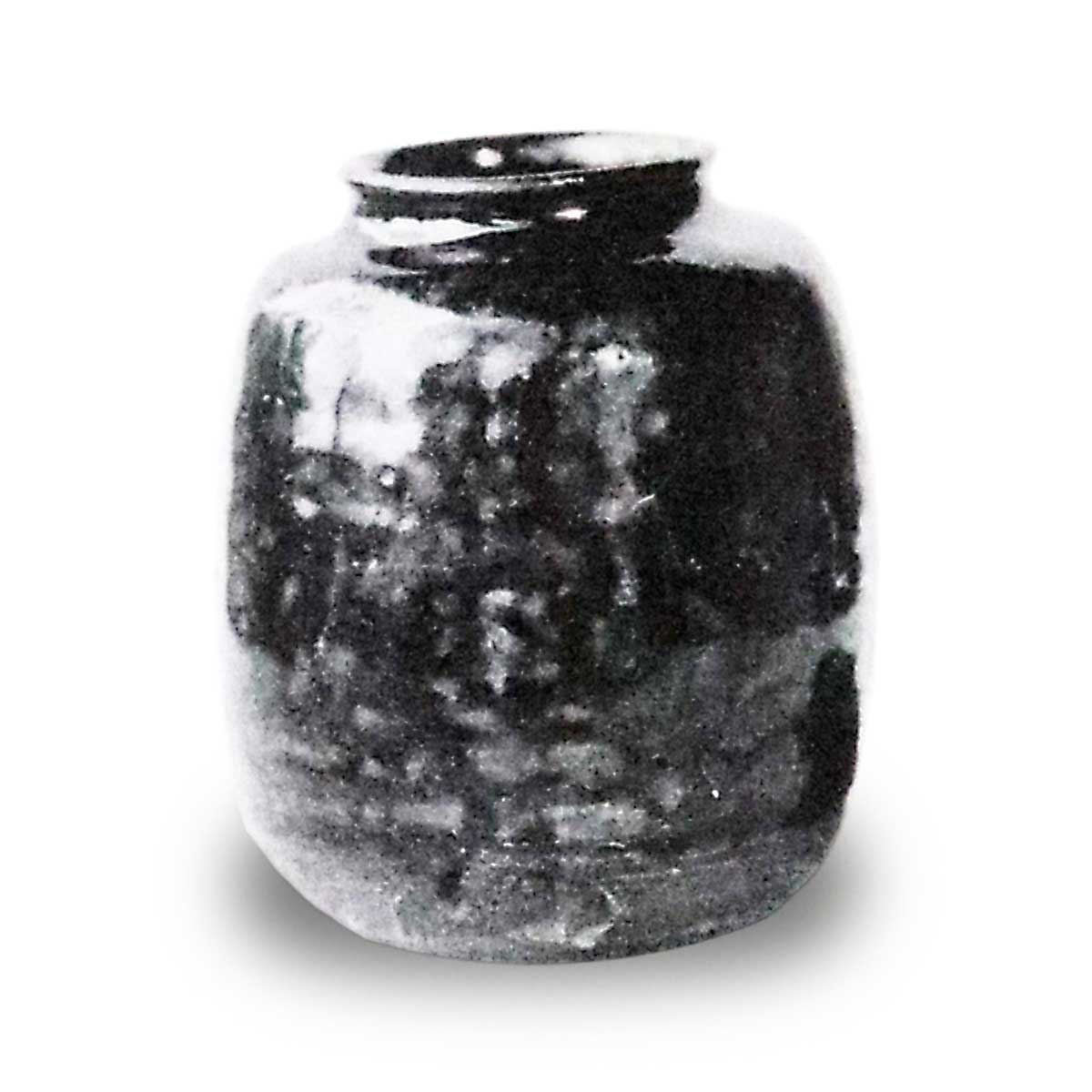
From the collection of Count Tadamasa Sakai of Kose-to
[Origin of the Name]
This name derives from the fact that it was once owned by Hosokawa Shōkō. Although the details of Shōkō’s life are not well known, the Sōyūki records: “Sōho (Kobori Enshū) visited Hosokawa Shōkō for a tea ceremony, accompanied by Kamiyanagi Fusai and Kameya Eijin.” Based on Fusai’s account, it is believed that Shōkō lived during the Enshū era. The Matsuya Nikki records: “Matsumoto Katatsuki is a Meibutsu known to all. Matsumoto was a man of Shimogyo; he was Shōkō, the tea master to the Great Elder (Tokugawa Ieyasu), and a direct descendant of Ninshō.”
Dimensions
Height: Approx. 7.2 cm (2 sun 3 bu 7 rin)
Body diameter: Approx. 6.2 cm (2 sun 0.5 rin)
Mouth diameter: Approx. 3.3 cm (1 sun 1 bu)
Base diameter: Approx. 3.9 cm (1 sun 3 bu)
Neck height: Approx. 0.5 cm (1 bu 6 rin)
Shoulder width: approx. 0.8 cm (2 bu 5 rin)
Weight: approx. 107.3 g (28 monme 6 bu)
Accessories
- Lid: 1 piece—worn Oribe-style, made by Kyumi
- Storage pouch: Shiro-habutae with Otsugari-cha cord
- Storage pouches: 2
・Moegi-ground dragon-patterned Kinran (Otsugari tea-colored, lining in iridescent green)
・Ouchi paulownia-patterned Kinran (Otsugari, lining in sea mist and storage room colors) - Storage Box: Made of paulownia wood, Shunkei lacquer finish, with an inscription on a sheet of Raku-bukuro paper affixed to the exterior
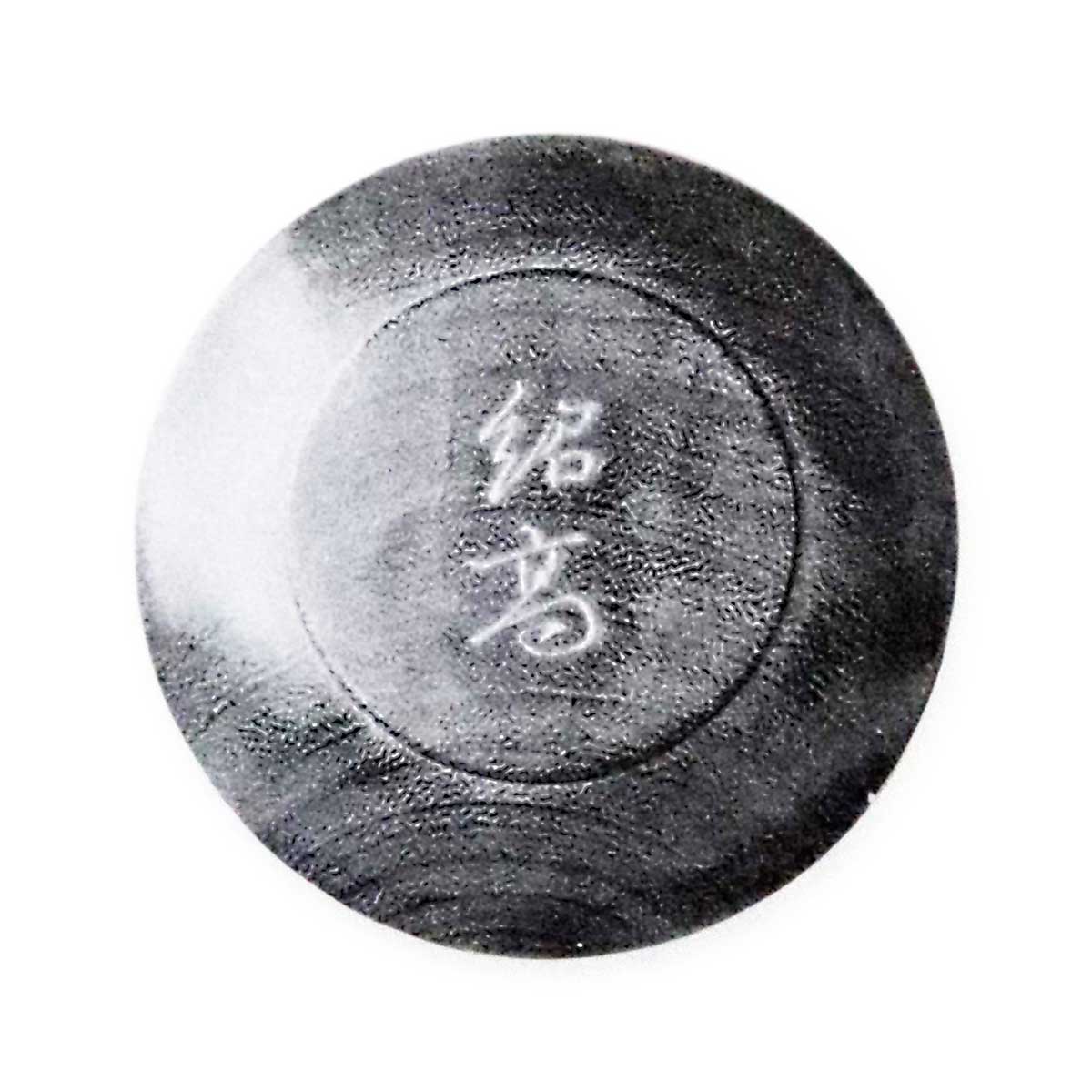
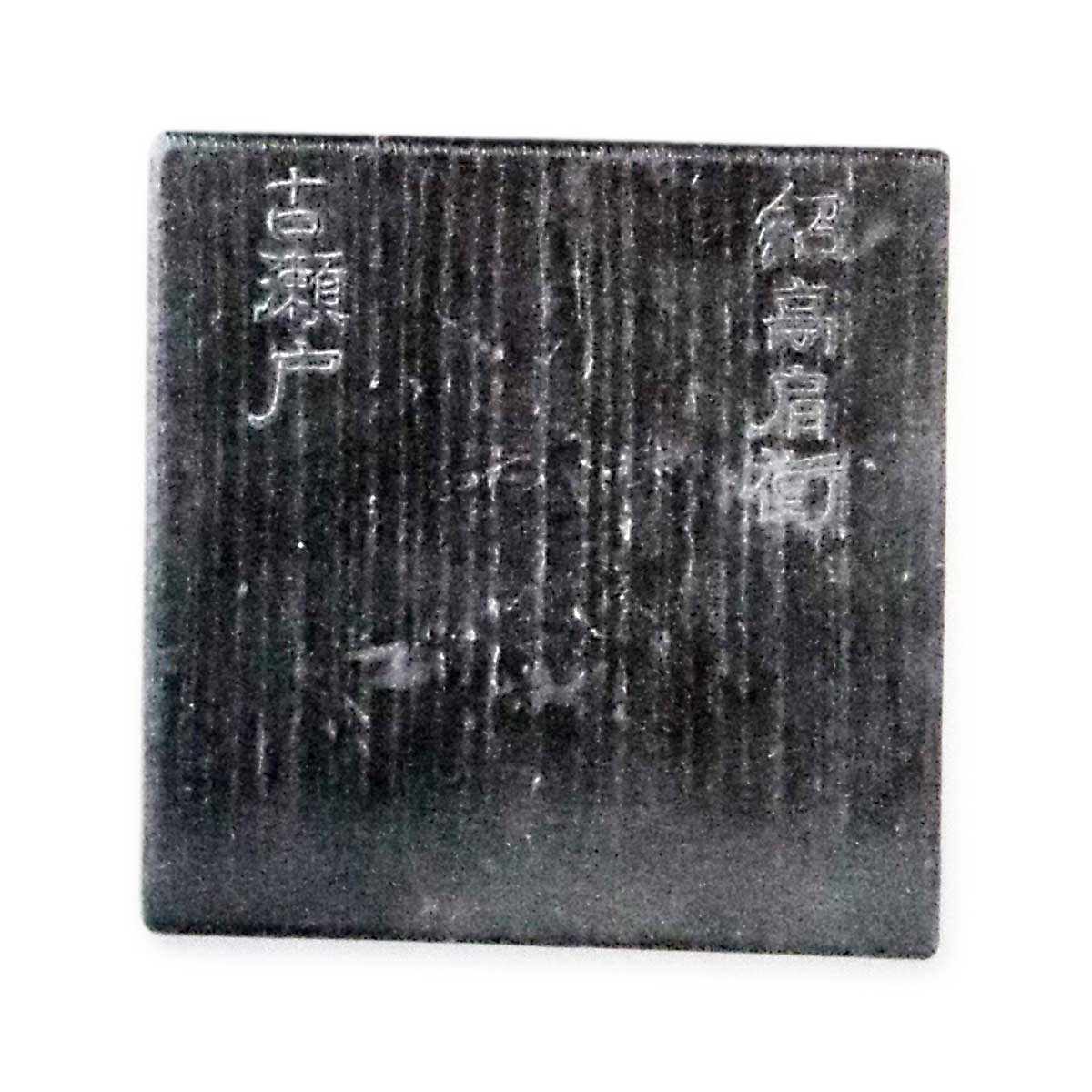
(Inscription: “Kose-to Shōkō Katatsuki Bag”) - Hikiya: Made of Tagayasan wood, with characters formed using gold powder
(Characters: “Shōkō”) - Cover (Pouch): Tea-colored Tang-style woven fabric (lining: satin with cloud-and-crane pattern, pale yellow)
- Inner Box: Paulownia wood, natural finish
(Inscription: “Shōkō Katatsuki,” “Koseito”) - Middle Box: Paulownia wood, Shunkei lacquer, inscription in black lacquer
(Inscription: “Shōkō Katatsuki,” “Koseito”) - Outer Box: Made of paulownia wood, with Shunkei lacquer finish
(Inscription: “Koseito Small Katatsuki Tea Caddy”)
*The interior of the box has a vertical divider and contains an accompanying document (certificate of authenticity).
Accompanying Document
- Accompanying Document (Certificate of Authenticity): 1 copy
“Koseito Small Katatsuki Tea Caddy
The lid and pouch shown on the right; the lid was favored by Lord Furuta Oribe and crafted by Kumi
The pouch is made of Ōuchi paulownia Kinran, featuring a pale yellow ground with a dragon pattern in antique Kinran”
(Modern translation of the inscription:)
I have seen this tea caddy before and remember it well. There is no doubt that it is a masterpiece of Koseto ware. I understand that this was previously owned by the late Elder Hosokawa Shōkō. This is a tea caddy that was previously highly praised by Lord Kobori Bitchū-no-kami (Kobori Enshū), Lord Kuwayama Shūnosuke, Lord Kitami Kyūdai, and others. I clearly recall that at that time, everyone discussed that it would likely be valued at between 100 and 500 kan. However, in today’s world (at present), it is difficult to assign such a high value; I believe a price of about 50 gold coins would be appropriate. That is all.
Year of the Dog, November 21—Ikeshima Tatsusa (Seal and Signature)
Miscellaneous Notes
Shōkō Katatsuki tea caddy, inscribed with “Shōkō.” Accompanied by a certificate of authenticity (orizumi) by Ikeshima Tatsusa. The storage pouch is made of white ha-niji; the handle is made of ironwood; the pouch (lined with cloud-and-crane satin) is lined with cotton; and the box is made of paulownia wood with a cotton Sanada cord. The outer box is made of paulownia wood with Shunkei lacquer, featuring characters in silver powder and a light yellow Sanada cord. The wrapping cloth is Guangdong brocade (lined with silk and tea-colored silk). The outer box is made of paulownia wood with a cotton Sanada cord; the tea caddy’s lid is made of ivory, in the Oribe style, crafted by Kumi. A separate box designed to hold the two pouches is made of moegi-colored dragon-patterned Kinran and Ouchi paulownia-patterned Kinran; the box is made of paulownia wood with Shunkei lacquer and features a brown Sanada cord.
(From the Himeji Sakai Family Treasure Inventory)
[Provenance]
Originally owned by Hosokawa Shōkō, it was later presented to the lords of the Himeji Domain (the Sakai family). Its exact date of origin is unknown.
[Observation Record]
On December 9, Taisho 9 (1920), I viewed this piece in person at the residence of Count Tadamasa Sakai in Haramachi, Koishikawa Ward, Tokyo.
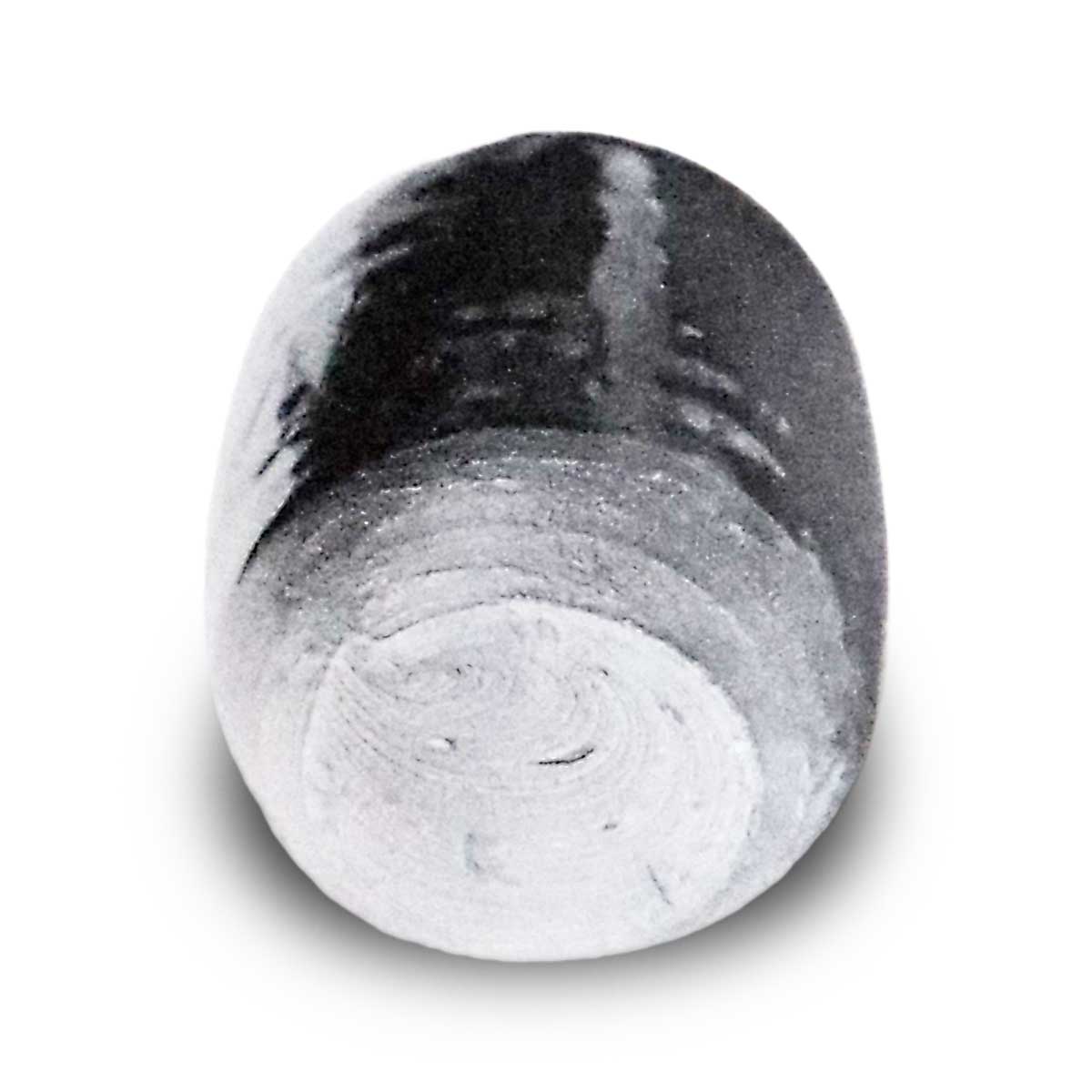
The rim is rounded, and the lip is shallow. The neck is low, and the shoulders are rounded and flared. The body features wheel-thrown ridges and has a taut, well-defined shape. From the rim downward, the color of the iron-rich clay is visible; the thread mark (the trace left by the potter’s wheel) is fine, with a slight distortion at its starting point. Additionally, there are cracks and areas where the clay has frayed, resulting in some parts that lack sharp definition. Overall, within the beautifully lustrous black glaze, a faint yellow glaze is visible, and there are areas where persimmon-colored and metallic sheen appear. The lustre is so intense that it clearly reflects objects.
This tea caddy has been repaired using kintsugi (gold joinery) to join together countless vertical and horizontal cracks, but the magnificent color of the glaze compensates for this flaw. At first glance, this large crack is not at all distracting. Inside, the glaze covers only the rim; below that, the interior of the body features coarse, well-defined wheel marks, and the center of the base forms a swirl pattern. Although small in size, it possesses an exceptionally beautiful luster and is a tea caddy of outstanding craftsmanship.