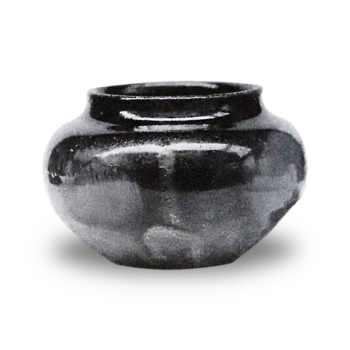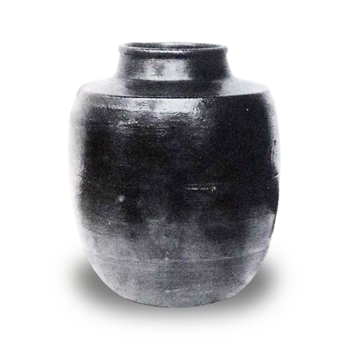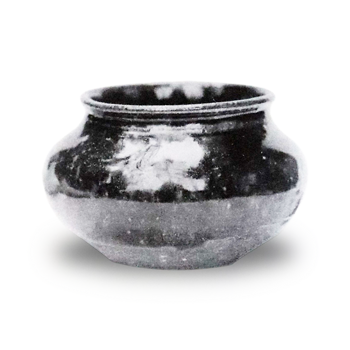
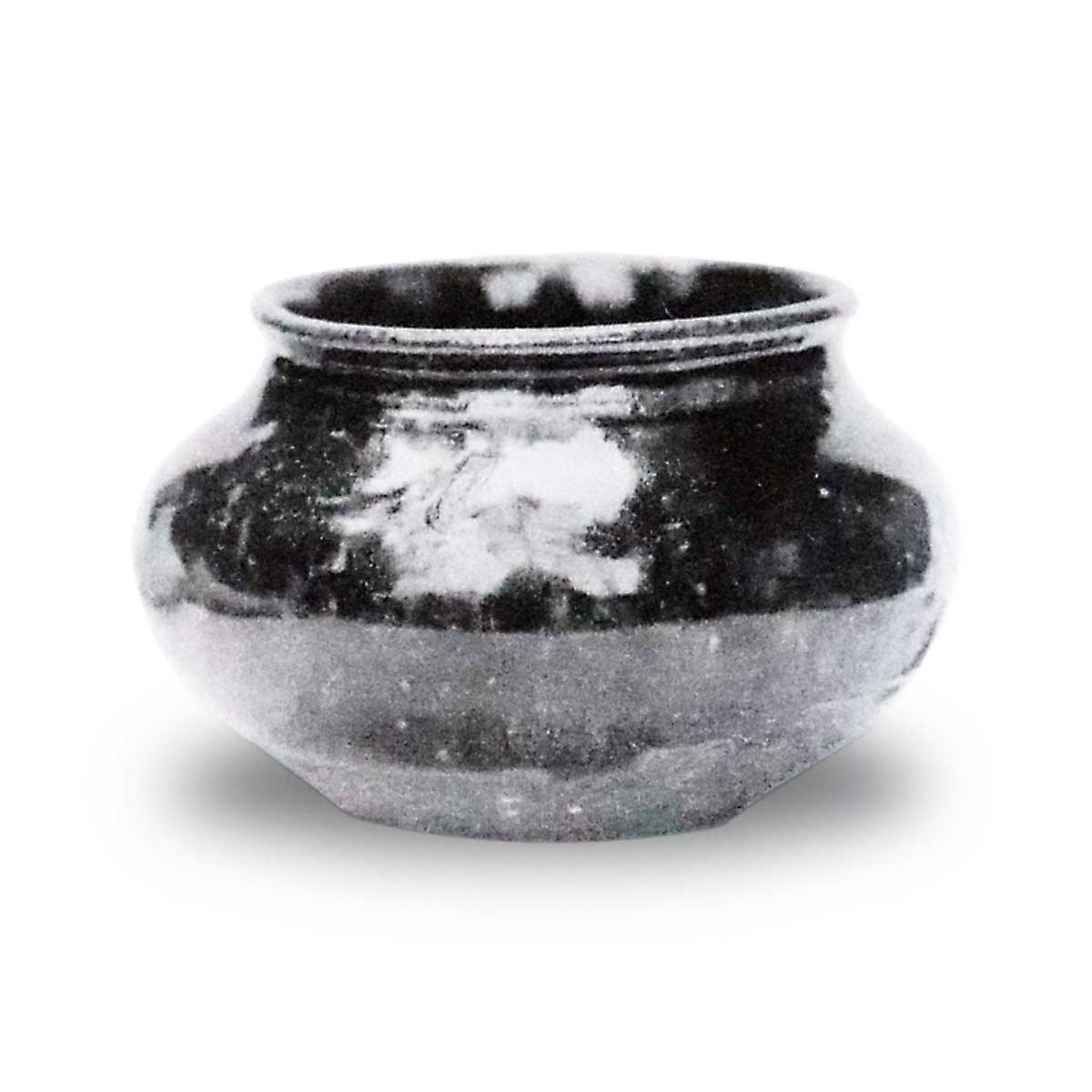
Old Seto: Collection of Yoshio Takahashi (Takahashi Hōan), Tokyo
Commentary:
Following the precedent set by examples such as the Kanamori Marutsubo and the Kanamori Katatsuki, this is believed to be the Taikai tea caddy that was once owned by Kanamori Izumo-no-kami (Kanamori Nagachika).
[Dimensions (Converted to Modern Units)]
Height: Approx. 6.06 cm – 6.12 cm (2 sun – 2 sun 2 rin)
Body Diameter: Approx. 9.85 cm (3 sun 2 bu 5 rin)
Mouth Diameter: Approx. 7.58 cm (2 sun 5 bu)
Base diameter: approx. 4.85 cm (1 sun 6 bu)
Koshiki height: approx. 1.06 cm (3 bu 5 rin)
Weight: approx. 177.4 g (47 monme 3 bu)
[Accessories]
・Lids for the storage case: 2 pieces
- No indentation (on the underside of the ivory lid): Made by Ritten, in the style preferred by Lord Kenzan (Date Tsunamura)
- With indentation: In the style preferred by Kobori Enshū, made by Insai
・Storage pouch: Light yellow chirimen silk
・Bags: 2
- Osaka Shokukin: Cord ends in Kaiki and purple
- Tang-style Asagi Donshu: Cord ends in Tamamushi, in the style preferred by Enshū, purple
・Storage box: Paulownia, natural wood
“Kanamori Taikai”
・Inner box: Paulownia, natural wood (with an inscription by Kobori Enshū)
“Kanamori Daikai”
[Miscellaneous Notes]
From Kokin Meibutsu Ruiju Shiyu no Bu:
“Kanamori Daikai, Tang-style (tea caddy illustration only)”
From Kanran Hōbutsu Mokuroku (also known as the Sendai Lord’s Collection Register):
“Kanamori Daikai, top-grade sea cucumber-handled style. Fifty gold pieces. Made by Tōshirō. Height: approx. 6.4 cm (just under 2 sun 1 bu); body circumference: approx. 30.9 cm (1 shaku 2 bu); mouth diameter: approx. 7.3 cm (just under 2 sun 4 bu); base diameter: approx. 4.8 cm (1 sun 6 bu). The lid with a ridge is in the Enshū style, crafted by Insai; the lid without a ridge is in the style of Lord Kōzan (Date Tsunamura), crafted by Tateno. The round pouch is made of pale yellow shibori crepe (tassels in urushi and umi-ki; lining in tamamushi, in the Enshū style) and Shokkin brocade (lining in pale yellow, in the style of Lord Kenzan). The inscription on the box is by Kobori Enshū.
“This piece was originally owned by Enshū; it subsequently passed to Kamio Bizen-no-kami, then to Funahashi Chōzaemon, and was finally presented as part of Funahashi Chōzaemon’s bequest.”
From Tsurezure no Tomo by Matsuyama Seika:
“Exhibited at the Special Exhibition in April, Meiji 35
Kanamori Daikai, Namako-de, for Lord Date Muneoki
Owned by Sōfu (Kobori Enshū), later by Kamio Bishū, and then by Funahashi Chōzaemon
(Illustration omitted) Two pouches: Osaka Shokkin; Chinese pale yellow Donshu silk”
Inaugurated on March 31, Taisho 10; held consecutively at Ikki-an, Garan-do, Akasaka
Host: Takahashi Hoki-an
[Meeting Record (Taisho Tea Ceremony Record)]
・1. Hanging Scroll: Kokura-style colored paper “The cherry blossoms atop Takasago’s hill have already bloomed”
・1. Tea Caddy: Antique Seto, Kanamori Daikai
・1. Tea Bowl: Sen Meibutsu—Black Kōetsu
・1. Tea Scoop: Furuta Oribe, with matching case
[Origin and History]
Originally owned by the Kanamori family (Kanamori Nagachika), it was passed down to Kobori Enshū, and subsequently to Kamio Bizen-no-kami and Funabashi Chōzaemon. Presented to the lord of the Sendai Domain (the Date clan) as part of Chōzaemon’s estate, it has been passed down through the Date family for generations; however, on July 4, Taishō 5, it passed into the hands of its current owner (Takahashi Hōian) during an auction of the family’s collection.
[Field Notes (Record of Actual Observation)]
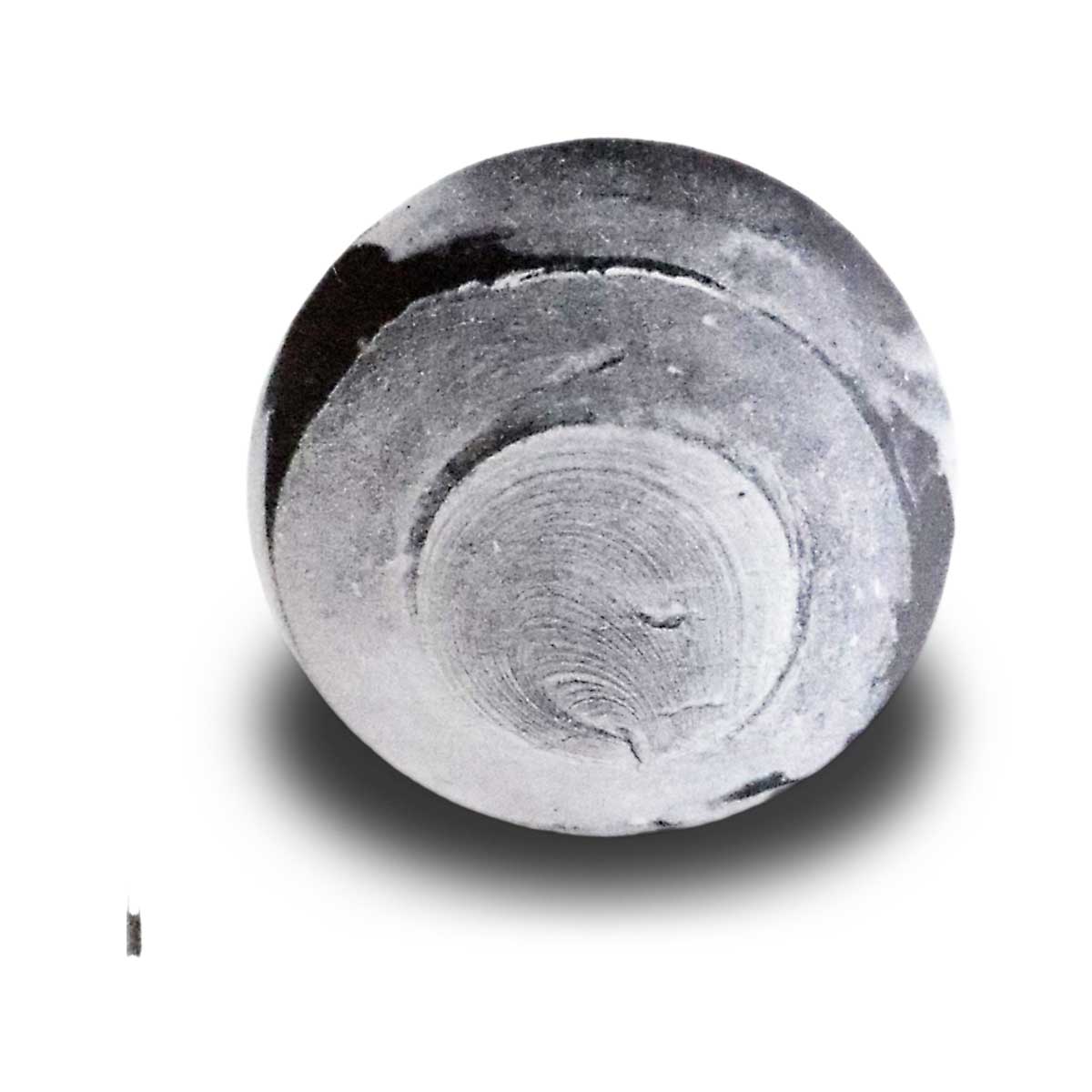
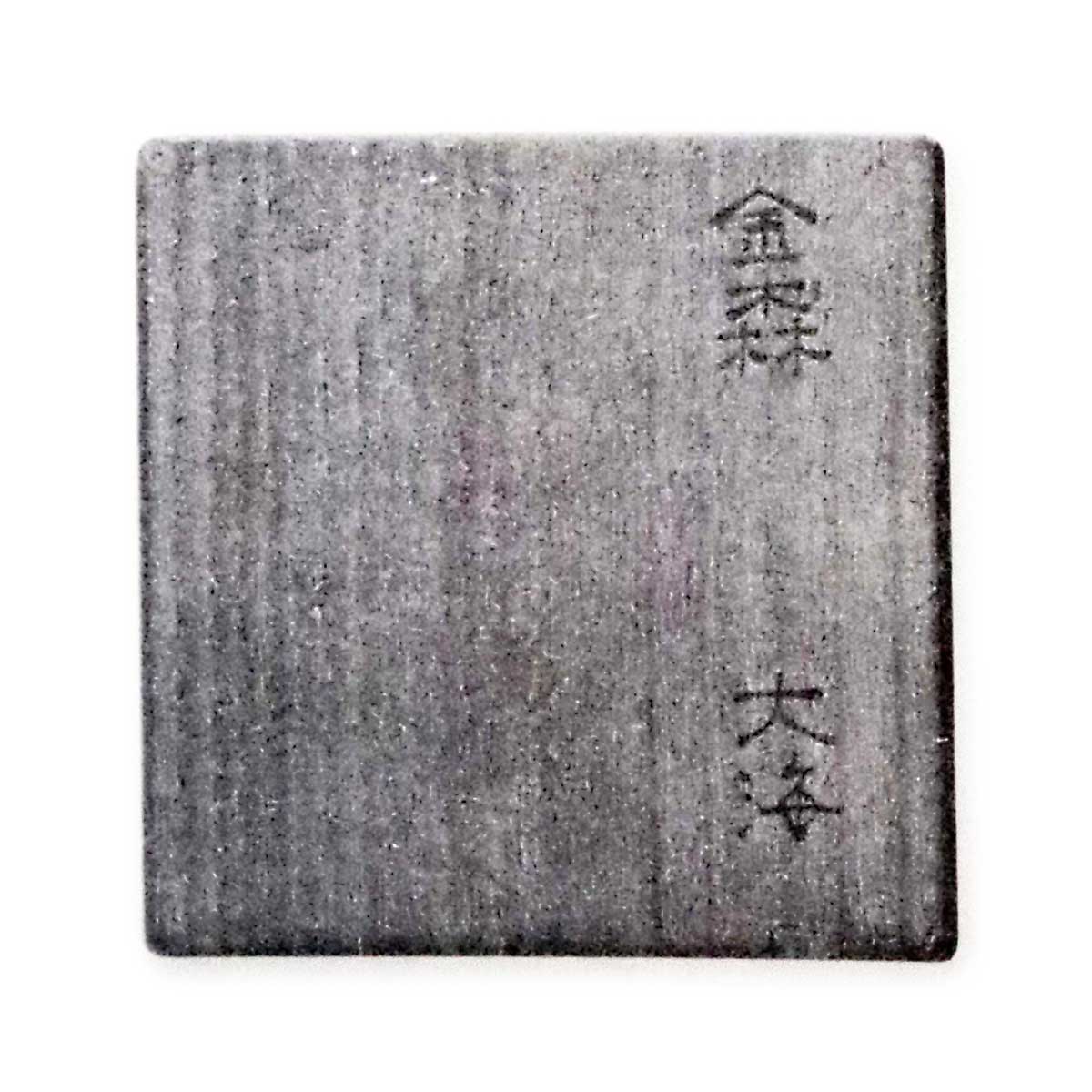
As a Daikai tea caddy, it possesses excellent proportions and form, and its appearance is exceptionally graceful. The rim is rounded, the twist is shallow, and the rim edge displays a persimmon-gold glaze effect, while the neck is dripped with black amber glaze. Along the edge of the neck, there are raised veins of persimmon-gold glaze, and overall, the black amber glaze and persimmon-gold hues blend intricately to produce a variety of visual effects (kiln changes and textures). A slight adhesion mark (where the piece touched another in the kiln) is visible on part of the shoulder tip, and a single horizontal streak around the waist adds a unique charm to this tea caddy. From the hem downward, the unglazed clay body is mouse-gray with a slight reddish tint, and fine “ishi-haze” (traces of small stones bursting within the clay) can be seen in places. The thread-cutting marks on the base are fine and distinct, with a slight misalignment at the starting point; near the center, some fraying of the clay is visible. The overall glaze color is beautiful, with some areas where a slightly yellow glaze is intermixed with the persimmon-gold hue. The interior is entirely covered in black amber glaze, and a vivid swirl-shaped mark remains in the center of the base. Both the interior and exterior exhibit a rich glaze luster; this is a magnificent, large “Oumi” tea jar that is flawless and in the finest condition.