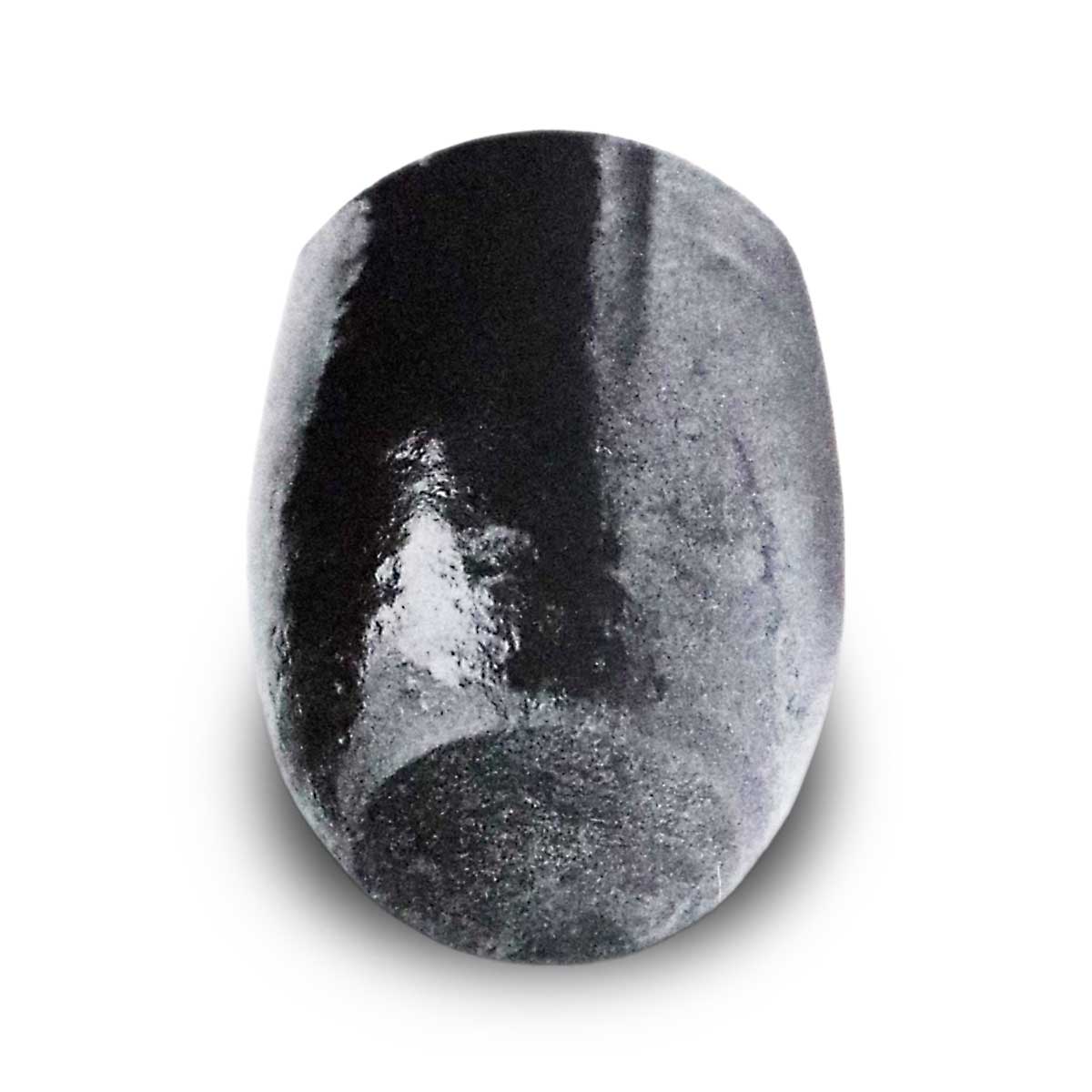
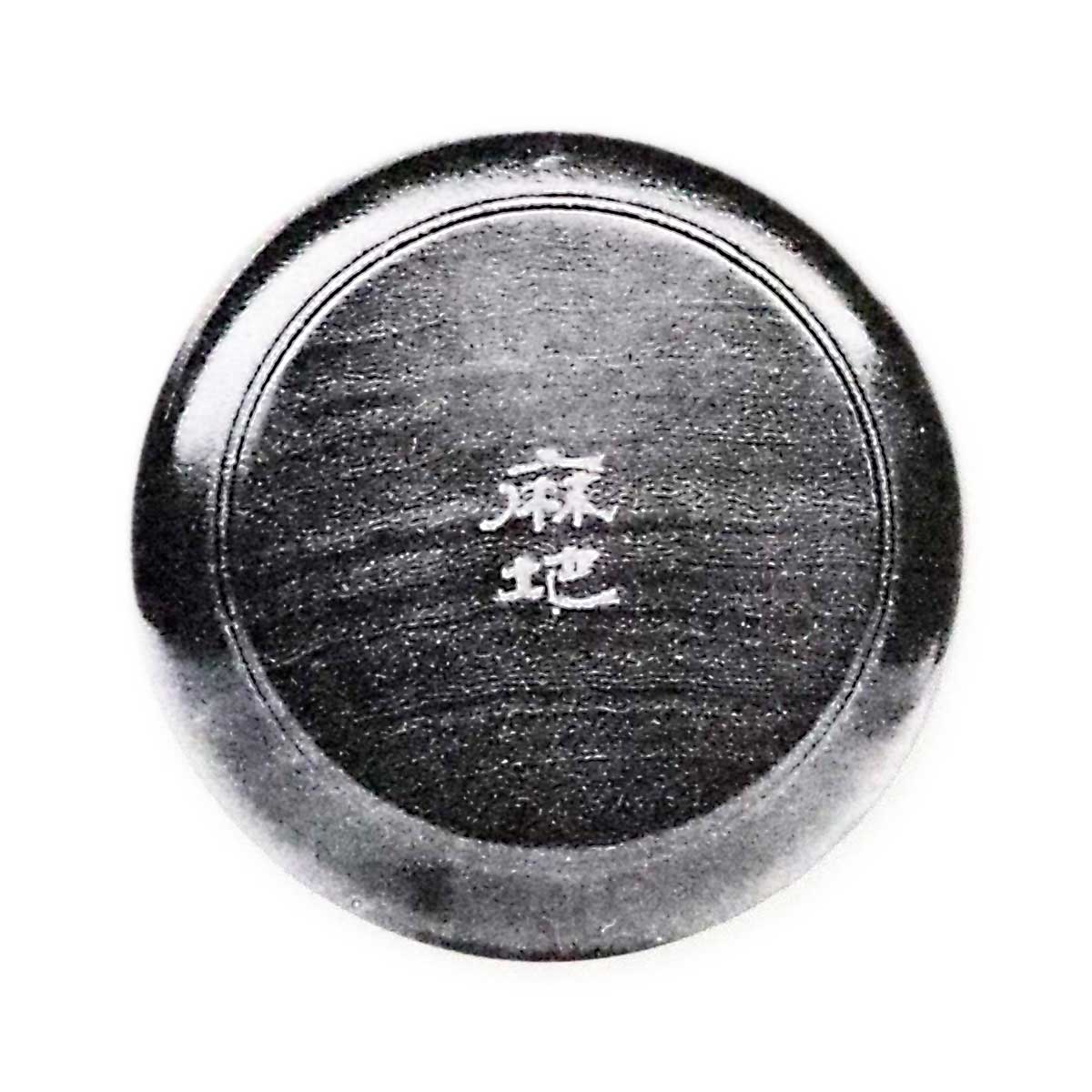
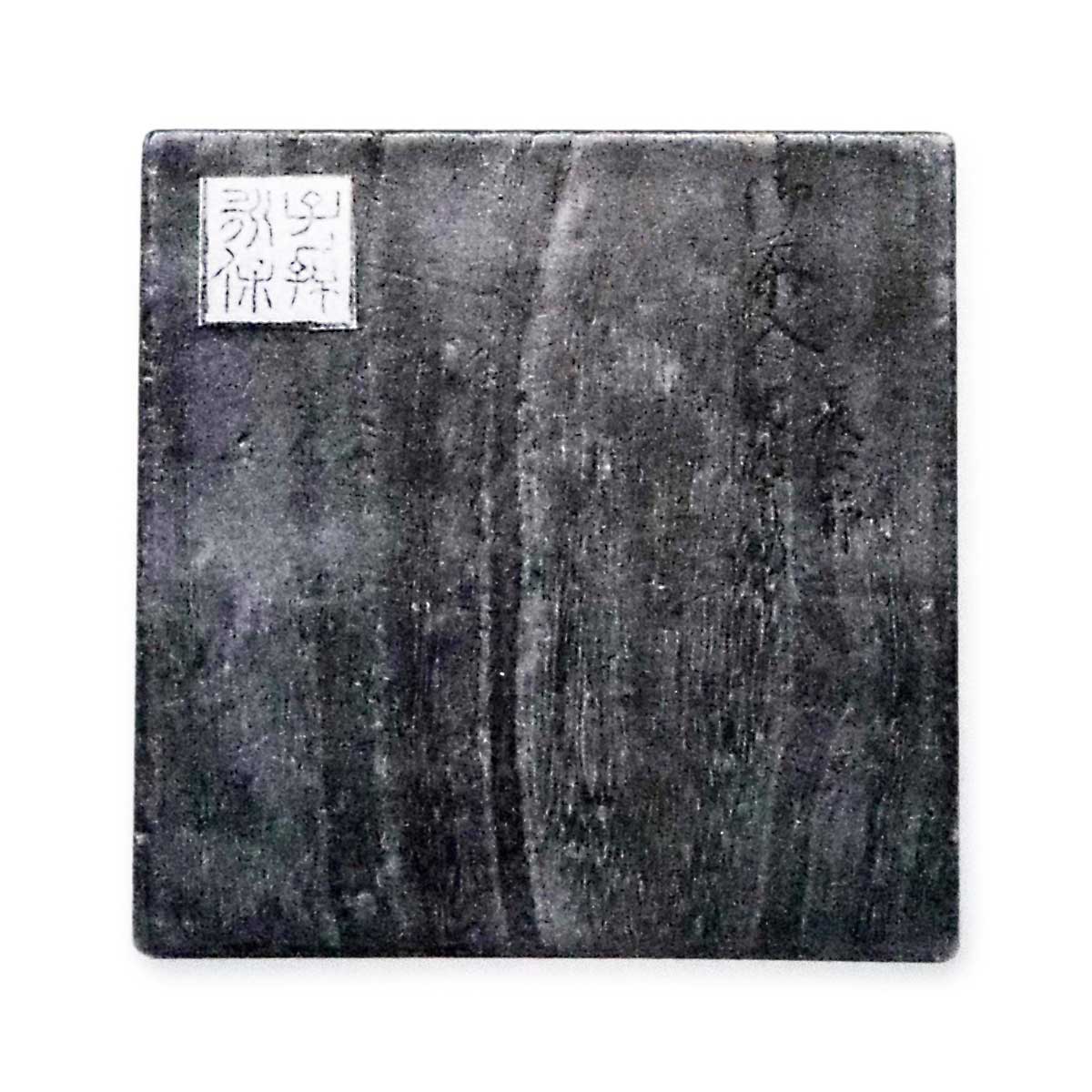
Toshiro, also known as: Nabeshima Katatsuki; Collection: Count Atsushi Matsuura
[Name]
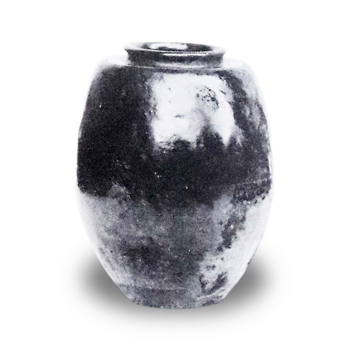
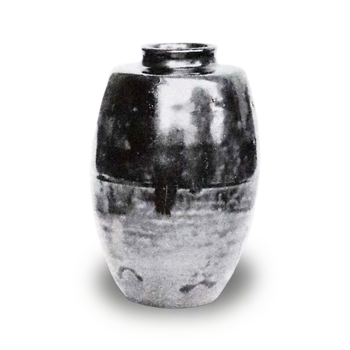
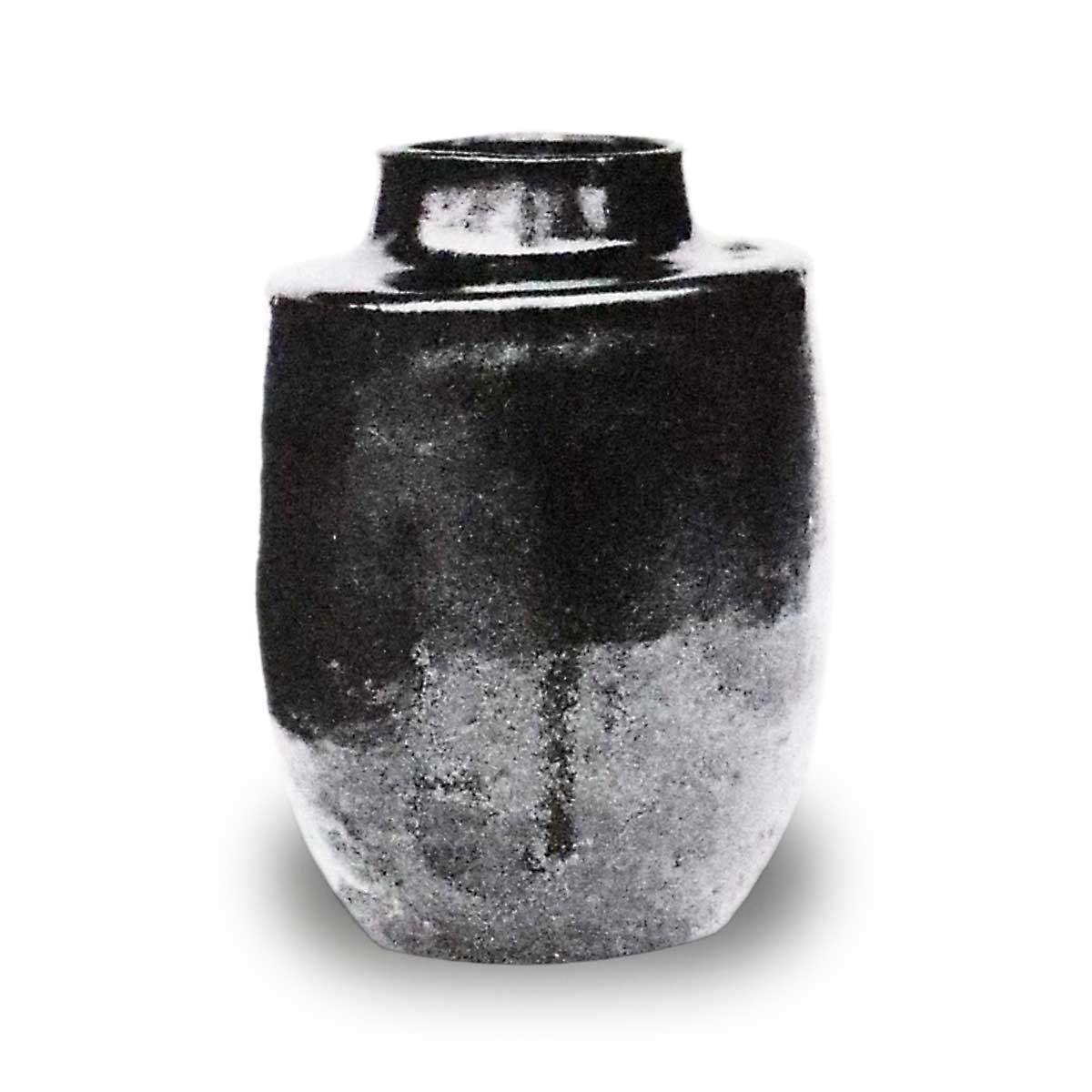
“Asaji” is an alternative spelling (ateji) of “Asaji” (浅茅), and it is believed that the name was given because the appearance of the tea caddy—its visual appeal and the texture of its glaze—was likened to the charm of Asaji grass turning color. The ancient Seto “Asaji Katatsuki,” known as a Daimeibutsu, is part of the collection of the Maeda Marquis family; while it happens to share the same name, this tea caddy is also known as “Nabeshima Katatsuki.” This is said to stem from the fact that this piece was passed down through the Nabeshima Marquis family.
[Dimensions (Converted to Centimeters)]
Height: 3 sun 2 bu 8 rin (approx. 9.9 cm)
Body Diameter: 2 sun 4 bu 5 rin (approx. 7.4 cm)
Mouth diameter: 1 sun 2 bu 5 rin (approx. 3.8 cm)
Base diameter: 1 sun 5 bu (approx. 4.5 cm)
Koshiki height: 3 bu 7 rin (approx. 1.1 cm)
Shoulder width: 4 bu (approx. 1.2 cm)
Weight: 51 monme 4 bu (approx. 192.8 g)
[Accessories]
・Lid: 1 (rounded rim, hollowed center)
・Storage pouch: White-brown ha-niwa
・Cover pouches: 3
- Sen-tai-butsu (Lining: Moe-gi mon-kaiki / Cord: Brown)
- Asa-ji (Purple ground with Kinran, Lining: Moe-gi kabe-choro / Cord: Purple)
- Donshu Shibayama (Lining: light green with a “mon-kaiki” pattern / Cord trim: wisteria purple)
・Hikiya (Maker): Tagayasan
Sunken carving with verdigris; author of the inscription unknown
・Inner box: Black lacquer
Pouch: Tanned leather (Lining: Donshu)
・Outer box: Paulownia, natural wood
(Inscription on the box: “Tea Caddy: Fujishiro, Nabeshima Katatsuki”)
[Provenance]
The inventory of the Matsuura Count’s family states:
“This is a renowned tea caddy passed down through the Nabeshima Marquis family. It had been transferred elsewhere during the Meiji Restoration; upon acquiring it and showing it to the Marquis, I was asked to keep it in my collection.”
It is recorded as such.
[Field Observation Record]
On November 26, Taisho 8 (1919), the item was examined in person at the residence of Count Atsushi Matsuura in Mukoyanagihara-cho, Asakusa Ward, Tokyo City.
The rim has no folded edge; the lower part of the neck protrudes, and there is a slightly concave section around it that forms a step. Overall, the base color is a blackish persimmon or chestnut brown; the glaze applied from the rim down to the body appears even darker. Within a single streak of black glaze (a “nadare” pattern), there are areas where the color transitions to chestnut brown, though the clarity of the pattern is somewhat lacking.
The rim has a somewhat wide, patch-like repair (maki-zuri). There are three areas of unglazed clay (hima) around the base; the glaze pools are low, so only a small portion of the unglazed clay at the base is visible. The base is raised, and the iron-rich clay body reveals small chips and dents, as well as marks from a hard spatula.
Inside, the glaze covers the rim, and below that, shallow wheel marks continue. This is a tea caddy that possesses a solid, powerful, and majestic elegance.