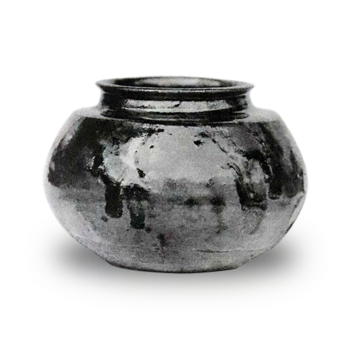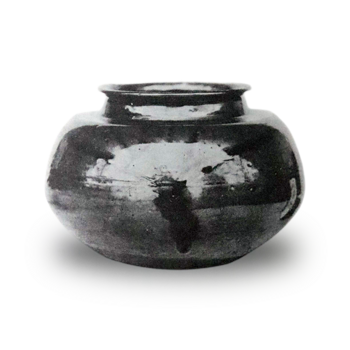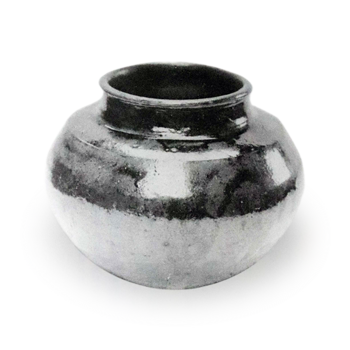
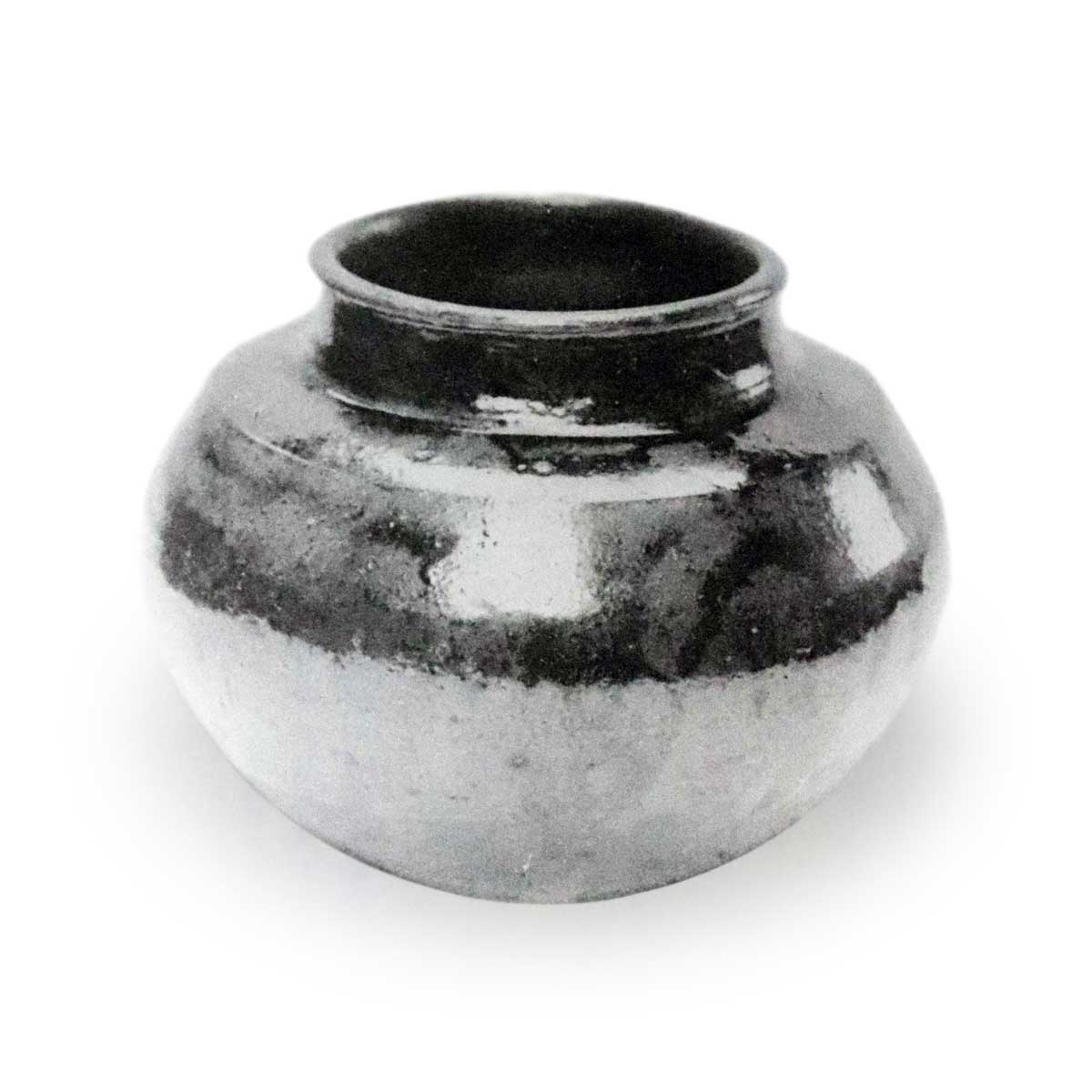
Chinese-made, Daimeibutsu; from the collection of Mr. Ueno Yokichi, Kyoto
Name
The Kokin Meibutsu Ruiju states: “According to the meaning of the poem, ‘Though I grieve that I was late, I now face the flowers at a time when the mountain cherry blossoms have faded,’ it has been called ‘Yamazakura’ since ancient times. Perhaps this is because the overall appearance of the tea caddy resembles that of late-blooming cherry blossoms.” The author of the poem on the right is Lord Fujiwara no Tametada.
Dimensions
Height: approx. 8.03 cm
Body diameter: approx. 10.66 cm
Mouth diameter: approx. 6.00 cm
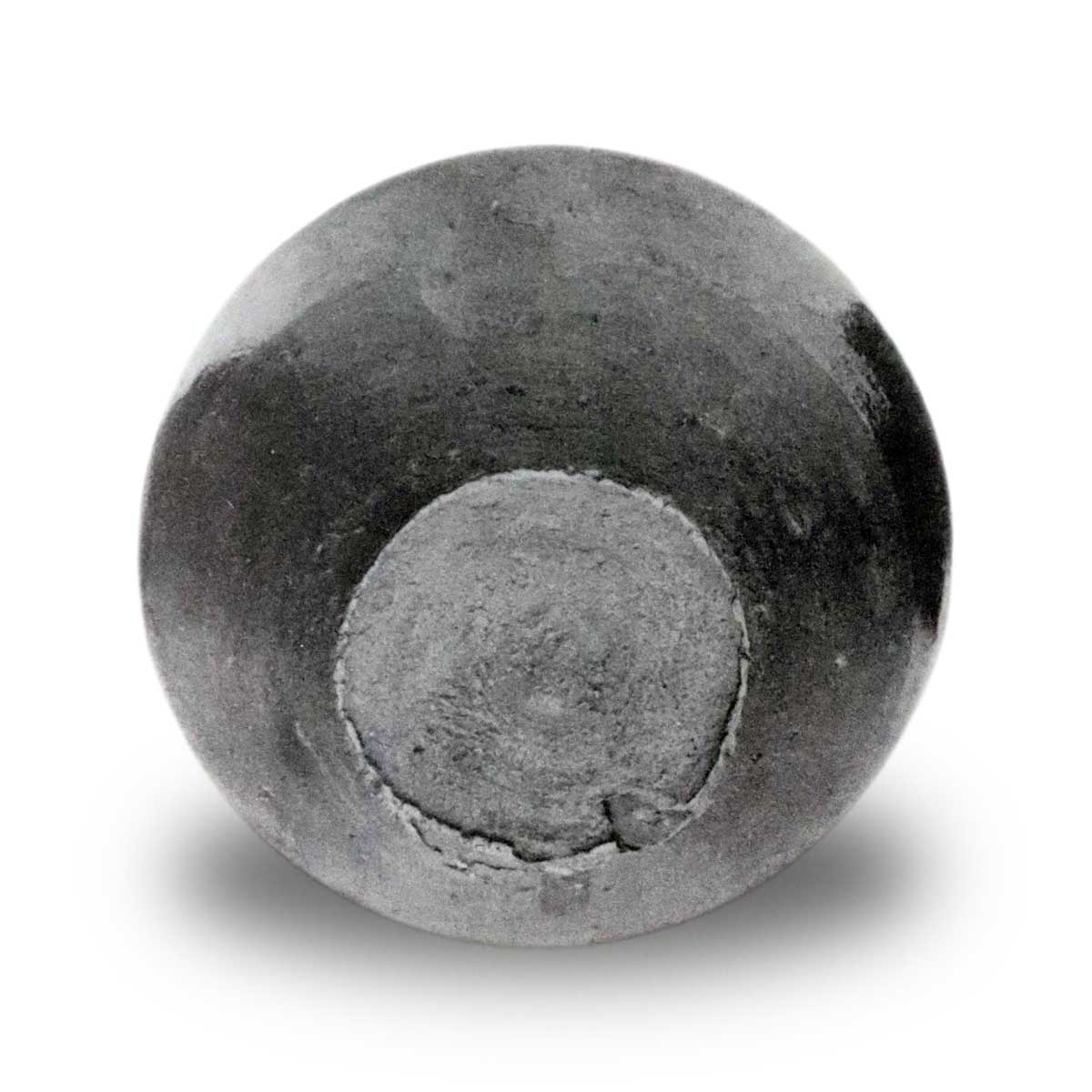
Base diameter: approx. 4.85 cm
Koshiki height: approx. 1.36 cm
Shoulder width: approx. 1.21 cm
Weight: approx. 206.6 grams
Accessories
- Lids: 3 pieces (one of which has a depression)
Lid diameter: approx. 6.36 cm
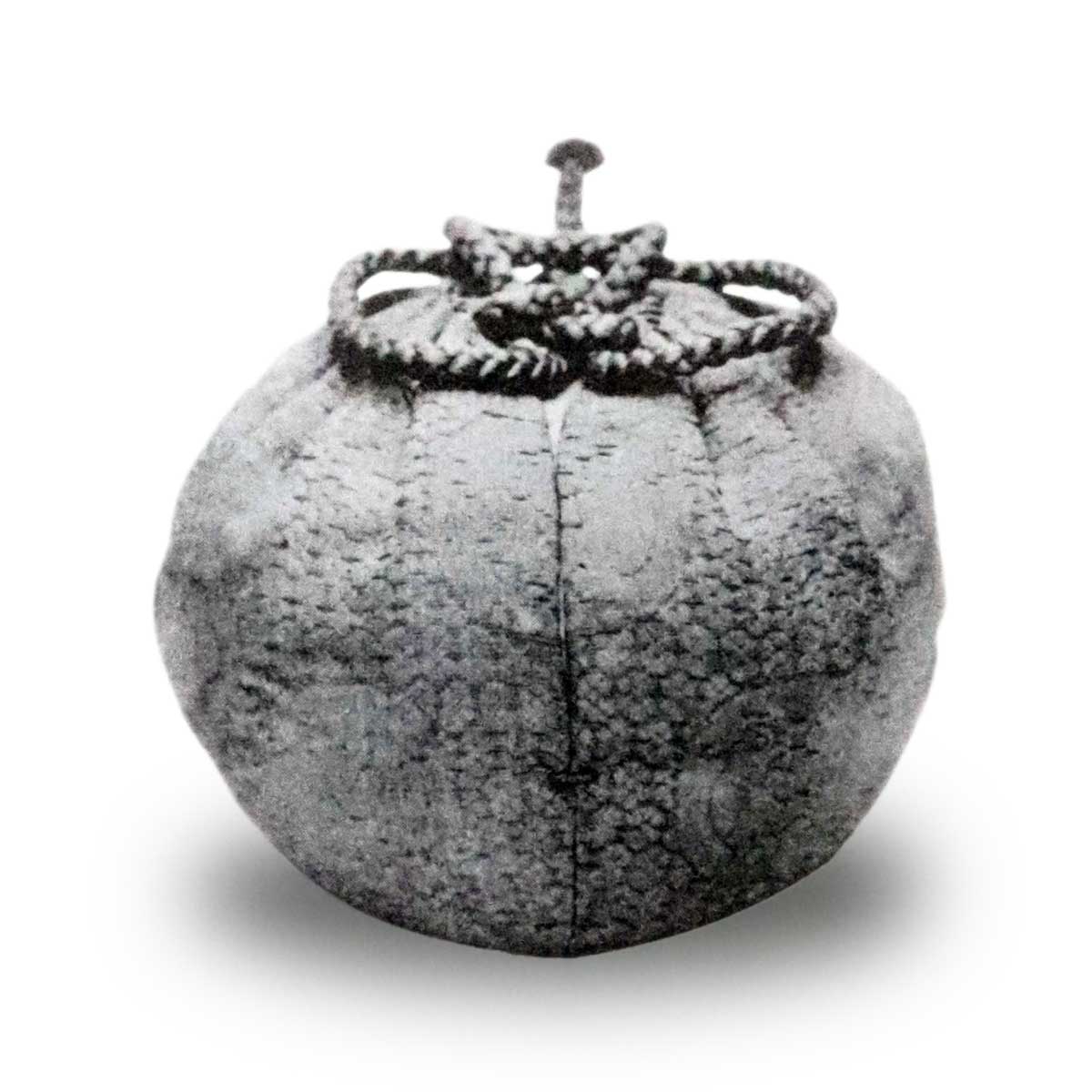
One set of two pouches
Gold-painted rabbit crest; lining in pale green kabechoro; cord tied in a brown tsugari knot
“Yamazakura Daikai”
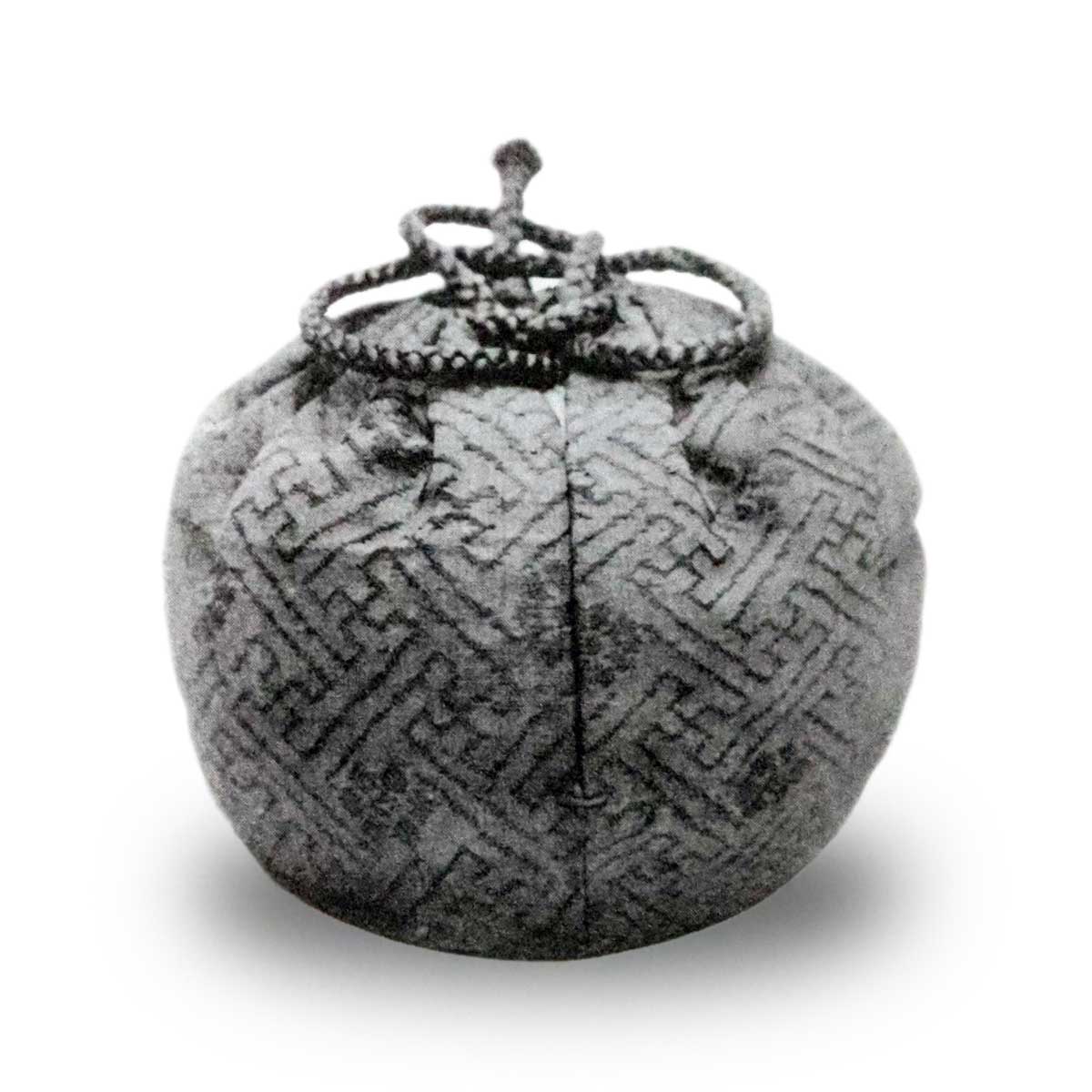
Lightning-patterned satin; lining in pale green kabechoro; cord tied in a purple tsugari knot
One pouch box; lid in black and vermilion lacquer; inscribed with silver powder
Black lacquer
“Yamazakura Lid Pouch”
Vermilion lacquer
One: Made of zelkova wood; black “kaki-awase” lacquer; interior features a gold-and-silver pear-skin ground
Characters rendered in silver powder; inscribed by Kobori Enshū
“Yamazakura”
Pouch: Birch-colored silk? Lining in pale yellow kabechoro; cord tied in a purple tsugari knot
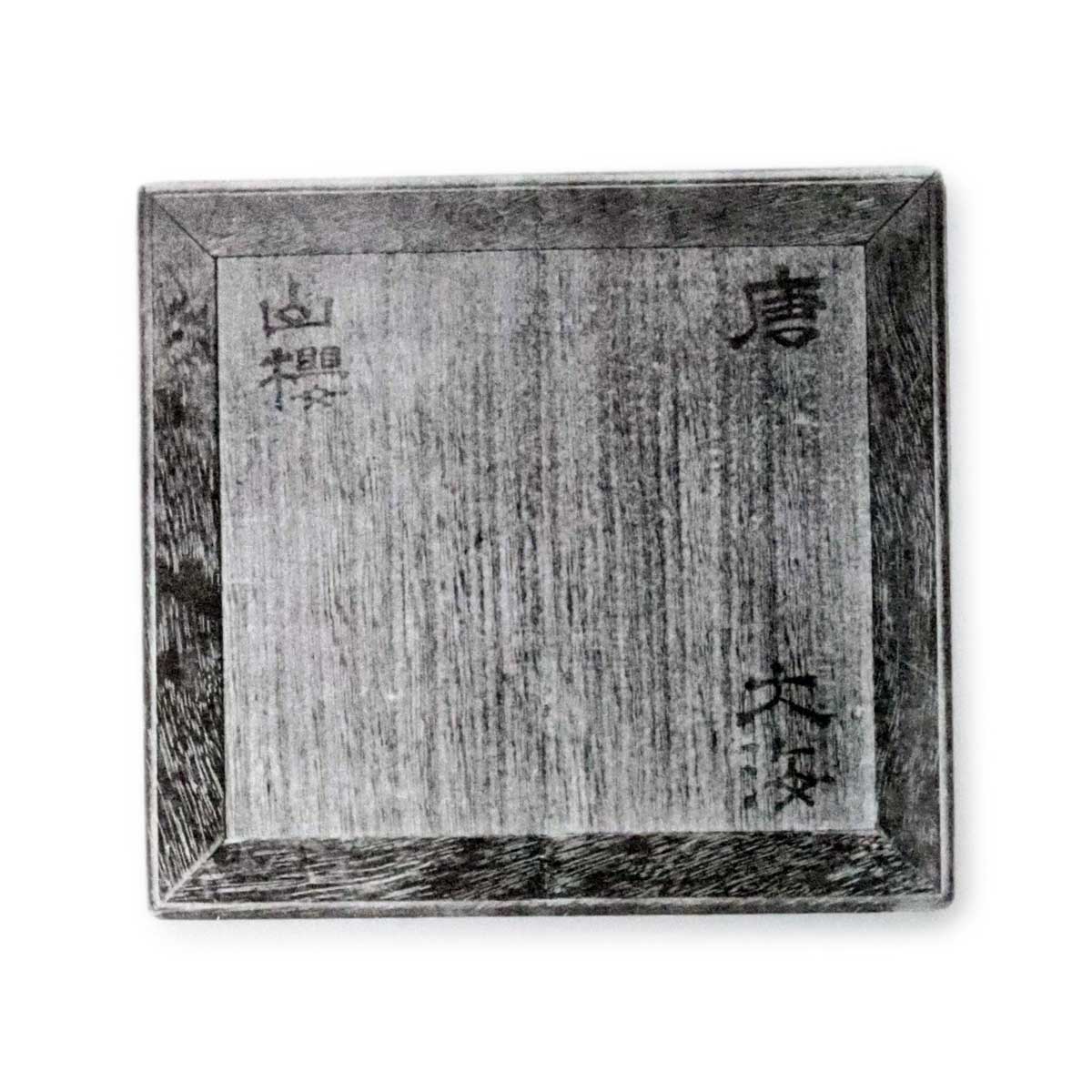
One box: Paulownia; lid rim made of joined rosewood
“Tang Daikai”
“Yamazakura”
One certificate: Authentication by Fujishige Fujimoto
Tang Daikai is authentic; there is no dispute.
December, Year of the Snake, [Date]—Fujishige Fujimoto (seal)
One accompanying note
From the Senju
Yoka—Fujiwara no Tameyuki
“Even the regret of being too late is now a mountain cherry blossom, gazing upon the flowers of a season when there are no blossoms.”
Miscellaneous Notes
Mountain Cherry Blossom: Chinese ware. Height approx. 8.03 cm, body diameter approx. 10.61 cm, mouth diameter approx. 6.06 cm, shoulder width approx. 1.21 cm, shoulder height approx. 1.42 cm, base diameter approx. 4.85 cm. Comes with two pouches. The front features a gold-ground rabbit crest; the back is designed to be worn as the front, with a pale yellow kabechoro lining. The cord is tied in a Enshū-cha tsugari knot. Lightning-patterned satin; the lining is pale yellow kabechoro; the cord is tied in a purple tsugari knot. Hikiya uses zelkova wood; the exterior is finished in black kake-ai lacquer with silver powder inlay. The pouch is made of kabairo-ken fabric; the lining is pale yellow kabechoro; the cord is tied in a purple tsugari knot. The box is made of paulownia wood, with a karin-patterned edge and meticulously chamfered corners.
“Even the resentment that came too late is now a mountain cherry blossom—facing the flowers of a time when there are none,” it is said that this tea caddy has been called “Mountain Cherry Blossom” since ancient times, inspired by the spirit of this poem.
Perhaps this is because the overall craftsmanship of the tea caddy resembles that of the “Late Cherry Blossom.” It is said to have been owned by the Kanamori family. Previously, the underside of the box lid bore an inscription in the hand of Kobori Gonjūrō (Masaharu, younger brother of Kobori Enshū), but this old box was destroyed in a fire on New Year’s Day of Shōtoku 6 (Year of the Monkey, 1716).
(Kokin Meibutsu Ruiju: Supplementary Section)
Yamazakura: Chinese-made. Acquired during the Hōei era. (The dimensions and details of the accessories are the same as those in Kokin Meibutsu Ruiju; there is a separate illustration of the tea caddy.)
(Meibutsu-ki)
Yamazakura: Chinese-made. Daimeibutsu. Taru Yozaemon. Mouth diameter: approx. 6.55 cm; height: approx. 8.24 cm; body diameter: approx. 10.30 cm; base diameter: approx. 5.00 cm; kōzuki height: approx. 1.52 cm; shoulder drop: approx. 1.21 cm; thickness: approx. 0.45 cm. The storage pouch is made of white chirimen, and the cord is purple. There are two pouches. The surface features a seven-star circular crest with a dragon-bird motif in gold on a pale yellow ground; the reverse side features a yellow sea mist pattern; the cord is purple. The “manji” sheath is made of satin with a seven-star brown crest; the reverse side is the same; the cord is Enshu brown. The Hikiya grinding bowl is round with black “kaki-ai” lacquer; it has a single horizontal line on the lid and a swirl pattern on the bottom; the interior features a gold-and-silver shimmering pear-skin ground. The pouch is made of light yellow satin with a peony crest; the lining features a brown arabesque pattern, and the cord is Enshū brown. The inscription on the Hikiya case reads “Yamazakura.” The box is made of white paulownia wood with a beveled edge; the interior is lined with mulberry wood, and the inscription reads “Tōdaikai.” The box measures approximately 14.36 centimeters across, though it contains an internal divider; the section with the inscription measures approximately 11.09 centimeters square. “Even the regret of being too late is now a mountain cherry blossom—facing the flowers in a season when there are no flowers,” attributed to Fujishige Fujimoto. The glaze is a cascade of amber over a persimmon-colored base; the glaze is thin, the shoulder is well-crafted, and the base glaze resembles that of Aburaya (Aburaya Katatsuki). Made of grayish-brown clay with a flat-bottomed construction. (Illustration of this exquisite tea caddy available)
(Lion, Phoenix, Tortoise, Dragon)
Yamazakura Daikai—a Chinese import. Owned by Tsuchiya Sagami-no-kami, then by Matsubara Heiizumi-no-kami. Later owned by Hotta Sagami-no-kami, and subsequently by Satake Sakyo-no-daibu.
(Collection of Famous Tea Utensils from Various Families)
History of Ownership
Originally owned by the Kanamori family, it was passed down to Tsuchiya Sagami-no-kami, and around the Hōei era, it came into the possession of Matsui Hei-izumi-no-kami. In a fire on New Year’s Day of Shōtoku 6 (1716), the box painted by Kobori Gonjūrō was destroyed. It was subsequently passed down to Hotta Sagami-no-kami, then came into the possession of the tea utensil dealer Taru Yozaemon, and from there was acquired by Satake Sakyo-no-daibu, the lord of Akita Castle. However, on November 15, Taisho 6 (1917), during an auction of the Satake Marquis family’s tea utensils, it was purchased by the current owner (Ueno Yokichi).
Field Notes
On May 16, Taisho 9 (1920), I examined the piece in person at the residence of Mr. Ueno Yokichi on Matsubara Hirodo in Shimogyo Ward, Kyoto City.
The rim is rounded, the flared rim is shallow, the base is broad, the shoulders are sharply defined, and the body is full.
From the waist down, the vessel is plump and rounded before tapering. From the lower rim down, half of the surface is a mouse-gray color, while the other half reveals the red-clay body; the base is raised like a board, with a slightly upturned rim, and there is a chip in one area. Below the shoulders, there is a wide wheel mark that appears to have been chamfered, and below that, fine wheel marks run all the way around. Half is covered in black amber glaze, while the other half is glazed in purple or persimmon-colored glaze, creating an asymmetrical design (where the colors differ on the left and right sides). Within the purple glaze, a single streak of black glaze flows down to the base and stops there. In addition, there is one spot where a black-amber-colored glaze run reaches the rim, revealing a slight hint of blue-lapis lazuli color in the glaze drips. Inside, the glaze covers the rim, and in some places, glaze runs extend down to the base. The wheel marks are coarse and circling the vessel, and the swirl pattern in the center of the base is worn down and barely visible. This tea caddy is in pristine condition, rich in visual interest, and features a striking color transition across one side, making it a piece with many points of interest.