Hafu Kiln, Yoneichi Model Song, Revival Meibutsu
Accessories
Lids (2), Nest, Insai-made
Cover (3)
Hikiya (1), Flower-patterned
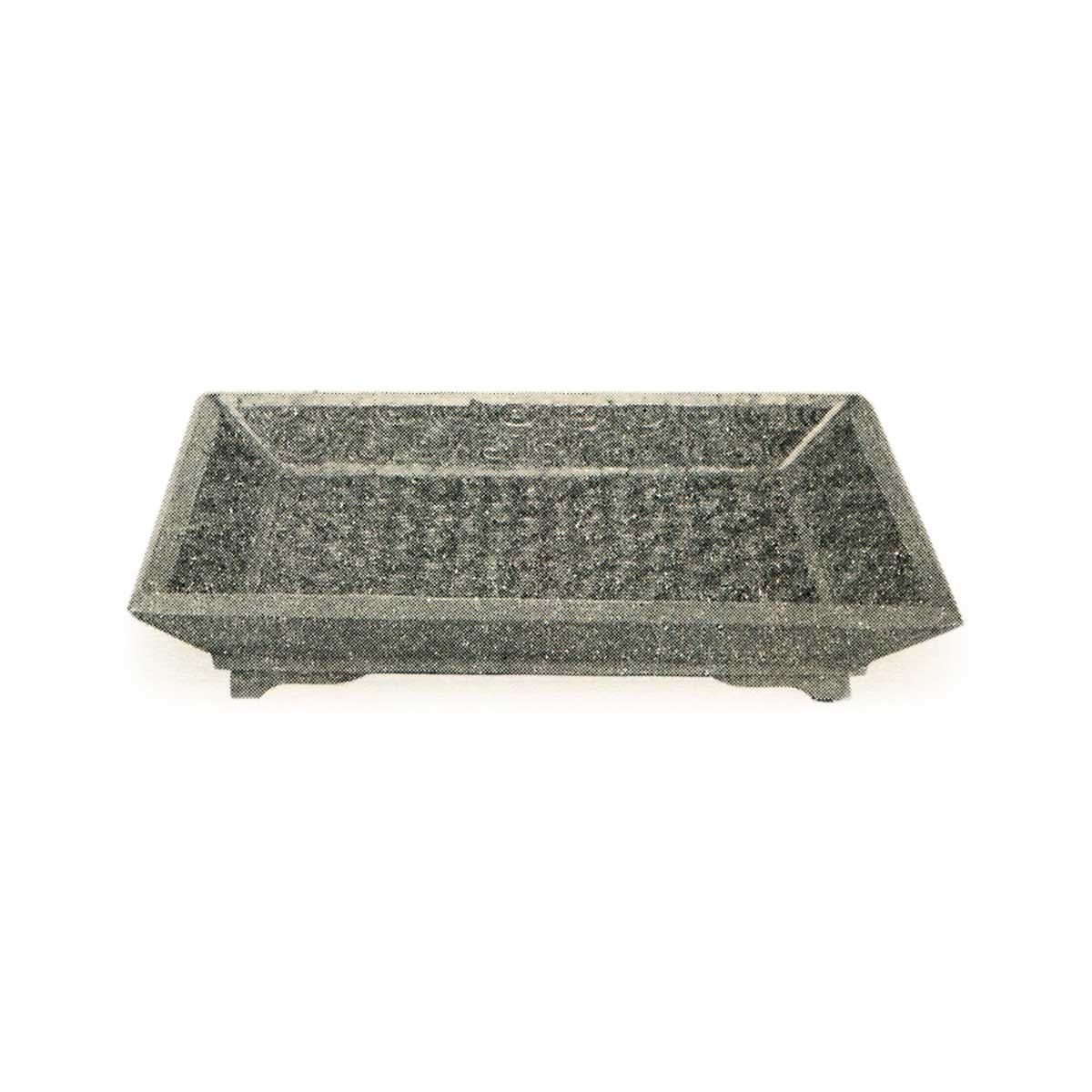
Chinese Item, Katsura Syo Square Tray
Box, Paulownia, Shunkei Lacquer, Gold Powder Inscription, Inscription, Kobori Enshu’s Brush
Provenance
Kobori Enshū → Inaba Mino-no-kami → Kōnoike Family
Recorded
Kokin Meibutsu Ruishū, Meibutsu-ki, Enshū Gosenshu Jūhachi-hin, Chaki Zōshōbō, Meibutsu Mokuri Monjo, Chaki Mokuri Monjo, Sakurayama Ichi’yū Nikki, Meiki-roku, Kamio-ke Dogu Meisai-ki, Kokin-roku
Dimensions
Height: 8.0cm Mouth Diameter: 4.2cm Body Diameter: 7.6cm Base Diameter: 4.3cm Weight: 183g
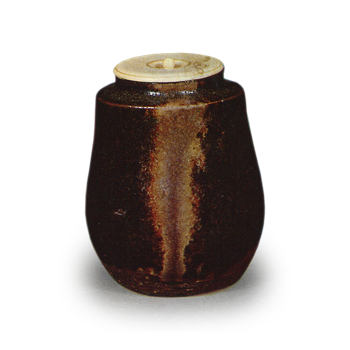
I first saw this tea caddy during the Kōnoike family sale.The name “Komeichi” (Rice Market) is said to derive from its resemblance to a rice bale. This original piece is thus the source of its exceptionally interesting form.
Among similar pieces by the same artisan, this shape is rare. Several others, displaying flowing glaze, were named “Taki” (Waterfall). The flowing glaze on this original piece is particularly vivid and beautiful, harmonizing with the fine-grained Seto overall glaze to create a tea caddy rich in visual interest.
Three shifuku (cover pouches) and two lids are included. Perhaps due to its Kōnoike provenance, the Saga paulownia wood is especially rare among Meibutsu, and the name “One Rice Measure” itself originates from this tea caddy. The bamboo vine design by Donshu is also of the highest quality.
Both ivory lids feature hollowed-out patterns, one being slender and the other notably thick, which is quite interesting.