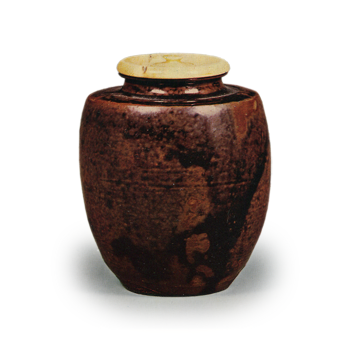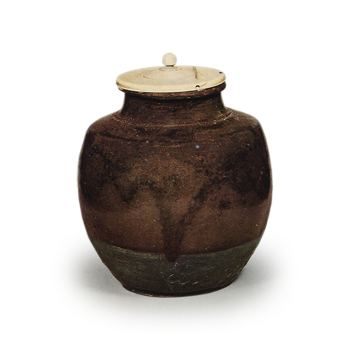

Chinese Daimeibutsu
Accessories
Lid
Three covers
One black lacquered box with gold lettering
Provenance
Juko – Miyoshi Sosan – Oda Nobunaga – Otomo Sorin – Toyotomi Hideyoshi – Tokugawa Ieyasu – Tokugawa Yorifusa (Mito family)
Published
Written by Yamagami Soji, Meibutsu Shu (Collection of Famous Tea Utensils), Kokon Meibutsu Ruishu (Collection of Famous Objects from Ancient and Modern Times), Kokon Meibutsu Ki (Record of Famous Objects from Ancient and Modern Times), Shokake Meiki (Collection of Famous Tea Utensils from Various Families), Tsuda Soun Chayu Nikki (Tea Ceremony Diary of Tsuda Soun), Chaden Kiroku (Record of Tea Ceremonies), Imperial Household Agency Book, Tencho 13th Year Ocha (Tea Ceremony), Sotoku Nikki (Diary of Sotoku), Kitano Chakai Ki (Record of Tea Ceremonies at Kitano), Rikyu Hyakukai Kai (Explanation of Rikyu’s 100 Tea Ceremonies), Shosho Taiko Ki (True Record of
Height: 8.6 cm, Mouth diameter: 4.5 cm, Body diameter: 7.9 cm, Base diameter: 4.6 cm, Weight: 116 g
This shoulder-shaped tea caddy is correctly made, with a soft shoulder, a strong body, and a glaze that draws a clear line, revealing the original thread cutting.
The Tang-style glaze is beautifully melted, and the appearance of the shoulder-shaped tea caddy is extremely beautiful.
Overall, the glaze appears lustrous, but this tea caddy was salvaged from the ruins of Osaka Castle after its fall by the Fujishige and Fujimoto father-son duo, who repaired its damage. Despite this, it retains its original form in harmony with the glaze quality. Therefore, one can imagine how excellent this tea caddy must have been in terms of both glaze and form before it was damaged by war.
The author had the opportunity to see it in person when it was offered at auction by the Mito family.