


Hafu Kiln, Shibugami Tehon Uta, Seto
Accessories
Four Lids, One Inner Nest, Lid Box, White Paulownia Wood with Inscription, Written by Matsudaira Fumai
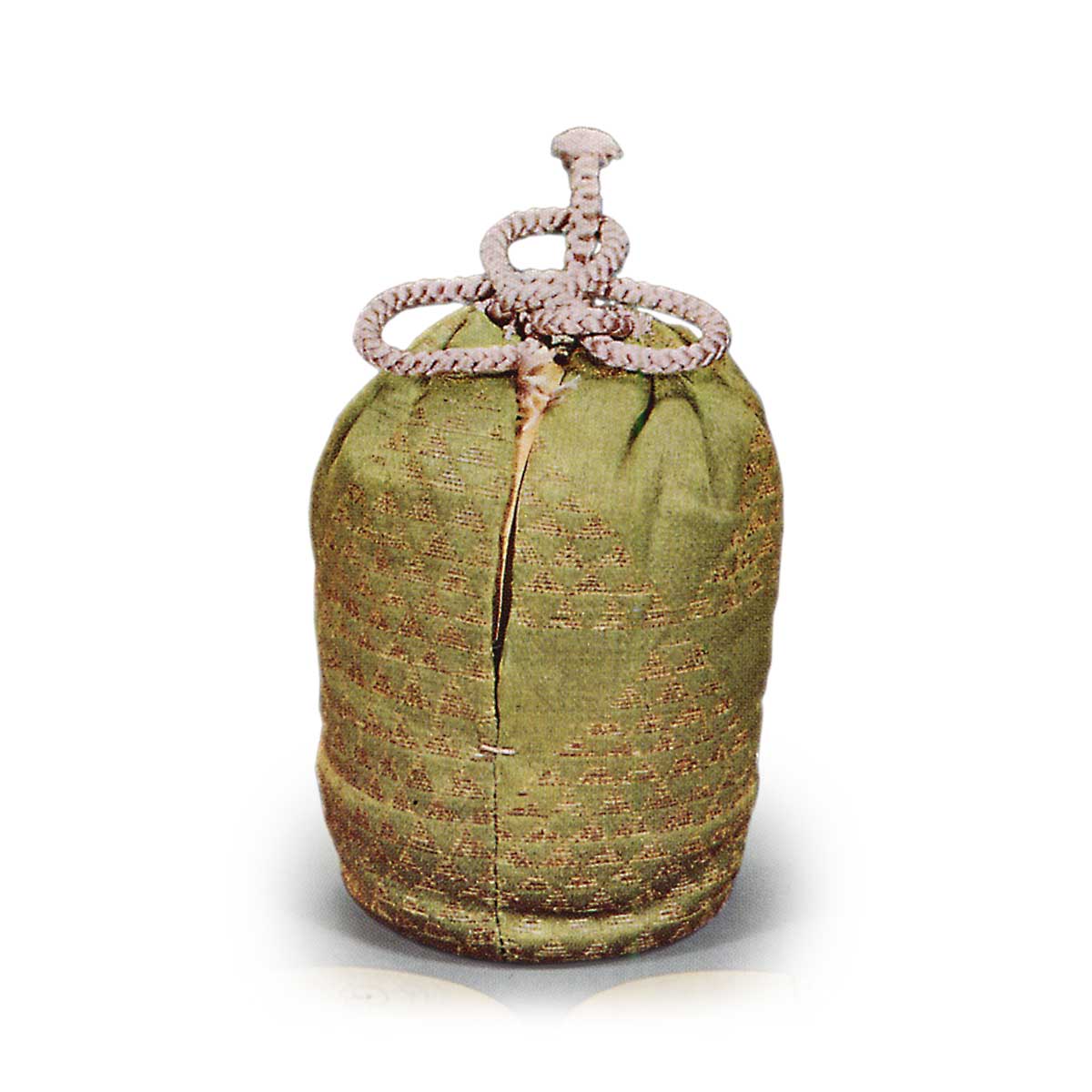
Two Covering Cloths, Covering Cloth Box, Paulownia Lacquered with Scraped Finish, Gold Powder Characters, Inscription, Written by Shōji-an Sōko
One Hikiya, Ironwood, Gold Powder Character Shapes, Inscription, Written by Shōji-an Sōko
Hikiya Lid, Gold Powder Character Shapes, Inscription by the Same Hand
Inner box: Paulownia lacquered with gold powder characters, inscription by Chōroan Sōko
Outer box: Paulownia white wood, inscription by Matsudaira Fumai
Transmission
Chōroan Sōko → Kutsuki Iyo-no-kami → Okuda Hachirōemon → Matsudaira Norimura → Hotta Sagami-no-kami → Itakura Sado-no-kami → Taruyemon → Matsudaira Fumai
Recorded in
Record of Meibutsu, Collection of Famous Objects Through the Ages, Collection of Tea Utensil Appraisals, Record of Meibutsu Appraisals, Written by Yoshimasu Kōen, Illustrated Tea Containers, Selected by Enshū, Eighteen Items, Shōtoku 4th Year (1714) Account Book for Tea Utensil Purchases, Fushimiya Memorandum, Lord Ōsaki’s Handwritten Record of Tea Utensil Purchases
Dimensions
Height: 9.0cm Mouth Diameter: 5.4cm Body Diameter: 6.8cm Base Diameter: 5.1cm Weight: 179g
The first owner of this tea caddy was Chaya Sōko, a tea master renowned even before Enshū, whose hermitage name inspired this inscription. It is a rare masterpiece among the Hagi kiln wares, distinguished by its unconventional form.
Its wide mouth tapers to the shoulders, and its simple, cylindrical form is also unusual.
A shibugami glaze covers the entire piece, creating a rough, grainy texture. Within this, a single pool of glaze forms an interesting placement pattern. This technique is called shibugami-de.
The clay itself has a sticky quality, and the coarseness of the brushwork adds a particularly elegant charm.
Two storage covers. Preserved exceptionally well in the Kamakura Kandou style, it is well-matched with the Gondaifu-kirisashi. The fact that the master potter Shōko himself inscribed the name of the kiln, Hikiya, speaks to how deeply cherished it was by the kiln master.


Body inscription: Shōko of Hikiya

Inscription: Written by Matsudaira Fumai


Inscription: Written by Chōroan Sōko


Inscription: Written by Chōroan Sōko

