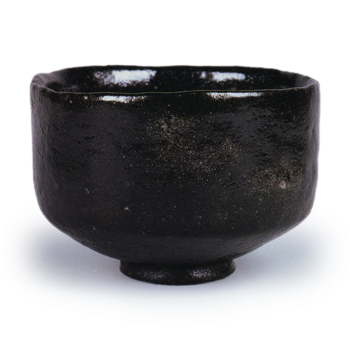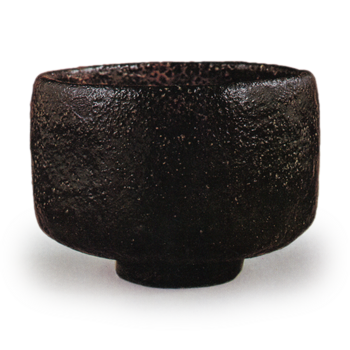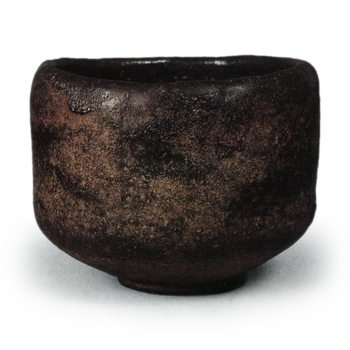
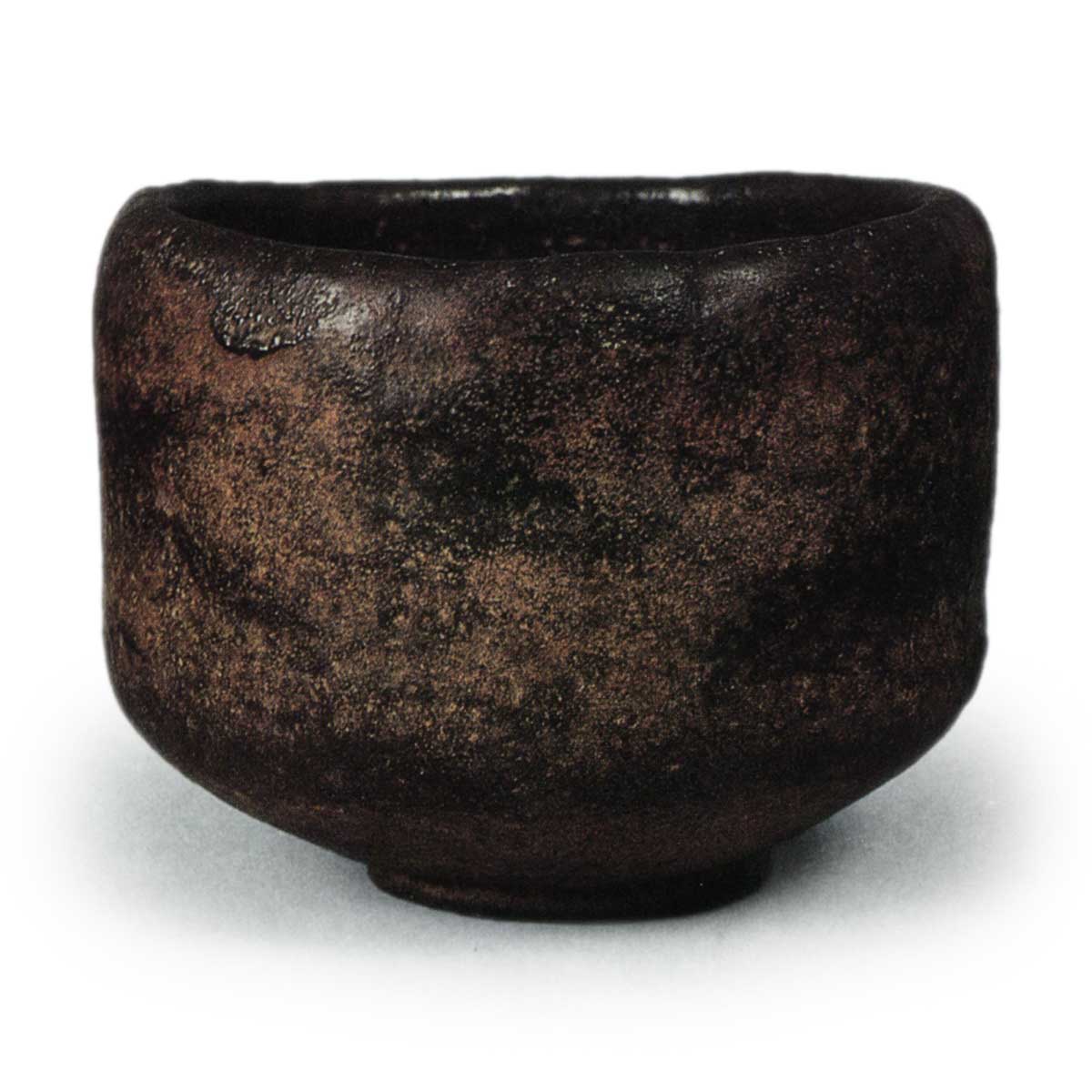
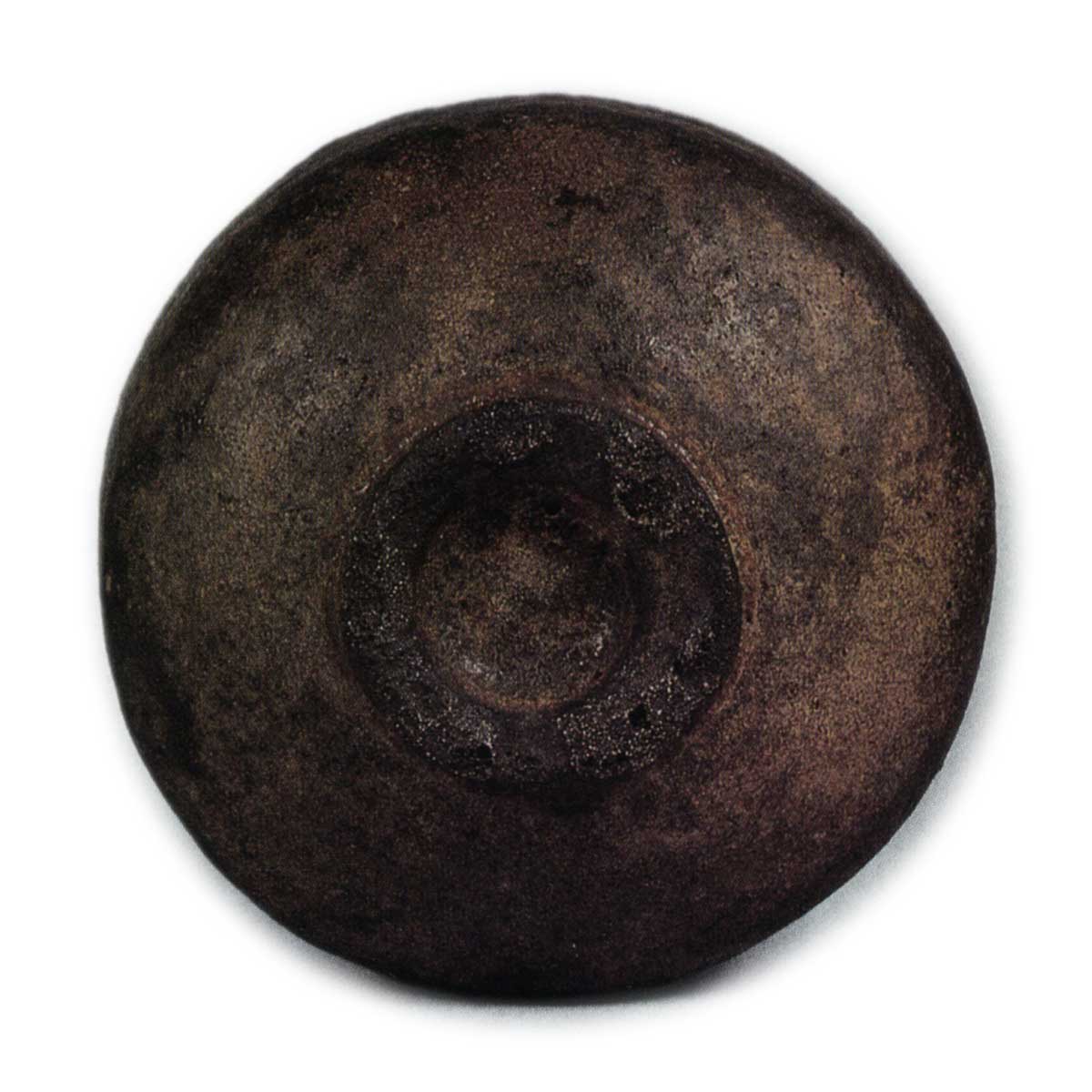
Height 8.9 cm, mouth diameter 10.2 cm, base diameter 4.6 cm
MOA Museum of Art
The “Nanpouroku” (Nanpouroku) records that Sen no Rikyu used this tea bowl three times as “Tea Bowl, Kuro Keison”, but the authenticity of this description in the “Nanpouroku” is not very high. On the back of the inner box lid, Sotan has written “Ayame Tadashi (flower seal)” and on the front of the inner box lid, “Chojiro ware tea bowl”. Some people have attributed the cover to Rikyu, but since there is no other example of Rikyu writing “Chojiro ware,” this is probably an erroneous assumption. On the inside box of the “Makomo,” Kusumi Soyasu wrote “Ayame Hachisen Somori II Yuriyuki,” so it is likely that the bowl was passed down from Sotan to Somori Ou, and then to Kankyuan.
It is clear from the accompanying letter that it later came into the possession of Eiraku Zengoro and was given to Kusama Ihei.
It is a tea bowl of unique style different from “Okuro” and “Shunkan”, and is one of Wabi-style masterpiece among the existing Chojiro tea bowls.
It is one of the best Chôjirô tea bowls among the existing Chôjirô teacups with a wistful taste. The mouth is shaped inwardly similar to the hand of “Shunkan”, but the entire body is molded to be quite thick, and the body has a slight neck, and the slope is slightly strong from the waist to the edge of the base. The height of the stand is small and low, and the width of the helmet inside the stand has no whorls. The black glaze has the characteristic yellowish-brown color of Chojiro ware. However, it may change if it is used more. The surface of the pot is very thin and there is no so-called “chadameuri” (tea stain), but it is deeply cut into the surface. The glaze seems to be thick, and there are areas inside and outside that look like curtain glaze. This is one of the seven types of Chojiro’s outer ware.