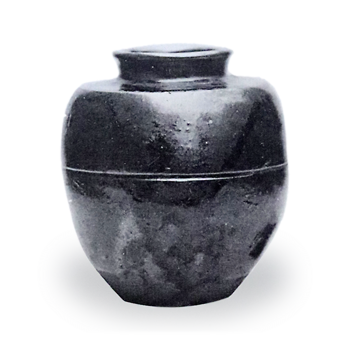
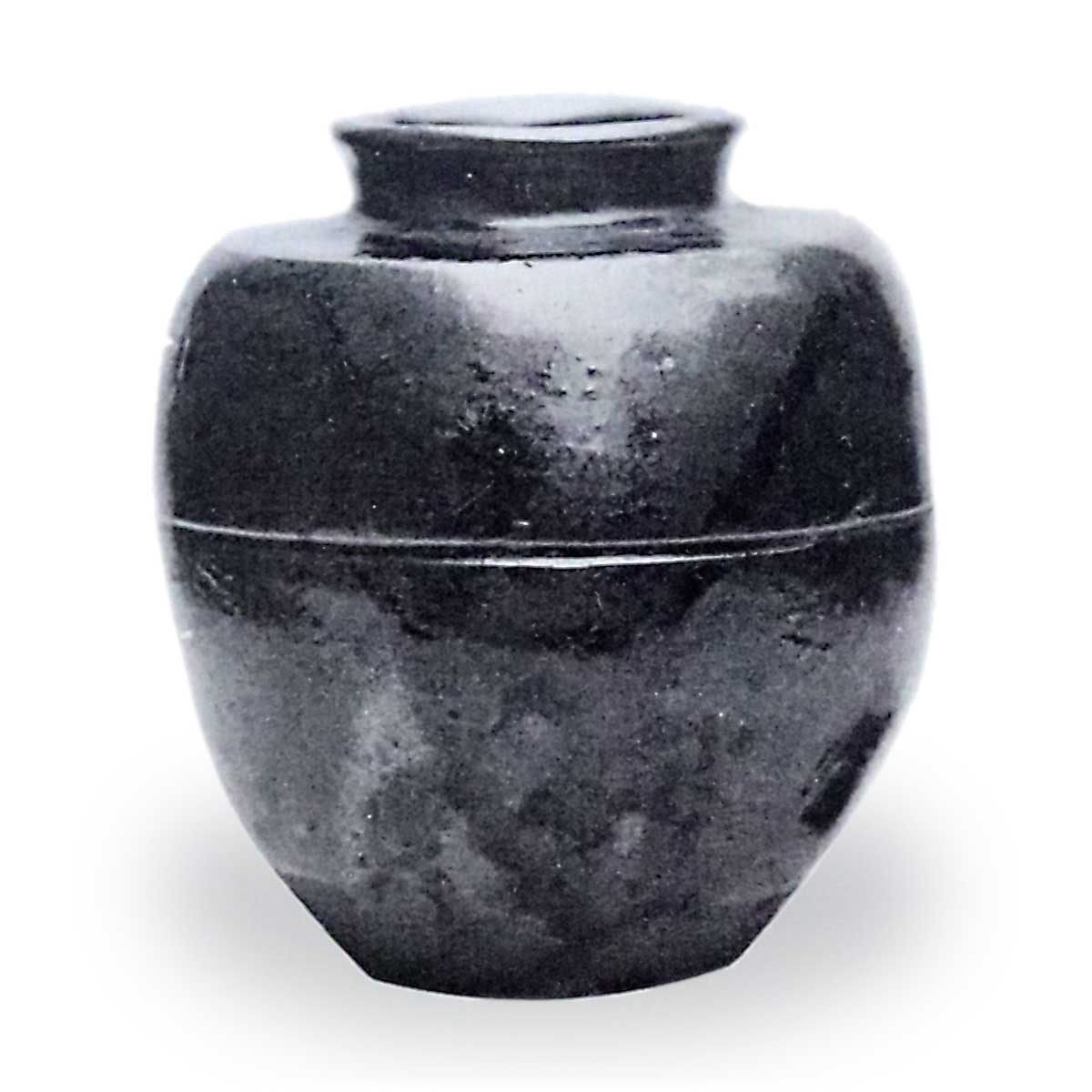
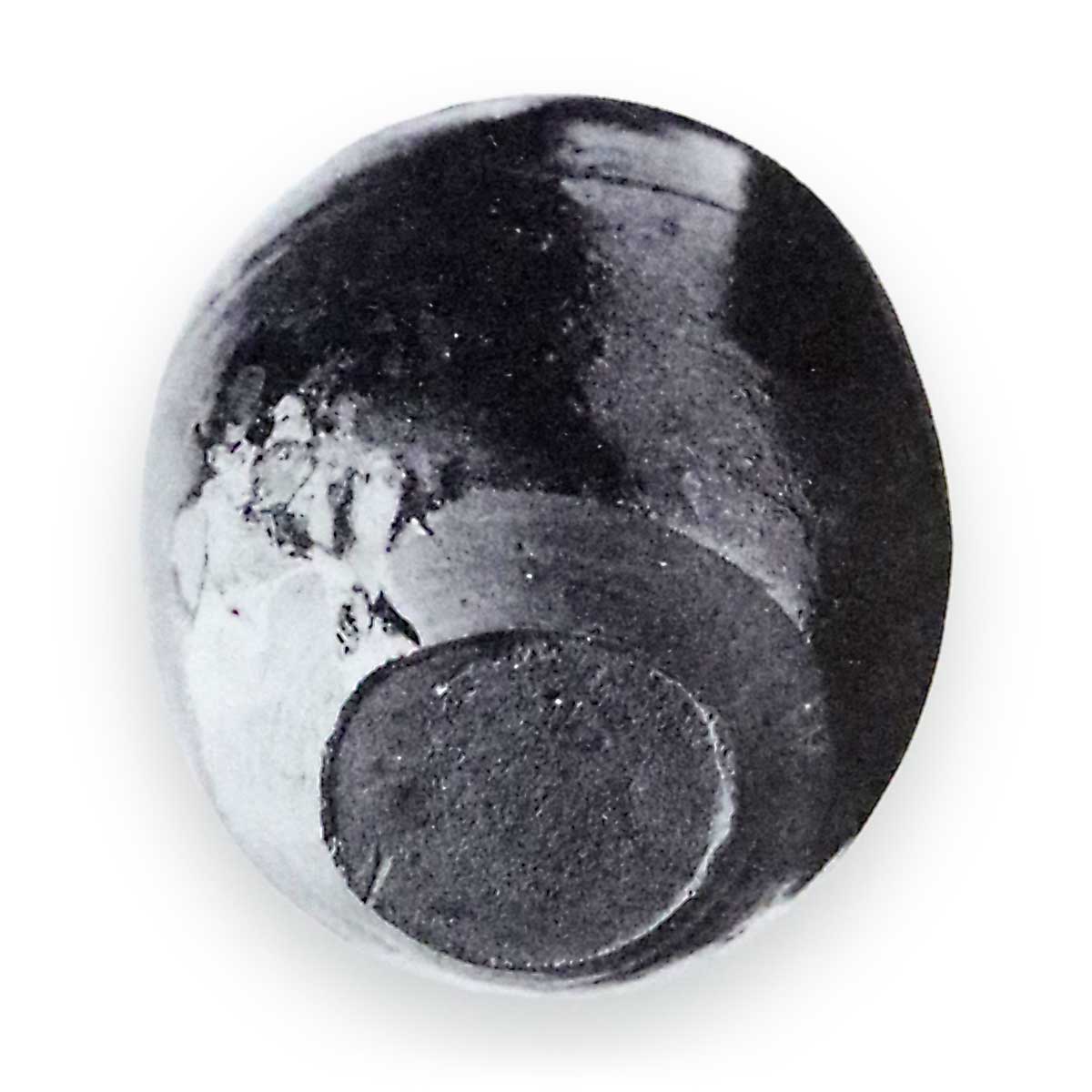
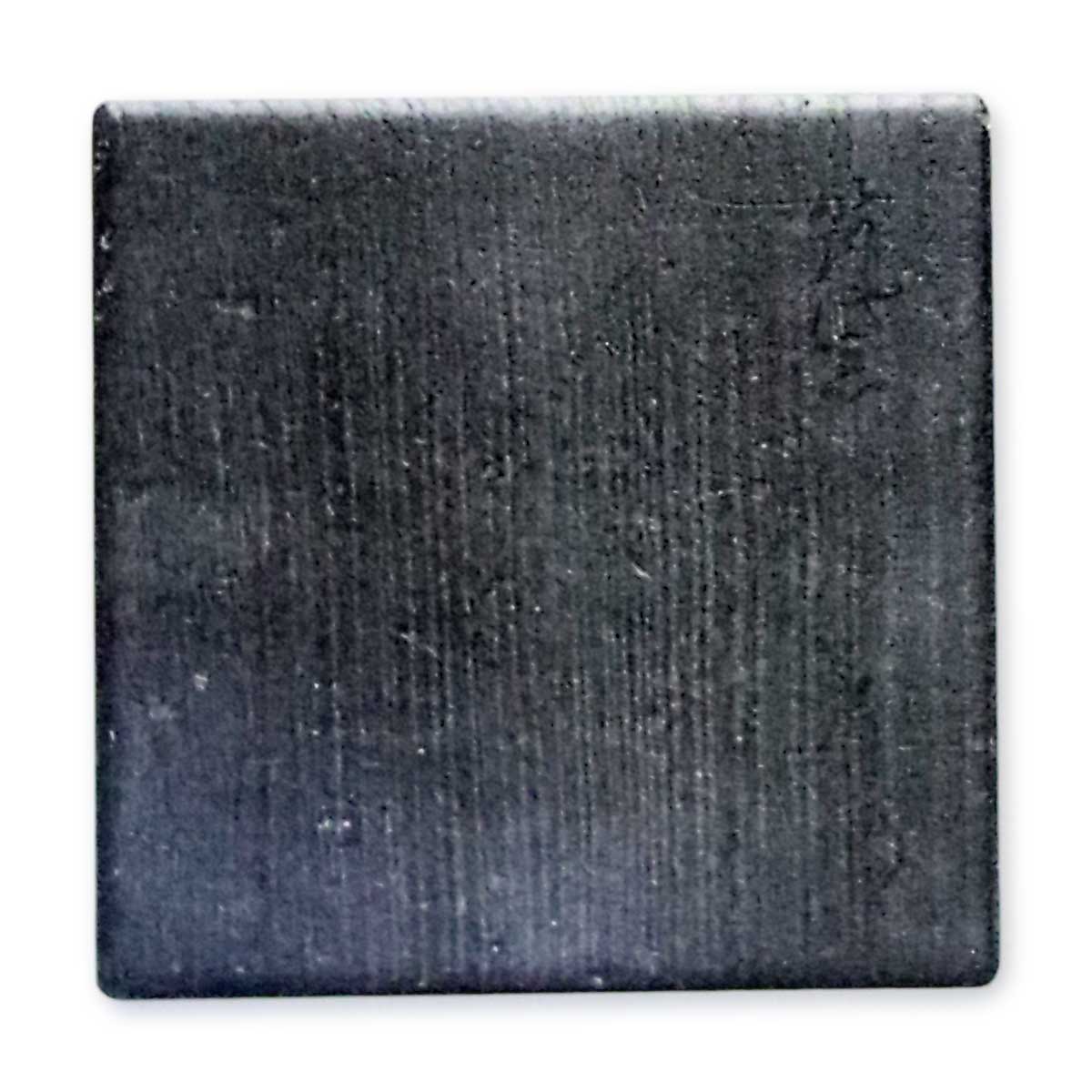
Made in China (Han-saku) | Daimeibutsu | Collection of Count Tokugawa Tatsutaka
[Origin of the Name]
This tea caddy was likely named after the region of Tsukushi (the area around present-day Fukuoka Prefecture), where it was originally found.
[Dimensions]
Height: Approx. 8.3 cm (2 sun 7 bu 5 rin)
Body diameter: Approx. 7.6 cm (2 sun 5 bu) *Measured at the waist (bulge of the body)
Mouth diameter: Approx. 3.9 cm (1 sun 3 bu)
Base diameter: Approx. 3.6 cm (1 sun 2 bu)
Koshiki (rim height): Approx. 1 cm (3/2 rin)
Shoulder width: approx. 1.2 cm (4 bu)
Weight: approx. 100.5 g (26 monme 8 bu)
【Accessories】
・Lid: 1 (made of ivory)
・Treasure pouch (bag for storing valuables): purple chirimen (crepe silk), with a purple cord
・Cover (bag for the tea caddy): 2
One is made of Jukō satin, lined with pale green Kaiki (silk fabric), with a purple tie cord
The other is made of Itō Kandou, lined with pale green patterned satin that is slightly worn, with a purple tie cord
・Box for storing the pouches: Unfinished paulownia wood
・Outer box for the pouches: Unfinished cedar (with the following inscription)
“On September 23, Kyōhō 16 (1731), when Lord Kansan (Tokugawa Munetake) moved to the Tayasu residence, he received these from Lord Yutoku-in (Tokugawa Yoshimune): two Chikushi katatsuki pouches.”
・Hikiya (a cylindrical container for storing a tea caddy): Black lacquered, with a gold-leaf ikake finish
Hikiya pouch: Kinran brocade with a tortoiseshell and Chinese floral pattern; lining is crimson kaiki; tie cord is purple
・Inner box: Natural white paulownia wood; an inscription by Katagiri Sekishu reads “Chikushi Katatsuki”
・Outer box: Thick paulownia wood, with a four-legged lid. Inscription by Kobori Daizen (Shōhō) reading “Chikushi Katatsuki”
・Outer Case (the outermost box containing all items): Unfinished cedar (bearing the following inscription)
“On September 23, Kyōhō 16, this Chikushi Katatsuki tea caddy was received from Lord Yutoku-in upon Lord Kansan’s move to the Tayasu residence. The inscription on the outer case is by Kobori Daizen (Shōhō).”
・Accompanying letter: 1 copy
“Upon carefully examining the inscription on the tea caddy’s box, I determined it to be in the handwriting of Lord Katagiri Iwami-no-kami (Ishū), so I am returning it. I do not recognize the bag. Sincerely. April 25. To Taro Oshiro and Tamon Okada”
【References in Past Literature, etc.】
(Quotes showing how “Chikushi Katatsuki” is written in various books)
・『Ganka Meibutsu Ki』: “Tsukushi (Chikushi)”—listed in the section on the Shogun’s tea caddies, with a vermilion inscription. Presented to Lord Mito.
・『Omono Godo Ki』: “Chikushi”—owned by Takenaka Ume. The pouch is made of Shukō satin and mouru (a type of woven fabric).
・『Onosukiya Godocho』: “Chikushi Katatsuki” owned by Takenaka. The pouch is made of gonsu (damask) and mouru. Stored in the first o-nagamochi.
・『Kokin Meibutsu Ruiju』: “Tsukushi” owned by Lord Mito.
・『Rinbōkiryū』: “Tsukushi” sent from Ōmonjiya in Kyoto to Lord Toyotomi Hideyoshi, and later to Lord Tayasu.
・From Meibutsu: “Tsukushi”—transferred from the Ōmonjiya in Kyoto to the Taikō (Hideyoshi); currently in the Mito family.
[Records of Use at Tea Ceremonies]
・From Kodai Oiai Kiroku: Used at a tea ceremony hosted by Lord Ganyū-in (Fourth Shogun Tokugawa Ietsuna) at Omote-en on December 3, Kanbun 5 (1665).
Guests: Sakai Gakudō, Abe Bungo-no-kami, Inaba Mino-no-kami, Kuse Yamato-no-kami
Hanging scroll: Painting of a waterfall by Gyokkan / Vase: Celadon kaburanashi (without a base), flowers: plum and camellia (arranged by the Shogun himself) / Tea caddy: Tsukushi (Chikushi) / Tea scoop: Made by Kobori Enshū
・From Records of the Tokugawa Family Tea Gatherings: Used at a tea gathering held on November 14, Kanbun 10 (1670), at Oku-Shin-Gyoen, attended by the Minister of Kofu and Ii Sōbetsu.
Hanging scroll: Calligraphy by Kyodo / Vase: Celadon kaburanashi, flowers: white plum and red camellia / Tea caddy: Tsukushi (pouch made of Juko satin) / Tea bowl: Ido tea bowl (spare bowl: Mishima)
・From Boan Bunko, Vol. 17: A record dated June 10, 1845 (Kōka 2). The text provides extremely detailed descriptions of the bag’s pattern and the condition of the box, the glaze of the tea caddy (including the application of amber and black glazes and the presence of metallic flecks), the color of the clay (light yellow and grayish-brown), and the shape of the base. (Includes an illustrated diagram of the tea caddy.)
[History of Ownership]
Long ago, it was owned by the Ōmonjiya family in Kyoto, and from there it passed to Toyotomi Hideyoshi. Later, it was bestowed upon Takenaka Umen, and subsequently presented to Tokugawa Ieyasu. Afterward, it was bestowed upon the lord of the Mito Domain, and on August 23, 1666 (Kanbun 6), it was presented to the Shogunate (the Shogun’s family) as part of the estate of Mito Yorifusa. On September 23, 1731 (Kyōhō 16), when Munetake—the third son of the eighth shogun, Tokugawa Yoshimune—was granted a villa within the Taian Gate of Edo Castle and became independent, the shogun bestowed this tea caddy upon him. Since then, it has been passed down through the Taian Tokugawa family to the present day.
[Record of Actual Observation]
On November 1, 1920 (Taisho 9), I had the opportunity to view the actual piece at the residence of Count Tokugawa Tatsutaka in Mita Tsunamachi, Shiba Ward, Tokyo (present-day Mita, Minato Ward, Tokyo).
The rim is thick, with a shallow fold, and there is a section where the rim is slightly thinner. The base of the rim is tight, with a raised ridge running all the way around it. The shoulder protrudes sharply, rounding out from the shoulder tip and gradually tapering toward the bottom. A single sunken groove runs around the body, clearly visible at about two-thirds of the tea caddy’s height; in some areas, an amber-colored glaze is applied, giving off a beautiful luster. Below the rim, the clay body—which appears to contain iron—is visible, and the base is slightly raised at the edge but shows signs of wear.
Overall, the chestnut-brown (dark brown) base has a purplish tint and a strong metallic sheen; it glitters and sparkles in the sunlight, resembling silver sand (finely crushed silver leaf).
Around the shoulder, dark amber-colored glaze flows down from both sides and converges; it merges beneath the body’s ridges (protruding lines) and cascades like an avalanche down to the base (the part in contact with the surface). The areas where the glaze has pooled are thick and exhibit a deep blue-green hue.
On the side opposite the “front view” (the side where the glaze drips), there are also drips of dark amber-colored glaze. Around the shoulder and waist, there are areas where the glaze has not adhered, revealing the clay beneath, which has a persimmon-like hue. Scattered around these exposed areas are specks of dark amber-colored glaze, creating a very charming and intriguing “view” (pattern or highlight).
The piece is entirely free of flaws, its craftsmanship is exceptional, and the charm of its patterns is beyond words. Beneath the cord on the body, there are marks resembling tiny grains that have adhered to the surface, and on the exposed clay below the rim, fine wheel marks are clearly visible. As a Chinese-made tea caddy (Han-style tea caddy), it exhibits a highly varied and distinctive style.
Inside, the rim is glazed, while below that, distinct wheel marks run clearly around the interior, and the center of the base features a large swirl pattern.