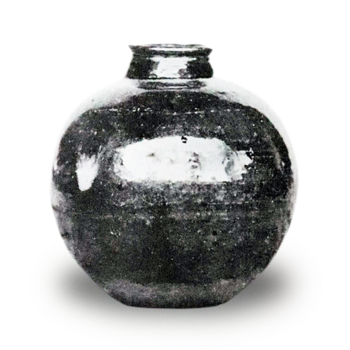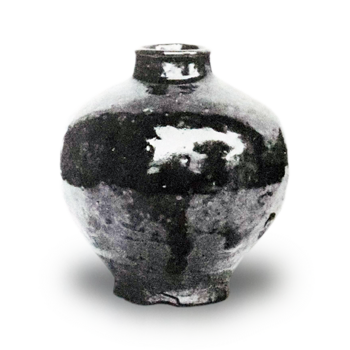
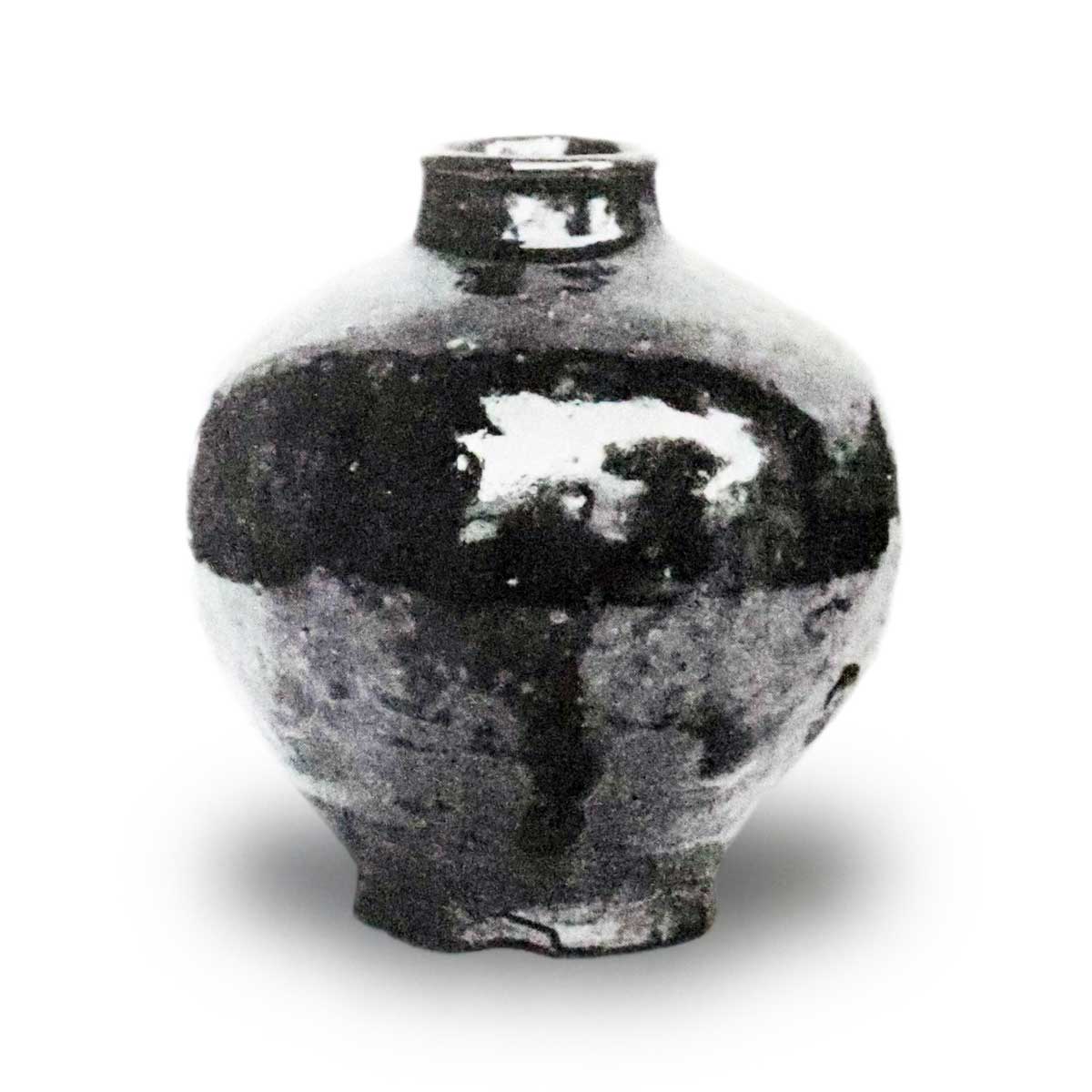
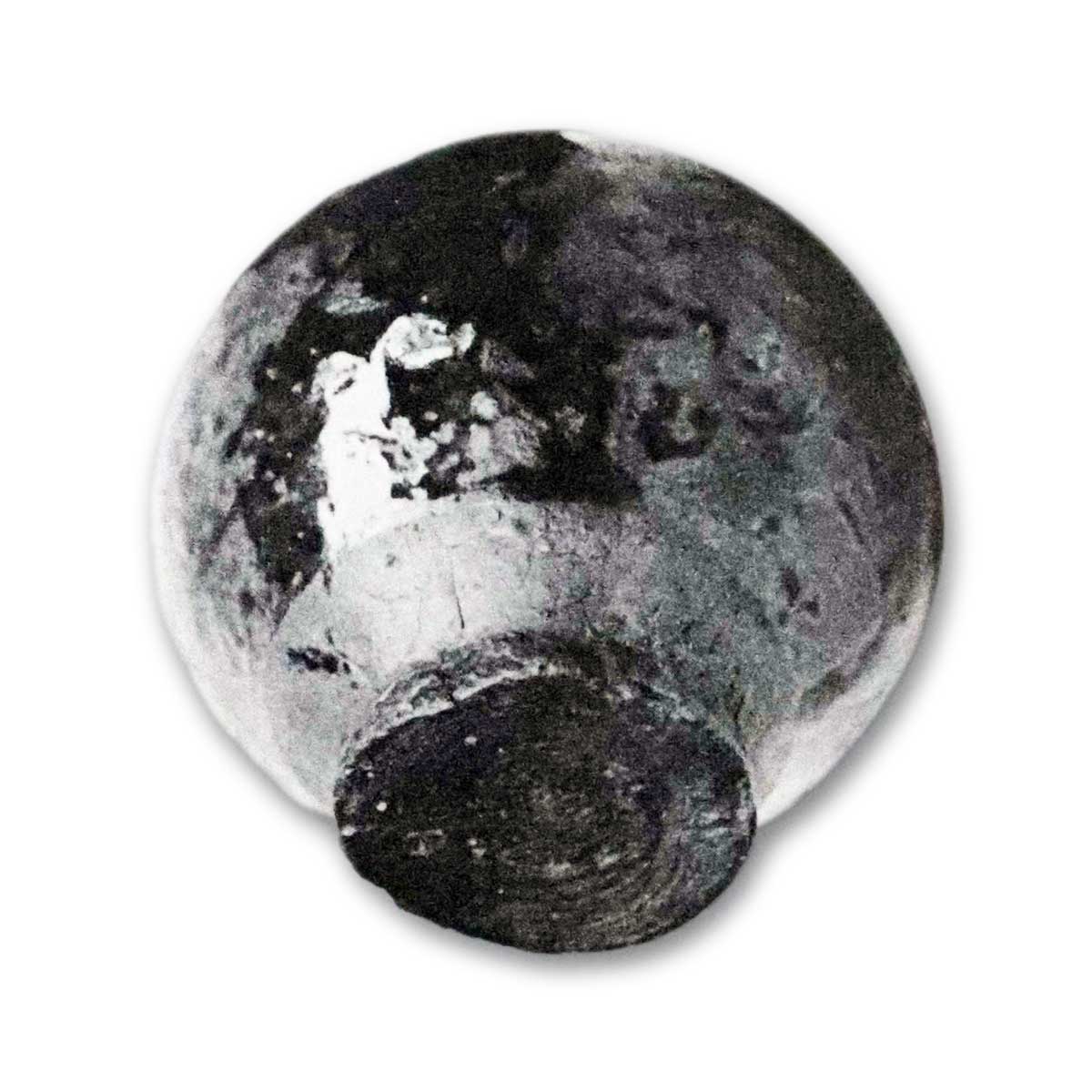
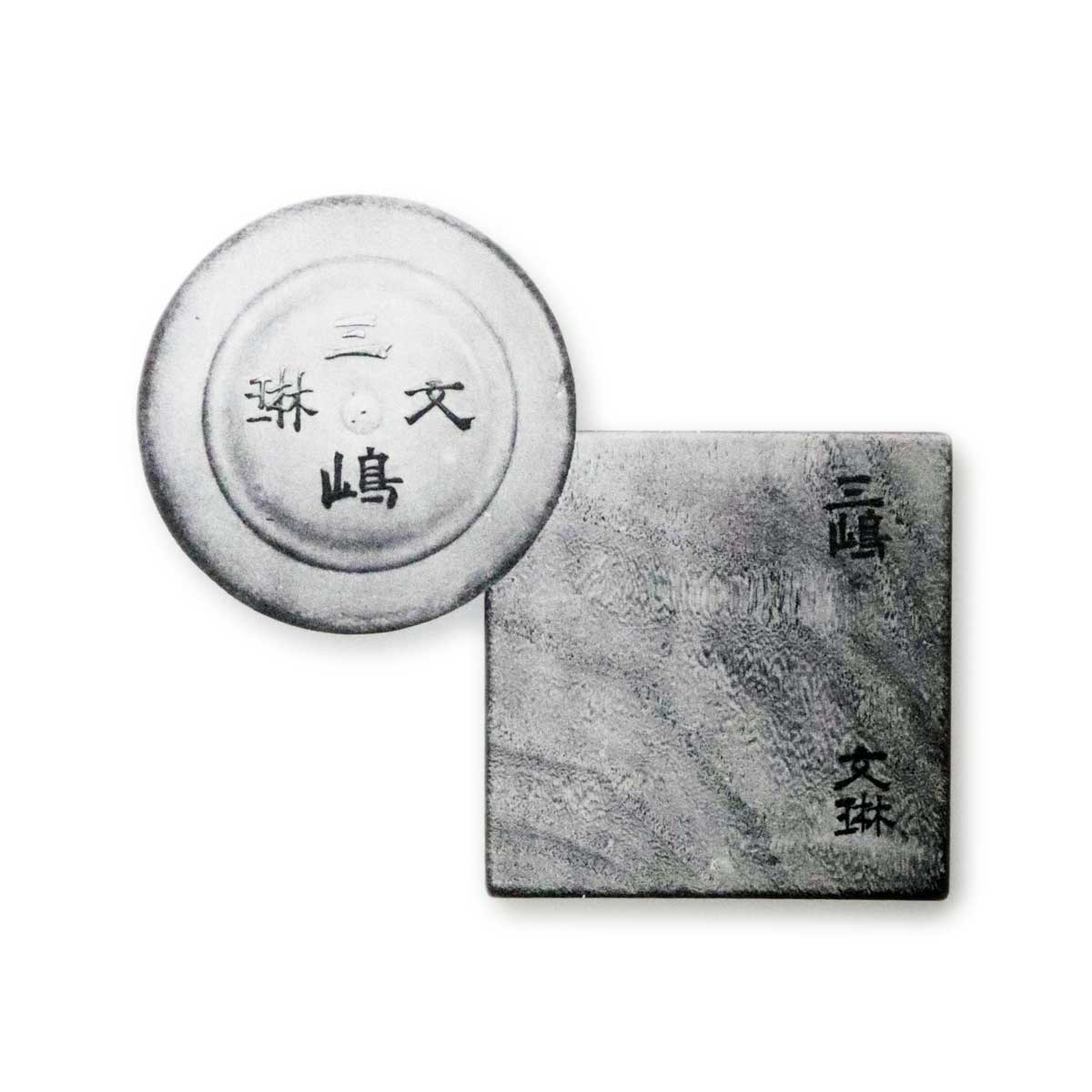
Made in China; Collection of Marquis Toshitame Maeda
Origin of the Name
It was named after the magistrate of Mishima in Izu, who owned it.
Dimensions (converted using 1 sun ≈ 3.03 cm and 1 monme ≈ 3.75 g)
Height: Approx. 7.58 cm (2 sun 5 bu)
Body diameter: Approx. 7.27 cm (2 sun 4 bu)
Mouth diameter: Approx. 2.42 cm (8 bu) or approx. 2.27 cm (7 bu 5 rin)
Base diameter: approx. 3.64 cm (1 sun 2 bu) or approx. 3.94 cm (1 sun 3 bu)
Base height: approx. 0.45 cm (1 bu 5 rin)
Neck length: approx. 0.76 cm (2 bu 5 rin)
Weight: approx. 117.0 g (31 monme 2 bu)
Accessories
・Lid: 1 (with a recessed center)
・Storage pouch (for the tea caddy): Brown silk; cord is Enshū brown
・Cover pouches: 2
Striped satin in Kanaharu-zori style with a “treasure-filled” pattern (lining is damaged; cord is purple)
Mochizuki Kōtō-ori (lining is damaged; cord is Enshū brown)
・Pouch box: Wiped lacquer finish, with characters in gold powder; author unknown
“Pouch Box: Mishima Bunrin”
“Mishima Bunrin”
(Note) Although the Maeda Family Treasury Inventory states this was inscribed by Lord Maeda Tsunanori (Fuko), this is considered doubtful; therefore, the author is listed as unknown.
・Hikiya (a cylinder for storing a tea caddy): Made of karin wood; interior finished with Shunkei lacquer; lid made of ivory
The lid’s top surface bears gold-leaf inscriptions reading “Bunrin,” “Mishima,” and “Rin” (author unknown)
The pouch is made of Western cotton twill with a cobblestone pattern (lining is five-color striped satin; cord is pale yellow)
・Inner box: Made of unfinished paulownia wood; bears an inscription by Kobori Daizen. Lined with paper on the inside.
Front: “Mishima Bunrin”
Back: “Mishima Bunrin, made in China” (written in vermilion)
“Confiscated from the magistrate of Izu Mishima”
“There is a story behind this.”
・Outer box: Made of unfinished paulownia wood; newly crafted.
“Mishima Bunrin”
Miscellaneous Notes
Mishima Bunrin, made in China. The clay is pale red. The underglaze is amber-colored, the overglaze is black, and from the waist down, the glaze changes to one characteristic of Bunrin ware. The bottom, which rests on the tray, has a round thread-cut design; the foot (incense stand) is tall and features “ishi-haze” (small stones visible on the surface), giving it a highly elegant and refined style.
(From The Maeda Marquis Family Inventory)
Mishima Bunrin—Made in China. Comes with two pouches (Mochizuki Guangdong weave, “Treasure Motif” design). The inscription on the pouch box is by Lord Maeda Tsunanori. The body is made of unpainted white hana-kuri wood, and the lid is made of ivory.
Mishima Bunrin
(Illustration of the lid included). The pouch is made of red-haired cotton. The box bears the inscription “Mishima Bunrin” in the handwriting of Kobori Daizen. (Illustration of the tea caddy included)
(From Maeda Family Collection Inventory)
Provenance
Apart from the inscription on the box stating that the Maeda family confiscated this item from a magistrate in Mishima, Izu, the detailed provenance is unknown, and the exact year of confiscation is unclear.
Record of Actual Viewing
On November 25, Taisho 8 (1919), I had the opportunity to view this piece in person at the residence of Marquis Toshiyuki Maeda in Honfuji-cho, Hongo Ward, Tokyo.
The rim is tight with minimal warping, and the neck is somewhat long with a flared lower section. Black glaze flows down over a pale purple base, and the vessel has a sloping-shouldered shape. The base is flat and circular, and the clay beneath the rim reveals a faint reddish (ochre) hue. There are thread marks, but they are irregular and indistinct. The rim around the base is chipped away, and the soft, supple texture of the clay—with its smooth undulations—is exceptionally elegant. Additionally, there are somewhat large kiln marks (traces where it adhered to other vessels inside the kiln) around the body. Inside, glaze covers the rim of the mouth, and below that, shallow wheel marks run around the interior. It exhibits characteristics commonly associated with “island ware” (pottery from Southeast Asia and similar regions), and it can be said to be an extremely unusual and unconventional shape for a Chinese Bunrin tea caddy.