

Meibutsu from the Revival Period: From the Collection of Count Tadamichi Sakai
Name
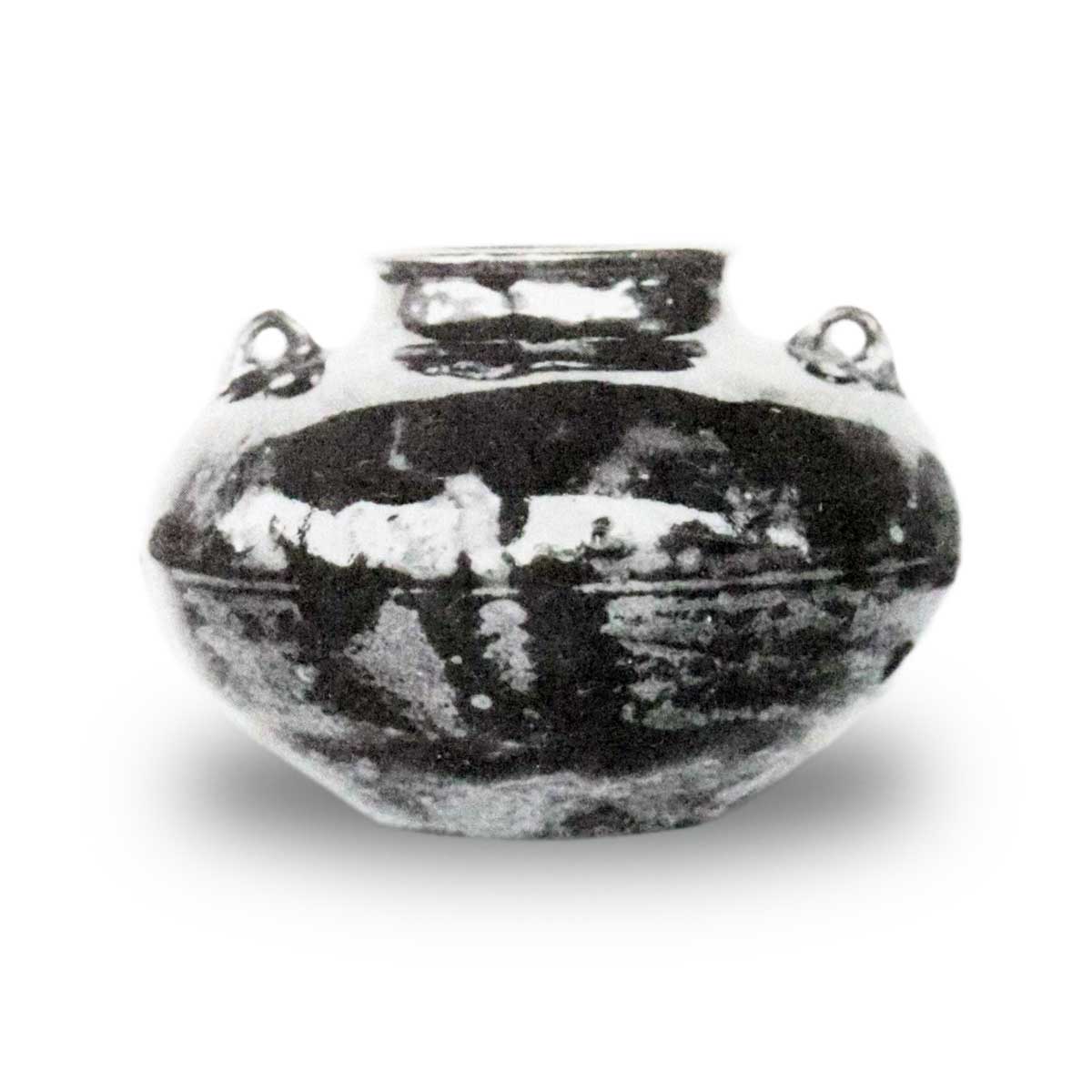
This is a Chinese-style tea jar with handles. It is also known as “Karamono Mimituki” for short.
Dimensions
Height: Approx. 5.9 cm (1 sun 9 bu 5 rin)
Body Diameter: Approx. 8.5 cm (2 sun 8 bu)
Maximum Circumference of Body: Approx. 26.7 cm (8 sun 8 bu)
Mouth Diameter: Inner dimension approx. 3.0 cm (inner rim 1 sun), outer dimension approx. 3.8 cm (outer rim: 1 sun 2 bu 5 rin)
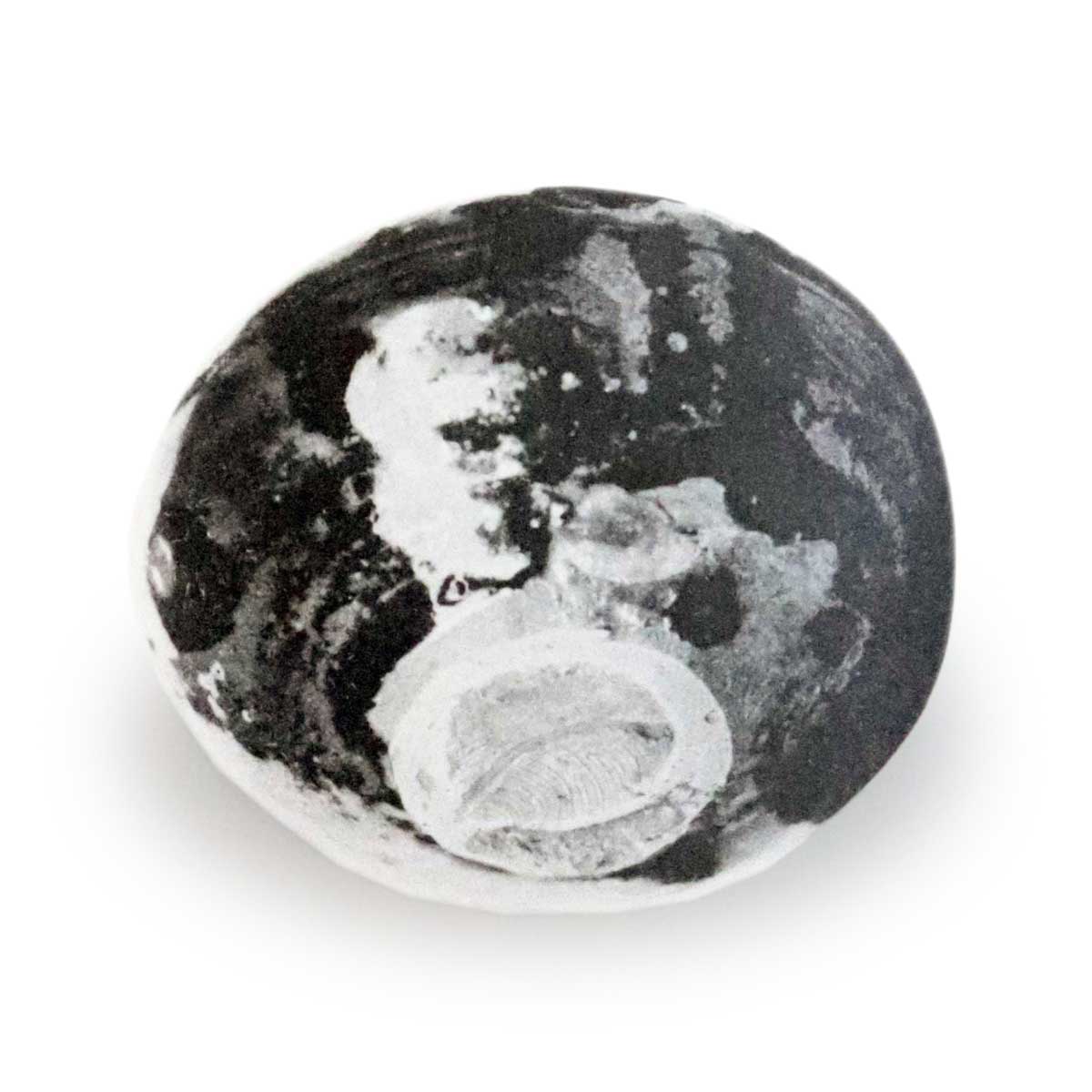
Base diameter: approx. 3.3 cm (1 sun 1 bu)
Height of the neck (koshiki): approx. 0.6 cm (2 bu)
Weight: approx. 100.1 g (26 monme 7 bu)
Accessories
・Lids: 2 pieces, with patterns (su)
・Lid box: Paulownia, natural wood; inscribed by Kobori Enshū
“With Ears, Chinese”
Additionally, the following accompanying note is included:
“Chinese Tea Caddy with Ears”
“From the Himeji Imperial Treasury
Chinese Tea Caddy with Ears
Includes two replacement lids
As this was kindly donated by the Kobori family,
it is to be attached to the aforementioned tea caddy
June 16, Year of the Goat”
・Tea caddy pouch: Ro-weave pine needle komon pattern; brown tying cord
・Pouches: 2
Nami-ume Donshu (lining: umi-ki; tying cord: moegi)
Sasa-tsuru Donshu (lining: velvet umi-ki; tying cord: brown)
・Pouch box: Black kaki-awase lacquer with vermilion lacquer inscription
“Tang-style ear-adorned pouch”
・ Hikiya (cylinder for storing a tea caddy): Large hollowed-out ivory with gold-powder inscription, calligraphy by Enshū
Pouch: Peach Blossom and Chinese Floral Weave (lining: five-color striped Donshu, tie cord: Enshū brown)
Box: Black lacquer with gold-powder characters, calligraphy by Sōfu (Enshū)
“Pouch with Chinese-style Ears: White Velvet”
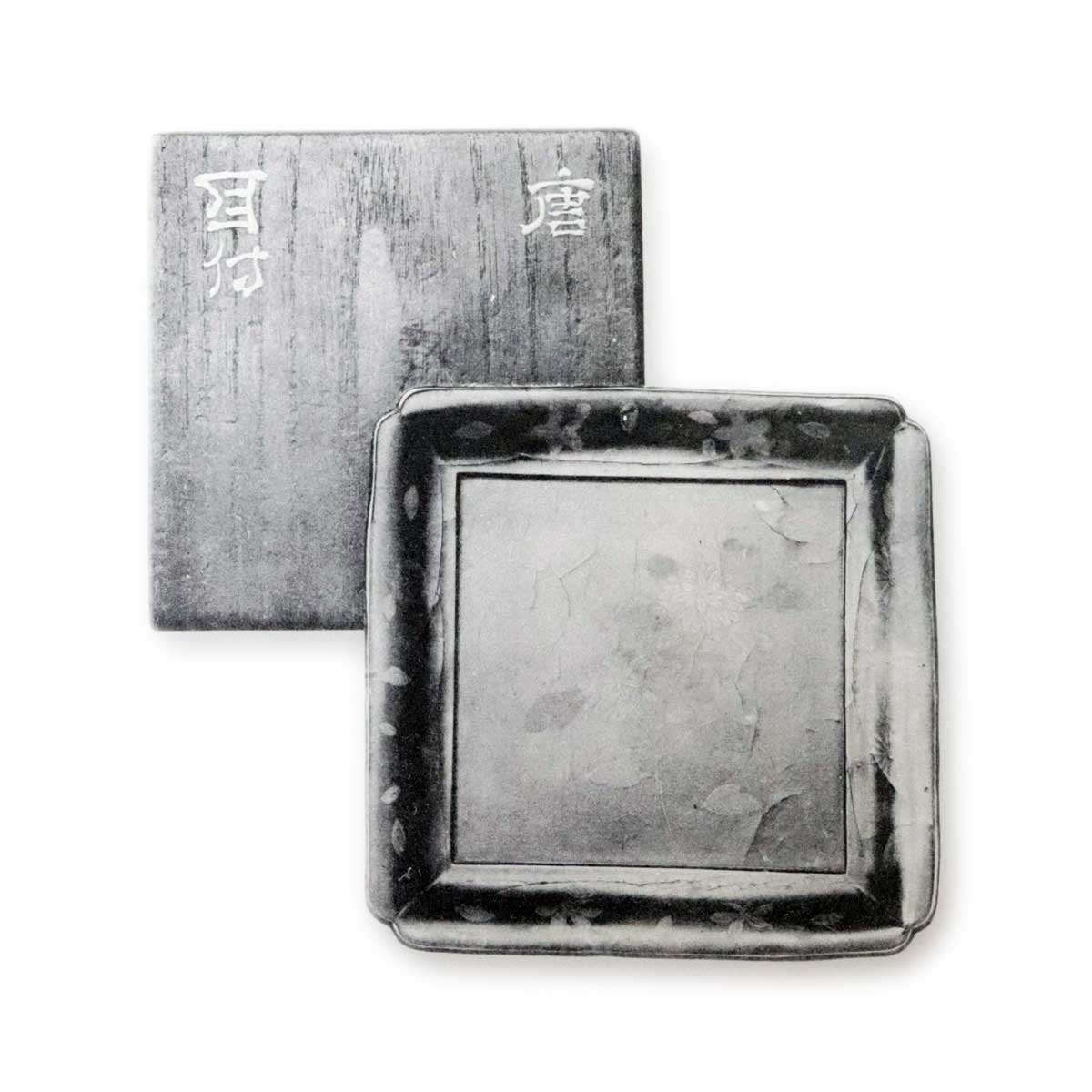
・Accompanying tray: Vermilion-lacquered square tray with chrysanthemum-style maki-e; rim with sand-textured finish; base with black lacquer
Side length: approx. 22.4 cm (7 sun 4 bu); inner side length: approx. 15.2 cm (5 sun); base side length: approx. 16.4 cm (5 sun 4 bu)
Box: Paulownia wood
Chinese-Style Eared
Chrysanthemum Karamaki-e Vermilion Square Tray
Miscellaneous Notes
Morning of July 13, Kan’ei 13 (1636) Host: Kobori Sōfu (Enshū)
Guests: Fuan, Dōkan, Sōgen, Kameshōbei, Okashōemon
・Wall hanging: A text by Rikyū
・Tea caddy: Tang-style with handles (specifically, a tea caddy by Nara-ya Dōkan)
・Flower vase: Sand-finished (plain gold) with one pale-colored lotus flower and an upright leaf
・Tea bowl: Seto
(From Kobori Enshū’s Tea Ceremony Diary)
(Year unknown) Morning of June 19: Host: Kobori Sōho
・Wall hanging: Tetsuō
・Tea caddy: Chinese-style with handles (placed on a vermilion-lacquered tray)
・Flower vase: Wide-mouthed; flowers: lotus
・Tea bowl: Blue-and-white porcelain with a cloud design
(From Enshū Hyakukai Chayū)
November 20, An’ei 9 (1780) — Host: Kobori Sōyū
・Wall hanging: Portrait of Daidō Kokushi by Shokado (with a poem by Kōgetsu)
・Flower vase: Single-layered cut vase by Sōho; flowers: white camellia
・Tea caddy: Chinese-style with handles; tray by Haramori
・Tea Bowl: Seto Tenmoku-style
(From Kokin Chado Shū)
Chinese tea caddy with handles, owned by Tsuchiya Samon. Height: approx. 5.9 cm (1 sun 9 bu 5 ri); width at the waist: approx. 8.5 cm (2 sun 7 bu 9 rin); mouth diameter: approx. 3.9 cm (1 sun 2 bu 8 rin); base diameter: approx. 3.0 cm (1 sun). There are three pouches: one in Donshu Junko (lined with moegi-colored umi-ki, with a Enshu-brown tie cord); one in Sasamatsu Donsu (lined with umi-ki, with a purple tie cord); and one in Koishidatami Donsu (lined with umi-ki, with a purple tie cord). The storage pouch is made of peach-colored Donshu on both sides (with a Enshū-brown tying cord). It has a single lid with a recess. The body is made of Hikiya wood, and the inscription is in gold powder in Enshū calligraphy. The pouch features a woven pattern of peach blossoms and Chinese floral motifs (lined with Goshikijima-donsu, with an Enshū-brown tying cord). (Illustration of the tea caddy included)
(From Meibutsu-ki)
With Ears, Chinese (The description of dimensions and accessories is exactly the same as in Meibutsu-ki; the owner’s name and illustration of the tea caddy are missing)
(From the “Supplementary Section” of Kokin Meibutsu Ruiju)
Auction held in Fushimi-cho, Osaka, in Meiji 4 (1871) by the Lord of Himeji (Sakai family)
Passed down through the Kobori family
Chinese-style tea caddy with handles: The box bears an inscription by Enshū; the accompanying tray is a Chinese-style leaf-patterned piece with a box bearing an inscription by Enshū; the lid box also bears an inscription by Enshū; the wrapping paper was written by Lord Sōchū. The pouch is made of bamboo vine, striped cord, authentic Shukō brocade, and Donshu fabric. The inscription on the pouch box is by Enshū.
(From Catalog of the Himeji Lord’s Auction)
Provenance
Originally owned by Kobori Enshū, it was passed down to Tsuchiya Samon. It subsequently became part of the Sakai family’s collection in Himeji, but in Meiji 4 (1871), the Year of the Rooster, when the family’s collection of tea utensils was auctioned off in Fushimi-chō, Osaka, it was acquired by the Wakashū Sakai family, the current owners.
Record of Actual Viewing
On April 28, Taisho 8 (1919), I viewed the actual object at the residence of Count Tadamichi Sakai in Yarai-cho, Ushigome Ward, Tokyo.
This is a Chinese-style tea caddy with handles; the rim has an extremely shallow fold, and the body is low with a flared base. At both ends of the shoulder, small fire-striker-style handles with holes face each other. On a pale yellow base, the black overglaze glistens as if dripping, and it appears to belong to the type known as “Togo” (a Chinese kiln). A black band encircles the body, and at the center of the thread-cut decoration is a single deep, curved line. The glaze is applied thickly; the base reveals grayish-brown clay, and the rim is worn around the edge. It is likely produced in Fujian Province or southern China and is probably a piece from the Tianmu Kiln.
The “Tang-style chrysanthemum-maki-e vermilion square tray” that Kobori Enshū paired with this tea caddy is a perfect match in terms of dimensions and color, and its form is supremely elegant. It is likely that this tea caddy was not originally made as a tea caddy in China, but was instead used as a container for medicine, with a string threaded through the holes in its handles. In any case, it must be described as a rare and exceptional masterpiece without equal.

