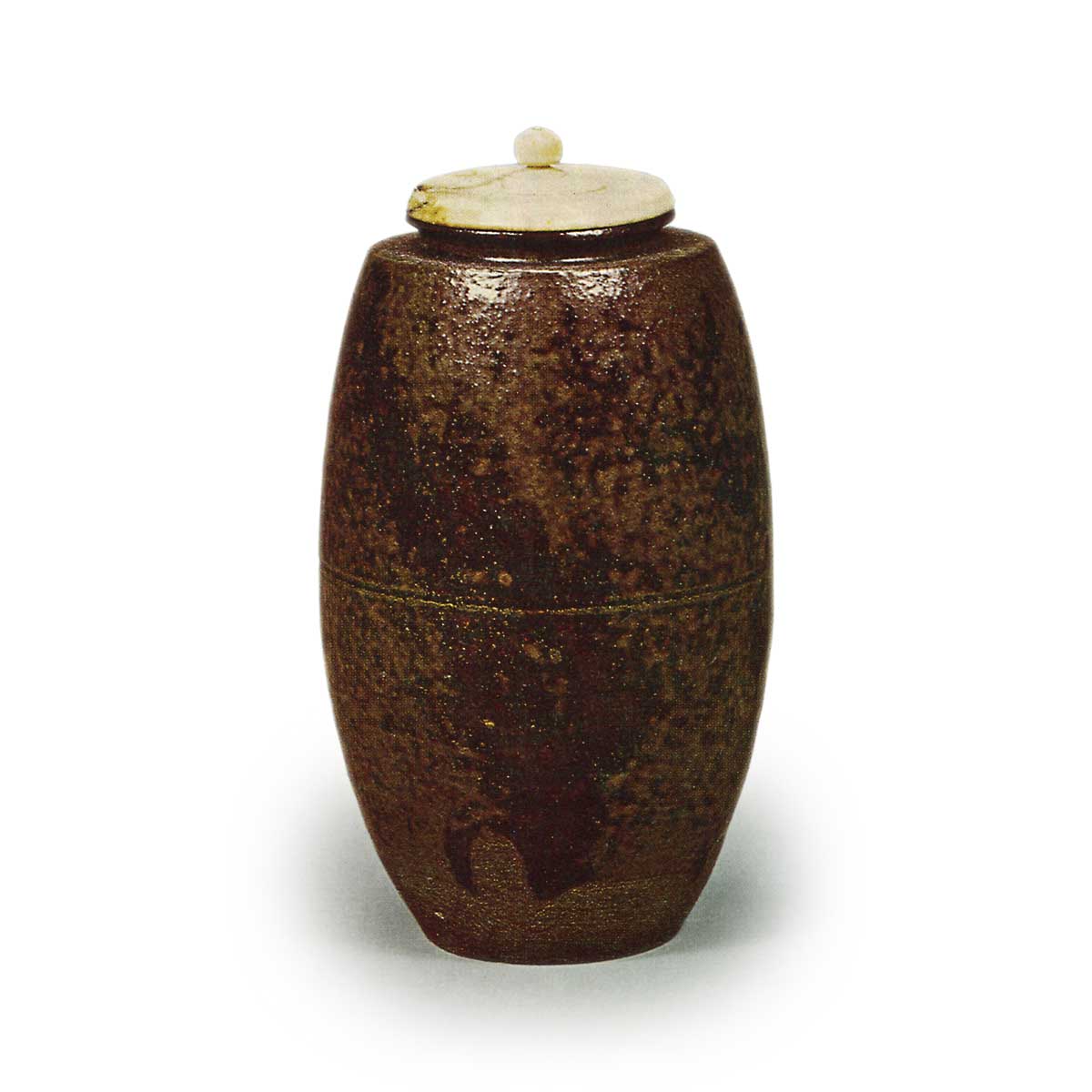
Old Seto, Daimeibutsu
Accessories
Lids x3, Ivory Edges, Horn Nest, Lid Box, White Paulownia Wood, Inscription by Matsudaira Fumai
Cover x6, Cover Box, White Paulownia Wood Inscription
Hikiya, Black Lacquer, Leather, Gold Powder Characters, Inscription
Hikiya Cover, Dyed Leather, Dark Lacquer Pine Wood Tray, Owned by Rikyu
Tray Box: Paulownia Wood with Inscription, Written by Kobori Enshu
Inner Box: Paulownia Wood with Simmered Black Locks, Outer Box: Kneaded Leather
Provenance
Toyotomi Hideyoshi → Ishikawa Bizen-no-kami → Ishikawa Munekumo → Gotō Jian → Tōemon → Izutsuya Kawai Jūzaemon → Mitsui Hachirōemon → Matsudaira Fumai
Recorded
Appraisal Records of Famous Meibutsu; Unshū Matsudaira Family’s Record of Famous Meibutsu Containers; Handwritten Inscription by Lord Fumai; Collection of Meibutsu Appraisals; Appraisal Notes; National Diet Library’s Record of Famous Meibutsu; Appendix to the Maeda Family’s Treasured Collection; Written by Kanshian Sōshin; Snow Interlude Grass: Resolving Confusion in the Way of Tea; Written by Mitsui Takafusa; Records Observing the Townspeople; Snow Province Treasure Transmission Records; Biography of Matsudaira Fumai
Dimensions
Height: 9.5 cm, Mouth Diameter: 3.45 cm, Body Diameter: 5.9 cm, Base Diameter: 3.35 cm, Weight: 103 g
This tea caddy, as its name suggests, evokes the form of a spear scabbard. The rim is low and approaches the shoulder, near the shoulder tip. A slightly bulging line extends beautifully from the shoulder to the base, creating an elegant form. It is a rare example of a shoulder-strike tea caddy among its kind.
A single line is drawn down the center of the body, maintaining perfect balance between left and right. The rim is precisely cut and sits correctly. The glaze resembles Tang ware glaze, melting with precision. A darker hue runs diagonally from the left shoulder down to the rim, forming a distinct pattern. The presence of finger-like marks alongside this is also intriguing. Overall, the interplay of the tea glaze’s varying shades creates a harmonious landscape.
The replacement covers, six in number, include Tanji Otonokiri, Nodakiri, Kakukura Kinran, Kongokiri, Hamon Donshu, and Chaji Nishiki. Each features a combination of early-period Daimeibutsu cuts, a fitting testament to the prestige of the Matsudaira family collection.

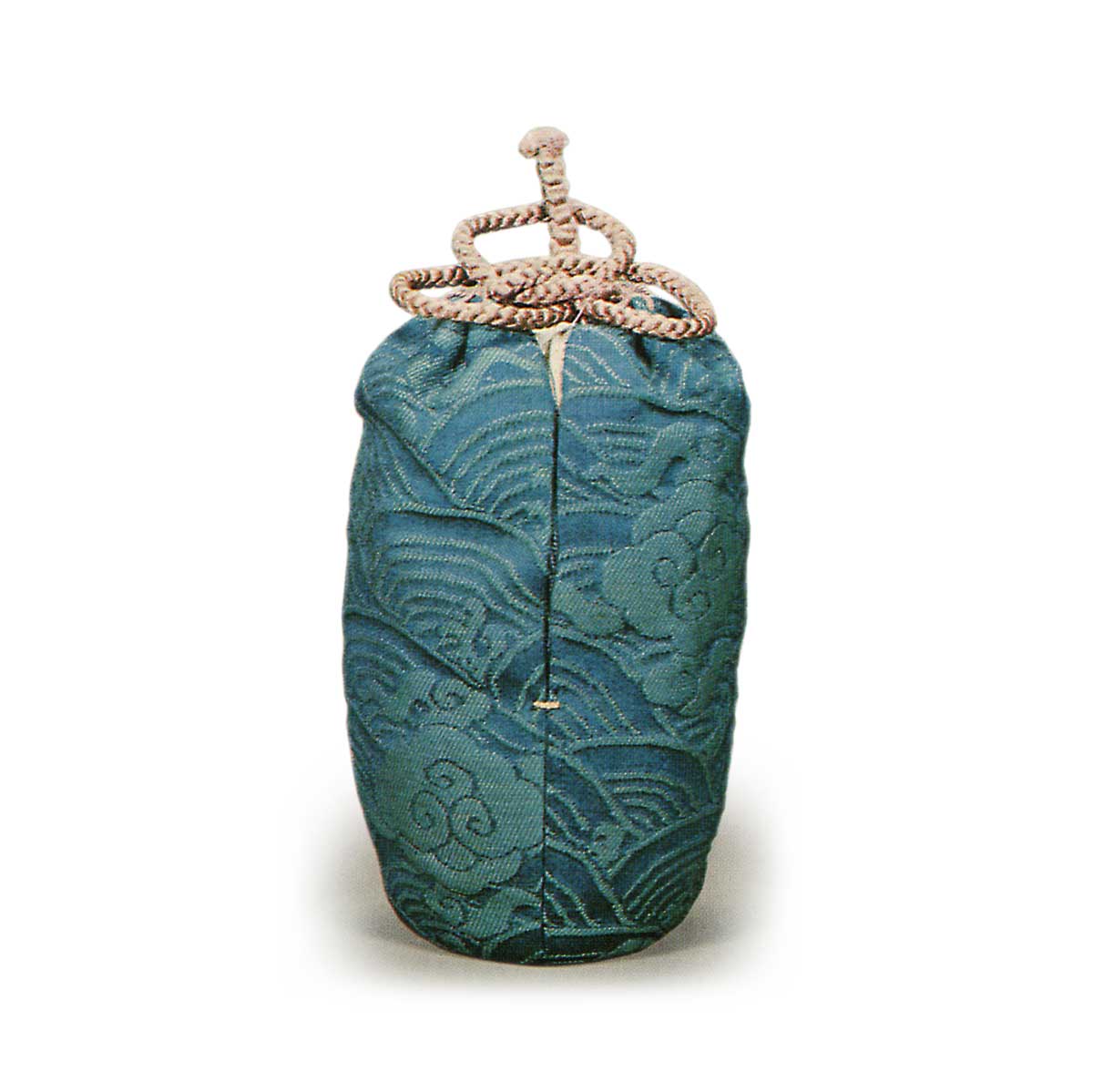
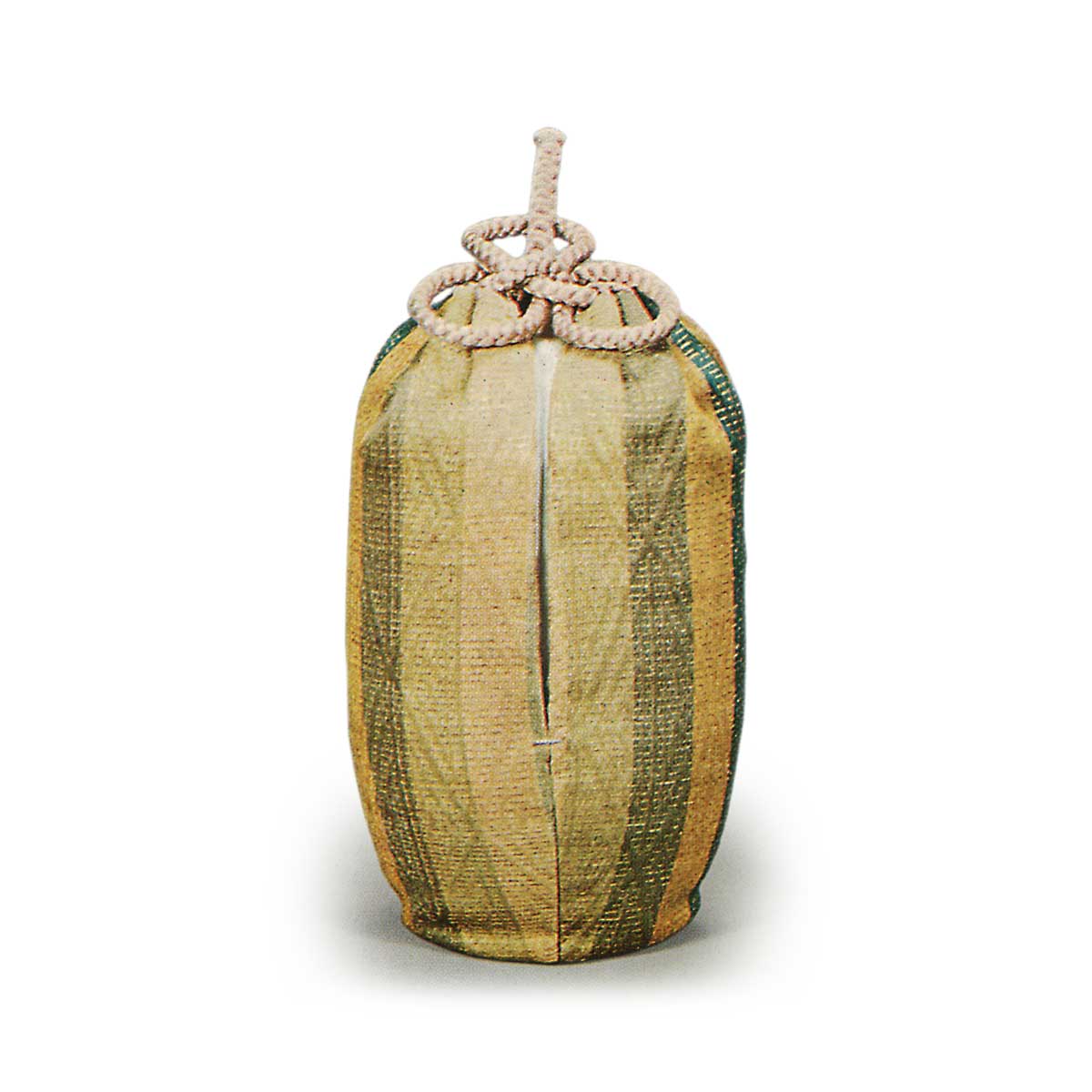

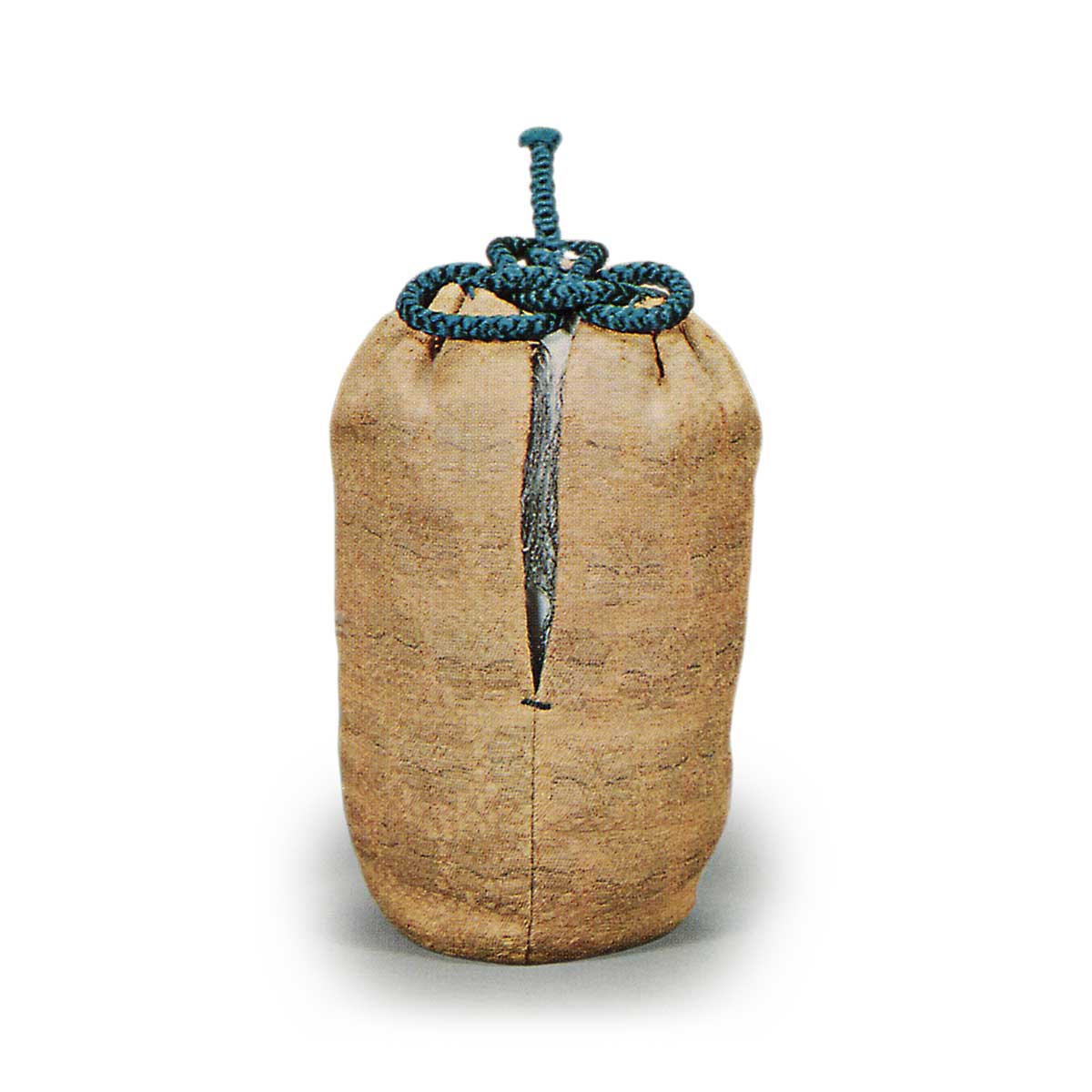


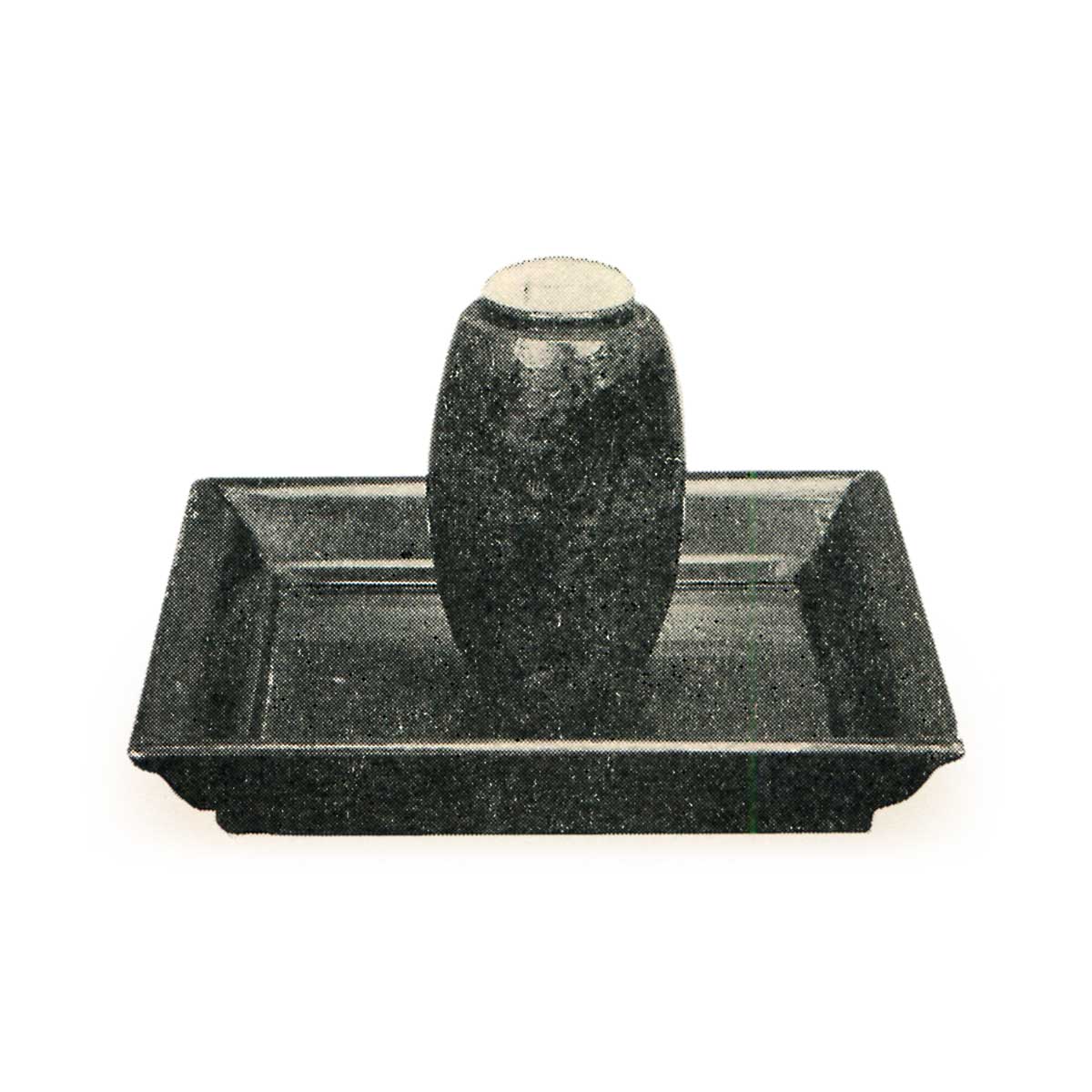

Lidded Box: Paulownia, Unpainted; Inscription: Matsudaira Fumoto’s Calligraphy
Cover Box: Paulownia, Unpainted; Inscription
House: Black Lacquered Leather; Gold Powder Lettering; Inscription
(Note) The National Diet Library copy of the ‘Meibutsu-ki’ records the house lid as “Yari no Saya” (Sword Scabbard), inscribed by Kobori Enshu.