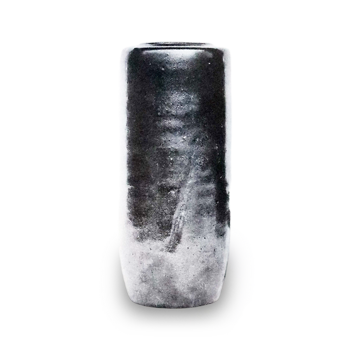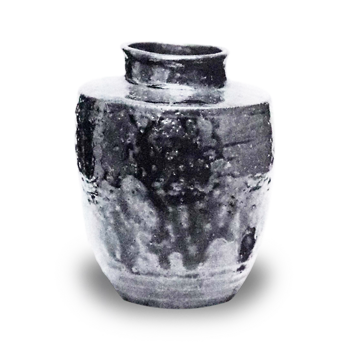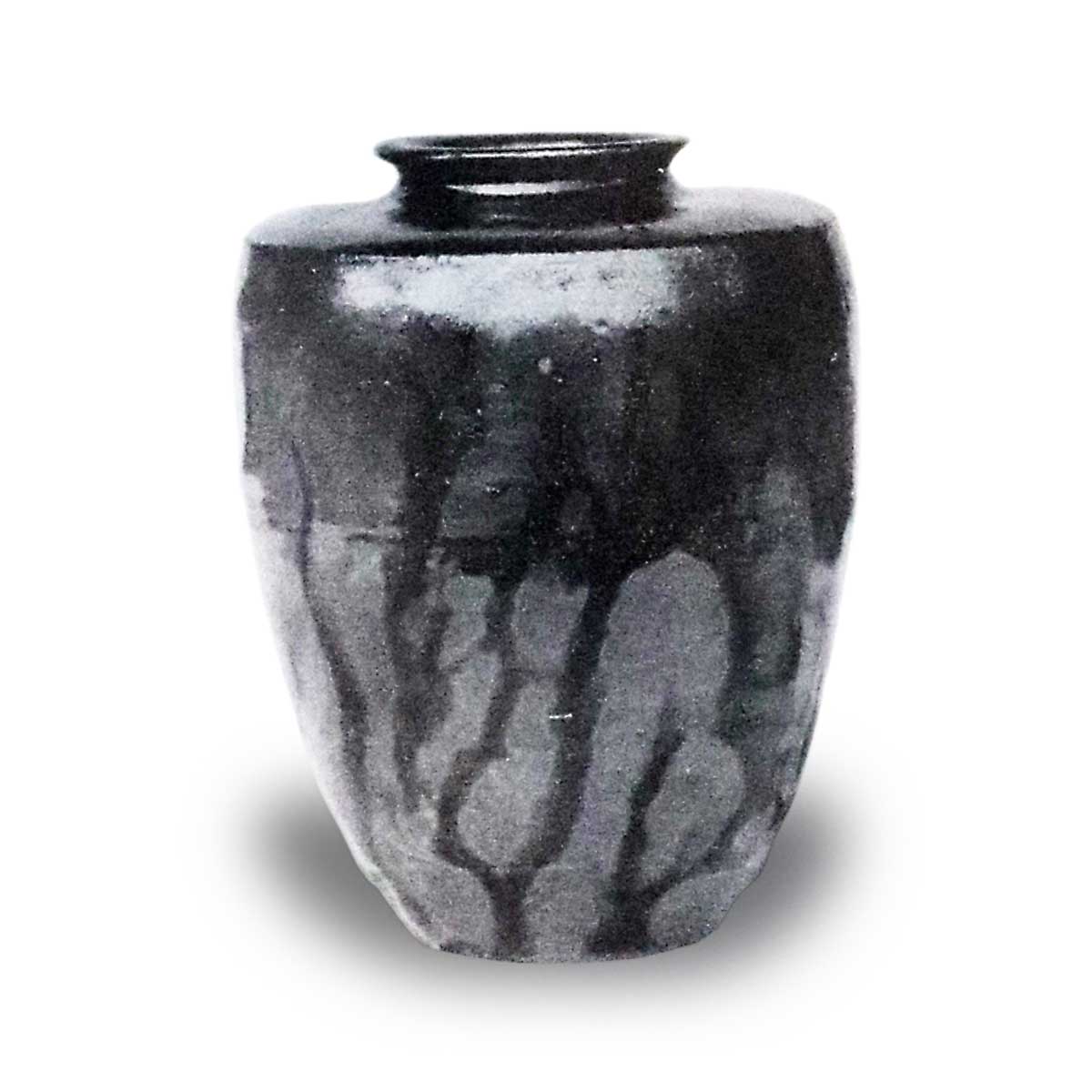
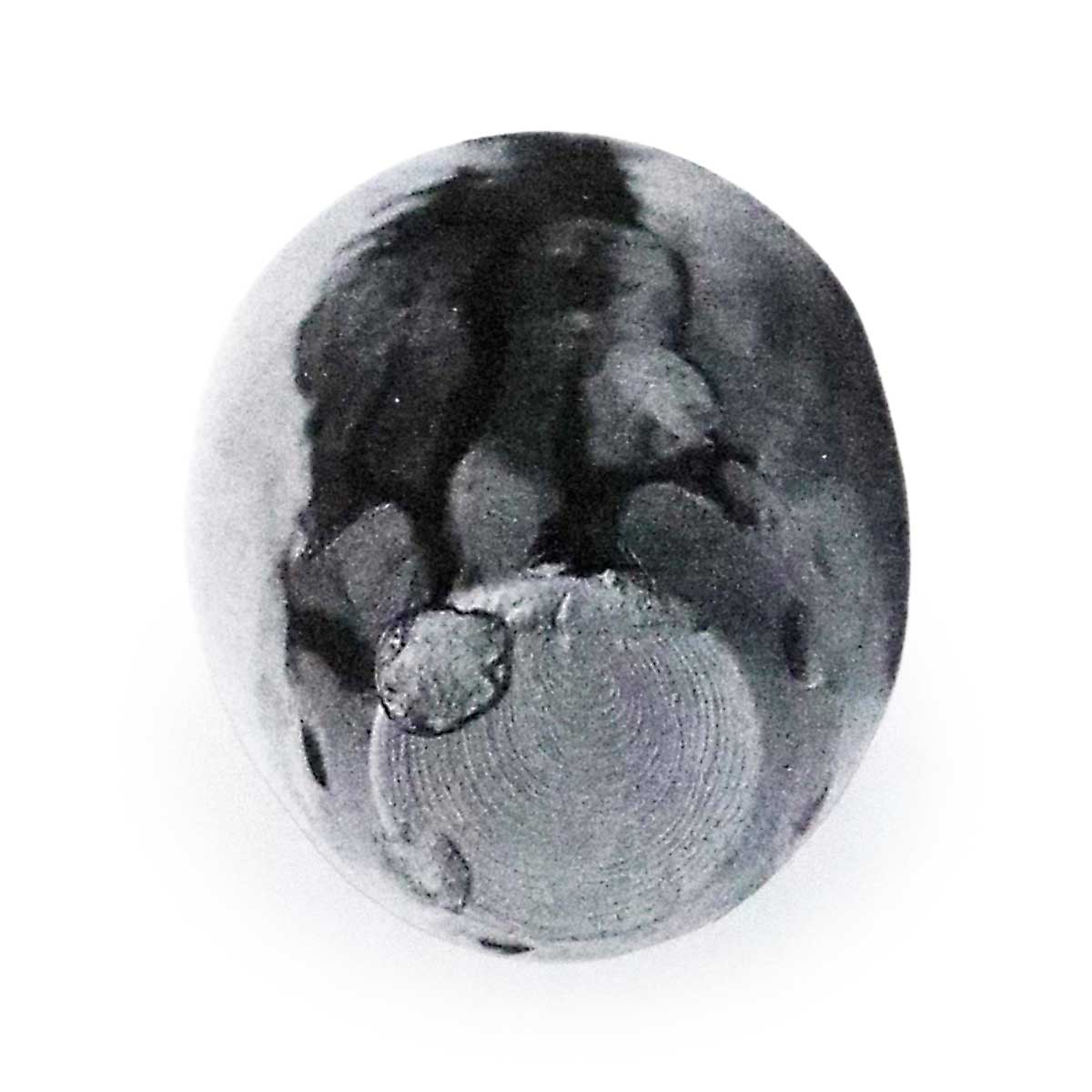
Old Seto, Daimeibutsu, Collection of Baron Heitaro Fujita
Origin of the Name
According to Chaki Meibutsu Zui (Illustrated Catalog of Famous Tea Utensils) by Kusama Waraku, “Hirate Oseto” was owned by Hirate Nakatsukasa Masahide, a retainer of Oda Nobunaga. Masahide served exclusively as Nobunaga’s tutor (Fuyaku), but in the 22nd year of Tenbun, he ultimately left a letter of admonition and committed suicide. As a result, Nobunaga reformed his own conduct; later, deeply moved by Masahide’s loyalty, he built a temple and named it Seishū-ji.”
Dimensions (converted to centimeters)
Height: Approx. 9.7 cm (just over 3 sun 2 bu)
Body diameter: Approx. 7.6 cm (2 sun 5 bu) at the cord section / Approx. 7.3 cm (2 sun 4 bu) at the shoulder section
Mouth diameter: Approx. 3.6 cm (1 sun 2 bu)
Base diameter: Approx. 3.6 cm (1 sun 2 bu)
Koshiki height: Approx. 0.6 cm (2 bu)
Shoulder width: Approx. 1.67 cm (5 bu 5 rin)
Weight: Approx. 183 g (48 monme 8 bu)
Accessories
・Lid: 1 (made of ivory)
・Storage pouches: 3
・Kamakura Kantō: Lining—Tamamushi Kaiki; Cord—Purple knot
・Shimizugire: Lining—Mon Kaiki; Cord—Brown knot
・Shiroji Hosozuru Kinran: Lining—Ume Ori-eda Mon Kaiki; Cord—Brown knot
(Inscribed with the characters for “Hirate Katatsuki”)
・Wooden Mold: Made of Japanese hornbeam (Isunoki) – 1 piece (contained within the Shiroji Hosozuru Kinran pouch)
・Hikiya Storage Box: Made of Chinese quince (Karin)
(Pouch made of Dutch cotton; lining made of mon-donsu; cord tied in a brown knot)
・Inner Box: Made of paulownia wood; the underside of the lid bears the following inscription and attached note.
[Content of attached note: Hirate Katatsuki / Height: slightly over 9.7 cm / Body diameter: approx. 7.3 cm / Mouth diameter: approx. 3.2 cm / Base diameter: approx. 4.1 cm / Weight: approx. 182 g]
・Outer Box: Black lacquered, with a lock
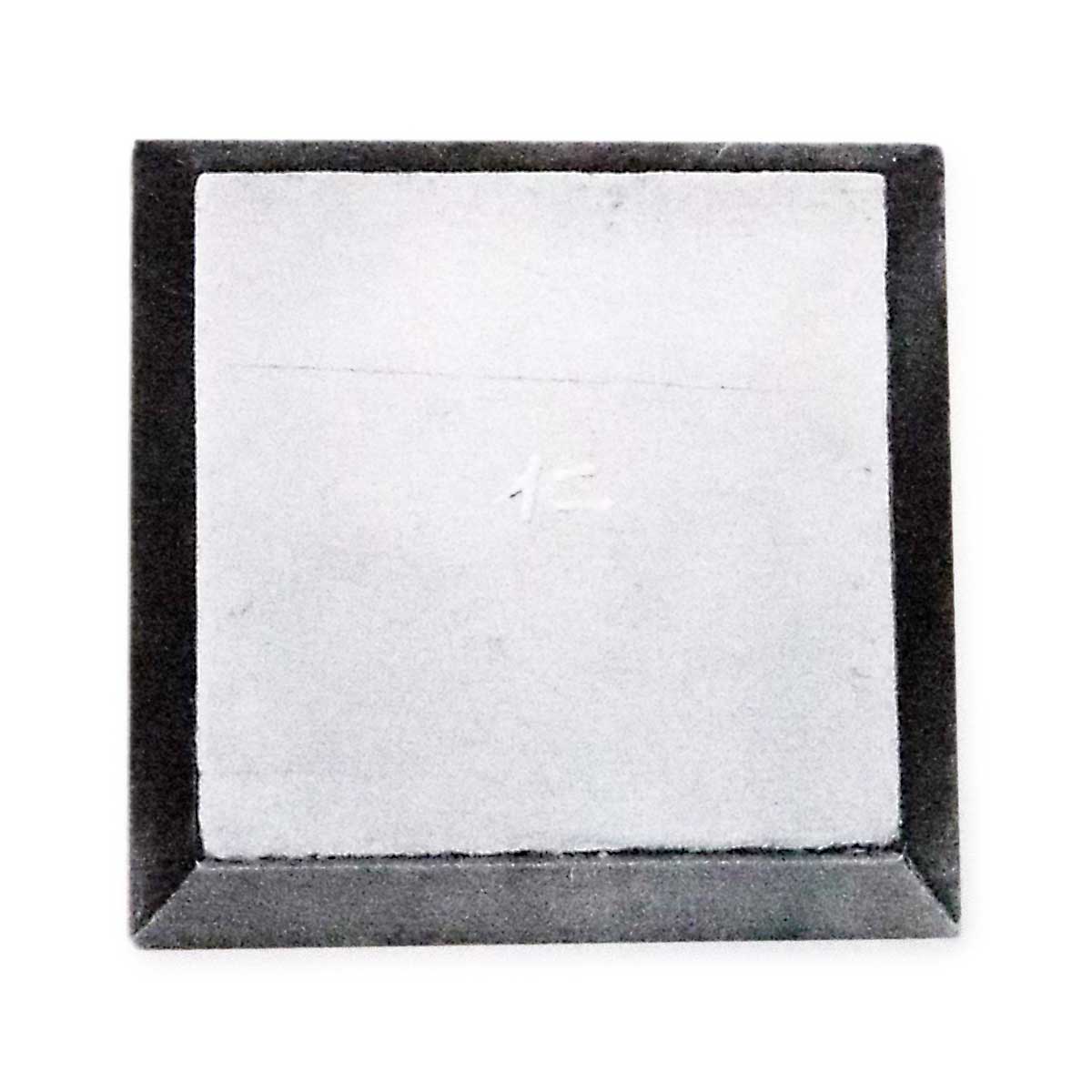
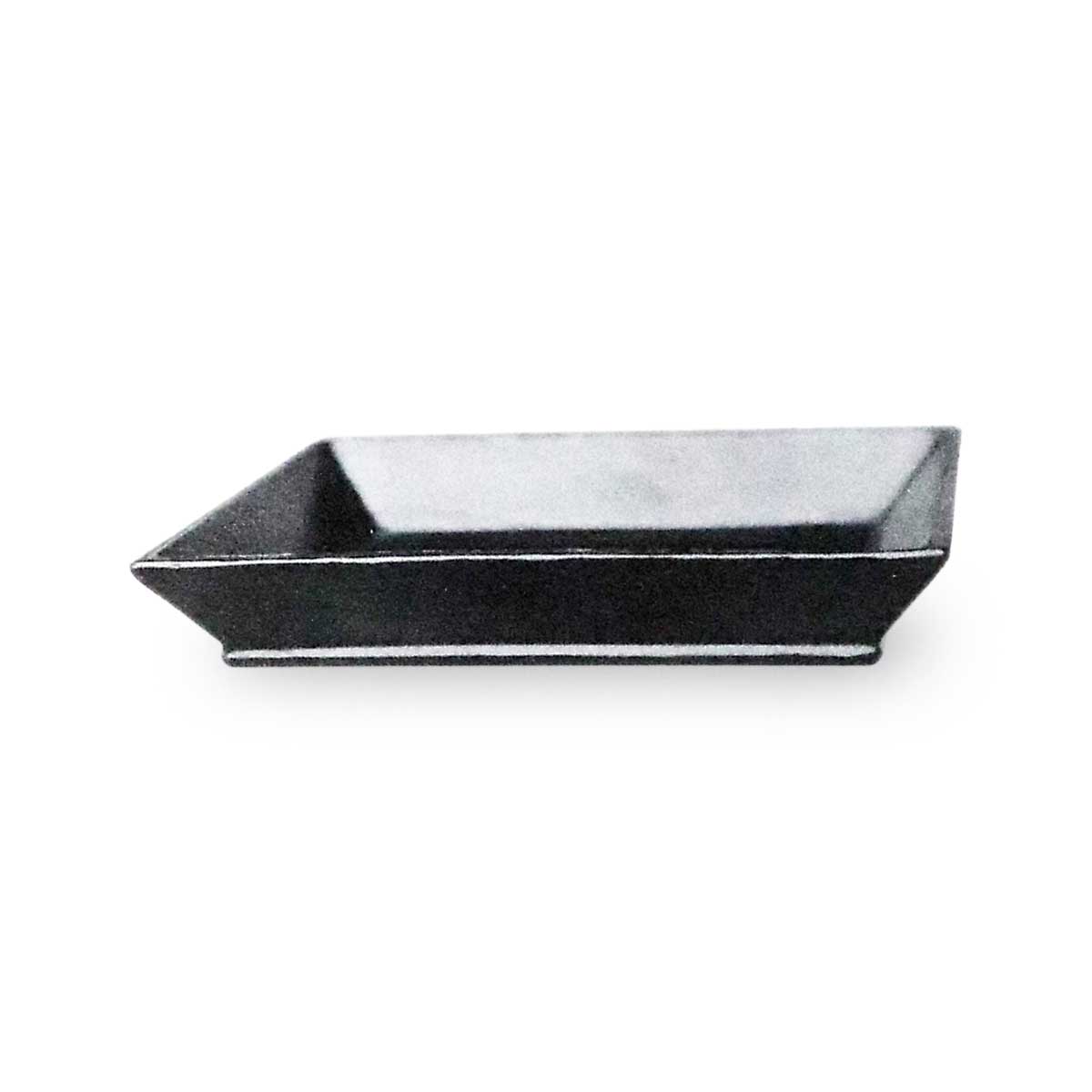
・Accompanying Tray (Soe-bon): Square tray with a vermilion-lacquered rim and black-lacquered interior
(Width and Depth: Approx. 24.2 cm (8 sun); Height: Approx. 3.9 cm (1 sun 3 bu); Base Width and Depth: Approx. 20.0 cm (6 sun 6 bu))
(There is an inscription of the character “仁” (Jin) in vermilion ink in the center of the underside)
・Tray box: Paulownia wood, natural finish; inscriptions on paper affixed to both the front and back of the lid
[Front: Tea caddy tray] [Back: Hirate Katatsuki accessory]
Accompanying letters (3 letters)
“As I had received repeated requests in my correspondence to view the ‘Hirate Katatsuki’ through Kōnoike-ya Zen’emon of Osaka and my fellow townsman Kagaya Saburōbei, I brought it with me in early summer of Kan’en 3 (1750). On that occasion, I also showed it to several other fellow townsmen, and after I returned home, letters of thanks arrived. Their names are as follows. All were of advanced age and have since passed away.
・Yamanaka Zen’emon (retired owner of Kōnoikeya Zen’emon; took the Buddhist name Sōchi after shaving his head)
・Tōri Masayoshi (retired owner of Aburaya Hikosaburō)
・Mimura Soken (retired owner of Sakaiya Kizaemon; of Awaza Kaifune-chō)
The above
Sōin (Kagaya Saburōbei; later took the name Shinbon-in)
Three Hirate tea caddies and their pouches
These were presented on May 16, Kōka 4 (1847), under strict secrecy, as Lord Takekoshi Hyōbu-shōsuke (Senior Councilor of the Owari Domain) had repeatedly made earnest requests for them, and it was difficult to refuse.
(Handled by: Okuda Yagara, Iwakoshi Yūryō / On this side: Lord Kawamura Kyūbei)
I accompanied him and delivered them to his upper residence in Sannomaru.
Regarding the Appraisal (Expert Assessment) of the Hirate Katatsuki
(Letter from Araki Muneyoshi to Kobe Bunzaemon)
In accordance with your instructions, I offer my humble opinion, though I am not qualified to do so. This tea caddy is of exceptionally rare quality as a “Ōseto” ceramic, and the charm (scenery) it exudes is unparalleled in its splendor. The quality of the clay is also exceptionally ancient among works of the Old Seto style, which makes it appear all the more magnificent. Its generous proportions and overall form are precisely the style cherished by the ancients, and it is beyond reproach. Appraising a piece by discerning the intentions of the ancients in this way is something I was unable to discern in my younger days, and I earnestly hope you will take this point into careful consideration. It is a great honor to offer such humble opinions regarding your family’s precious heirloom, but in accordance with your request, I am compelled to share these thoughts. After viewing it, please take care to ensure it is not seen by others. I am truly humbled to offer such a clumsy opinion regarding a piece recognized as a “Meibutsu.” I humbly ask for your kind consideration. That is all.
March 15th, Araki Sōin (Seal)
To Mr. Kobe Bunzaemon
(Note: There are several other letters of thanks from those who have viewed the item, but they have been omitted.)
Miscellaneous Notes (Summary of Past Records)
・Kokin Meibutsu Ruiju: The Hirate Katatsuki is a Daimeibutsu from the ancient Seto period, owned by the Kobe family of Owari. Height: approx. 9.7 cm; mouth diameter: approx. 7.3 cm; mouth width: approx. 4.5 cm; base diameter: approx. 4.5 cm. The thread-cut and Hikiya parts are made of karari wood; the pouch is red-dyed cotton with a white-ground umebachi satin lining. The outer box is made of paulownia. The pouch features Kamakura Kanto, Shimizu-giri, and white-ground fine-vine Kinran patterns. The Hirate tea caddy tray has a vermilion rim and black interior, measures approximately 24.2 cm square, is about 3.9 cm high, and has a base diameter of about 19.4 cm. The character “Jin” is written in vermilion on the base.
・Meibutsu-ki: Hirate Katatsuki, ancient Seto ware. Presented by Kanda Ankyu on March 2, Hōei 7 (1710). Originally owned by Lord Nakayama Shūmasuke, it later passed to Kobe Hikoichi, and subsequently to Kobe of Seishū. (Descriptions of dimensions and accessories are the same as in Kokin Meibutsu Ruiju.)
・Komeibutsu: Hirate, Seto Katatsuki. Features a vermilion inscription by Nakayama Chūma; currently in the possession of Kobe Hiko-shichi.
・Ganka Meibutsu: Hirate; features a vermilion inscription by Lord Nakayama Chūma; currently in the possession of Kobe Bunzaemon of Bishū.
・Rinpō-kuryū: Hirate, Old Seto; owned by Kobe Bunzaemon of Bishū.
・Illustrated Catalog of Meibutsu Tea Utensils: Hirate, Ōseto. Owned by Hirate Masahide, a retainer of Nobunaga; later acquired by Kobe Bunzaemon of Bishū. The body has a persimmon-black color with pools of glaze, and black glaze runs are visible across the entire surface. The clay is grayish-brown. (Includes dimensions, accessories, and an illustration of the tea caddy)
・Katsu Kaishū’s Record of Famous Tea Utensils: Hirate; formerly owned by Kobe Bunzaemon of Bishū. The entire piece features persimmon-black glaze runs reminiscent of Raku ware, with a metallic luster (kinki) throughout. The rim’s upturned edge is distinctive; the base has a persimmon-black color, the shoulder features a black Raku-style metallic luster, and the body displays black Raku-style glaze runs. The thread-cut rim at the base shows “toji” (spatula marks or knots). (Dimensions, accessories, and illustration of the tea caddy included)
・Chaki Zunsho Hōritsu-sho: Hirate-style with a shoulder-pushed rim, owned by Kanda Ankyū. (Dimensions recorded)
・Hōki-an Bunko: Hirate Katatsuki. The overall surface features persimmon-black Raku-style cascades as shown in the illustration, with a golden luster throughout. There are three “toji” marks on the thread-cut edge. (Dimensions, accessories, and illustration of the tea caddy included)
Provenance
Originally owned by Hirate Masahide, a retainer of Oda Nobunaga. It was subsequently passed down to Nakayama Chūma, and by the Hōei era (1704–1711), it had come into the possession of Kanda Ankyū. Later, it was passed on to Kobe Bunzaemon, a wealthy merchant from Owari, and in the third year of Kan’en (1750), at the request of Kōnoike Zen’emon of Osaka, it was presented to a group of tea masters, including Zen’emon (Sōchi). Furthermore, on May 16, Kōka 4 (1847), at the earnest request of Takekoshi Hyōbu-shōsuke, a senior official of the Owari Domain, it was made available for private viewing at the Upper Residence in Sannomaru. These details are made clear by the aforementioned accompanying letter. In the summer of Taishō 5 (1916), it was entrusted to the Fujita family via a fellow tea master from the same hometown as Kobe Bunzaemon.
Field Notes (Author’s Observations)
On May 17, Taishō 9 (1920), I had the opportunity to view the piece in person at the residence of Baron Heitarō Fujita in Amishima, Kita Ward, Osaka City.
“Hirate Katatsuki”
The rim has a deep fold (where the clay is turned back), and the tip of the lip is sharp. The foot ring is extremely low, with a single black line running around its perimeter. The shoulder surface is very wide, tapering gradually from the edge of the shoulder, and there is a single sunken line on the body. The glaze stops at a low position, revealing the “doki-iro” (dull reddish-brown earthenware color) unglazed clay surface only at the very edge of the base. The thread-cut is fine and extremely distinct, but glaze pools have dripped onto the rim of the base, forming three “hikki” (glaze breaks or round marks).
Overall, on top of the purple glaze, darker purple and black glazes cascade down the teapot in multiple streaks—as if branches of snow willow were tied together—and stop just before reaching the unglazed clay at the base. These glaze pools are thick, and their black luster is exceptionally beautiful. The entire interior is also glazed; the wheel marks run shallowly around the interior, and a “doki-ochi” (a sunken area) in the center of the base demonstrates a unique artistic style.
Furthermore, at the broad shoulders, the purple and black glazes intertwine in a complex pattern, presenting a completely different appearance from the scenery around the body. The overall shape possesses a distinctive character, and the beauty of the patterns woven by the purple glaze is beyond words. With its grand scale and endless variations in appearance, it must be considered a masterpiece that stands out most brilliantly among ancient Seto tea caddies. There are no flaws (flawless) throughout the piece.