
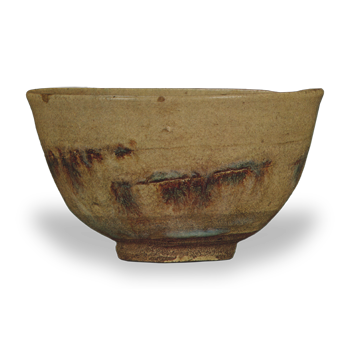
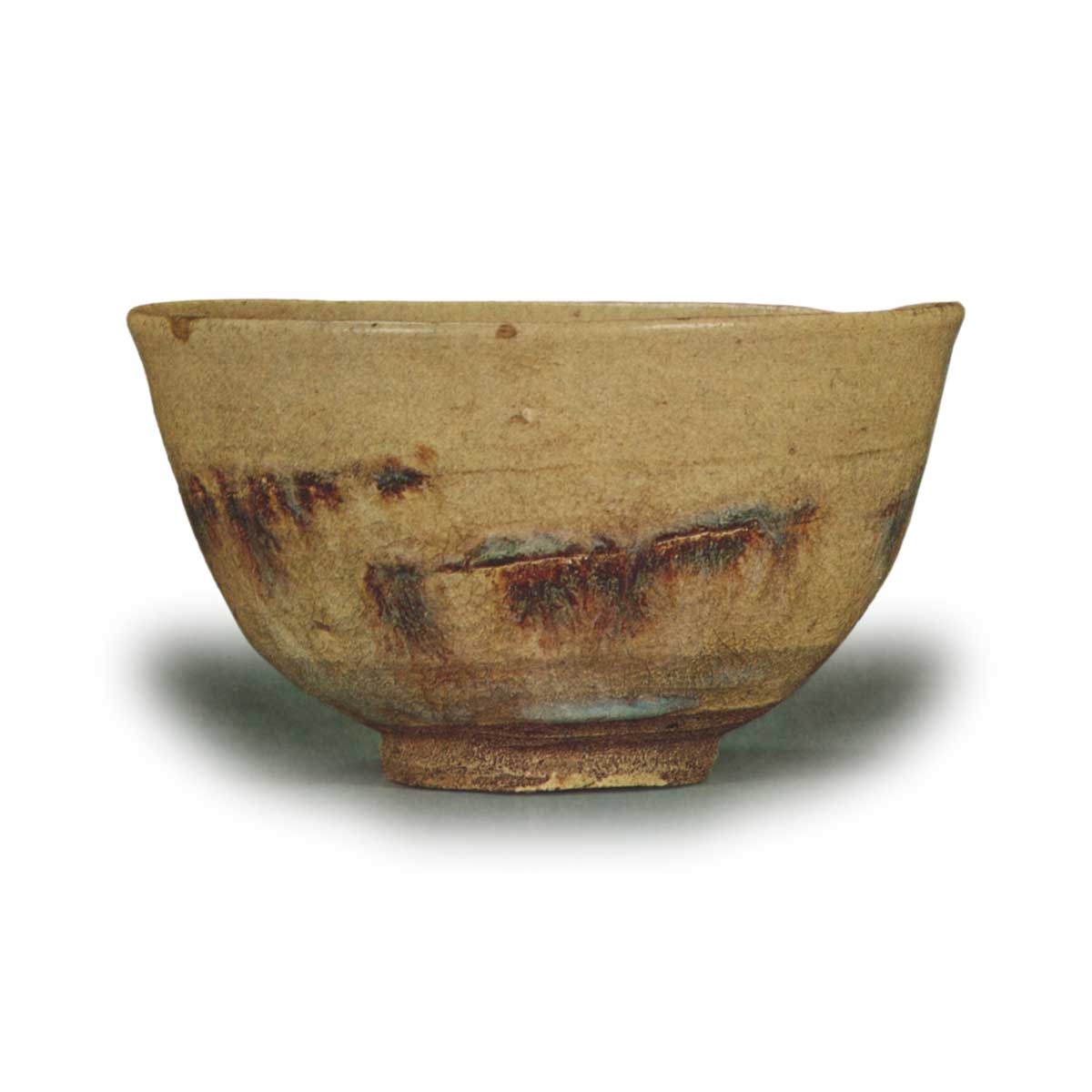
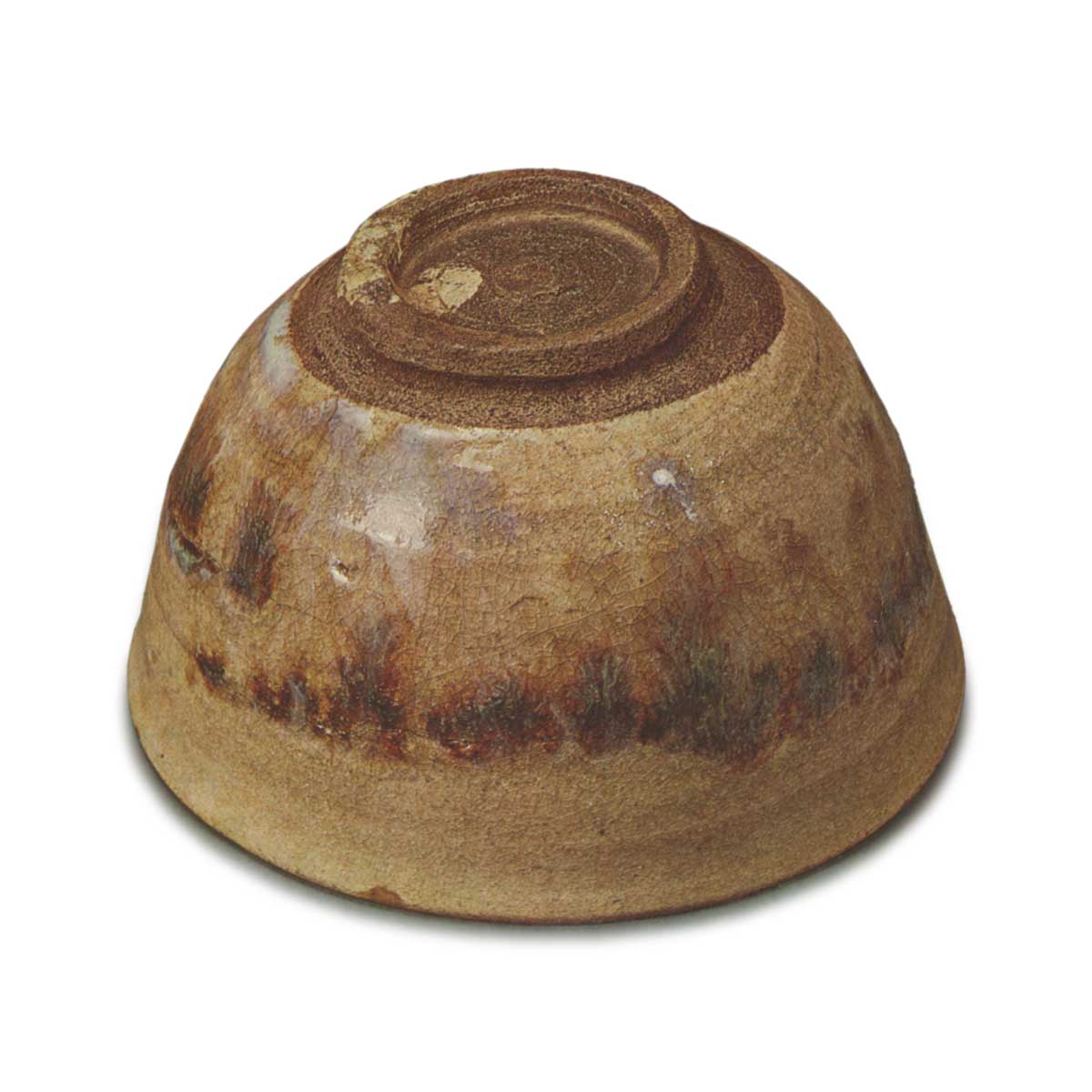
Revival of a famous object
Transmitted from the Toki Mino-no-kami of the Numata clan to the Fujita family
Recorded in: Kokon Meibutsu Ruiju (Collection of Famous Objects from Ancient and Modern Times), Sosan Techo (Sosan’s Notes), Fujita Family Tool Register, Taisho Meiki Kan (Taisho Guide to Famous Artifacts)
Dimensions
Height: 8.11-8.7 cm Foot diameter: 5.7 cm Mouth diameter: 14.5 cm Same height: 0.9 cm Weight: 464 g
Owner: Osaka Fujita Museum of Art
As can be seen in the illustration, there is a crack running horizontally in the middle of the tea bowl. Iron glaze has flowed out from the crack.This is one of the characteristics of Haku-an tea bowls.
As explained in the previous section on Haku-an tea bowls, this is the prototype of this tea bowl, which can be found in Hyesan, North Korea, and further north in Manchuria. The clay used in this region is prone to cracking due to its composition.
Therefore, iron was applied to the cracks to prevent water from leaking out. As a result, when fired, the iron patterns visible in the center of the body emerge. This was likely imitated as a pattern suitable for tea, and it has become the form of the Hakuan tea bowl.
The clay in Seto does not naturally crack, so horizontal grooves were intentionally cut into it, iron was applied, and it was fired to artificially create the pattern. This tea bowl is also an example of this technique, and the seaweed-like glaze, which likely resulted from the inclusion of straw ash in the glaze, was likely appreciated.
The name “Toki Hakuan” derives from its place of origin.

