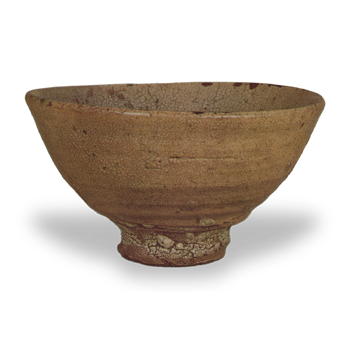
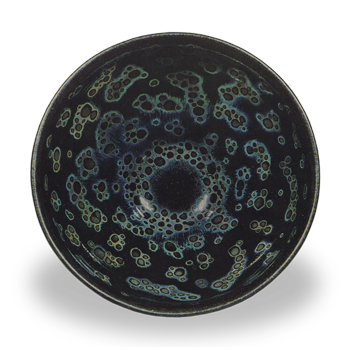
The term “karamono” can be interpreted literally as “things from Tang,” referring to items made in China. However, due to their lack of geographical awareness, the Japanese of old apparently applied this term in a very broad sense. While it is obvious that items from China are considered karamono, those from Korea, Annam, Thailand, Luzon, and even Europe were sometimes lumped into this category. Therefore, “Tang goods” can be understood as a term referring to imported goods. However, this does not mean that “Tang tea bowls” refer to all foreign tea bowls. Among foreign tea bowls, those produced in Korea, specifically Goryeo tea bowls, are primarily referred to as “Tang tea bowls.” This is quite peculiar, but it has become common knowledge in the tea ceremony world to this day. When explained in this way, many people may raise questions. In the case of tea caddies, one might naturally ask why “Tang” refers to Chinese-made items, yet ‘Tang’ tea bowls refer to Korean ones. Clarifying this point is essential to uncovering the true meaning of the ambiguous term “Tang.” Tea caddies that were introduced to Japan long ago were primarily produced in southern China, with some from other countries in the South China Sea region. Korean-made ones are almost nonexistent. Southern-made ones are distinguished as “island-made,” so when we say “Tang-style tea caddy,” it refers exclusively to Chinese ones. The reason the term “Tang-style tea caddy” properly refers to Chinese-made ones is due to the above circumstances. As for tea bowls, the first to arrive were authentic Tang-style tea bowls, specifically those made during the Song and Yuan dynasties, such as Tenmoku, celadon, and white porcelain tea bowls. However, during the Muromachi period, as tea ceremony gradually shifted toward the austere style of wabi-cha, the ornate Chinese tea bowls began to be avoided, and in their place, Korean tea bowls with their subdued flavor came to dominate the field. After Rikyu, that is, from the Momoyama to the Edo periods, Korean tea bowls and Japanese tea bowls such as Raku and Oribe came to dominate the tea ceremony, and Chinese tea bowls were largely excluded, except in special cases. By the way, the practice of categorizing tea utensils into detailed types, such as “Iraho tea bowl” or “Tsujido incense box,” seems to have begun around the time of Enshu. This was, of course, an era when Korean tea bowls were at the forefront of tea bowls. It was perhaps only natural that the high-ranking title of “Tang ware” was applied to these Korean tea bowls. Moreover, the original Chinese tea bowls, which were truly “Tang ware,” were referred to by more direct names such as “Tenmoku tea bowls” or “blue-glazed tea bowls with chipped edges,” so there was no need to call them “Tang ware.” Under such circumstances, over time, the term “Tang ware” came to refer specifically to Goryeo tea bowls. Following this convention of the tea ceremony world, this article, as a general overview of Tang ware tea bowls, should naturally cover all aspects of Goryeo tea bowls. However, in modern times, the appreciation and study of ceramics have made tremendous progress, and celadon and tenmoku, which had previously been regarded in the tea ceremony world as merely old and unusual tea bowls, have come to be recognized as important heritage of Chinese ceramics history, prompting widespread appreciation among scholars. Furthermore, as the very origins of the world-renowned tea ceremony culture, it has become impossible to ignore them. In light of this situation, I will defer discussion of so-called Tang tea bowls, i.e., Goryeo tea bowls, to the second volume, and here I will briefly describe the original Tang tea bowls, i.e., Chinese-made tea bowls, which were the first to be embraced by the tea ceremony world. Tea bowls from China As is well known, the custom of drinking matcha tea was introduced to Japan at the beginning of the Kamakura period by Eisai Zenji, who studied Zen in Song China. He brought back the method of preparing and drinking matcha, as well as tea seeds for cultivation, thereby initiating the custom of tea drinking and tea production in Japan. It is only natural that he also brought back the utensils used to drink it, namely tea bowls. At that time, there were no tea bowls specifically designed for drinking tea in Japan. While wooden and lacquerware were used as tableware for the upper classes, their materials were not suitable for tea. Among pottery, the only item that could be called a tea bowl was the mountain tea bowl produced in the Seto region. However, compared to the exquisite pottery bowls used daily in Chinese Zen monasteries, these were far too crude. Well-versed in the circumstances of the time, Eisai likely brought tea bowls back from China without hesitation. Unfortunately, the contents of his luggage are unknown. However, there are records that suggest what they might have been. The “Buddhist Antiquities Catalog of the Buddha’s Old Hermitage,” which records the possessions of Engaku-ji Temple, one of the five great temples of Kamakura and a center of learning, religion, and culture closely tied to political power, is such a record. Listed there are tea bowls made of celadon, followed by those from Rao Zhou, Kencho, Kutsuhen, and Keigai. Rao Zhou was a place known for producing white porcelain, and “Rao Zhou-made” referred to white porcelain from that region. However, it likely referred to celadon or similar blue-white porcelain from Jingdezhen or similar regions. Ken’i refers to ordinary tenmoku tea bowls from Fujian Province, while kōhen denotes a special type of Ken’i tea bowl later named Yōhen or Yūteki. Keien refers to Shakuho Tenmoku tea bowls from the Jizhou Kiln in Jiangxi Province. These were the first tea bowls used in Japan for matcha. It goes without saying that all of these are Chinese-made, but it is worth noting that they were all produced in kilns in the Jiangnan region. The fact that the production areas were concentrated in the south was due to the fact that the monks who studied in China stayed mainly in the central part of Jiangnan. This characteristic of tea bowls imported from China remained unchanged for a long time. This is evident from the fact that the tea bowls listed in the Ashikaga family’s inventory of utensils, “Kintaikan Sayu Choki,” compiled during the reign of Ashikaga Yoshimasa, do not deviate from the style of the Buddha-ni-an. The places where monks studying abroad stayed were still limited to the Jiangnan region, and public and private trade ships also called at ports south of Zhejiang. At the same time, after the Southern Song dynasty ceded the northern half of its territory to the Jin dynasty, the famous kilns that had once flourished in the Jiangbei region fell into decline, and Song ceramics became limited to those from the Jiangnan region. Now, let us examine these tea bowls brought from China, categorizing them by type and considering their ceramic historical background. Celadon Among ceramics used as tea bowls in China, celadon and white porcelain were the earliest. According to Lu Yu’s “Cha Jing,” which describes the tea ceremony of the Tang Dynasty, celadon from Yuezhou and white porcelain from Nanzhou were considered the finest tea bowls. Additionally, poems praising these blue and white ceramic bowls frequently appear in Tang poetry. However, from today’s perspective, Tang ceramics were still relatively limited in variety, with only black ceramics existing alongside these two types. Therefore, it is perhaps natural that the two kilns that produced the finest blue and white ceramics were so highly praised. That aside, the reason these Yue and Zhe blue and white porcelain tea bowls were praised is said to be because their color harmonized well with the color of tea. However, it is important to note that the color of tea at that time was completely different from the vibrant green of matcha. Tang Dynasty tea was called “dancha,” made by steaming tea leaves, grinding them into a powder, shaping it into pills, drying them, and then crushing them to dissolve in hot water. The tea brewed in this manner had a reddish-brown color similar to black tea or bancha. The pale olive-green Yue blue porcelain and the slightly yellowish Ya white porcelain must have created a striking contrast with this deep color, which is likely why they were so highly regarded. Such Tang Dynasty tea ceremonies and tea bowls were introduced to Japan as early as the Heian period. However, this style of tea ceremony has no direct connection to the tea ceremony practiced today, and therefore these tea bowls are not used in tea ceremonies. Therefore, I will refrain from describing them in detail. However, it is worth mentioning the relationship between the blue-glazed porcelain of Echigo and the blue-glazed porcelain that was popular in Japan during the Song Dynasty and the Kamakura period and thereafter. When people hear the term “celadon,” they typically imagine pottery with a thick jade-green glaze, similar to the full moon tea bowl shown in Figure 7 of this book. That is correct. However, it took two thousand years of Chinese ceramic history to achieve such perfect celadon. The Yue celadon of the Tang dynasty can be considered the final step in this evolution. Earlier, I mentioned that Yuezhou celadon has a pale olive green color. Even when written in words, this differs in nuance from the jade-green color of jade celadon. Where does this difference lie? In short, the glaze of celadon is a gray glaze. By using ash from burned杂木 (miscellaneous wood) as glaze and firing it with a large amount of firewood to create a smoky atmosphere, the iron contained in the ash is reduced, resulting in a pale gray-blue glaze. By carefully refining the glaze and paying attention to the firing method, celadon can be produced. The olive-green hue of Yuezhou celadon is a perfect example of this theory being executed correctly. However, even with this, the dripping emerald green color of Koto-style celadon was not achieved because one more step was missing. The secret lies in the thickness of the glaze layer. Water is colorless and transparent, but when it is deeply pooled and forms a pool, it appears blue. Similarly, even a slight blue glaze becomes darker and deeper when applied in a thick layer. The reason why the celadon from Yuezhou, despite not having a bad color tone, failed to escape a flat appearance was because the glaze was merely applied lightly, resulting in an extremely thin glaze layer. During the Five Dynasties period following the Tang Dynasty, a new kiln following the Yuezhou tradition emerged in the southwestern part of Zhejiang Province, around Longquan County. This marked the beginning of the renowned Longquan Kiln. It is unclear exactly how and why kilns emerged in this region during this period. However, given that these kilns produced the most technically challenging celadon in the world in such large quantities, it is certain that those involved in their operation and the technicians themselves possessed exceptional intelligence. They believed that the key to the success of this new venture lay in creating something that was absent in the existing Yuezhou celadon. The result of their relentless efforts was the creation of authentic celadon with a thick glaze and deep color. However, it would be risky to attribute this great discovery solely to the Longquan kiln. It seems that there were various other factors at play. When the Northern Song Dynasty was established as a unified Chinese state, its capital was placed in Kaifeng, Henan Province. In terms of the entire Chinese territory, this was the Jiangbei region. The production of new ceramics, which the Song dynasty vigorously promoted, naturally took place around the capital, and in fact, the famous kilns of the Northern Song dynasty, such as Ding Kiln, Jun Kiln, and Ru Kiln, were concentrated in Henan and Hebei provinces. These kilns, backed by the state, built on the traditions of the Tang and Five Dynasties periods and devoted their efforts to creating new innovations. The Northern Song Dynasty was a time of remarkable scientific and technological advancement. It is no wonder that outstanding works were produced. Masterpieces such as the moon-white glaze of the Jun Kiln, the celadon of the Ru Kiln, and the carved white porcelain of the Ding Kiln, which are now cherished by the world’s art connoisseurs, were produced one after another. Despite their size, the kilns in the remote region of Jiangnan must have seen the superior techniques of the kilns in the north as an excellent model to emulate. The emergence of jade-colored celadon at the Longquan kilns can be attributed, to a greater or lesser extent, to the influence of these kilns’ techniques. The moon-white glaze of the Jun Kiln and the celadon of the Ru Kiln may appear to be different colors, but they share a very similar character. The Ru Kiln’s celadon resembles the color of Yuezhou celadon, but with a much higher degree of translucency in the glaze. The Jun Kiln’s moon-white glaze, as the name suggests, has a pale white or lavender color and also exhibits high translucency. This color is achieved by using ash from straw, which contains phosphorus, rather than ash from mixed wood, to make the gray glaze for celadon. Both glazes have the same main components, differing only in the type of ash used. And what is particularly important is that these two glazes are applied to the vessel in two or three layers. As mentioned earlier, in Tang Dynasty Yuezhou celadon, the glaze was applied in a single coat. However, in Ru Kiln and Jun Kiln celadon—including Jun Kiln’s moon white glaze, which technically belongs to the celadon category—the glaze is applied, dried, then applied again and dried, in an effort to build up thick layers of glaze. As a result, the finished glaze has a deep color and a solid, dignified appearance. It seems reasonable to conclude that the beautiful celadon of the Longquan kiln was born because they quickly adopted this glazing technique. When the gray glaze used at the Yuezhou kiln was applied multiple times using the Ru kiln method, beautiful celadon was produced. That must have been the case. In any case, it was through such efforts that the Longquan Kiln introduced a new, true blue porcelain to the world during a certain period of the Northern Song Dynasty. Let us now examine the properties of this blue porcelain in greater detail. Although people refer to it simply as the Longquan kiln, the kiln sites were scattered across the counties of Longquan, Qingyuan, Yunhe, Suichang, Lishui, and Yongjia, and even today, there are more than 200 known kiln sites. The emergence of such a large-scale production area indicates that there was an abundant supply of high-quality clay in this area. When examining the body of today’s well-known Longquan celadon, we find that most of the vessel is covered in glaze, with only the base of the foot rim exposed. The clay is grayish-white and highly compacted, indicating that it is a fine-grained clay. While the term “celadon” might suggest that this is kaolin, it is actually a semi-magnetic clay. While describing it as grayish-white is not incorrect, there is an issue that needs clarification, so I will add a note here. The parts of the Longquan celadon where the clay is visible are generally reddish-brown in color. This is due to the iron content in the clay oxidizing during the final stage of firing. This phenomenon is often referred to as “purple mouth and iron feet” in relation to Longquan celadon, and the iron feet refer to this reddish-brown color. Therefore, it is easy to think that the soil of Ryuzan celadon is red. However, this is merely a surface phenomenon, and the interior remains grayish-white. The high foot area is prone to chipping due to functional reasons. Additionally, many pieces were polished in later periods to smooth out such chips. By examining these areas, one can see that the soil is indeed grayish-white. Now, the fact that this clay is grayish-white is highly suitable for applying celadon glaze. Why is that? Because this color is similar to the color of reduced iron, which is the primary element of celadon’s color. In other words, they are of the same hue. Therefore, when celadon glaze is applied to this clay, the color does not repel but blends well, resulting in a deeper color tone. If this soil were pure white, the color might become bright and vibrant, but it would likely result in something superficial and lacking in depth, similar to the pottery of the Nagasaki region. Another advantage of this soil is its high plasticity, meaning it is highly malleable. Whether it be the full moon tea bowl in Figure 7 or the tea bowls known as Ma Huang Ban and Yu Ryu, both attributed to the Song Dynasty Longquan Kiln, all of these tea bowls have an exceptionally thin body. To shape a tea bowl this thin requires not only skillful wheel-throwing but also clay with strong resilience. Thinly made tea bowls evoke a sharp, intellectual sensibility in the observer. Many Song Dynasty ceramics, such as Ding Kiln white porcelain, Yaozhou Kiln celadon, and Jingdezhen blue-and-white porcelain, share this characteristic. The artisans of the Longquan Kiln likely learned the glazing techniques from the Ru Kiln while also adopting the sharp forms from those kilns. Nevertheless, it is thanks to this strong clay that they were able to achieve such results. The Yuezhou Kiln, which is said to have originated from the Longquan Kiln, is also renowned for its excellent clay. It is a fine, grayish-white clay similar to that of Longquan. However, in terms of plasticity, it may be slightly inferior to Longquan. This is because even during the Tang Dynasty and the Five Dynasties period, when the Yuezhou Kiln is said to have produced its finest works, there were almost no thin-walled tea bowls or bowls produced. Next is the shape of the vessels. Post-war excavation reports by the Chinese Communist Party have gradually clarified the types of vessels produced in the early Longquan kilns, but here we will focus solely on the shape of tea bowls. As kilns said to have been established following the example of Yuezhou, the bowl shapes of Longquan are similar to those of Yuezhou ware from the late Tang and Five Dynasties periods. What shapes were popular in Yue ware? They were relatively wide at the base, shallow, and had a morning glory-shaped opening, known as the flat tea bowl shape. This describes the shape when viewed from the side, but when viewed from above, there are two types: those that are simply wheel-thrown into a perfect circle, and those where the rim is shaped into a flower pattern by making cuts in several places or lightly pressing the rim from the outside. Let us examine both of these forms in tea bowls from the Longquan kiln. When it comes to tea bowls with a circular rim, the Amaryu tea bowl, which was passed down to the Kinkaku-ji Temple, comes to mind. The shallow lid with its smooth, unbroken sides is the quintessential form of Echizen. The second form, corresponding to the wheel-flower shape, is undoubtedly the tea bowl by Ma Huangban. Chinese Communist Party surveys have reported that fragments of a “sunflower-mouth bowl” were found among the kiln sites of the Northern Song period at the Longquan Kiln. The “sunflower-mouth bowl” refers, of course, to this Ma Huangban-style wheel-flower shape. Considering this, it may be reasonable to date Ma Huangban’s work to the early Northern Song period. The provenance of this tea bowl, which was presented to Shigemori Taira by Zen Master Bussho of Ikkyo-zan, cannot be dismissed as mere speculation. However, there is one difference in shape between this bowl and two other bowls similar to Yue ware. That difference is the foot. The feet of Yue ware tea bowls are generally wide. They are either flat without any carving or have a wide base with only the center carved shallowly, and ordinary ring bases are rather rare. However, in similar tea bowls from the Longquan kiln, including the Full Moon, the foot is small and has a narrow ring base carved very thinly. This is likely due to the consideration that attaching a wide, thick foot to a thin, sharp-shaped bowl would disrupt the balance. This is a mark of skillful craftsmanship. However, when we look at Northern Song ceramics as a whole, including Ding Kiln, Yaozhou Kiln, Jun Kiln, and even Henan Tenmoku, all bowls with large openings and shallow rims feature this type of small, compact, thin foot. This was the typical style of the time. The Longquan kiln may have simply followed this trend. A slightly later development is the so-called “full moon” type of tea bowl with a ridge. The basis for this later date is that fragments of this type have been found in Longquan kiln sites dating back to the Southern Song Dynasty, according to reports from the Chinese Communist Party. However, given the vast scale of the Longquan kiln sites, future research may reveal different findings. For now, it is reasonable to consider this as the current understanding. Longquan celadon tea bowls have been extensively imported to Japan since the Kamakura period, and among them, the ridged tea bowls, along with the “sunflower” bowls (i.e., wheel-shaped bowls), appear to have been the most favored. The fact that many of the Ryusen celadon bowls and dishes that have been passed down to our country today are of this type reflects this preference. The tea bowls displayed by the tea seller by the roadside in the famous screen painting “Autumn Leaves at Takao” by Kano Hideyori are clearly celadon with a ridged rim. Until the end of the Muromachi period, this was the most common type of celadon tea bowl. As can be seen when viewed under a full moon, the foot of this type of bowl is relatively small, but in proportion to the body of the bowl, it is somewhat larger than the Ryūryū type. This is thought to be due to the shape of the bowl. In this bowl, the side walls do not open straight outward, but rather curve gently outward, enveloping the bowl. Although it is somewhat open, it can be considered a fairly standard bowl shape. With this shape, a foot that is too small would be unstable and out of balance. Compared to the shallow shape, the center of gravity is higher in this shape. Therefore, this size was necessary. The most significant difference, however, is that this tea bowl has decorations that were not present in the previous one, specifically the presence of ridges on the outer surface. Ridges, as seen on a sword, refer to convex bands whose peaks form sharp angles. Such convex bands arranged vertically along the outer surface are called ridge patterns. This decorative technique was already used in ancient Egypt and Greece on marble vessels, and in China on bronze vessels from the Zhou dynasty. While such ancient examples are beyond the scope of this discussion, tracing the origins of this design on Ryuzan kiln ware leads us back to Tang Dynasty Yue ware and Northern Song Dynasty kiln ware. Those bowls and dishes often feature flower petal decorations on the outer surface. This decorative technique originated from the lotus pedestals of Buddhist statues, and by doing so, the vessel takes on the shape of being embraced by a flower. It is extremely beautiful, and since the Six Dynasties period, it has been widely used on white porcelain, blue-and-white porcelain, and three-color glazed vessels. As the petal decorations, known as “lotus petals,” become denser and the width of each petal narrows, they evolve into engraved patterns. In Northern Song ceramics, this decorative pattern is commonly seen. When the scalloped pattern forms a full moon, not only are the shapes of the petals symmetrical and well-proportioned, but all thirty petals are identical in shape, orientation, and size, creating a perfect, harmonious composition. The craftsmanship is so exquisite that it is hard to believe it was carved by hand, leaving one in awe of the skill of the potters of the time. This ridged pattern is said to have an even greater effect when covered with a celadon glaze. Although the vessel walls are thin, the ridges are only slightly raised, yet they are distinctly different from a completely flat surface. The glaze is then applied. It accumulates well in the recessed areas and only lightly coats the ridges. When fired, the vessel features deep jade-green hues in the thickly glazed recessed bands, while the thinly glazed ridges reveal the underlying clay color, creating pale blue-white streaks. These patterns alternate and run horizontally across the vessel. A stunningly beautiful scene emerges. This is a new innovation not seen in the previous first form. In the full moon tea bowl, the glaze, applied multiple times, pools in the middle of the outer surface, creating a dense, cloud-like haze that spreads horizontally. This intertwines with the glaze patterns flowing vertically along the ridges, creating an indescribably beautiful landscape. According to records of items from the Muromachi period, the name “kanyo” often appears alongside “seiji” (celadon) and ‘Nanyo’ (Nanyo ware). It is associated with terms such as “kan’yo” (official use), “kan’chiku” (official ware), and “dan’yo” (imperial ware), but essentially refers to celadon with fine crackle patterns on the glaze surface. If this were simply a matter of glaze cracking, it would be straightforward, but recent research into the official kilns of the Southern Song Dynasty—kilns exclusively producing imperial ware for the court—has led to speculation that “kan’yō” may actually refer to official kiln celadon. While it would be nonsensical to argue based solely on the similarity of the characters, the fact remains that celadon with glaze cracking is indeed more common in official kiln works. While there are examples of Longquan celadon with large cracks, there are none with fine cracks densely covering the surface. It is unlikely that the records emphasizing “kan’yō” were referring to Longquan pieces with large cracks. Therefore, it is possible that this term was used to describe pieces with small cracks, such as those found in the Suburban Altar Official Kiln. However, there are currently no transmitted celadon tea bowls that can be definitively identified as imperial kiln pieces. Therefore, the classification of this cylinder title cannot be resolved, and there is no need to delve further into imperial kiln celadon here. It suffices to note that the higher-quality pieces from the Longquan kiln have a glaze color that is slightly whiter. I would like to add one more point. There is a strong tendency to arbitrarily classify traditional flower vases, such as the Ouchi-tsubo and Mansei, as imperial kiln ware simply because they are famous pieces. Such classifications should be made after more detailed research on the imperial kiln ware scattered in museums in Europe and the United States, including the National Palace Museum in Taipei. The fact that the so-called “anvil-shaped” peanut-shaped vessels with phoenix ears or straight ears do not survive in official kiln wares serves as a good cautionary example. Ningyo-te As mentioned earlier, the taste for tea in Japan gradually shifted toward a more austere direction from the late Muromachi period. The visually striking beauty of celadon and tenmoku became too flashy and gradually fell out of favor. In contrast, celadon with a subdued color, known as Ningyo-te or Jukou celadon, gained popularity. As mentioned earlier, the glaze of celadon only achieves its emerald green color when fired in a reducing flame. However, even a small amount of fuel can cause the glaze to oxidize. In other words, the iron in the glaze oxidizes into iron oxide, resulting in a yellowish-brown hue. These color tones are characteristic of Ningyote and Shukou Seiji. After the Song Dynasty, many Longquan-style kilns spread from Zhejiang to Fujian. Among them, there were undoubtedly many with inadequate kiln facilities and inferior techniques. As a result, complete reduction was not achieved, and a large number of yellowish celadon pieces were produced due to partial oxidation. This was clearly a failure as celadon, and it likely fetched only a fraction of the price of the beautiful celadon from Longquan at the time. However, the world is a strange place, and this inferior celadon, which could be called a failure, was paradoxically welcomed in the Japanese tea ceremony world, which sought simplicity. It is likely that trade ships of the time casually brought back these types of tea bowls, which were produced near the ports of Zhejiang or Fujian, without giving them much thought. They caught the eye of tea masters of the time, who praised their rustic glaze as embodying the essence of wabi, and eventually they became highly prized tea bowls. One of these bowls, beloved by Murata Jukō, came to be known as “Jukō celadon,” and thicker, molded bowls with human figures were called “doll bowls” and widely used. Jukō celadon is similar to celadon from Yue Prefecture. It has a grayish-white body, is relatively thin and shallow, and features fine combed patterns on the inside and outside. The interior and exterior are adorned with fine comb-like patterns. Since the glaze is thin, the comb marks are merely scratched lightly, creating a light and lively effect. It is said to resemble a cat’s claw marks, hence the name “cat’s scratch.” The celadon glaze on top was probably applied in a single coat, resulting in an extremely thin glaze layer that resembles that of yue ware. Consequently, the glaze color is pale, lacks depth, and, due to incomplete reduction firing, has a brownish-green hue—what is known as “hishio” color. I saw many such bowls lined up at an antique shop on Hollywood Road in Hong Kong a few years ago. They were likely made in Fujian or Guangdong, near Hong Kong. The “Hina-te” style differs significantly from “Jukou Seiji.” When examined as an antique, the clay appears heavily charred, indicating a high iron content, but the quality is dense and well-fired. The clay seems similar to jade-green celadon, but this one is much thicker. The bowl shape belongs to the full moon type, which is closed and rounded. During the Ming Dynasty, the Longquan kiln produced many bowls and dishes with this construction and shape, so it likely follows that tradition. The glaze is also applied thickly and abundantly, which is also reminiscent of Longquan. The name “hina-te” (doll hand) comes from the fact that the interior of the bowl is decorated with patterns such as figures, flowers, broken branches, and thunder patterns, which are stamped using a mold. The figures are likely considered the main focus, leading to the name “doll-shaped tea bowl.” While figures are not commonly seen, there are many examples of blue-glazed ceramics from this period in Longquan that feature stamped patterns. Based on these common features, it is likely that the kiln that produced these “doll-hand” bowls was located relatively close to Longquan. However, when it comes to the glaze color, there is a significant difference from Longquan. Ming Dynasty Longquan celadon, with its high sulfur content in the glaze, has a translucent, lustrous surface and a color ranging from green to grass green. This is what is known as “seven-official celadon.” However, it was not yet to the point where one would hesitate to call it celadon. In contrast, the glaze color of the figurine hands, as seen in Plate 8 of the Eleven Houses catalog, is a deep orange color. It is not a grass-green color with a reddish tint. In that sense, the glaze of the Jukō celadon was more celadon-like. The description in “Chado Seiden Shu” as “persimmon-colored Tang tea bowl” is accurate. While it is clear that this glaze color was produced by oxidation firing, it may also depend on the glaze composition. Upon close examination of the glaze surface, one notices that the persimmon-colored glaze has scattered spots resembling “U” marks. This phenomenon is likely due to poor selection of clay ash, but such glaze may have contained a higher-than-usual amount of iron, which may have intensified the redness of the glaze. I have spent too much time on the topic of Tenmoku celadon, but let us now turn our attention to Tenmoku, which played a more important role than celadon on tea bowls and was used in far greater quantities. During the Song Dynasty, celadon achieved a beautiful jade-like color. It seemed that it would be even more highly valued due to its harmonious contrast with the color of tea, but this was not the case. In the Song Dynasty, the method of making tea changed. As a result, the color of brewed tea became a pale greenish-yellow, resembling dried bamboo leaves. It is similar to the whiter shade of modern matcha. Such tea, no matter how you look at it, does not seem to go well with celadon tea bowls. This is because the color is too intense. In Japan, as celadon flower pots and bowls became highly valued, celadon tea bowls were also appreciated for a long time. However, during the Song Dynasty, it seems that earthenware was rarely used for tea bowls. The mismatch in color with the tea played a significant role. Additionally, tea bowls that were far more effective at showcasing the tea’s color were created. That is precisely what Tenmoku is. Regarding the origin of the name “Tenmoku,” there have been various theories since ancient times. Since it is pointless to engage in unnecessary speculation, we will follow the most reasonable theory here: that the name comes from tea bowls brought from Tenmoku Mountain. Tenmoku Mountain is located on the border of Zhejiang and Anhui provinces, alongside Jingshan Mountain. It is a tea-producing region and home to a famous Zen temple where many monks studied. It was only natural that the tea bowls brought back from there were called Tenmoku. In short, the name Tenmoku refers to tea bowls brought from Tenmoku Mountain, that is, the tea bowls from the Tateyaki kiln and the Kichijo kiln that will be described later. These tea bowls indeed have a unique shape that distinguishes them from other tea bowls. It is reasonable to call them Tenmoku tea bowls rather than simply tea bowls. However, today, the black glaze on these bowls is also collectively referred to as Tenmoku glaze—not limited to those from Song Dynasty China, but also including those from Japan and other East Asian countries—which can be somewhat confusing. The term Tenmoku is used for both the shape of the bowl and the type of glaze. Tenmoku glaze is black because it contains a high percentage of iron (about 10%). This type of glaze first appeared in China during the Six Dynasties period at the Yuezhou kilns. However, the black porcelain from the Tang Dynasty is directly related to the tenmoku tea bowls we are discussing here. The exact location where Tang Dynasty black porcelain was produced is still unclear, but it is certain that it originated in the Henan Province area. Therefore, even as the era shifted to the Five Dynasties and Northern Song periods, the tradition of this glazing technique likely persisted in the Henan region. Thus, it is reasonable to assume that when the Song Dynasty arrived, this glaze was first applied to tea bowls in this region to create Tenmoku tea bowls. The black glaze with brown spots, the small oil-drop Tenmoku at Ryuko-in Temple and the Fujita Museum of Art, and the white-rimmed Tenmoku at the Fujita Museum of Art can be considered Tenmoku that originated in the northern part of the river. Although it cannot be confirmed, it is likely that these were made earlier than the Tenmoku from the Jiangnan kilns, such as the Jizhou Kiln, and at least during the Northern Song Dynasty. Tenmoku tea bowls are appreciated for the subtle variations in their glaze, so it would suffice to discuss the glaze alone, but here I will briefly touch on the differences in shape, or rather, the differences between the north and south. Among the Henan Tenmoku mentioned earlier and similar persimmon-shaped Tenmoku, there are many examples of shallow, straight-sided flat tea bowls with small, compact bases, known as “rain dragon” shapes. Whether or not these should be called Tenmoku tea bowls is a matter of debate, but in any case, this form was popular in various kilns in the northern part of the Yangtze River during the Northern Song Dynasty and can be referred to as the Northern Song style. Therefore, it is safe to assume that this type of tea bowl was produced during the Northern Song Dynasty. It can be considered the earliest example of a tea bowl with black Tenmoku glaze. Tea bowls from the Tateno Kiln and the Jizhou Kiln also incorporate this style. If these kilns had been actively producing Tenmoku tea bowls since the Northern Song Dynasty, it would be natural for this shape to have emerged. The absence of such examples suggests that Tenmoku in the Jiangnan region began later than in the north. Some may raise objections to this theory. Some argue that among the Shakuho-style Tenmoku bowls from the Yoshizawa kiln, there are examples of the shallow lid shape characteristic of the Northern Song Dynasty. Indeed, there are shallow, rounded shapes. For example, the famous “Kobata-ke-denrai” (Kobata Family Transmission) leaf-shaped Tenmoku bowl is a prime example of this shallow, rounded shape. However, upon closer inspection, it can be noted that these shapes differ slightly from the authentic Northern Song Dynasty shallow lid shape. First, while the foot is indeed small, the back is too low. It is so low that it seems to sink into the bowl bottom, giving the foot a rather awkward appearance. This is the first point that distinguishes it from the Northern Song style. Additionally, the shallowly opened side walls show a slight curve inward. The deliberate straight lines of the Northern Song style are absent here. Considering these points, it seems reasonable to view this form from the Yoshizuka Kiln as a distorted version of the Northern Song shallow sparrow-shaped design. In the Tenmoku tea bowls of the Jiangbei region, this shallow, curved form is relatively rare, and most bowls have rounded side walls, taking on the typical bowl-like shape. The oil-drop Tenmoku bowls at Ryuko-in Temple and the Fujita Museum of Art are good examples of this form. Overall, these bowls are low in height, with a wide opening, and could be described as a type of flat tea bowl. However, the side lines of the bowl are gently curved, giving it a gentle, rounded shape. In contrast, the foot is straight and upright. This form is unique to the northern region and is not found in Tenmoku from the Tateyaki kiln or the Jizhou kiln. Considering that bowls and dishes of the same style are often found in the Ru kiln and Jun kiln, this form can also be considered one of the Northern Song styles. There are a few pieces in the Jizhou kiln’s Kai Ryu En collection that resemble this shape, but the foot is poorly constructed and cannot be traced back to the Northern Song Dynasty. The shape that the built kilns and Jizhou kilns were most skilled at, known as the “tenmoku” shape (see Plate 2, “Oil Drop Tenmoku”), is thought to be an arrangement of this Jiangbei tenmoku bowl. This is because, when turning the pot on the wheel, the potter twisted the rim back at the very end to create the drinking rim. When you put your lips to these bowls, you can feel that the twisted rim touches your lips, making them very comfortable to drink from. This can be considered an ingenious design inspired by functional considerations. However, the drinking rim is also found in the Tenmoku-shaped bowls from the Tateyaki kiln and the Jizhou kiln. This can be clearly seen in the oil-drop Tenmoku in the “Unshu Zocho” (plate 2) and the Daihaku Ran Tenmoku in the Muromachi Mitsui family collection (plate 6). This twisted rim is considered one of the major characteristics of the Tenmoku shape, but as we can see here, it was learned from the Tenmoku of the northern region. This single point reveals that the Jiangnan tenmoku form is based on the Jiangbei bowl shape, but other parts are not very similar. The dissimilarity stems from the significantアレンジ (arrangement) applied. In the case of Tenmoku made in a standing kiln, i.e., Ken’en, the foot is correctly upright in accordance with the original, which is good, but in the case of Daihaku, even in this Tenmoku shape, the foot is still flat and low. It is only natural that they do not resemble each other. However, this does not mean that the standing lid is closer to the original form. The Tenmoku of the North Even though it is called the Tenmoku of the North, the Henan Tenmoku and the Kaki Tenmoku are not included in the ancient pieces, and they are rarely used in tea ceremonies, so here we will limit our discussion to the oil-drop Tenmoku found at Ryuko-in Temple and the Fujita Art Museum. The origin of these Tenmoku is unclear, but it is believed that they were made at the Dangyang Peak Kiln in Xiuwu County, Henan Province. This kiln is a famous kiln included in the so-called Cizhou kilns, producing various works such as Song Sancai, Song Red Painted Ware, and Scraped-Off Ware. There are fragments collected from this kiln site in my possession, and among them, there is one piece that clearly exhibits the same oil drop pattern as the aforementioned Tenmoku. While I am uncertain whether this is indeed a genuine piece from Dangyang, for now, I have no choice but to believe it is. Now, if this type of celadon is considered to be produced by the Cizhou kiln system, those familiar with Chinese ceramics will notice that the clay should naturally be white in color. Whether it is Song red-painted ware, Song three-color ware, or the white-glazed pottery known as “Julu-style,” the body clay visible in the unglazed areas always has a reddish or bluish gray hue. Exactly so, this type of oil-drop celadon uses the same white clay. However, the white color is not visible from the outside because the area around the high footring, where the clay is exposed, is always coated with iron sand. As a result, it appears as a purple-brown color. However, due to insufficient application of iron sand, the white clay beneath the glaze may peek through at the edges, or over time, the iron sand may wear away, revealing the underlying clay, making the original white color clearly visible. The reason for this application method is unknown, as there are no records. It is likely that the clay was originally glazed and fired in its natural state. However, when the oil-drop tenmoku glaze with its deep chocolate color and floating silver beads was created, the contrast with the white clay was too strong, causing the oil drops to lose their individuality. Even when I imagine the oil drops with the white clay left as is, I feel the same way, so the aesthetically sensitive people of the time must have quickly recognized this. The Jizhou kiln was particularly skilled at applying a white slip glaze to the base clay. In other words, they were accustomed to altering the color of the base clay. Therefore, they may have come up with the brilliant idea of using black clay instead of white to match the color of the base clay with the glaze. According to previous theories, this black slip glaze was inspired by the black clay used in the tenmoku of the standing kiln, especially the oil-drop tenmoku. However, upon examining the white-rimmed oil-drop tenmoku at the Fujita Museum of Art, which appears to be of the same type as the oil-drop tenmoku, I began to question this theory. This is because, both in terms of its construction and the special white-rimmed technique used, it cannot be considered to be from the Northern Song Dynasty. Nevertheless, this piece also has iron sand drawn into the clay. It is more reasonable to consider this technique as unrelated to the built kiln. Next, let us consider the glaze. As mentioned earlier, the glaze of tenmoku contains approximately 10% iron. When fired at high temperatures, the iron oxidizes into iron oxide particles and melts into the glaze (which can be considered a type of molten glass). Within this glaze, the glaze and the clay body release the oxygen they contained. The oxygen gas forms small bubbles, which rise to the surface of the glaze like bubbles in boiling water, eventually bursting. This is the mother of the oil drop phenomenon. The unstable iron oxide dissolved in the glaze quickly gathers around these bubbles, similar to how debris on the surface of water concentrates around bubbles. When the bubbles burst, the iron oxide flows into the resulting depressions and remains on the glaze surface in a spotted pattern. At this stage, the fire is extinguished, and as the kiln cools slowly, these particles retain their shape and become oil droplets. When viewed through a magnifying glass, the surface of oil droplet tenmoku reveals that the oil droplets are brown clusters. Therefore, oil drop tenmoku should be characterized by brown spots, but the thin glaze film on top interferes with external light, making the particles appear silver-gray. This kiln, likely from Dangyangyu, like other kilns in North China, uses coal as fuel, resulting in firing primarily by oxidizing flames. As a result, the glaze color becomes a deep sepia due to iron oxidation, with silver droplets floating on the surface. The nature of the glaze and the formation of oil droplets are identical to those of built kiln tenmoku. However, the oil droplets of Jiangbei tenmoku are slightly thinner than those of built kiln tenmoku, possibly due to the glaze composition or application method. As a result, the glaze has a slightly deeper tone, and the luster of the oil droplets tends to be somewhat superficial. Kiln-fired oil-drop tenmoku When discussing kiln-fired tenmoku, one should begin with the first-class yōhen tenmoku, but since oil droplets were mentioned earlier, I will proceed with oil-drop tenmoku first. The clay used in a kiln-built kiln differs from that of the Jizhou style, containing more iron and having coarser particles. As a result, the finished piece exhibits a color range from light brown to dark brown, with a rough texture resembling the crinkled silk of Tangzhi ware. However, I have been told by Mr. Shimizu Uichi that the darker color is not due to the iron content but rather the reduction firing process. Or perhaps that is the case. Using this clay, we create the tenmoku-shaped pieces mentioned earlier. Although the wheelwork is executed swiftly and skillfully, compared to the tenmoku from the Kanto region, they are significantly thicker in construction. Especially from the bottom to the waist, it is quite thick. Therefore, when you pick it up, the first impression is that it is heavy. Since the potter is skilled, it could have been made thinner, but the decision to make it thicker was intentional. This is because this tenmoku is designed solely for the function of holding and drinking tea. Tea is drunk hot, so it is desirable for the vessel to minimize the transfer of heat to the hands. This thickness was determined by that requirement. Additionally, the thickness also serves the purpose of keeping the tea inside from cooling too quickly. Cai Xiang of the Song Dynasty praised the black color of the lid, which complements the color of the tea, and also praised the benefits of its thickness in his book “Cha Lu.” He also noted that those with knowledge of tea would not use celadon or white porcelain. As we saw earlier, the celadon tea bowls from Longquan have thin walls. I have never tried brewing tea in them, but I imagine that if hot water were poured into them, they would be too hot to hold with bare hands. The walls are thin, and the clay is semi-porcelain, well-fired and dense, so heat must transfer quickly. This characteristic, rather than the color, was likely the main reason why Song Dynasty tea masters disliked it. Another point worth mentioning regarding the shape is the construction of the foot. The foot of the Ken’en tea bowl stands straight and upright, but the interior of the foot is only slightly carved, almost as an afterthought. It resembles a flat foot with a single groove carved into it. The reason for this design is unclear. However, since this is one of the major characteristics of the lid, there must be a reason for it. It is tempting to think that it was done to prevent heat from escaping as much as possible, but what could that reason be? The oil-drop glaze on the lid is almost identical to that of the Jiangbei region. I inadvertently wrote “oil-drop glaze,” but “iron glaze” is the correct term. The same glaze can produce oil droplets, yōhen (color changes), or ordinary rabbit-hair lids depending on the firing conditions. However, the glaze on this lid appears to have been more viscous than that of the northern region, resulting in a thicker application. Looking at the edge of the glaze on the standing lid, it resembles the flow of molasses. The thick glaze forms rounded pools and stops there. This is also a unique feature of the standing lid. The mechanism by which this glaze produces oil droplets during firing was already explained in the previous section. The formation of oil droplets in a standing kiln is almost identical to this. However, in the standing kiln, unlike in the Huabei region, wood is used as fuel, and firing is typically done in a reducing flame. Since it is fired in a reducing flame, the iron in the glaze oxidizes to iron oxide, the same composition as that in celadon, giving the glaze a bluish hue. This glaze, which contains a high amount of iron, results in a glaze color that is close to black. This is why the base glaze of the built kiln appears blue-black, differing from the purple-brown skin of the oil-drop tenmoku from the Jiangbei region. Over time, the glaze releases oxygen bubbles, and fine crystals of iron(II) oxide concentrate in these bubbles. This process is similar to the previous section. However, since these crystals are iron(II), the oil drops should have formed black particles. This results in a blue-black surface with darker black spots. However, the oil-drop tenmoku we have found in the built kiln has brownish oil droplets, not black grains. Why is this the case? Although we mentioned that a reducing flame is used in the built kiln, when the fuel is stopped and the kiln begins to cool, outside air enters, often causing oxidation to occur even for a short time. At that moment, the oil droplets of iron oxide that were exposed on the glaze surface instantly react with oxygen, transforming into iron(II), or red iron. The iron(I) melted within the glaze, however, remains submerged and does not come into contact with oxygen, thus retaining its blue-black color. Thus, the tenmoku with its blue-black base and floating brown oil droplets is born. Tenmoku refers to these oil droplets that form on the glaze surface, but they only appear very thinly in areas where the glaze is thin. In such areas, the first iron that rises up cannot solidify into grains and instead spreads out horizontally, leaving a uniform brown glaze. Of course, here there is no way to see the underlying blue-black base glaze. In contrast, in areas where the glaze is thickly applied, the base glaze, though darker in color, possesses the deep clarity of obsidian, with fine brown particles floating about, evoking an eerily beautiful aura. This flavor was not found in the oil-drop-style bowls of the northern region. It is likely due to the thick glaze of the lid. Yōhen Tenmoku In the “Kunitai Kan Sayū Chōki,” the types of Tenmoku tea bowls are listed, with Yōhen Tenmoku at the top. Quoting the description, it reads: “Yōhen, the unparalleled masterpiece within the raised lid, a treasure unmatched in the world. The base is jet-black, with fine, dark blue specks scattered throughout. Additionally, various hues of blue, white, and dark blue intertwine, and there are also opalescent hues resembling a rainbow, making it a masterpiece of countless forms.” The black glaze is adorned with Yōhen patterns of varying shades of lapis lazuli, sparkling like stars in the sky, with opalescent光芒 surrounding them, a scene skillfully rendered. Even today, no oil droplets are visible. For example, the twisted rim is particularly prominent, and the glaze swirls around it with such beauty that it is no wonder that people of the past were amazed by it. It is known that it was a rare item even back then, and is now considered a lost treasure. The price of ten thousand pieces is difficult to estimate today, but it was undoubtedly an exorbitant sum. This Yōhen Tenmoku now exists in only four pieces. They are housed at the Seikado Museum, Ryuko-in Temple, the Fujita Museum of Art, and in the private collection of a certain individual. No other examples exist in other countries, making these four the only ones in the world. They are undoubtedly treasures of the world. The clay and shape of the Yōhen Tenmoku are no different from other Tenmoku, so here we will focus solely on the changes in the glaze. As mentioned earlier, no special glaze was used. It is the same glaze used for oil drop or rabbit’s hair patterns. During firing, the glaze forms bubbles, and iron particles gather around them to create oil drops. Up to this point, the process is identical to that of oil drop tenmoku. When viewed under a magnifying glass, the star-like particles of the yo-hen tenmoku are all nearly circular, leaving no doubt that they are the remnants of burst bubbles. However, what is the secret that transforms this from a simple oil drop tenmoku into a yo-hen? In the case of oil drops, the particles are brown. However, when viewed under a magnifying glass, the particles of yo-hen are uniformly black. The outline of these particles exhibits an opalescent color, revealing them to be black, round particles. Otherwise, they would be indistinguishable from black particles on a black glaze. The black color is unclear, but the iron gathered in these bubble marks may not be brown ferrous iron. It could be crystals of impurities like tungsten or manganese, or it might not be reduced ferrous iron. In any case, these black particles undoubtedly hold one of the secrets of yo-hen. Another secret lies in the thin layer of glaze covering these particles. When you hold a Yōhen Tenmoku in your hands and examine it, you notice that the brilliance of the Yōhen effect varies depending on the angle of view, sometimes shining brilliantly and other times appearing less luminous, with the intensity of the glow changing. To be more specific, when viewed directly, the brilliance fades, but when viewed at an angle, it shines brilliantly. In other words, when oblique light is applied to create diffuse reflection on the glaze surface, the yōhen achieves its maximum brilliance. In essence, the yōhen phenomenon can be described as the result of interference between reflected light and the thin, opalescent layer on the glaze surface, which is prone to opalescence, and the black particles beneath it. Such yōhen tenmoku only emerged under extremely special firing conditions, which is why only four examples survive today. However, objects exhibiting a similar state are not uncommon within the built environment. When oblique light is shone on oil drop tenmoku or rabbit hair tenmoku, the glaze surface often emits a lustrous glow similar to the raster phenomenon. These pieces share a similar surface membrane with yo-hen tenmoku. However, the composition and conditions of the oil drops or rabbit hair beneath the glaze did not reach the level of yo-hen. While other types of built-in lids are highly valued for their yo-hen and oil droplet patterns, the majority of built-in lids are characterized by patterns known as “usagi-mo-en” or “kome-me tenmoku.” “Usagi-mo” and “kome-me” refer to fine, hair-like lines. In other words, these are patterns where such lines are densely arranged on the glaze surface. The rabbit-hair glaze shares the same clay, shape, and firing process as the yōhen and yūdaku, but the surface texture of the glaze is different. As already explained in detail, the yūdaku forms when iron particles suspended in the glaze settle and solidify. The rabbit-hair glaze, on the other hand, is formed when these iron particles do not settle but instead drip downward. When iron gathers around bubbles and forms oil droplets, as the kiln fire dies down and cools slowly, the oil droplets remain on the glaze surface in their original shape, resulting in a beautiful oil droplet tenmoku. However, if the fire does not die down and the firing continues, the glaze continues to flow, causing the accumulated iron clusters to collapse and flow downward. Therefore, when examining the glaze surface of a rabbit-hair lid, one can observe brownish streaks that flow uniformly downward, either long or short. The variation in the rabbit-hair patterns—some still granular in shape and others elongated—depends on the time of day when the sun sets. In this sense, the rabbit-hair lid can be considered the younger sibling of the oil droplet pattern. When the firing progresses and the glaze is boiling, if the fire suddenly drops and the kiln cools, the iron oxide in the glaze does not crystallize like oil droplets or rabbit hair, but instead turns the glaze surface into a muddy, dirty color. Of course, this is considered a failure in Tenmoku, but the ashy gray-black texture is favored in wabi-cha (a style of tea ceremony that values simplicity and rusticity) and is prized as “Ash-Covered Tenmoku.” The name comes from the appearance of ash covering the surface, but since ash would not actually settle on the lid used in the kiln, the name likely originated from the visual impression of the color. The glaze of a tenmoku tea bowl is typically applied in two layers. A base layer of iron-rich yellow clay is applied, followed by a sulfuric acid-based glaze. During firing, the iron from the base layer melts into the upper glaze, forming the oil droplets and rabbit’s hair patterns mentioned earlier. However, if for some reason the base glaze is applied very thinly, most of the iron melts into the glaze, and the excess iron does not crystallize to form oil droplets. In this case, the glaze takes on the color of iron, becoming yellowish-brown and translucent like amber glaze. Such pieces are called “yellow Tenmoku,” but they are rare as they are accidental products. The term “tatehiyashiru tenmoku” occasionally appears in records of tea ceremonies from the Momoyama period, such as the “Tennojiya Kaiki.” Tatehiyashiru refers to a cold soup made by grinding perilla leaves, whose finely chopped pieces give it a light green color and are said to stimulate the appetite in summer. The tenmoku in question is said to resemble this. For a long time, its nature was a mystery, but it has recently been clarified. Among the tenmoku in the collection of Mr. Takeuchi Itsu in Kyoto, there is a piece with a glaze that closely resembles the color of tatara-hiyashi, with a greenish hue. This is undoubtedly the one in question. This is also an extremely rare piece, with only one other known example at Kyushu University, the Fröning Museum in the Netherlands, and one in the UK. Its composition is likely almost identical to that of the earlier yellow tenmoku. However, while the yellow Tenmoku was fired in an oxidizing atmosphere, resulting in a yellowish-brown color, this one was fired in a reducing atmosphere, causing the iron to reduce and turn grass green, much like celadon. The glaze and firing conditions alone can produce an endless variety of forms in Tenmoku. Daiho-san Tenmoku There are various types of Tenmoku produced at the Jizhou Kiln in Jiangxi Province. While there are detailed classifications based on patterns, the techniques are largely the same, so here we will use the representative name “Daiho-san” for consistency. “Daiho” refers to the shell of a turtle, specifically the tortoiseshell. The glaze, which has a dark brown base with yellow spots, is characteristic of the Jiuzhou Tenmoku, so it was named “Daiho” after the tortoise shell. Daiho-san can be broadly divided into two types. One is the shallow lid shape mentioned earlier, characterized by a low foot that is barely noticeable. The other is a simple bowl shape. As can be seen in Plate 4, the bowl has slightly curved side lines and a relatively wide foot, but it is extremely low, and when viewed from the side, the foot is not visible. Additionally, unlike the lid, there is no twisted rim around the mouth. In this regard, the Rantennmei in Plate 6 can be considered an unusual shape. However, some pieces have an inner rim that is not visible from the outside but is raised like a “baba-ro” (a type of lid), forming a kind of drinking rim. This was likely added to tighten the inner rim of the tea bowl. The clay from the Yoshizawa kiln is white and quite fine, unlike that of the standing kiln, but it seems somewhat brittle in quality. Unlike the clay of Mino, it does not fire as hard, and even thin pieces with shallow lids have high thermal insulation properties. The charm of the Daihō-san lies not in the clay or shape, but in the variations of the glaze applied to it. As mentioned earlier, the glaze of the Tenmoku is applied in two layers, but the glaze of the Daihō-san skillfully applies this technique of double glazing.
Explanation of Chinese ceramics
 China
China