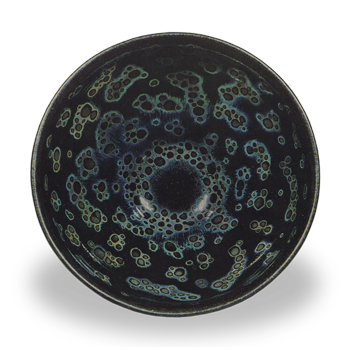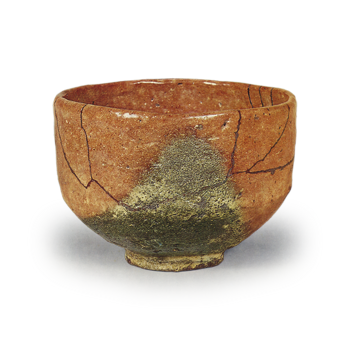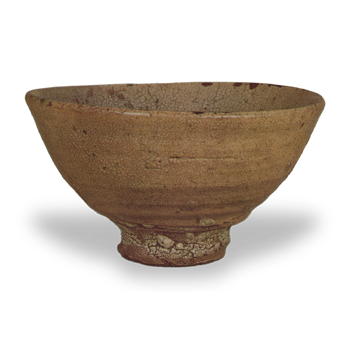
Korean tea bowls such as Ido, Kumagawa, Mishima, Hake-me, Iraho, and Tottoya were once called Goryeo tea bowls, and even today, they are often referred to as such among tea masters. In the tea ceremony, even Korean tea bowls are called Tang ware.When we say “Korean tea bowls,” it does not necessarily mean they are from the Goryeo period. During the late Muromachi period to the Momoyama period, when Korean tea bowls began to be used for tea in Japan, Korea was referred to as Goryeo. Just as Hideyoshi’s campaign against Korea was called the “Goryeo Campaign,” Korean tea bowls were called Goryeo tea bowls because they were from Korea.
Korean tea bowls began to appear in tea ceremonies around the late Muromachi period, during the Shōō era, and it seems that tea masters in Sakai were the first to introduce them. As the emerging townspeople began to participate in tea ceremonies that had previously been dominated by the Tang style, significant changes occurred in the style of tea ceremonies. The most noticeable change was the shift in preferences for tea utensils.Sakai was the most developed town among the merchant class at the time, so it was only natural that this trend became clearly evident in the tea ceremonies of Sakai. While it was natural for tea ceremonies originating from Zen monasteries, which were heavily influenced by Chinese culture, to initially value Tang-style aesthetics, it was also a natural trend for artistic events rooted in human sensibilities to eventually be permeated by the inherent Japanese sensibility.For the townspeople, who had inherited the pure sensibility of the Japanese people from their commoner background, the Tang-style tea ceremony, which was governed by Chinese standards of beauty, must have been completely foreign to them. In particular, the townspeople of Sakai were the most free-spirited people, and they boldly expressed their preferences rooted in their raw sensibilities even in tea utensils. The leader who guided the tea masters of Sakai was Shōō.
It was he who picked up the gray-glazed Tenmoku tea bowls, which were considered inferior, and it was he who actively promoted the beauty of Bizen and Shigaraki ceramics. In traditional Tang-style tea ceremonies, tea bowls were beautiful Tenmoku or celadon, but the tea masters of Sakai found the rough, gray-glazed Tenmoku and Shukou celadon, which melted softly into the senses, more appealing.
Jukō’s preference represented the pioneering flow of Japanese sensibility in tea, and the name “Jukō celadon” has been passed down as its symbol. However, its subdued glaze tone resonates far more deeply with the inherent sensibility of the Japanese than the gaudy glaze of the traditional celadon.Not limited to Shukou celadon, tea bowls made of lower-grade celadon such as “ningyo-te” and “hishi-te” were highly favored among tea masters in Sakai during the Tenmon and Eiroku periods. However, the terms “chuko tea bowl” or “ume tea bowl” appearing in tea ceremony records of the time refer to these celadon tea bowls in general, and their common characteristic is their yellowish glaze.
The name “ume tea bowl” comes from this, as it resembles the color of ripe plums. This preference for this color tone is unique to the Japanese and is particularly favored in dyeing. However, tenmoku and celadon, even jade-glazed celadon, are ultimately standardized in shape and cannot escape a sense of uniformity.
Japanese people, influenced by their environment, tend to dislike regular or overly symmetrical things. Tenmoku and celadon tea bowls, in this regard, seem to be inherently unsuitable for the Japanese sensibility. In other words, even in tea bowls, people appreciate individual differences, and within a single bowl, they find joy in variations in shape and glaze. In essence, they value works with distinctive, individualistic characteristics.
Here, Korean tea bowls come into play. As seen in tea ceremony records, tea from Sakai was the earliest to appear. The port of Sakai was frequented by ships traveling to Korea, and it is likely that Korean tea bowls, along with the tea trend, had already been introduced to Sakai before the late Muromachi period and were familiar to the tea masters of Sakai. Furthermore, the varied styles of Korean tea bowls undoubtedly appealed to their tastes.The new trend in taste was further strengthened by Shōshō’s advocacy, and as Sakai tea master Yamakami Sōji noted, “The finest tools of the age were selected by Shōshō’s discerning eye,” this situation can be inferred. The appreciation for Goryeo tea bowls likely reached new heights at this time. Among them, the well-shaped tea bowls are particularly intriguing.In Tsuda Sōyū’s tea ceremony records, he mentions a tea bowl from Goryeo at a gathering in the 12th year of the Eiroku era, describing its color as “usukihishiho (loquat color),” which is noteworthy, suggesting that the glaze color was particularly appealing.This glaze color is also common to blue-glazed plum tea bowls, and it is likely that the origins of the appreciation for well-shaped tea bowls lie in this area. This may also explain why the name “well-shaped tea bowl” gained prominence earlier than other types of Goryeo tea bowls.
As seen in Soeki’s tea ceremony records, the appreciation of Goryeo tea bowls by the tea masters of Sakai extended to subtle nuances in the color of the clay, the delicate glaze, and variations in the craftsmanship. This was not only due to their preference for freedom and individuality but also because tea bowls are not merely objects to be viewed but are held in the hand and examined in detail, which naturally led to such appreciation.With the exception of Mishima, most Korean tea bowls lack artificial decoration, yet within their seemingly plain and monotonous appearance, tea masters discovered complex changes that surpass artificial designs and uncovered profound charm. The discovery of new beauty in Korean tea bowls was brought about by the collaboration of refined individual senses, and it was, so to speak, a new realm of beauty and a standard created by the sensibilities of outstanding tea masters.
Another notable feature of Korean tea bowls is that they are generally made of earthenware. Compared to the hard texture of tenmoku and celadon, their soft touch was also a major appeal to the sense of touch.
Korean tea bowls, which became popular in Sakai during the Shōgi period, came to dominate the tea ceremony in the Kansai region during the Rikyu period.
This is why Yamakawa Sōji stated, “Regarding tea bowls in general, Tang-style tea bowls have been discarded. In the present age, Goryeo tea bowls, contemporary tea bowls, and Seto tea bowls are the only ones in use.” In essence, this reflects the fact that the external preferences of the Tang style had been shed, and the inherent Japanese sensibility began to emerge in the tea ceremony.
Even during the Momoyama period, except for the names “Ido” and “Mishima,” the term “Korean tea bowls” was still used as a general term, and various names emerged only after the Edo period. However, terms such as “Funaki,” “Hake-me,” “Kumagawa,” “Ido-waki,” “Katen,” “Goki,” “Kinkai,” “Iraho,” “Unryu,” “Kyogen-hakama,” “Wakata,” “Hanshi,” “Gosho-maru,” and “Gohon-te” were already in use by the Genroku period.These names were created as Goryeo tea bowls were categorized for practical use, but this also led to increasingly detailed appreciation, sharpening the senses of tea masters.
During the Momoyama period, which saw the boom in Korean tea bowls, it was only natural that the interest of the feudal lords turned to the tea bowls of that region. The establishment of pottery production in the western domains by Korean potters who had settled there after the war was a significant byproduct of this trend.Furthermore, as the craze for Korean tea bowls spread, some were produced in Korea specifically as tea bowls, reflecting the preferences of tea masters. The “Gohon Chawan” is a clear example of this, with the “Oribe Gohon” and “Gosho Maru” being considered early examples, and there are also claims that the “Rikyu Gohon” may have originated from Korea.In terms of their connection to the preferences of tea masters, Irabou, Toudouya, Chou Mishima, and Kinkai can also be considered part of the same tradition. It is noted that Korean tea bowls have two distinct streams: one representing pure Korean-produced styles such as Ido, Kumagawa, Mishima, and Hake-me, and another influenced by the preferences of tea masters.
The unique beauty of Korean tea bowls is commonly referred to as “wabi,” and the Dōdōya, Iraho, and Kaki no Shiki types are particularly representative of this quality, with tea masters referring to them as “wabi-mono.” The expression of dark, subdued tones is truly befitting of the term “wabi,” and it is a unique creation born from the sensibilities of tea masters rooted in the Japanese aesthetic sensibilities cultivated through the study of Korean tea bowls.However, the expression of “sabi” may appear at first glance to be the result of no human intervention, and this can lead those with a superficial understanding to mistakenly view “sabi” items as simple, rustic utensils. Yet, upon closer examination of the craftsmanship, one realizes that there is actually meticulous design consideration behind them.Wabi-sabi is the focal point of the charm of Korean tea bowls, but its beauty is also seen as the product of sophisticated design, and it also has a sense of connection to the preferences of tea masters, making the creation of wabi-sabi beauty something that cannot be simply defined.
Well
The well is referred to as the king of Korean tea bowls, and is considered the highest form of tea bowls, with the saying “one well, two Raku, three Tang.” This is likely due to its majestic form, excellent craftsmanship, beautiful persimmon-colored glaze, and other features that make it a standout tea bowl, such as the bamboo-jointed foot and the “kairagi” decoration.
The first to adopt Korean tea bowls were tea masters in Sakai, who had deep connections with trade with Korea. They were already in use by the early 16th century, but among them, the well tea bowl stood out not only for its exquisite craftsmanship but also because its glaze color resembled the yellowish underglaze of the plum-shaped tea bowls favored by the tea masters, leading it to gain a reputation under the specific name “well” before other types.The name “Ido” had already emerged by the Tensho era, originating from a bowl owned by the Ido family, temple officials of Nara’s Kofuku-ji Temple, which was highly renowned at the time. This bowl, considered the origin of the Ido style, later passed to Tsutsui Junkei, who referred to it as “Tsutsui Tsutsu” due to its depth, and it is now known as “Tsutsui Tsutsu” or simply “Ido,” regarded as a masterpiece within the Ido category.
There are many types of well-style tea bowls, but the most prominent is the O-ido, also known as the “famous style.” This style best exemplifies the characteristics of well-style tea bowls, and all the famous well-style tea bowls mentioned earlier, such as the Tsutsui Tsutsui, as well as the famous ones from ancient times like Kisaemon (Honda Ido), Hosokawa, Kaga, Yurak, Mino, Soeki, Echigo, Asano, Matsunaga, Fukushima, Sakamoto, Kuromon, Honami, and Nobunaga, all belong to this category.
The name “Oido” comes from its majestic and grand appearance. In fact, among wells, this type has the largest diameter, averaging over 15 cm (about 5 inches). Its sturdy construction and well-proportioned shape suggest that it originated quite early, possibly as early as the mid-Muromachi period, and it is likely to date back to the early Joseon Dynasty.
The base color of the large well is reddish-brown, appearing coarse at first glance, but it is actually a clay with considerable粘り (adhesiveness). A persimmon-colored glaze penetrates the body, covering the entire well, including the base, creating a fully glazed finish. This is one of the hallmarks of wellware, and the areas where the glaze has worn off reveal the reddish clay beneath. The glaze is transparent, but the areas where it has accumulated appear white and opaque.The construction is somewhat thick, with coarse wheel marks, and the foot is sturdy, large, and tall. The tea-stained area has five or six eyes, which is a standard feature and an important point of interest. These eyes are the remnants of small lumps of clay from the layered firing process, but the top layer, which was placed on top during the layered firing, naturally has no eyes.The pieces by Kizaemon, Hosokawa, and Kaga, known as the “Three Greats of Mitsui-do,” are characterized by the absence of these holes.
The sides of the high base are sharply carved in one swift motion, leaving the raw clay rough. Additionally, this area has poor glaze flow, causing the glaze to solidify into small particles, forming what is known as “shark skin” texture, or to accumulate thickly and shrink.
This is the so-called “kairagi” (plum blossom skin), which is the most cherished feature of the well-shaped tea bowl and its greatest highlight.
Kairaki refers to the skin of a fish used as decoration on sword handles or scabbards, and the name comes from its resemblance to this. It is often mistakenly referred to as “butterfly shark skin,” but it actually comes from the skin of a fish similar to the southern red stingray. This kairaki pattern can also appear inside the high foot. The high foot, which is shaped like the joints of a bamboo stalk for the side-carved design, has a protrusion called a “helmet cloth” at its center, created by carving.
The above characteristics—persimmon-colored glaze, bamboo joint high stand, kairagi, kabuto-kin, side handles, body wheel marks (commonly called “well four tiers”), eye-shaped indentations, and full glaze (no exposed clay)—are considered the highlights or essential features of a well-style tea bowl and are important points to note when appreciating them.Among these, the persimmon-colored glaze, bamboo-jointed high foot, kaigari, wheel marks, and eye-like patterns are particularly important conventions for well-shaped tea bowls, and the secret to their charm lies largely within these elements. Additionally, while the pleasant feel in the hand is one of the hallmarks of Korean tea bowls, the rough, sturdy feel of the well-shaped tea bowl is especially remarkable.
Large well bowls are believed to originate from the Gyeongsangnam-do region of South Korea based on their clay composition, but it is speculated that they were likely produced in kilns near Jinju, which was close to the port of Kumagawa, a major trading hub with Japan during the Muromachi period and beyond.
There are also small well-shaped tea bowls. The name comes from their smaller size, but they also differ from large well-shaped tea bowls in terms of style and glaze. Representative works include the “Rokujizo” and “Bousui,” both of which are renowned pieces from the revival period and are considered the twin masterpieces of small well-shaped tea bowls. Both are thin and delicate in construction, and their preference for the aroma of tea is evident. They are believed to be from a later period than large well-shaped tea bowls, dating to the mid-Joseon Dynasty.
Aoi-ido is named for its glaze, which has a bluish hue. The clay body contains more iron than Oi-ido, giving it a brownish tone. The glaze is thick, lacks luster, and has a translucent, soft, underfired appearance.The bluish hue is likely due to the kiln’s characteristics. The glaze is applied evenly, with some crackles and pinholes, and the wheel marks are well defined. The style resembles the Oido, but the firing temperature appears lower. Compared to the Oido, the Aoi-ido is thicker, with a slower, less refined workmanship. However, its austere charm is well-suited for wabi-cha (the tea ceremony emphasizing simplicity and the beauty of nature). The shapes are generally small.Shibata Ido, considered the finest example of Aoiido, has a well-defined form, sharp wheel marks, and a beautiful apricot-colored glaze, making it somewhat unique among Aoiido. Other famous examples include Shibata, Hōju-an, Hōrai, Takeya, Masuya, and Seo.
Judging from the style, it is likely to be from a later period than the Oi-do, but this point is also supported by the fact that many of the owners of Oi-do pieces were from the late Muromachi to the Momoyama periods, while those of Aoi-do pieces were from the early Edo period or later. This suggests that Aoi-do was introduced to Japan at a later date than Oi-do.It is believed to have been made during the mid-Joseon Dynasty (early Edo period in Japan), with the production area likely being Gyeongsangnam-do.
“Koganeiri” refers to fine cracks (kogane) in the glaze, and it is also known as “Kohibite.” It is small in size with a firm body. It is likely from the mid-Joseon Dynasty.
Although it resembles a well, this type, which differs slightly in the clay body or glaze, is called “well side” to indicate its similarity to a well or its location next to a well. However, this category includes various items, and it is impossible to characterize them with a single feature. Generally, they are firm and many are of poor quality. Among them, there are also famous bowls with the name “Nagasaki” that were highlighted by Nagasaki Kyutaro and became renowned.Most of these were made during the mid-Joseon period and seem to have been produced in kilns around Jinju.
Goki
Goki is also written as “goki,” but it originally referred to wooden bowls, and it got this name because of its similar shape. Commonly known as “goki,” it has a distinctive shape with a high foot and a flared rim.The body is made of fine-grained, sticky yellow clay, covered with a semi-transparent glaze with a pale blue tint, and the color ranges from persimmon to blue. The glaze extends to the foot, forming a full glaze, and the interior of the foot is rounded and scooped out.Eki-style bowls are also found in Goryeo celadon, and Joseon Dynasty Eki-style ware follows this tradition. However, those with a refined and sharp design are considered to date back to the early Joseon period, and the kiln is likely located in Gyeongsangnam-do.
Wu ware, with its standardized forms, is particularly appreciated for its accidental patterns such as glaze flow, glaze removal (where glaze is intentionally left unapplied, known as “fire marks”), and finger marks. Tea masters, while valuing simplicity, do not settle for monotony; they appreciate variations in the glaze surface as well as in the form, seeking pieces with visual interest. Examples include rainwater stains and fire marks.
There are various types of Gokki, including Daikaku-ji Gokki, Momiji Gokki, Suigetsu Gokki, Banjo Gokki, Ni Gokki, and Yūgeki Gokki. There are also tea bowls modeled after Gokki, which are called Gokki-style tea bowls.
Daikaku-ji Goki originated when Korean envoys staying at Daikaku-ji Temple in Kyoto during the Muromachi period donated their Goki as a memento upon their return to Korea. Since then, similar pieces have been referred to by the same name. Among Goki, it is the oldest, large in size with a high foot, and features a strong outward-opening foot. The rim is rounded and has a bluish hue.
Momiji Goki is considered superior to Daikaku-ji Goki, particularly for its exquisite craftsmanship and elegant high foot. It is slightly smaller in size and has a dignified appearance. The overall color is reddish, with white glaze pools, finger marks, or traces of glaze removal, and hints of blue from the firing process, creating a unique and beautiful appearance.The name “Kōyō Goki” comes from the reddish hue of the glaze. It is a rare item, and the two bowls from Kajimaya (Hirooka family) and Chikusa-ya (Hirase family) are renowned as the finest examples.
Kushi-guri ware is thin and often small in size. It has a light persimmon color, and skilled pieces feature a “picked-out” design. The name is said to originate from the indentations on the rim, which resemble marks made by a chisel, or from the chisel-like grooves on the body and foot rim. Another theory suggests that the name evolved from “kiriguri,” which referred to pieces with a cut foot rim.Additionally, Banjo-goki is said to resemble the wooden bowls used by carpenters, while Ni-goki is named after the shape of its rim, which resembles the face of an old woman.
Powder-coated
Powder-coated is also called “powder-blown.” It is a term unique to tea masters, referring to the white clay applied evenly over the entire surface. In other words, powder-coated refers to a technique where white clay is applied as a base coat over the entire surface of the raw clay, followed by a transparent glaze. This technique shares similarities with brush-marked and Mishima styles in terms of the white clay application method, and they are considered to be of the same period.
Since the base clay contains iron, the white coating is applied as a decorative element to conceal its color. There are three types of base clay for powder-coated ware: fine black-brown, coarse light brown, and fine light brown. The former is often thin and well-crafted, with beautiful white hair and a glossy transparent glaze, and some pieces have a thin, folded base, known as “thin-rimmed high base.”
Additionally, this type often has bamboo leaf-shaped fire marks on the outer surface. The latter is also generally thin, but the craftsmanship is inferior to the former, the white slip is less vibrant, the glaze lacks luster, and overall it has a crude appearance. The superior pieces are considered to be older in style and shape, dating back to the early Joseon Dynasty.
Boseong in Jeollanam-do is known as a production area for powdered slip ware.
Mishima
Mishima-de is characterized by a fine white inlay pattern, and the vertical patterns resemble the Mishima calendar of the Mishima Shrine in Izu, hence the name Mishima. It is also called “calendar hand.”
Mishima-de is made by pressing the same small pattern over the entire surface using a mold, then applying white slip to the surface and wiping it off, leaving only the patterned areas white in an inlaid-like finish. However, the technique is often careless, leaving brush marks or white slip remaining, giving it a powdered appearance. This rustic quality is appreciated by tea ceremony enthusiasts.
The base material varies by region, with shades ranging from light brown to dark brown. The shapes include bowls and shallow tea bowls. It is also fully glazed. The Mishima-de technique traces its origins to the Korean celadon inlay style, though it can be seen as a simplified version of that tradition. It originated in the late Goryeo period and was widely produced in the southern regions of Korea from the early to mid-Joseon period.
Due to the wars and famines caused by Toyotomi Hideyoshi’s campaigns in the Bunroku and Keicho periods, the southern regions of Korea were devastated and exhausted, leading to a severe decline in pottery production. This marked the beginning of the gradual decline and eventual disappearance of Mishima-de.
Among Goryeo tea bowls, Mishima-de was one of the earliest to be introduced to Japan, alongside the Ido style, and its distinctive patterns quickly earned it the name “Mishima.” It was already popular among tea masters in Sakai by the late Muromachi period. Tea masters classify Mishima-de into various types, with “old Mishima” referring to the style of the early Koto-tanji period, characterized by its curved rim and bowl shape.Those with small chrysanthemum patterns are called “Hana Mishima,” and those with several swirl patterns on the rim are called “Uzu Mishima.” Additionally, “San-saku Mishima” refers to bowls with an inner surface of Mishima, an outer surface of powdered clay, and brushstroke patterns on the foot rim.
Reihin Mishima refers to bowls with the characters “Reihin” (meaning “reception of guests”) inlaid on the rim, and many are flat tea bowls. During the Joseon Dynasty, there was a government office called the Reihin-ji Temple, which was used to entertain foreign guests. Reihin Mishima was originally part of the furnishings of this office, and therefore many are of high quality. Even without this inscription, Mishima of this style and quality are sometimes called Reihin-te.There are also Mishima-style pieces with inscriptions from other government offices of the Joseon Dynasty, such as Chōkō-ku, Naishi-ji, Naikan, Shizen, and Jinshu-fu. Chōkō-ku was an office responsible for managing tax revenues, and the names of production areas such as Gyeongju, Gyeongsan, Miryang, Changwon, Jinju, Hwaseong, Gimhae, Yangsan, and Goryeong are often added to these pieces.Even those with inscriptions from other government offices are uniformly referred to as “reception-style Mishima.” The reason for these government office inscriptions is that during the Joseon Dynasty, ceramics were also collected as taxes from various regions, but due to corruption that had accumulated since the Goryeo Dynasty, officials often embezzled these items. To prevent this, during the reign of King Taejong, a law was enacted requiring the name of the government office using the items to be clearly marked on each piece.During the Muromachi period, Japanese envoys who visited Korea were entertained at the Ryōheiji Temple, so it is likely that they had many opportunities to acquire Ryōheiji Mishima as decorative items. As a result, among surviving pieces with official marks, those with the Ryōheiji mark are the most numerous. It is believed that Ryōheiji Mishima was highly valued among connoisseurs even in the Muromachi period.
Those excavated from the Goryeongsan Kiln Site (Chungcheongnam-do) are called Goryeongsan Mishima and are highly prized.In addition to Mishima ware, various other items such as brush-marked, painted brush-marked, scraped, tenmoku glazed, and white porcelain have been excavated from Keiryu-zan. However, the Mishima and brush-marked tea bowls from this site have a brownish clay body, are thin, have sharp lines, and feature a small, tightly drawn foot, giving them a light and lively feel, making them unique among Mishima ware.There are also Koryuzan Mishima pieces among heirlooms, and Ueda Ryokute is a good example.
Hake-me
This name comes from the white clay used in the brush strokes. Hake-me is a simplified version of powdered white glaze, which is simple yet creates a unique pattern. The lively brush strokes and light design are the highlights of Hake-me tea bowls.
Like Mishima-de, these were produced in the southern part of Korea from the early to mid-Joseon period, sharing stylistic similarities with Mishima-de. They are often referred to collectively as “Mishima brushstroke,” akin to siblings. At Keiryu-zan, they were fired alongside Mishima-de, and their dates are nearly identical.
The white glaze technique originated in the late Goryeo period, with the scraping technique being the most common. The brushstroke pattern also follows this tradition, simplifying the process by omitting the white glaze. While the brushstroke pattern is simpler in technique compared to Mishima, it may be said to have a more refined flavor as a result.
Brushstroke glaze is also fully glazed, with the foot rim resembling bamboo joints, and a helmet-shaped protrusion visible within the foot rim. Tea masters classify brushstroke glaze into categories such as old brushstroke, mound excavation (ancient tomb excavation) brushstroke, rice brushstroke, plain brushstroke, and Koryuzan brushstroke. Old brushstroke, like old Mishima, has a bowl-shaped form with curved edges, and the foot rim resembles a well, making it sturdy.Rice brushstroke refers to brushstrokes that are not clearly defined, so it was originally called “non-brushstroke,” but the character for “rice” was later applied. Chicken Dragon Mountain brushstroke is thin and sharp, with a small, compact foot. Plain brushstroke refers to brushstrokes covering the entire surface, giving it a powdered appearance, but the lower part of the outer surface must be free of brushstrokes. This style was primarily produced in the Muan region (Jeollanam-do).
Wakagata
Wakagata refers to a foot ring that is divided into four sections. There are various types based on the clay body and glaze, including hard-fired and Kumagawa-style, and both old and new styles can be seen. Some were modeled after Joseon Dynasty ritual vessels, while others were made to suit the tastes of tea masters.”It is not possible to attribute these to a specific kiln. However, most of the surviving pieces have a style that suggests a connection to tea, and they were likely made in kilns near Busan during the early Edo period, such as those in Gimhae and Jinju. The popularity of Gakutai began after the Imjin War (1592-1598), when it was first adopted by the Oribe school and gradually gained favor among samurai.
Kumagawa
Kumagawa is also a tea bowl that has been cherished by tea connoisseurs since ancient times.The name “Kumagawa” comes from the place name of Kumagawa near Busan. Kumagawa was the most active port for Japan-Korea trade throughout the Muromachi period, with many Japanese residents and a Japanese consulate (now a consulate general) established there for many years. It was a place deeply familiar to Japan, and at the time, Japanese people referred to it by the Japanese-style reading “komokae.”In fact, documents from the time of Hideyoshi’s campaign in Korea also refer to Kumagawa as “Komokawa.” Just as pottery shipped from Imari Port was called Imari ware, the tea bowls produced in nearby kilns and exported from Gomokawa Port were likely referred to as “Komokawa” in Japan.
Near Kumagawa, items from kilns near Jinpukushu are similar in style to Kumagawa ware, so Kumagawa tea bowls are likely to have originated from these kilns. They are believed to date from the early to mid-Joseon period. The distinctive feature of Kumagawa ware lies in its shape, commonly referred to as “Kumagawa-style.” The body is round and bulging, with curved edges. The clay is white, though red clay is occasionally used, and this type is called “purple Kumagawa.”
The clay is fine and sticky. The glaze is usually persimmon-colored, with a soft texture and fine cracks. In antique pieces, the glaze often has a bluish tint. There are also often rainwater stains. The foot is sturdy, shaped like a bamboo joint, and the inside is rounded. The foot is unglazed, showing the natural clay.The tea-holding area is rounded and sunken, referred to as a “mirror,” “mirror-shaped,” or “wheel,” which has become a hallmark of Kumagawa. However, smaller mirrors are considered more desirable.
Given the history of Kumagawa Port, it is believed that Kumagawa pottery may have already been introduced during the Muromachi period, and its appearance as a tea bowl may be as old as those from Mishima and Ido.
As a result, Kumagawa was popular among tea masters from an early period, and many pieces imitating Kumagawa were produced in old Tangazawa and old Hagi. Tea masters classify Kumagawa into various types, including Shin-Kumagawa, Hamgyong-do, Shikyu-Kumagawa, Oni-Kumagawa, Hei-Kumagawa, Go-Kumagawa, and Nuri-Kumagawa. Shin-Kumagawa is the original style of Kumagawa, characterized by a deep, elegant shape and refined appearance.
The body is made of fine, sticky white clay, with a soft persimmon-colored glaze that has fine cracks. The foot is shaped like a bamboo joint, and the interior has crepe-like wrinkles. The foot is made of the same clay as the body, but in antique pieces, the body is often stained and has a tea-brown color, and the glaze may have a bluish or persimmon hue. Water stains are also commonly seen.The upper part is thin and the foot is small. The Senjitsu passed down by Fuma is a representative example. Tea masters refer to this as “Orikagami-do” (Kawakami-do), which is the highest level of Makuma-gawa. The clay and glaze of Makuma-gawa are similar to those of kilns in the Jinju area, and are believed to originate from there.
Onikuma River is considered inferior to Makuma River, but it has a stronger sense of craftsmanship, hence the name. It is thicker than Makuma River, with a stronger sense of craftsmanship, shallower, and the mirror-like surface is large and sandy. The clay body consists of white and red clay, the foot rim is roughly carved, and the bamboo-jointed foot rim is also sturdy. The glaze is mostly persimmon-colored, with some fire-cracked or rain-leaked areas.There are also pieces with a translucent white glaze. Onikuma River has a different, more relaxed flavor than Makuma River and is popular among tea connoisseurs. Hirakumagawa is similar to the purple clay of Makuma River but lacks the mirror-like finish on the surface. Ushikuma River is a later-period piece with a plain clay body.
Tamagote
The name Tamagote comes from the color of its glaze. The shape is similar to Kumagawa, with rounded edges and a round body, but compared to Kumagawa, it has a slightly tighter waist and appears shallower.It is thinly made, with a fine, sticky white-brown clay body, over which a semi-transparent milky white glaze with crackles extends down to the base. The foot is made of bamboo joints, with a helmet-shaped rim inside and fine crepe-like wrinkles. The tea pool has a mirror and small eyes.
There are vertical cracks from the rim to the foot, which are called “yakusoku.” It can be considered a fine example of the Makuma River style.
True tamagote is rare, and many of the so-called tamagote in the world are actually misnamed, such as katate or funaki. Tamagote is also known as “warakate.”
Katate
Katate is named for its hard texture.It belongs to the Joseon white porcelain tradition, with various styles and types, and dates from the early to mid-Joseon period.
However, what is particularly appreciated is the earthy texture, the soft and thick glaze, and the varied craftsmanship. Many of the hard-hand tea bowls in circulation are believed to have been produced in the Gyeongsangnam-do region of South Korea, specifically in kilns such as Gwangju and Gimhae.
Among the hard-fired pieces, the most highly prized are the old-style hard-fired pieces, also known as “old hard-fired.” These pieces have a earthenware-like texture, are rough and light to the touch, have a soft and lustrous glaze, and feature coarse cracks, a translucent quality, and a thick glaze.They are made with little clay, have a light and varied construction, prominent wheel marks, bamboo-jointed bases, and occasionally have a rough texture. Their style shares similarities with well-style, Mishima, and brush-stroke patterns.Old Katanes often have a purple tint, creating a scene that tea masters find pleasing, and these are called “rain-leak Katanes.” Tea masters refer to the glaze’s spots as “rain leaks,” which are also commonly seen in powdered glaze and Kumagawa ware, but they are particularly beautiful in old Katanes due to the glaze’s texture.
Outstanding old katanes are often attributed to the Gyeonghai kiln near Busan, but the Nagasaki katanes owned by Nagasaki Kyutaro and the Gosho-maru and Gyeonghai pieces were also made at this kiln. The most common type of katane is the Gyeonghai katane from Gyeonghai, characterized by small pinprick-like holes dotted across the surface, with the surrounding area tinged with a pale pinkish hue.These red spots are common on tea bowls, so they are commonly referred to as “hon-bon.” Other types of kante include shiro-te, hachi-no-te, sunagane-te, and e-kane-te.
Soba
The character for soba is derived from ganrai-soba (side), and originally meant the side of a well, similar to igawaki.
Additionally, its color resembles that of freckles, so it is also called “sobakasu.” There are soba tea bowls made in the same style as well, with some having a plain base or glaze. Some old boxes are labeled “soba well” or “well soba,” but I believe this style is not the original form of the soba tea bowl. The typical soba style has a distinctive shape and is commonly referred to as “soba-nari.”
These are slightly thick, flat tea bowls with a slightly curved rim, a wide tea pool that is deeply concave, creating a step at the waist, and a large foot that does not show the clay. The base is made of white-tinged sandy clay, and the glaze is slightly translucent. The interior has a textured finish, and occasionally there are blue-tinged fire marks.There is also a type called “blue soba,” which is similar to the blue well pattern found on the clay and glaze. Soba bowls usually have fire marks, and their charm is similar to that of the “honte-toto-ya” style, suggesting the presence of a tea master.
Toto-ya
The name “Toto-ya” is said to have originated from a wealthy fish merchant in Sakai who imported this type of bowl from Korea.It was formerly known as “zarame.” Tōtōya, along with Irabō and Kaki no Ki, is particularly regarded as a “wabi-style” item and is highly appreciated by tea connoisseurs among Korean tea bowls. This is likely due to its dark, earthy flavor, which is rich in tea aesthetics, and its deep charm in contrast to the vibrant color of the tea.
The base is made of fine, sticky brown clay, with a thin layer of moss-green glaze applied in a faint, uneven manner, leaving the foot unglazed. The clay is known for producing the distinctive red spots (gohon) of the Tōtōya style and is likely sourced from the area around Busan. The vibrant red hues of the Tōtōya’s unique firing patterns are also a result of this clay.The fine lines from the water-turning process are clearly visible on the base, forming a notable feature. The thin, sharp form is another major characteristic, and beautiful creases form inside the foot, resembling the underside of a shiitake mushroom, hence the colloquial name “shiitake foot.” This is also a notable feature.
The essence of Totto-ya’s aesthetic lies in the elegant redness that emerges from the subdued grayish-blue hue, enhanced by the sharp, clean lines of the design. Upon closer inspection, Totto-ya’s style appears seemingly casual yet meticulously crafted, truly suited for tea, and it is impossible to believe it was created as a mere everyday utensil.
The technique of cutting the rim with a chisel, known as “kirihashi,” is a clear example of this, and it is believed that these pieces were made in kilns near Busan, where tea masters were active. Tea masters classify Tottoya into two categories based on their shape: Hon-te and Hira-chawan. Hon-te Tottoya is particularly prized for its distinctive shape, which features a stepped waist.
They may have a reddish or bluish hue, but those with a single-sided color change from red to blue are particularly prized. The rim has a cut-around design, the foot is shaped like a bamboo joint, and inside the foot is a crisply defined helmet-shaped protrusion, with delicate creases around the edges. The interior features neatly arranged dots, and the surface has beautiful fine grooves, all of which are important points of interest.
Hon-te-dodoya are generally large in size, and as such, smaller, more compact pieces are highly valued. Hon-te-dodoya, in particular, are said to have been favored by tea masters. The handles of flat tea bowls are also skillfully shaped with a light touch, resulting in a thin yet well-defined form, and the distinctive sharpness of the dodoya style is particularly well-executed in this piece.
Many are reddish in color, but those with a bluish hue are called “Aoi Tottoya” and are considered high-quality pieces. Additionally, the firing technique is particularly appreciated. The clay is finer than that of the Hon-te Tottoya, and it is so fine that it is commonly referred to as “Koshido Tottoya.” The creases on the high foot are also particularly striking. The rim typically features eight small, stylishly arranged dots, which evoke the presence of the tea master’s breath.
Kaki no Tsubo
The name “Kaki no Tsubo” comes from its resemblance in shape and color to a persimmon stem. It is also considered a prime example of “shibui” (subtle elegance) and is a rare item. Notable examples include those from Otsu and Bishamon-do. Its unique shape resembles a persimmon stem when inverted. The mouth is slightly curved, with a step at the waist, and the base is wide. Though thick, the clay has a coarse texture, making it lightweight to hold.
The rim has a carved groove, forming what is known as a “higuchi,” which is also a characteristic feature. The waist step is clearly defined, and the sharpness of the carved groove is highly appreciated.The high foot is large and raised, which is also a standard feature. The interior of the foot is carved into a rounded shape. The clay body is brown in color, with a sticky texture mixed with sand. A bluish glaze, known as “beadro,” is applied very thinly up to the foot. The clay body has fine lines from the water-turning process, and the surface has a textured finish.The grinding marks on the clay body are an important feature in all wabi-style pieces. The clay quality suggests that this piece was produced in Gyeongsangnam-do, and the technical cutting techniques shared with Hon-te-dodo-ya and Iraho, as well as the unique style of the glaze application, suggest that it was made by a tea master. It is likely to have been produced in a kiln near Busan during the early Edo period.
Iraho
The name Iraho likely derives from the rough, uneven texture of the surface. The box inscription also lists variations such as Iraho, Debo, Iraho, and Iraho.Iraho has various styles, but common characteristics include a brown sand-mixed clay body with good plasticity, fine grooves visible in the wheel-thrown surface, a distinctive Iraho glaze that extends all the way to the foot, a slightly thick wall, a deep shape, a body that does not bulge much, a straight line from the waist to the rim, a wide opening, and a large foot.
The sand-mixed clay not only adds a rustic flavor but also makes it easy to prepare tea. Iroha is considered the top-tier in rustic ware, but upon closer inspection, its craftsmanship is meticulously refined, making it truly suitable for tea.
The designs and techniques, such as the cut-back, beveled edges, inner brushwork, single-sided change, and nail carving, as well as the classifications like Sen-shu Iroha, Katami-gae Iroha, Kugi-bori Iroha, Wan-gata Iroha, and Kiiro Iroha, clearly indicate that this was crafted with the preferences of a tea master in mind.
Iraho is said to have been fired in the early Edo period at the Changgi kiln near Busan. Tea masters have a tradition of not tolerating even the slightest flaw or repair in Iraho. Iraho is divided into categories such as Ko-Iraho, Sen-Iraho, Katami-kae Iraho, Nagare-Iraho, Wan-gata Iraho, and Kiiro Iraho.Old Irabo is large in size, with a cut-back rim and a sturdy bamboo-jointed foot. The sand-mixed clay body occasionally features stone fragments, which serve as decorative elements. The interior has a loose, single layer of white brushstrokes, known as Irabo’s inner brushwork, which is an important traditional feature. The rim has the characteristic Irabo “bebra” decoration.
The “bebra” is a repair made by adding clay to the rim where it was cut during shaping on the potter’s wheel. In Iroha ware, it has become a decorative element and a standard feature. The cut-away rim, inner brushstrokes, and bebra all originate from designs suited for tea ceremony.
Chikusa Iroha and Katamigata Iroha are both types of ancient Iroha ware.Chigusa Irabō is similar to Katamigata Irabō and can be considered the same, but it is treated as a separate category due to its exceptional craftsmanship. The name “Chigusa Irabō” originates from the original piece passed down in the Hirase family, which was said to have been owned by the Chigusa regent, and there is another piece passed down by Fumai. Katamigata Irabō is characterized by the division between Irabō glaze and well glaze.The rim is slightly curved outward, with a single indentation and a sharp cut that forms a spout. The interior has brushstrokes that are half-turned, known as “katabake,” and it is customary to always check the brush tip. Additionally, there are ‘bebera’ and “ishi-haze” decorations. The bamboo-jointed high foot is well-made and sturdy, and the “kabuto-kin” is round and large.
The “katami-gae” technique is particularly praised among old Irahō pieces and represents the essence of this style. “Nail-carved Irahō” refers to pieces with spiral carvings resembling nails inside the base. The style is similar to that of old Irahō, with a sturdy construction. The base is made of reddish-brown clay mixed with sand, and the stones are embedded to create a stone-like texture.
There are no cut-outs, but the mouth is shaped like a mountain path with a beveled edge. Compared to others, it has a slightly wider body, with skirting and side cuts, adding a touch of elegance to the design. The Iroha glaze is applied thinly and faintly up to the high foot. The glaze, resembling moss in various shades of blue, blends with the reddish hue of the clay, creating a complex and subtle color palette that exudes a unique, deep charm.The entire surface has a lustrous sheen, but the areas where the glaze is slightly worn reveal a strong reddish hue, giving the skin a radiant glow. This intense redness is a characteristic of nail-carved Irahō, and is due to the quality of the clay. Unlike other pieces, the foot is not shaped like a bamboo joint, and the base is flat with a raised foot. This raised foot is another distinctive feature of nail-carved Irahō.The interior of the high foot is also different from old Irabos or those with a single-sided design, as it lacks a helmet-shaped ridge and is instead flat, with thick nails carved into swirling patterns. This is why it is called nail carving and is the most distinctive feature.
In the past, nail carving that extended from the base to the hem, like Gen’etsu Irabou, was called “hon-te nail carving” and was highly valued, but this is a style from an earlier era. Nail carving is extremely rare, but among the few existing pieces, a handful of exceptionally fine examples share similar styles and nail carving techniques, leading scholars to speculate that they may be the work of the same artisan.
Nail carving was likely done at the Shōki kiln according to the preferences of tea masters. The “bowl-shaped Iraho” is also a type of nail carving, but it is extremely rare. “Yellow Iraho” refers to pieces coated with yellow Iraho glaze, which are divided into two types: Hon-te and Nami-te. The style resembles ancient Iraho, but the base is whiter.
The main type features a cut-back design and a standard spout opening. The glaze is applied lightly, creating a subtle gradation of color and a textured appearance. The beveled rim, sand-textured interior, and bamboo-jointed foot are all standard features.
Carved Mishima
Carved Mishima refers to a design where the carved patterns of cypress fences are arranged in a Mishima-style pattern. The patterns are shallow, of uniform size, and extend from the rim to the interior in two or three layers. Occasionally, pressed chrysanthemum patterns appear on the interior or the base, with white brushstrokes applied over them, creating a white inlay effect on the patterned areas.