Shin-Chuko, Ogawa Model Poem, Revival Meibutsu
Accessories
Lid x1, Nest
Cover x4, Cover Box, Paulownia Wood with White Lacquer, Inscription
Cover Outer Box, Ikkanshiki Lacquer, Inscription, Written by Matsudaira Iga-no-kami
Hikiya, Flower-Patterned Lacquer, Gold Powder Inscription, Written by Kobori Enshu, Hikiya Cover, Champa Lacquer
Inner Box: Paulownia Black Scraped Lacquer, Gold Powder Inscription, Written by Kobori Enshū
Outer Box: Ichikanzuri Lacquer, Written by Matsudaira Iga-no-kami
Provenance
Ogawa Sōtei → Kobori Enshū → Tsuchiya Sagami-no-kami → Matsudaira Iga-no-kami → Akaboshi Family
Recorded
Kokin Meibutsu Ruishu, Tsuchiya Kura Account Book, Enshu’s Selected Eighteen Items, Written by Yoshimasu Kōen, Illustrated Tea Caddy, Famous Tea Caddy, Book of Discernment, Sekishū Kagenroku, Enshu Shūi, Enshu Hyakukai Chayū Mokuzōgi Hon, Tea Ceremony Utensils Included
Dimensions
Height: 8.6 cm Mouth Diameter: 4.2 cm Body Diameter: 7.5 cm Base Diameter: 4 cm Weight: 145 g
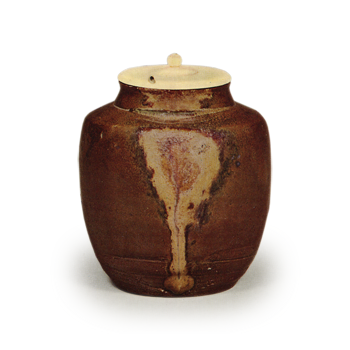
As seen in the illustration, this tea caddy possesses an antique patina. Its form, rather than being called a shoulder-shaped type, evokes the appearance of an old Seto jar, rich in elegant charm.
The rim, reminiscent of an ancient jar, and the body tapering from sloping shoulders to the base similarly evoke an old pot. Moreover, a rustic red persimmon glaze is applied casually, over which several streaks of black Seto glaze begin to separate. Among these, one thick streak forms a distinct pattern, flowing all the way to the base.
The seemingly coarse clay connects to the glaze line about three-tenths of an inch from the base.
Four shifuku (dust covers), one Donshu, three Kinran. Again, pairing the austere, wabi-like Kinran with Donshu.


Inscription by Kobori Enshu
Hikiya Cover, Champa, Inscription

Gold Powder Lettering, Inscription: Written by Kobori Enshu

Inscription: Written by Matsudaira Iga-no-kami

Inscription: Written by Matsudaira Iga-no-kami