Accessories
Inner box, paulownia wood
Inheritance
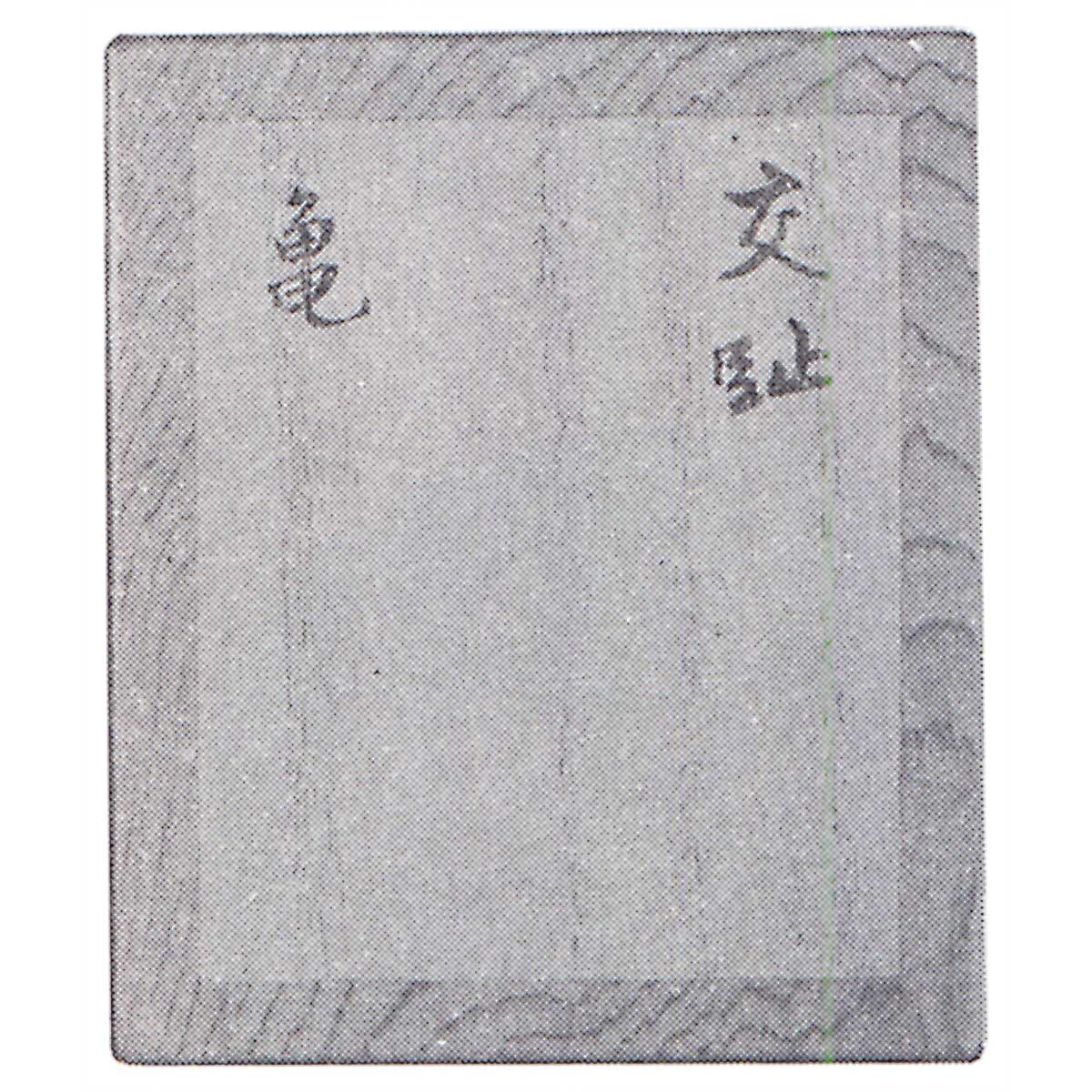
With calligraphy by the monk Manhiro
Dimensions
Height 6.1cm
5.8-8.1cm in diameter
7.8-10.5 cm (left and right)
Bottom diameter 3.8-5.6cm
Weight 205g
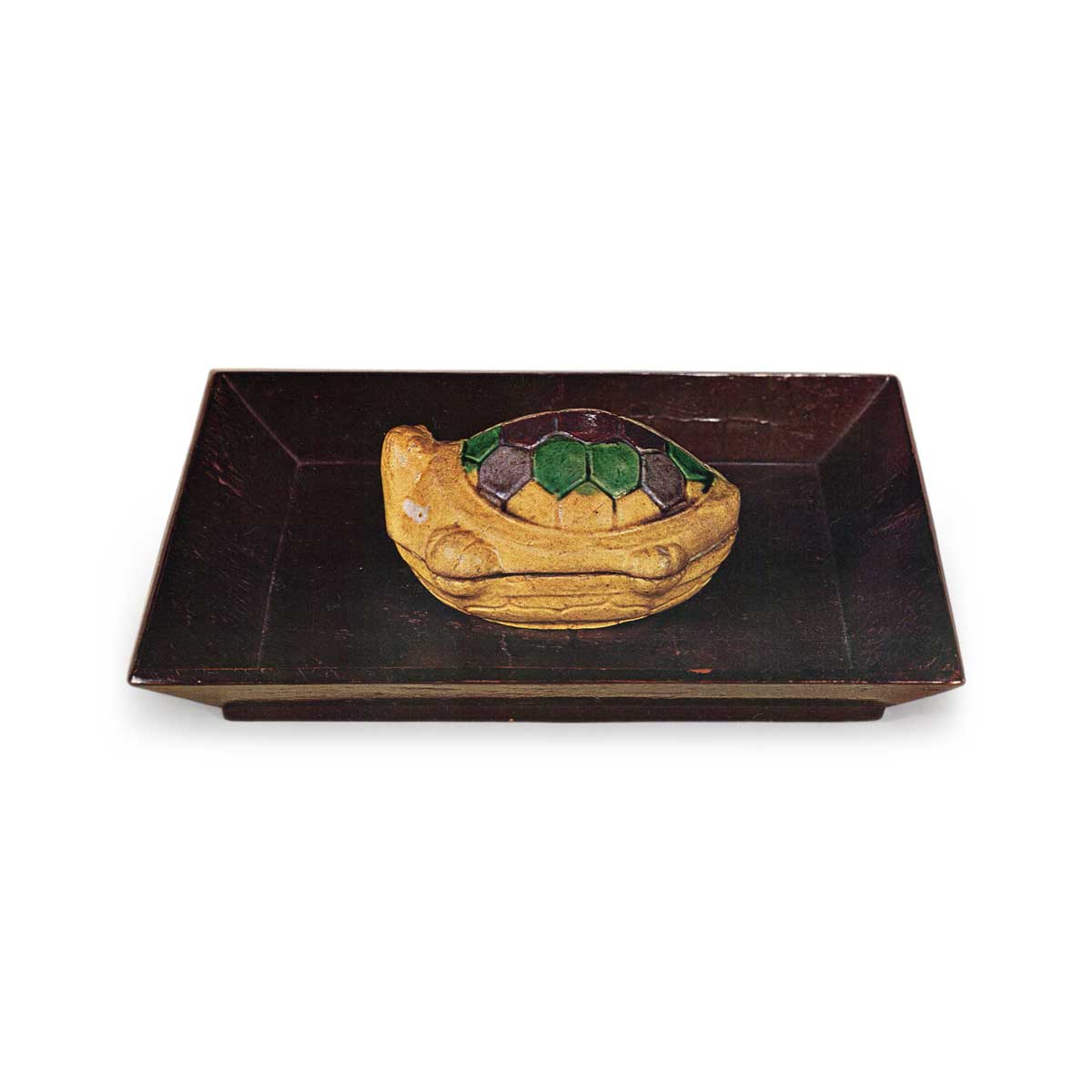
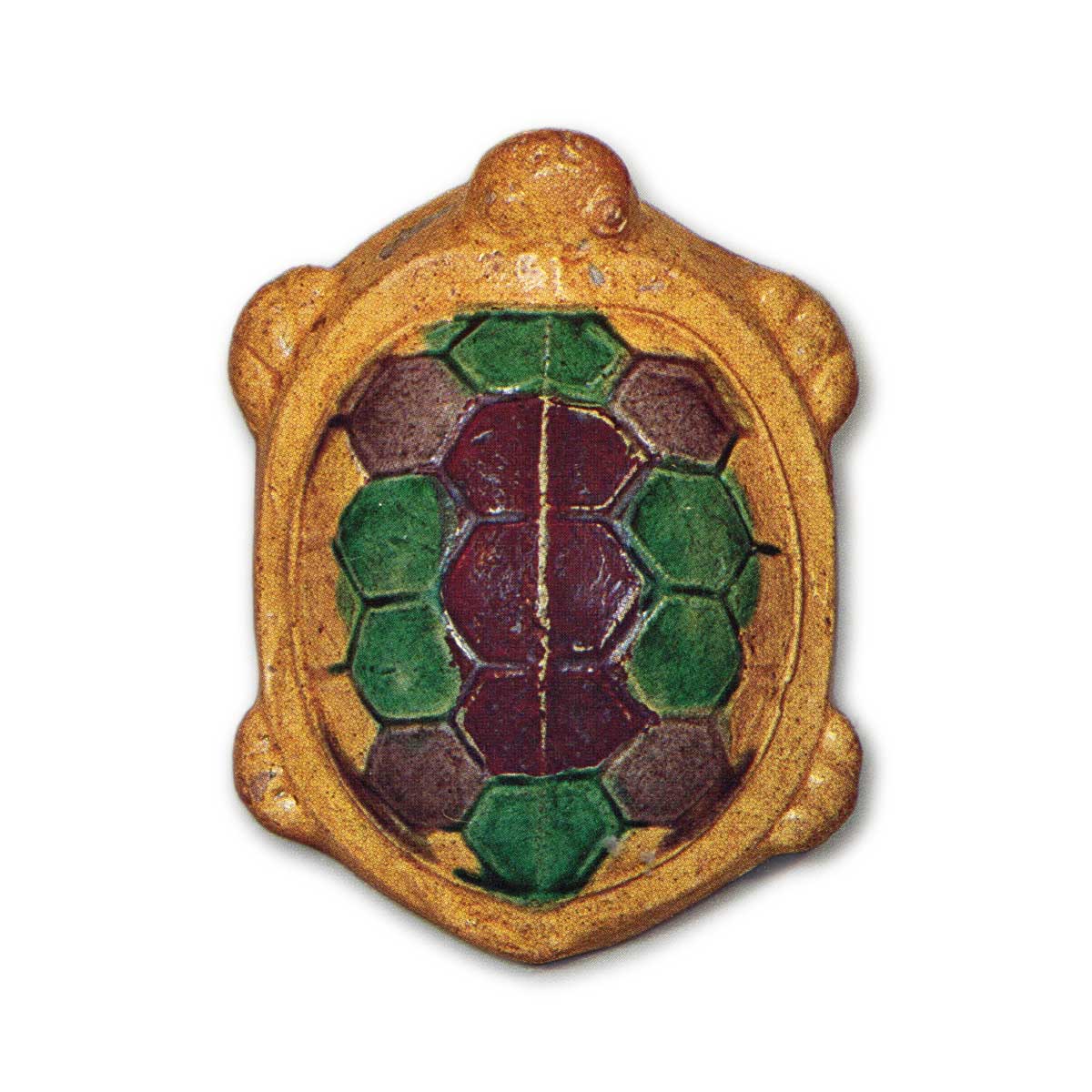
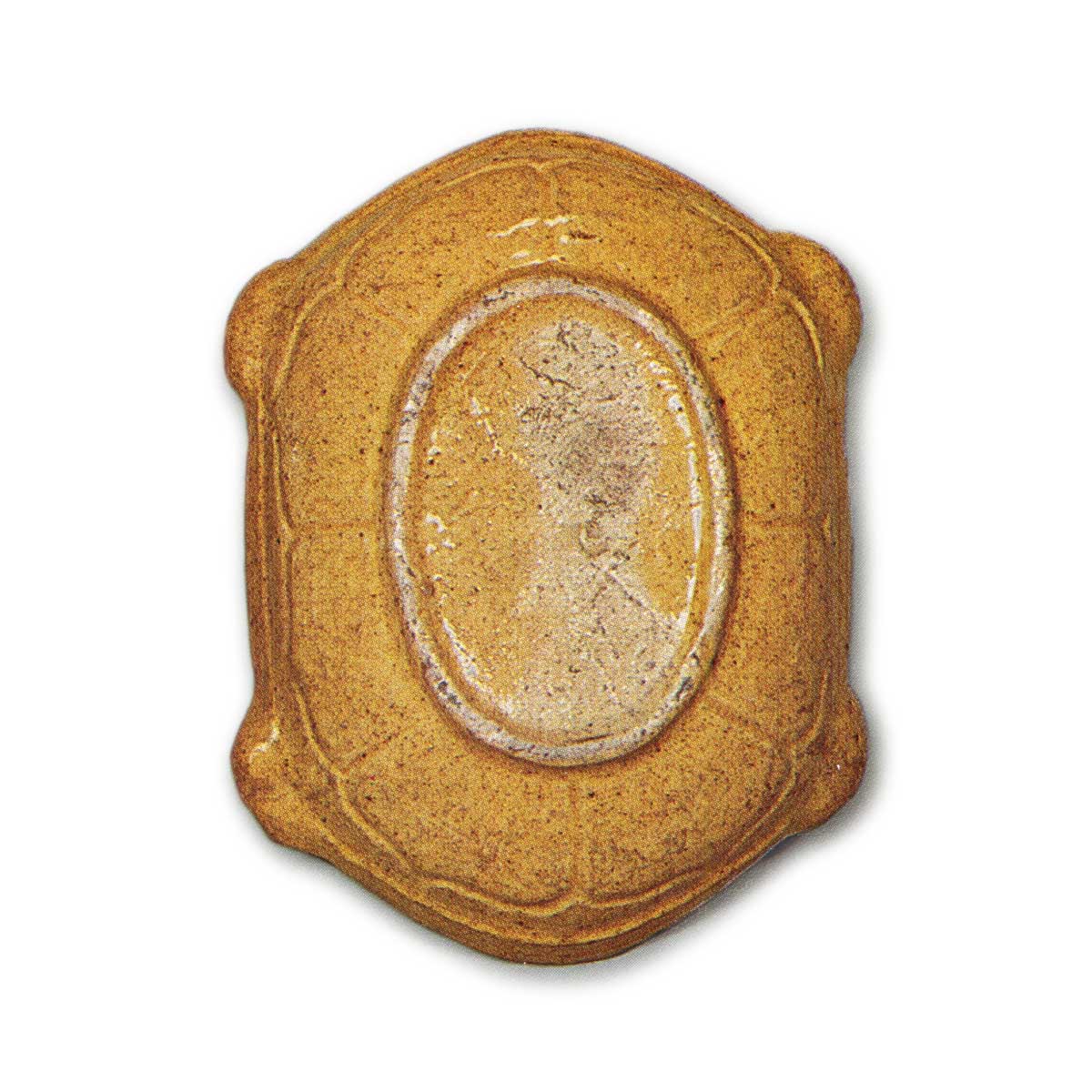
When it comes to the throne of incense containers, any sukiya would probably answer “kojiki no daikame” (large tortoise).
When the tea ceremony first began to require pottery incense containers, it first sought celadon and blue porcelain from China, but the Sansai-glazed small containers that came to Japan under the name of “kosai” were welcomed by tea masters. The individual shapes of these containers were designed in the shape of creatures that represented good fortune, and they were ideal for use in incense containers. Among these, the ookame (giant tortoise) was said to be the most exquisite, and was placed at the top of the list as the “yokozuna” (champion) of the east when the ranking of incense containers was compiled.
It had been in the possession of a wealthy merchant in Osaka for many years, but during a period of change at the beginning of the Meiji era (1868-1912), it came into the possession of the Ikushima family, also of Osaka, and was exhibited at their famous auction in 1945.
However, it was Denzaburo Fujita, a great lover of incense, who had heard about this incense container and had been waiting for an opportunity to own it. At the time, Denzaburo Fujita was in his late stages of illness, but when he heard about the bidding for the Okame, he placed the highest bid, forgetting that he was on the verge of death. When he won the bidding for 90,000 yen, he nodded his head and became a man of the underworld.
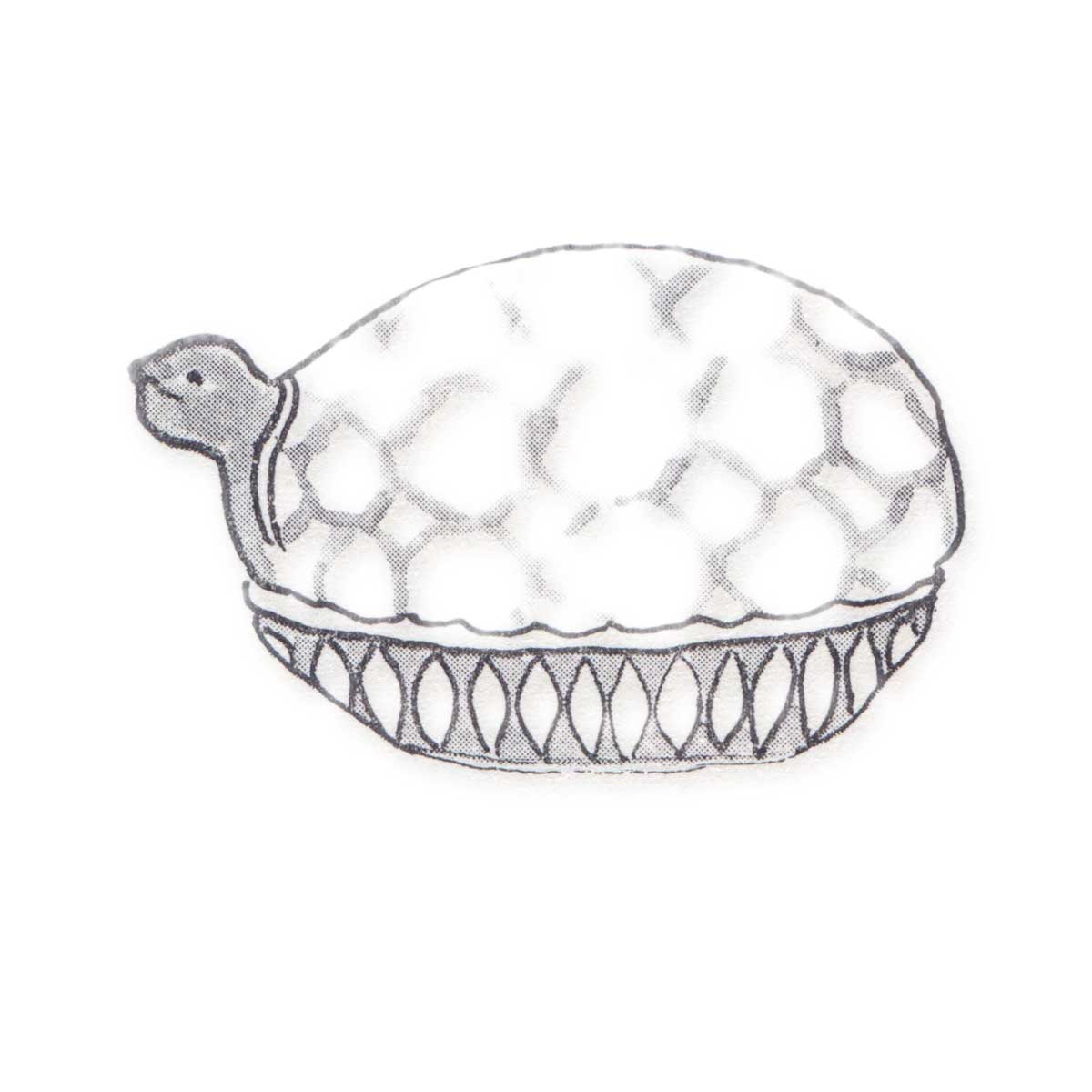
The two similar pieces, “Kanamori” and “Matsudaira,” were both made with all-yellow glaze and three-color Kou motifs, and both were made with all-blue glaze and two-color Kou motifs.
The two pieces of the same type, “Kanamori” and “Matsudaira,” are all reference examples of the same type.
Reference