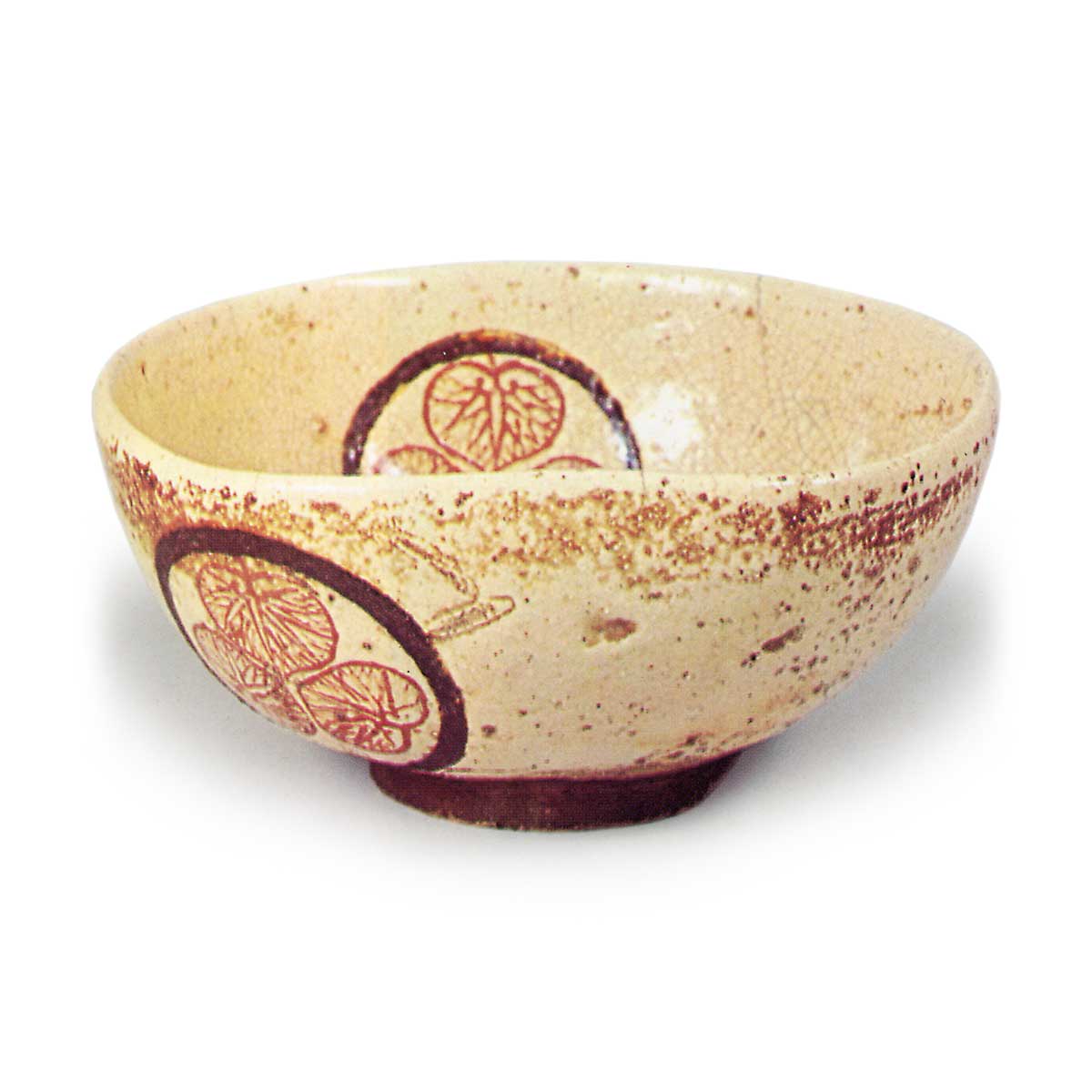
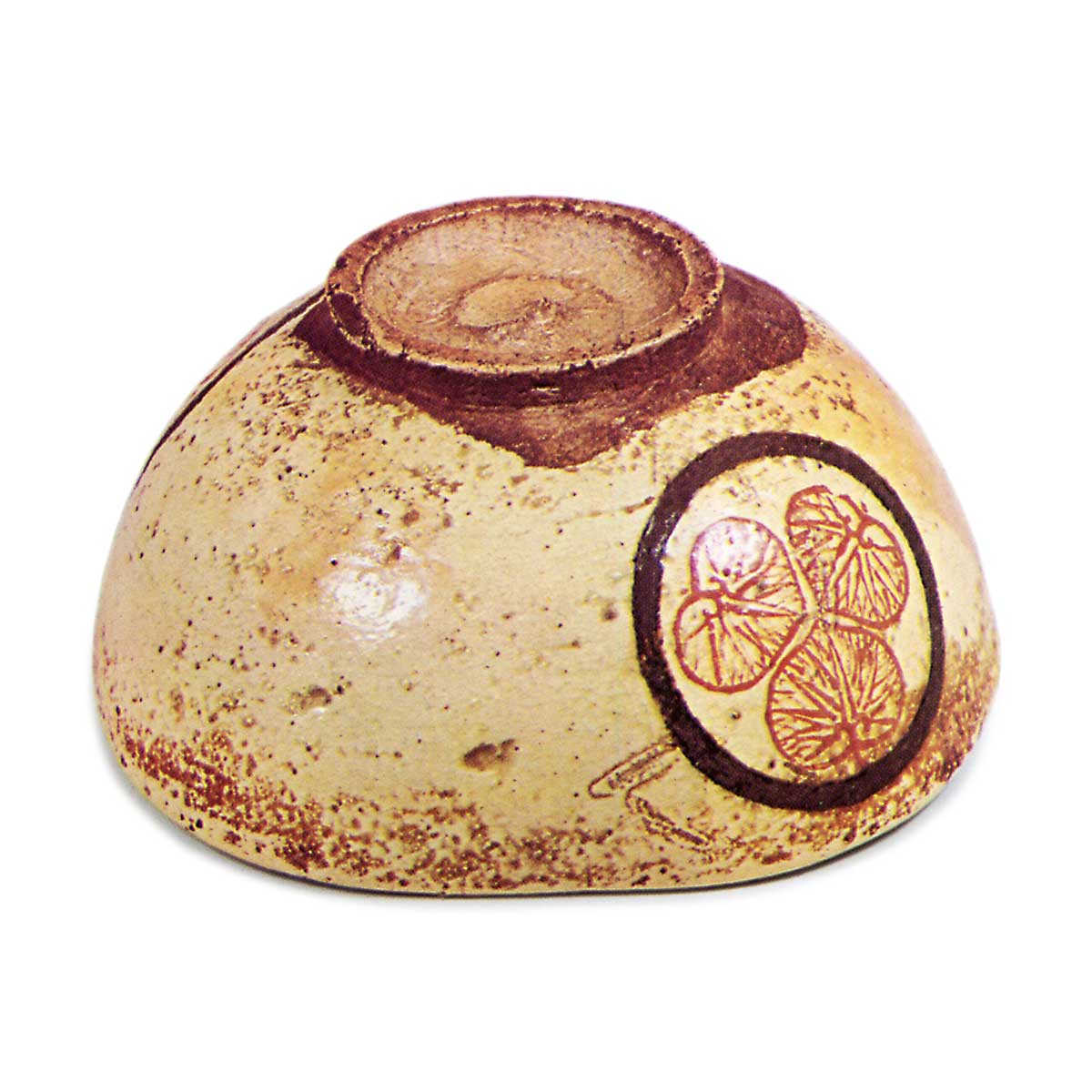
Height: 6.1 cm, Mouth Diameter: 13.6 cm, Foot Diameter: 5.7 cm
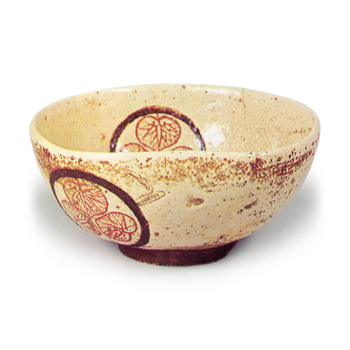
This is a renowned tea bowl that has been passed down to Fushin-an since the time of Fushin-an. It is a slightly shallow bowl; the rim is slightly pressed and warped at the edges, and the large, sharply carved foot is flat and square. Inside the foot, a swastika-shaped pattern—resembling a Goryeo tea bowl and not seen on other Raku tea bowls—is revealed. While the form clearly appears to be modeled after a Koryo tea bowl by the Go-ki school, the unique shape was likely chosen because this bowl was intended as a tribute to the Lord of Kishu. The Shiro-raku glaze covers the body, leaving the foot and its surroundings exposed. The three-leaf hollyhock crest of the Kishu Tokugawa family is depicted in large scale on two sides of the body and once on the interior, rendered in ochre linework and iron pigment. On the exterior of the inner box lid is inscribed: “Crest Tea Bowl” is inscribed on the lid’s exterior, while the underside of the lid bears the inscription “Presented on the 2nd day of the 3rd month of the Year of the Rooster: Crest Tea Bowl, Sōsa (seal),” written by Kōsui. Kōsui served the Kishū Tokugawa family and held a fief of 200 koku; the “Year of the Rooster” in question is believed to correspond to either the first year of Shōhō, the third year of Jōō, or the fourth year of Kanbun. This is a valuable document for understanding the relationship between the Kishū family and Ezan Dōnyū. The Omotesenke school uses this tea bowl every year at the Hatsugama ceremony.