Accessories: Inner box, gold-leaf lettering, inscription by Masuda Kōen
Inside of lid: Gold-leaf lettering, inscription by the same artist
Dimensions
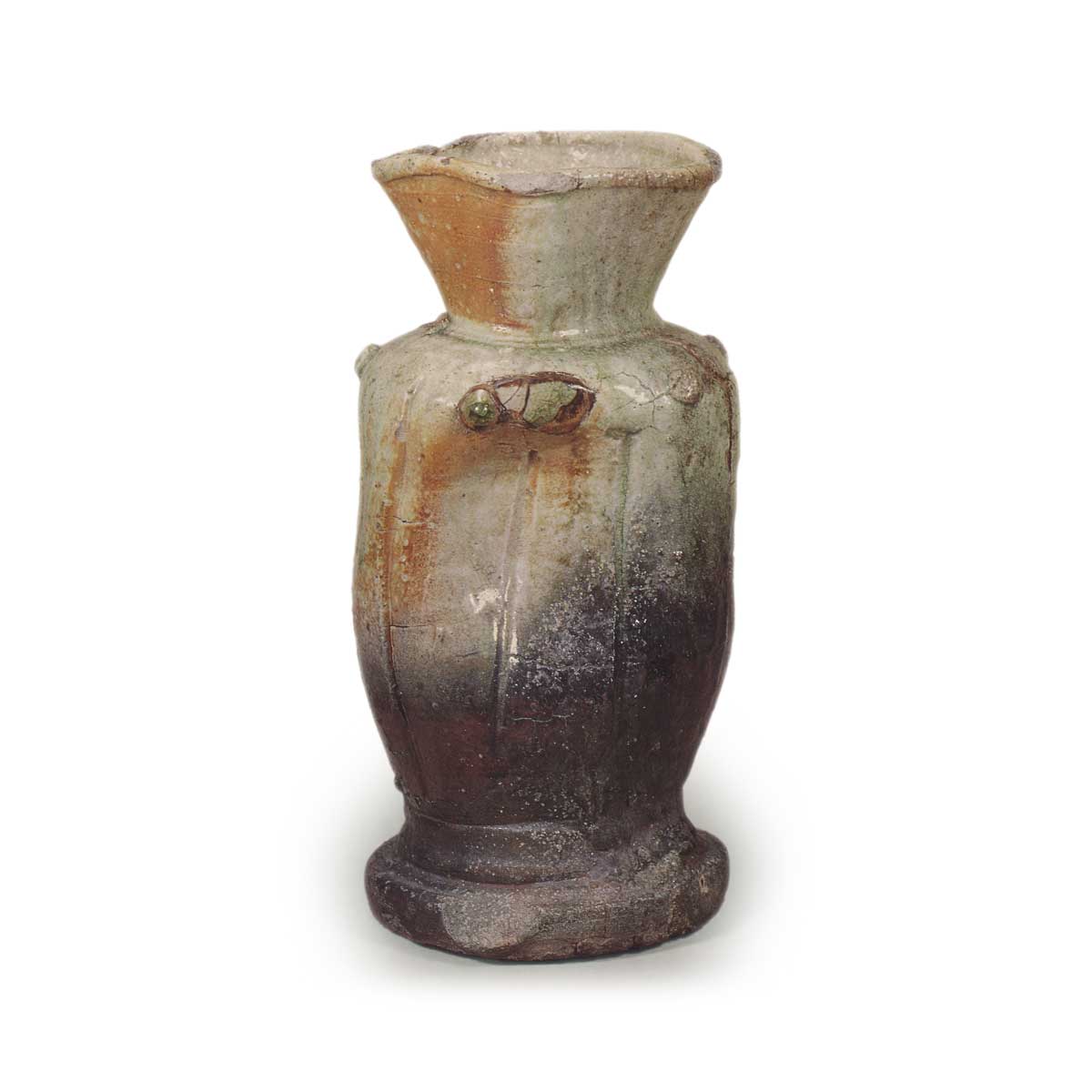
Height: 28.3 cm, Mouth diameter: 11.8–12.2 cm, Body diameter: 13.2 cm, Base diameter: 11.8–12.3 cm, Weight: 2700 g
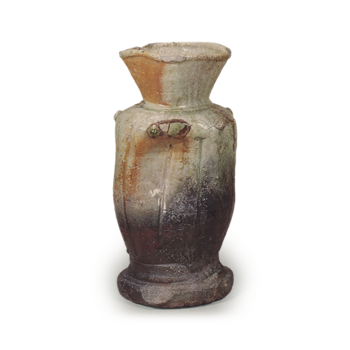
Iga ware typically features pieces that evoke a bold, vigorous, and robust masculine image. This “Hibiscus” is an exception, possessing a feminine quality. The rim, shaped like a morning glory, is not particularly sharp but rather rounded. The broad shoulders flow into gentle curves, and the tapering base is also feminine in character, stabilized by a pedestal. While it lacks the imposing ear-like protrusions typical of Iga ware, the base serves as a breast ornament in its place. The burnt and pale green beidoro patterns lend a soft, gentle feel.
On the left side, a large crack in the glaze has carved out a crescent-shaped groove—a serendipitous creation of nature brought about by kiln changes—yet it possesses a truly vivid charm.
“Though this Iga may not be from Ueno,
people say the flower is a hibiscus,”
—so wrote Masuda Kōen (younger brother of Masuda Don’ō, pen name Eisaku), the discoverer of this Iga piece, in a self-praising kyōka poem playing on the homophones for “hibiscus” and “useless.”
Furthermore, Katsu Kawasaki states,
“In a flower such as this vessel, not only is adornment unnecessary, but the inscription on the box is also unnecessary, and thus the tea master’s endorsement is unnecessary as well; it possesses a dignity that allows it to occupy the tokonoma with nothing but its bare form, leaving no room for complaint from anyone.”