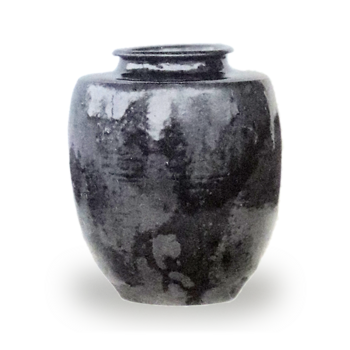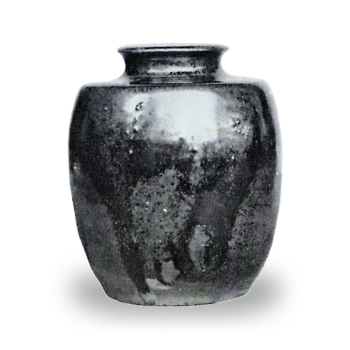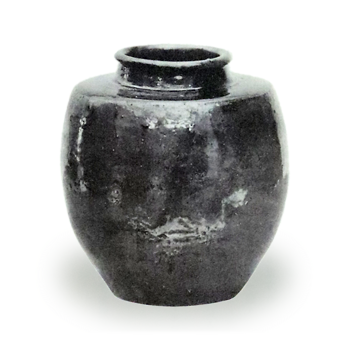
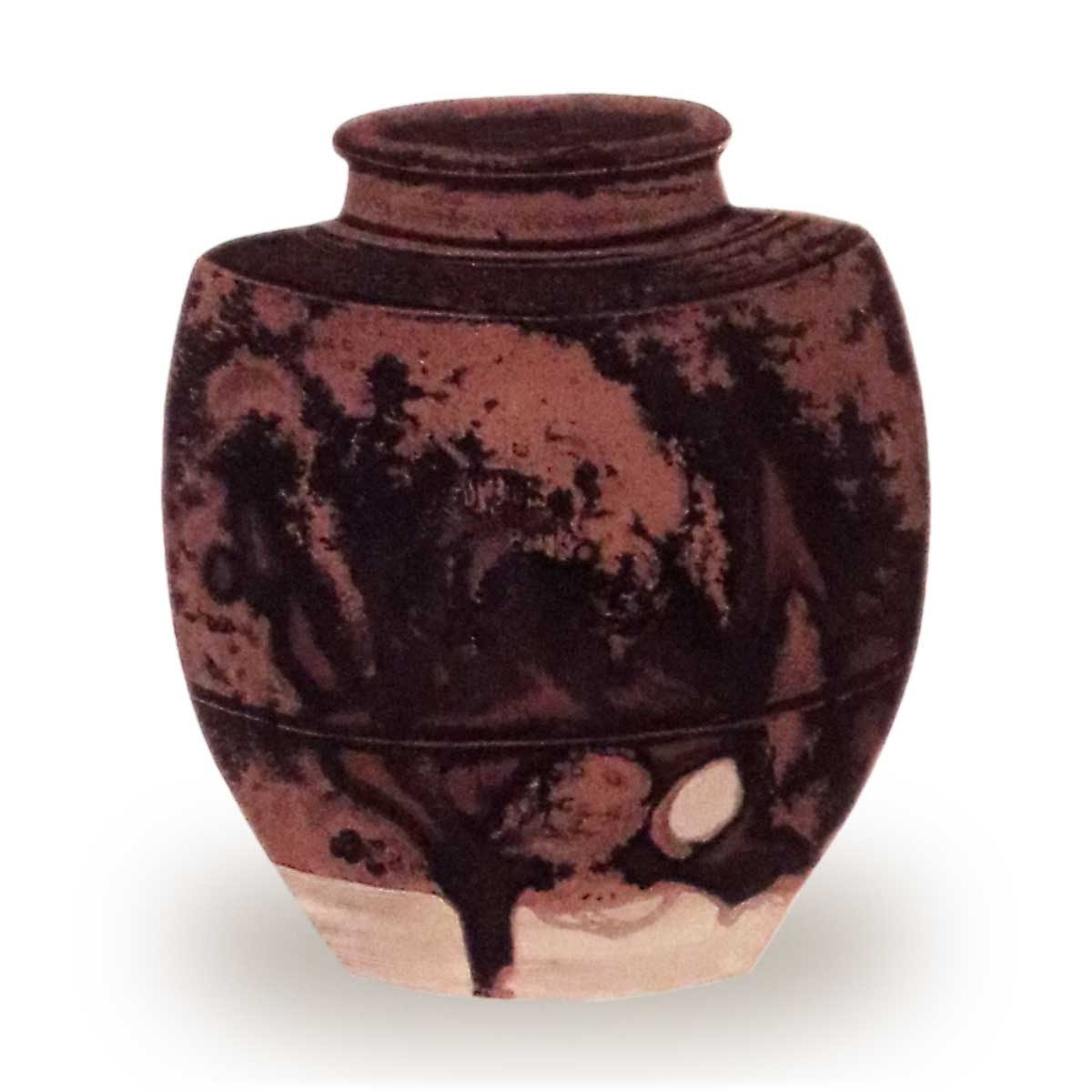
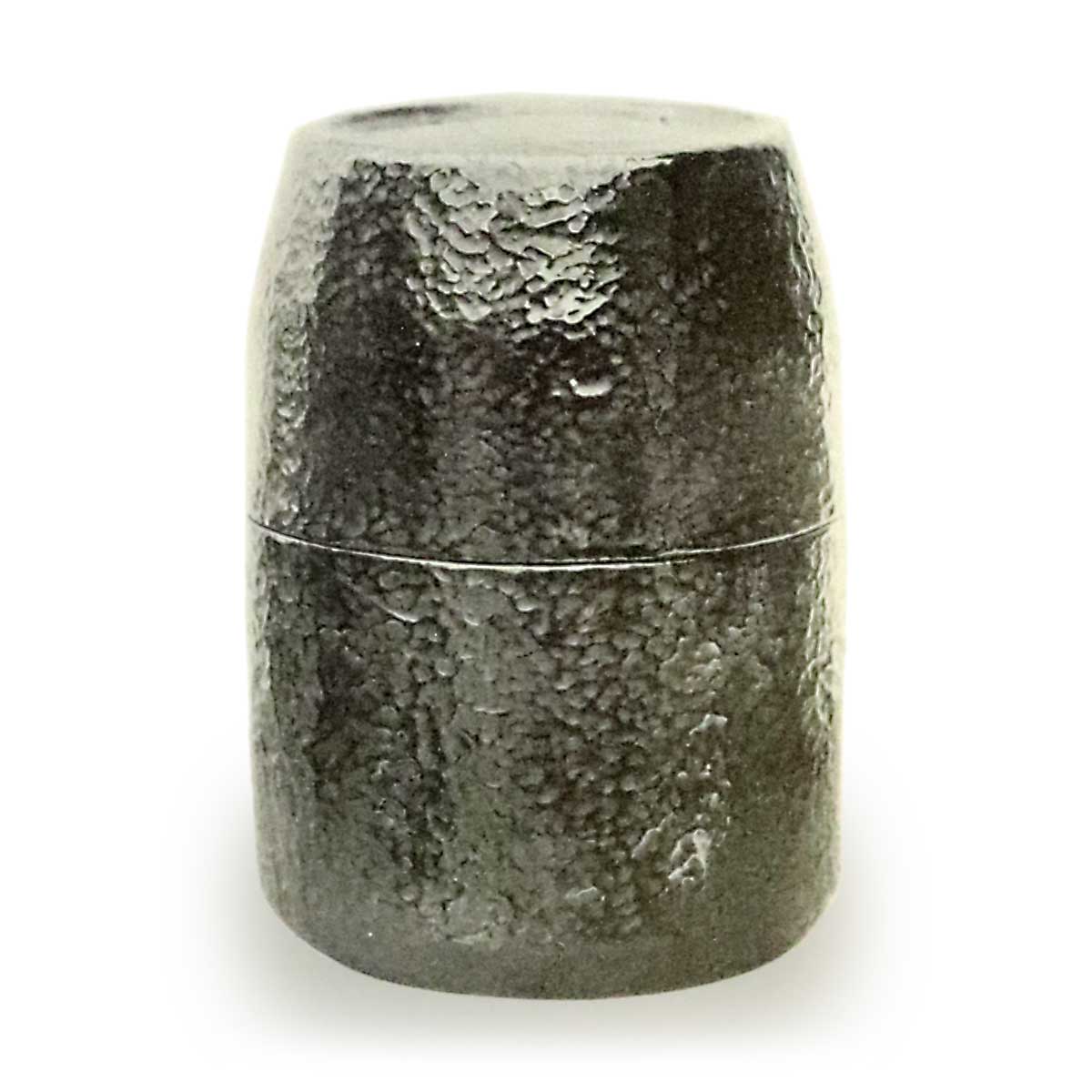
Made in China (Han-saku) | Daimeibutsu | Collection of Count Naoaki Matsudaira
[Name]
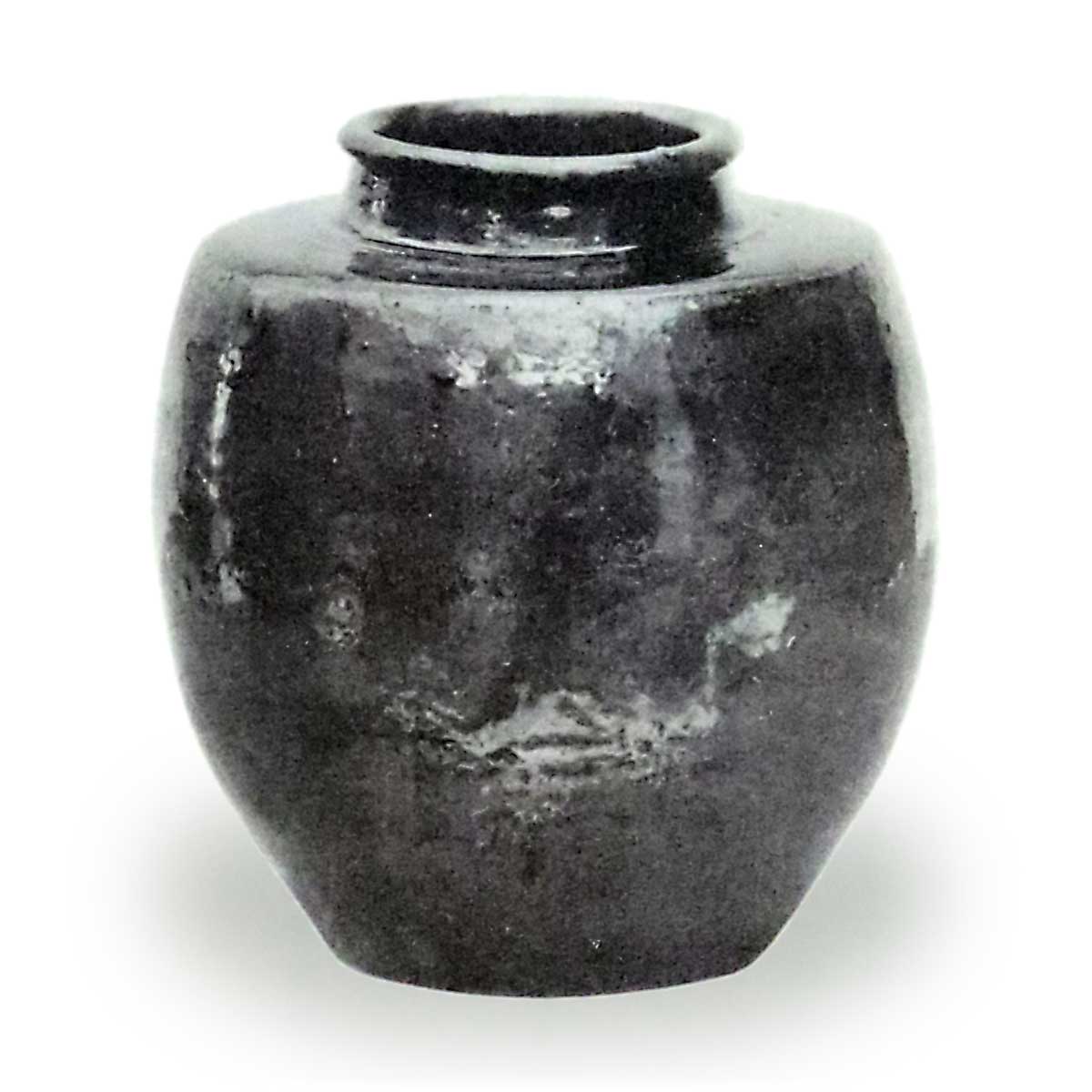
This tea caddy is named after Aburaya Jōgon, a merchant from Sakai in Izumi Province, and his son, Jōyū, who owned it. The “Kitano Nasu Origin Document” and documents from Myokoku-ji state that “Aburaya Jōgon presented a tea caddy called the Aburaya Karatsuki to Toyotomi Hideyoshi (Taiko),” and Kanji-an Munenobu’s book Rikyū Hyakukai Kai notes: “Aburaya Jōyū was a man from Sakai in Izumi Province and a disciple of Sen no Rikyū. Because he owned this Katatsuki, it is commonly referred to as the Aburaya Katatsuki.”
[Dimensions]
Height: Approx. 8.3 cm (2 sun 7 bu 5 rin)
Body diameter: Approx. 8.0 cm (2 sun 6 bu 5 rin)
Mouth diameter: Approx. 3.9 cm (1 sun 3 bu)
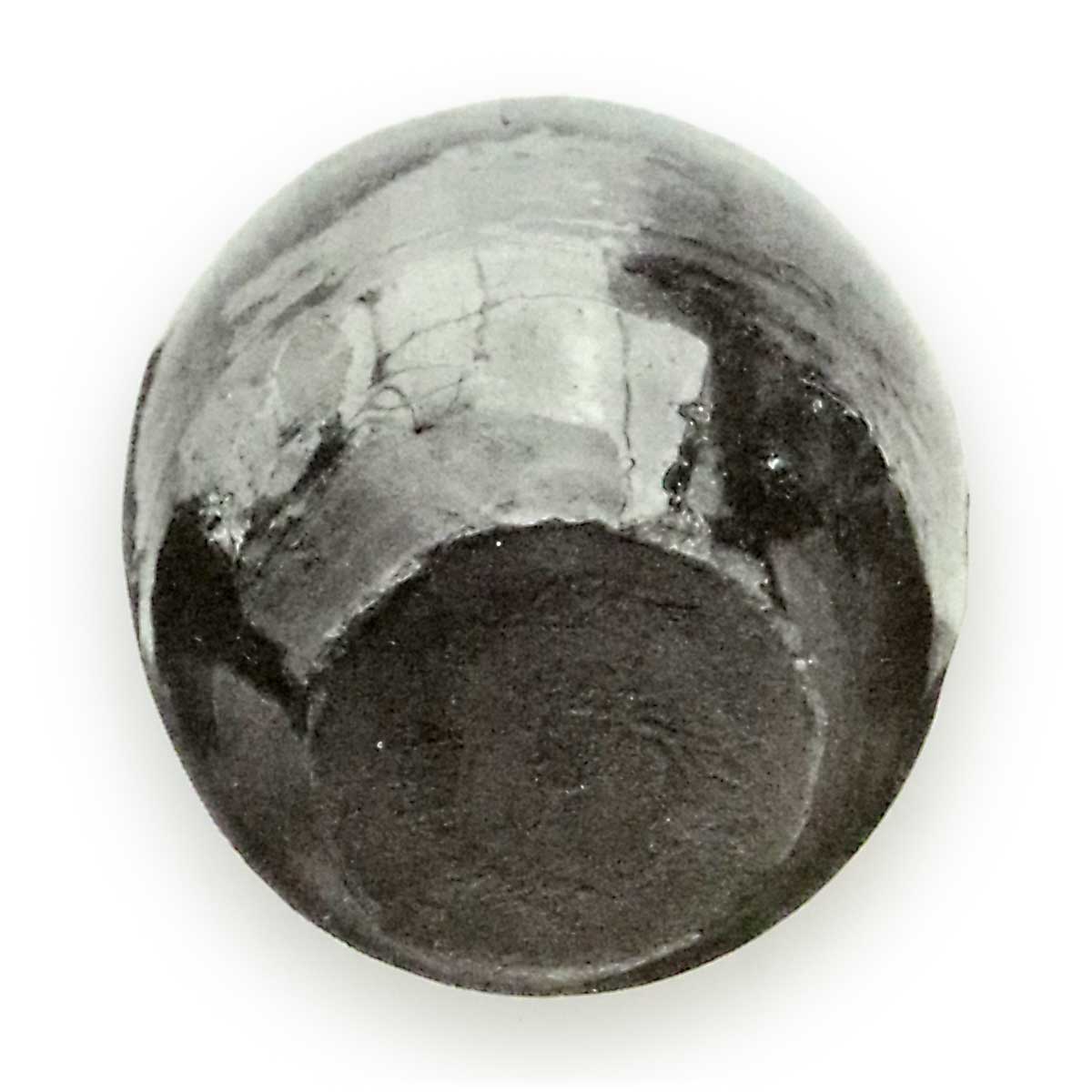
Base diameter: Approx. 4.4 cm (1 sun 4 bu 5 rin)
Shoulder diameter: approx. 6.8 cm (2 sun 2 bu 5 rin)
Shoulder width: approx. 1.4 cm (4 bu 5 rin)
Height of the koshiki (the raised rim): approx. 0.9 cm (3 bu)
Weight: approx. 117.8 g (31 monme 4 bu)
[Accessories]
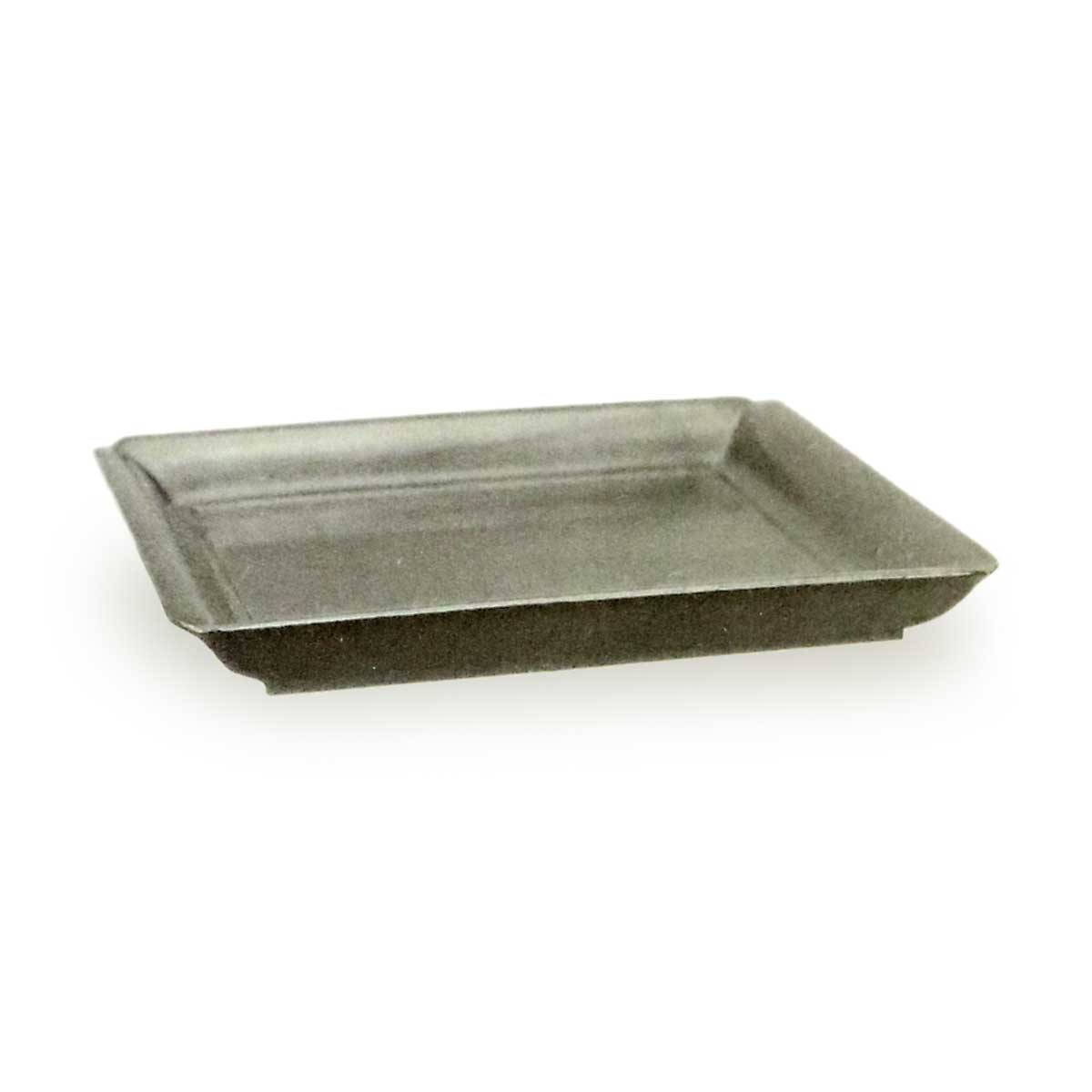
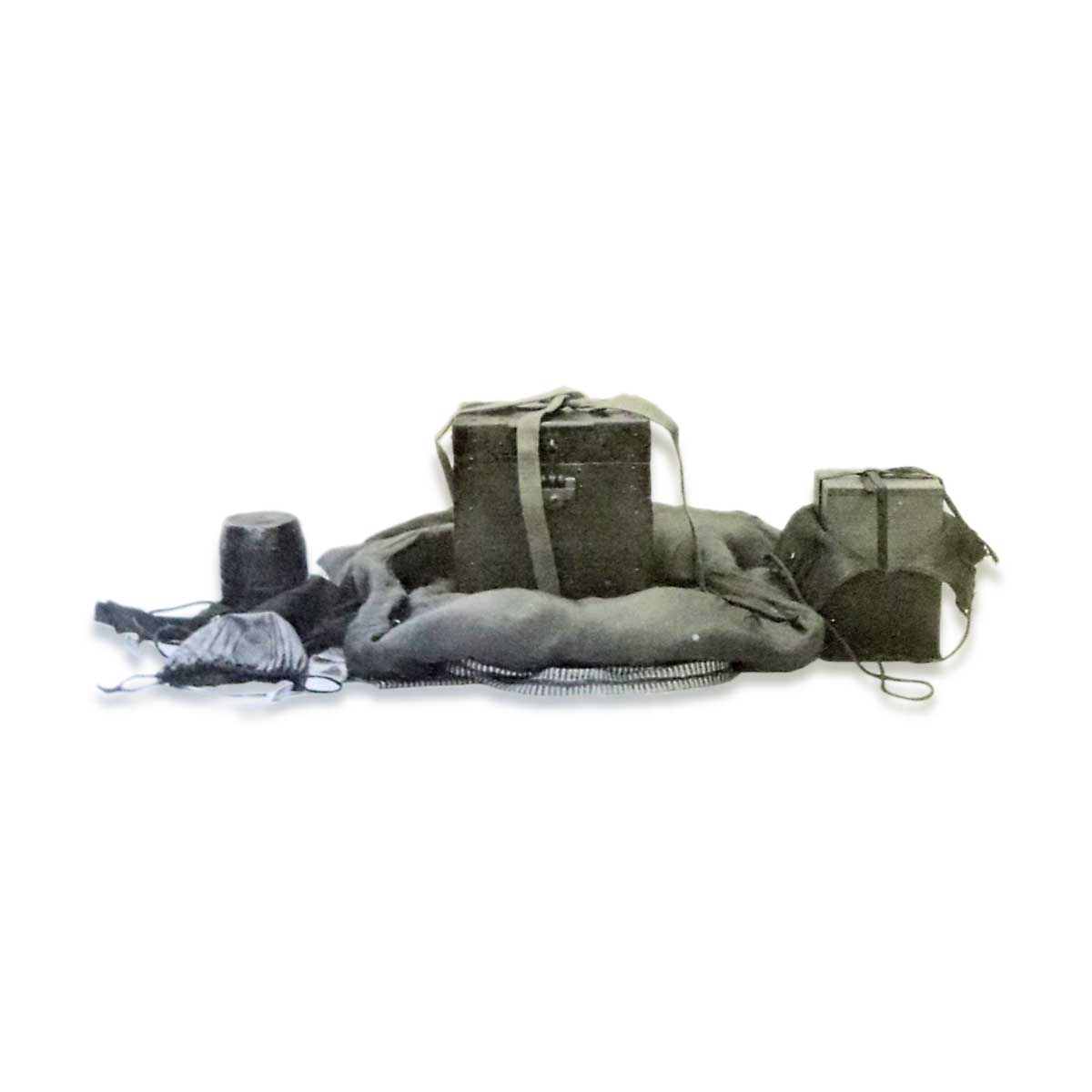
(*The following is a detailed inventory of the accessories. It includes four ivory lids, six storage pouches made from various Meibutsu textiles, a paulownia wood box to hold them, Hikiya (a tube for storing the tea caddy), cloths to wrap it, an inner box, an outer box, and a Wakasa tray said to have been included by Rikyu. It is noted that a certificate of authenticity and tags by Lord Matsudaira Fumai are included.)
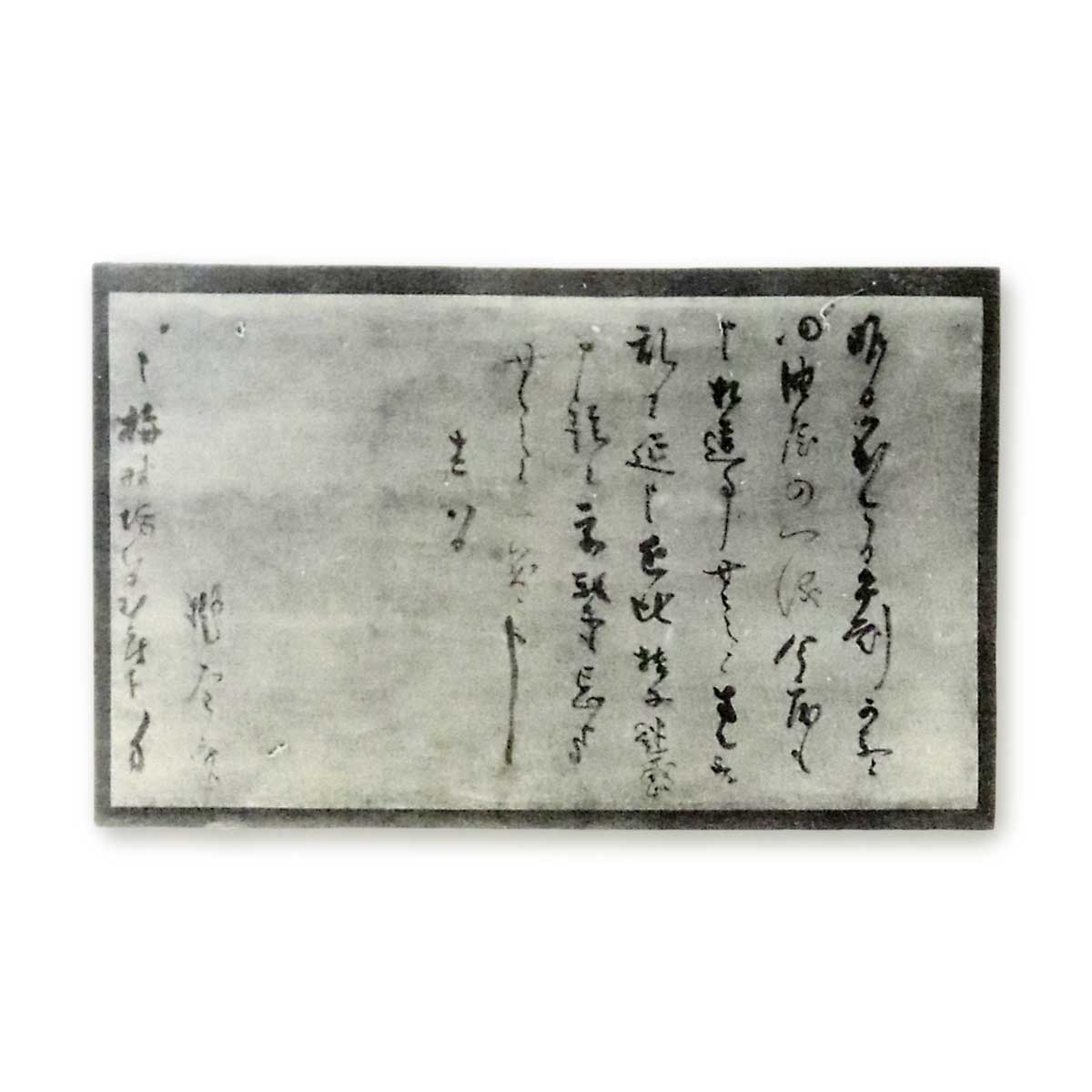
[Accompanying Hanging Scroll]
Letter from Rikyu:
“Thank you for visiting yesterday. I plan to pay my respects around noon today.
Now, regarding the matter of the Aburaya (Katauchi), as I mentioned this time as well, there is no mistake. I apologize for becoming flustered in various ways, causing the schedule to be delayed; I have recently been perplexed myself and sought your counsel. Furthermore, we will never forget this matter.
With a smile,
December 8th, Hōsen-sai (Sen Rikyū’s pen name)
To Bō Uemura, Your Excellency, Sōeki (Sōeki = Rikyū)”
(Details regarding the mounting of the hanging scroll and the box inscription are recorded.)
[Miscellaneous Notes]
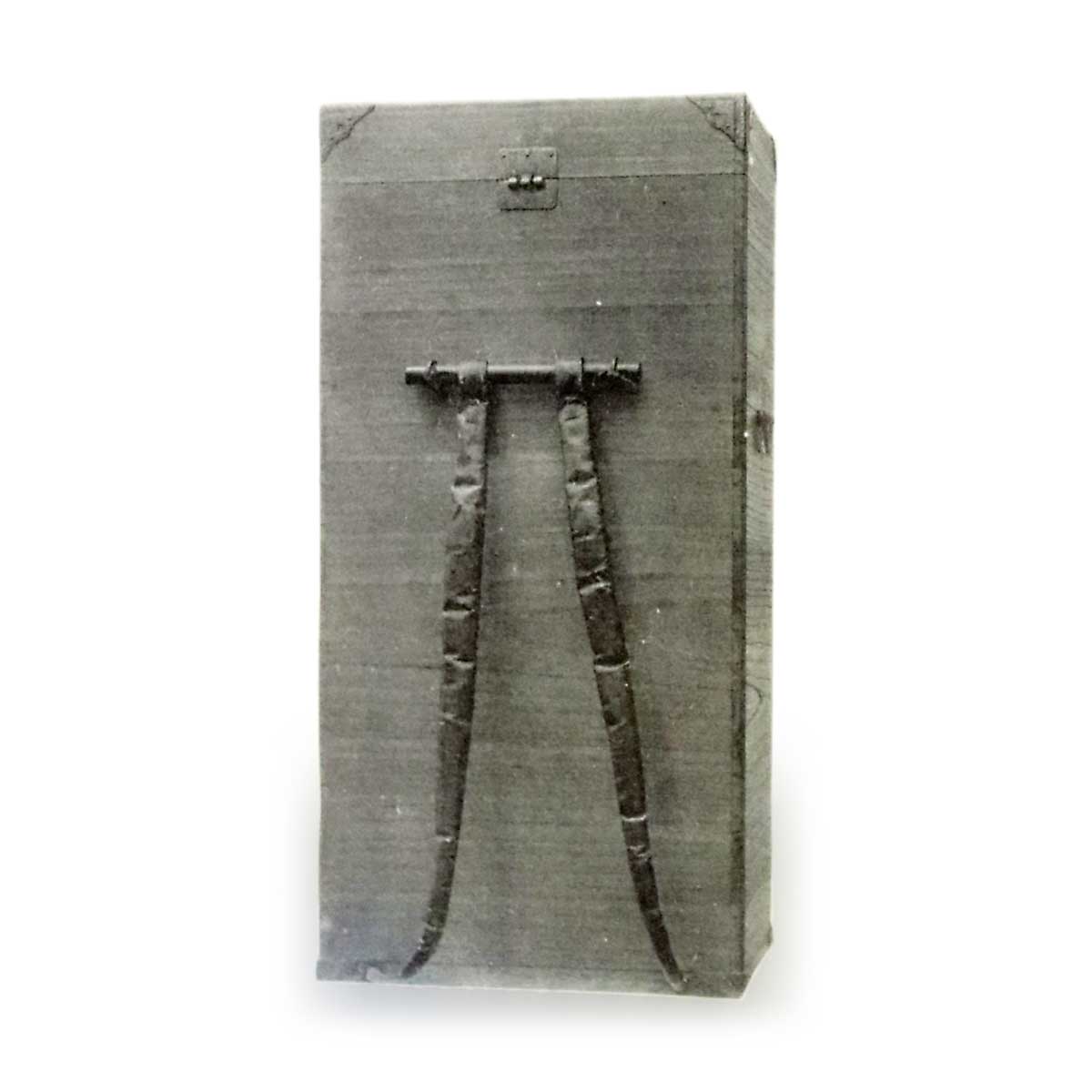
(Note) The oibitsu (backpack) illustrated on the right is the one that Lord Matsudaira Fumai had his retainers carry on their shoulders during the sankin-kotai (alternate attendance) journeys. Furthermore, the diagram showing the arrangement of the tools inside this oibitsu was drawn by Lord Fumai himself.
(The following is a quotation from Kokon Meibutsu Ruiju, which again details the dimensions of the Aburaya Katatsuki and the specifications of its accessories.)
Regarding the provenance of the Aburaya Katatsuki, it is recorded that it was presented by Aburaya Tsuneyoshi to Toyotomi Hideyoshi, who in return bestowed upon him 300 kan of money and the “Kitano Nasu” (another Meibutsu tea caddy). It is further noted that it was subsequently owned by Fukushima Masanori (Saemon-dayu) and later passed into the hands of the Lord of Unshu (Matsudaira Fumai).
The band at the bottom is narrow, and the shoulder area exhibits a strong metallic luster, resembling blue jade. Overall, it features abundant metallic sheen and is a beautifully crafted piece of exceptional quality; however, the thread-cutting marks on the base are somewhat rough.
(From Rinpō-kiryū)
The Aburaya katatsuki owned by Matsudaira Dewa-no-kami has a persimmon-colored base with black glaze flowing over it. In the front view, yellow glaze is visible in places within the black glaze, and the black glaze is uneven overall. The clay is a deep, light grayish-brown with a slight reddish tint.
(From Shoke Meiki Shū)
Chinese tea caddies take these two types of katatsuki—“Aburaya” and “Matsuya”—as their models. They date back a thousand years and are truly Chinese in origin (Han-style).
(From Yamasumike Honcha-iro-gaki)
The Aburaya katatsuki is entirely persimmon-colored, and the rim is elegantly and cleanly cut. The rim (koshiki) bears traces of the potter’s wheel, the shoulders are perfectly flat with intricate wheel marks, and they protrude slightly like a roof eave, while the body is plump and rounded. There is a single spot on the bottom clay that appears pinched, and while the overall carving marks are high and the clay grain is fine, only the pinched section appears coarse.
(From Meibutsu-ki)
Aburaya Tsuneyoshi was a native of Sakai in Izumi Province and a disciple of Sen no Rikyū. Because he owned it, it is commonly known as the “Aburaya Katatsuki.” He later presented it to Hideyoshi and received the Kitano Nasu in return. It was subsequently donated to Myokoku-ji Temple, and it is said that Achiko Sōnai purchased it during the Kan’ei era to fund the construction of various temple halls, bringing it into the public eye.
(From Rikyu Hyakukai Kai)
(The following are excerpts from records of tea ceremonies held by Tsuneyoshi Aburaya in the 10th and 12th years of the Eiroku era (Imai Sōkyū Nikki). The records list the participants and the combinations of utensils used. Regarding this tea caddy, the contemporary impression noted at the time was: “The glaze color was fine, and the shape appeared beautiful and magnificent.”)
“It is a truly magnificent jar. This jar does not appear to be overly contrived or artificial, yet neither is it overly aged or worn. It is an indescribably fine jar. While it does not stand out as particularly special from the perspective of tea ceremony etiquette, it lacks any trace of amateurishness and is not a dull jar that lacks charm.”
(From Tsuda Sōyū’s Tea Ceremony Diary)
Morning of the 25th day of the intercalary first month of the 3rd year of the Genki era: Tea gathering hosted by Aburaya Tsuneyoshi (from Tsuda Sōyū’s Tea Ceremony Diary)
“This is the second time I have seen this katatsuki (Aburaya katatsuki). It is a fine piece. However, it bulges slightly around the body and tapers sharply toward the base. Its shape is larger than others. The clay is yellowish-red, and the bottom is unglazed. As for the glaze patterns, there is a single streak of glaze run on the front and two on the sides. It is a pot where the front pattern is somewhat difficult to see.”
Morning of March 2, Tenshō 15, at Aburaya Jōetsu’s tea gathering in Sakai (from Sōtan Nikki)
(The text quoted here is a record in which Kamiya Sōtan observed and documented the Aburaya Katatsuki’s dimensions, the pattern of the glaze drips, the color of the clay at the base, and the condition of the lid and cover in great detail. It includes descriptions such as, “The glaze is uniformly thick on the shoulders, with an amber hue within the black,” and “On the front, a single glaze drip extends all the way down to the bottom.”)
(The latter part contains records regarding its successive owners.)
This Aburaya Katatsuki was later owned by Fukushima Masanori (Saemon-dayu), and in the first year of the Kan’ei era, it was presented to the Tokugawa Shogunate (Daio-in = Tokugawa Iemitsu) by his son, Ichinosuke. Subsequently, in the third year of the Kan’ei era (1626), it was bestowed by Tokugawa Iemitsu upon the Rōjū (Senior Councilor) Doi Toshikatsu (Ōsui-no-kami), and records such as the Kansei Shūshū Shokke-fu indicate that this tea caddy was used to entertain the shogun when the Doi family hosted him.
According to sources such as the Meibutsu Kōki and Sekkan-sō: Chadō Wakuge, this tea caddy was presented to Toyotomi Hideyoshi, then passed to Fukushima Masanori and Doi Toshikatsu. Subsequently, the wealthy merchant Kawamura Zui-ken took possession of it from the Doi family as collateral for a loan of 20,000 ryō. It is further recorded that it subsequently passed into the hands of the Fuyuki family (Fuyuki Kodajiro and Ueda Sogo), wealthy merchants of Edo.
Records of a tea gathering hosted by Fuyuki Kodajiro (E Mokuzan Sogi Hon Byōkyū Chakai-kiE ) also note that the “Aburaya Katatsuki” was displayed at the request of a guest.
The book Tan-kai contains an episode stating that “when Annaka in Shinano was struck by disaster, the feudal lord Itakura Ise-no-kami sold off family treasures for 20,000 ryō to raise funds for reconstruction, and among them, the Aburaya Katatsuki was purchased by Matsudaira Fumai (Dewa-no-kami) for 1,500 ryō.” However, according to the Remarks, it is pointed out that the reference to “Itakura Ise-no-kami” is a mistake for “the Doi family,” and that the story of the Annaka disaster is also a misrepresentation. It is speculated that the actual event—in which Lord Fumai purchased the item from the Fuyuki family for 1,500 ryō during the period of the Mount Asama eruption and the Great Tenmei Famine in the third year of Tenmei—was likely misreported.
The Unshu Jitsubutsu Denraisho notes that since ancient times, large-shouldered Chinese tea caddies have been said to be worth 10,000 ryō, and that the Wakasa tray accompanying this tea caddy is also extremely rare, likely having washed ashore in Wakasa during the Yuan Dynasty in China (around the Kōan era in Japan).
Around the time of the Hōei era, the Edo merchant Fuyuki Kodajiro received it in lieu of a debt, and subsequently, in the third year of the Tenmei era, the Matsudaira family purchased it through my mediation. The accompanying cover, known as “Aburaya-ori,” is made of an extremely rare fabric. (From Fushimiya Teko)
(Quotes from Myokoku-ji documents and the Dictionary of Buddhist Family Names)
Nikkō Shōnin, the founding abbot of Myokoku-ji in Sakai, was of the Date clan by birth; he was the son of Aburaya Tsuneyori and the younger brother of Aburaya Tsuneyoshi. Both Tsuneyori and Tsuneyoshi were major patrons (powerful supporters) of Myokoku-ji.
(Regarding the History of Transmission)
[The Last Will of Lord Matsudaira Fumai]
These two items, “Zen Master En’go’s Calligraphy” and “Aburaya Katatsuki (Han-saku),” are national treasures. While there are many Meibutsu in the land, none can rival these two. Ensure they are preserved with the utmost care for generations to come.
(September, Bunka 8 [1811]—From Matsudaira Fumai to his eldest son, Dewa-no-kami)
“I used to carry the calligraphy of Zen Master En’go and the Aburaya Katatsuki in my palanquin when traveling for the sankin-kotai duty, taking them back to my home domain (Izumo). However, as I am concerned about their safety during the journey, from now on, they should be stored in the storehouse of my villa in Ōsaki.”
(From Matsudaira Fumai to Saitsune)
This tea caddy was originally owned by Aburaya Tsuneyori, a merchant from Sakai. Tsuneyori’s original family name was Date, and he was the father of Priest Nichiko, the founding abbot of Myokoku-ji Temple in Sakai. His son, Tsuneyoshi, was a disciple of Sen no Rikyū and the older brother of Nichiko. Now, regarding the year in which Aburaya presented this tea caddy to Toyotomi Hideyoshi (the Taiko), various texts offer differing theories, which I will list below.
(1) The history of the Kitano Nasu and the Myokoku-ji documents state that “it was presented to Hideyoshi by Tsunekoto of the Aburaya family during the Bunroku era”; (2) the Unshu Hōbutsu Densai-sho states that “it was presented to Lord Hideyoshi around the Keichō era”; and (3) the Rikyū Hyakukai-kai states that “it was presented to Hideyoshi around the Jōshun era.”
Subsequently, Toyotomi Hideyoshi bestowed it upon Fukushima Masanori, and his son, Masatoshi, presented it to the shogunate. In the third year of the Kan’ei era (1626), Shogun Tokugawa Hidetada bestowed it upon Doi Toshikatsu. The Doi family passed it down for a long time, but it was later entrusted to the wealthy merchant Kawamura Zui-ken as collateral for a debt of 20,000 ryō. Around the time of the Hōei era, it passed into the hands of the Fuyuki family (Ueda Sōgo) in Edo, and in the third year of Tenmei, it became part of the collection of Lord Matsudaira Fumai.
It is believed that he was able to acquire this tea caddy—which was said at the time to be “worth 10,000 ryō”—for only 1,500 ryō because it was right in the midst of the Great Tenmei Famine. Lord Fumai was thirty-three years old at the time. He was overjoyed to have acquired this rare masterpiece and designated it the foremost family treasure, alongside the calligraphy of Zen Master Enko. He had a new box made and added a pouch; during his sankin-kotai travels, he carried it himself in a backpack (e-guchi) and never let it out of his sight for a moment. When he retired to his villa in Ōsaki in his later years, he strictly instructed his heir in his will to store it deep within the treasury and preserve it carefully as it was.
According to a legend passed down by the elders of the Matsudaira family, when someone asked Lord Fumai, “What would you do if the Shogun’s family requested that you part with the Aburaya Katatsuki?” he reportedly replied “If it is the Shogunate’s wish, I cannot refuse. However, in exchange, I must be granted a province.”
On another occasion, when a senior councilor of the Shogunate requested, “I would like to see the Aburaya Katatsuki once,” the Lord invited the councilor to the domain residence, personally unwrapped the box and bags layered with multiple layers of wrapping, took out the tea caddy, placed it on a Wakasa tray, and respectfully presented it before the councilor. It is said that as soon as the senior councilor had finished examining it—before he could even finish saying, “That is enough”—the lord immediately put it back into its original box.
After that, even within the Matsudaira clan, viewing it was treated as a privilege granted perhaps only once in a lifetime, even to senior retainers; it was never shown to ordinary vassals and was considered the “most secret of secrets.” In 1917, on the final day of the exhibition marking the 100th anniversary of Lord Fumai’s death held in Matsue City, it was displayed to the public for the first time, drawing a large crowd of people who had heard the rumors and traveled from far and wide specifically to see it.
[Firsthand Account (Record of Actual Observation)]
On May 28, 1918, I had the opportunity to view it in person at the office of the Matsudaira Count’s family in Matsue City.
The rim is formed by folding the clay over and trimming the inside and outside, resulting in a sharp tip. Compared to similar Chinese-made (Han-style) katazuki tea caddies, the rim diameter is slightly smaller; for example, while the dimensions of the other parts are almost identical to those of the “Hatsuhana Katazuki,” the rim diameter is about 2.5 mm (approx. 7.5 mm) smaller and more compact than that of the Hatsuhana, which is a defining characteristic of this tea caddy. There is a single wheel mark around the neck, and a single indented groove around the waist. Another characteristic is that this groove at the waist is positioned slightly lower than on other tea caddies.
From the hem downward, the dark gray clay is visible, and the base has rough thread-cutting marks and a slightly tapered shape. Overall, the body is persimmon-colored with a metallic luster (kinki), over which a dark amber glaze pattern spreads. The front pattern (okigata) spreads unevenly from below the shoulder, forming a single cascading streak around the waistband, and stops where it meets the tray. To the right of this pattern is a small gap (hima) where the glaze has not adhered.
The overall quality of the glaze is superb, rich in metallic luster, with various hues—such as bluish brown—blending together, offering something to admire from every angle. The interior rim is also glazed, and beneath it, the wheel marks are visible.
Whether considering the antiquity of its era, its form, the quality of the glaze, or the glaze patterns, it is perfectly complete; moreover, it is without a single scratch and shows no signs of wear from use. It is by no means a coincidence that it has been prized since ancient times as the foremost Daimeibutsu tea caddy. The true value of this tea caddy can be gauged from the fact that Lord Fumai, who had seen countless renowned tea caddies, ultimately recognized its extraordinary excellence and bequeathed that it be preserved alongside En’go’s calligraphy.