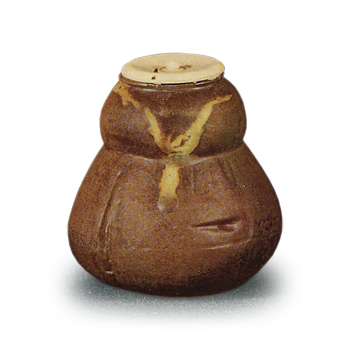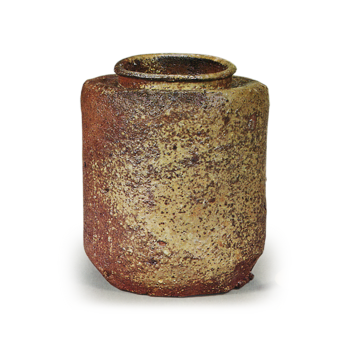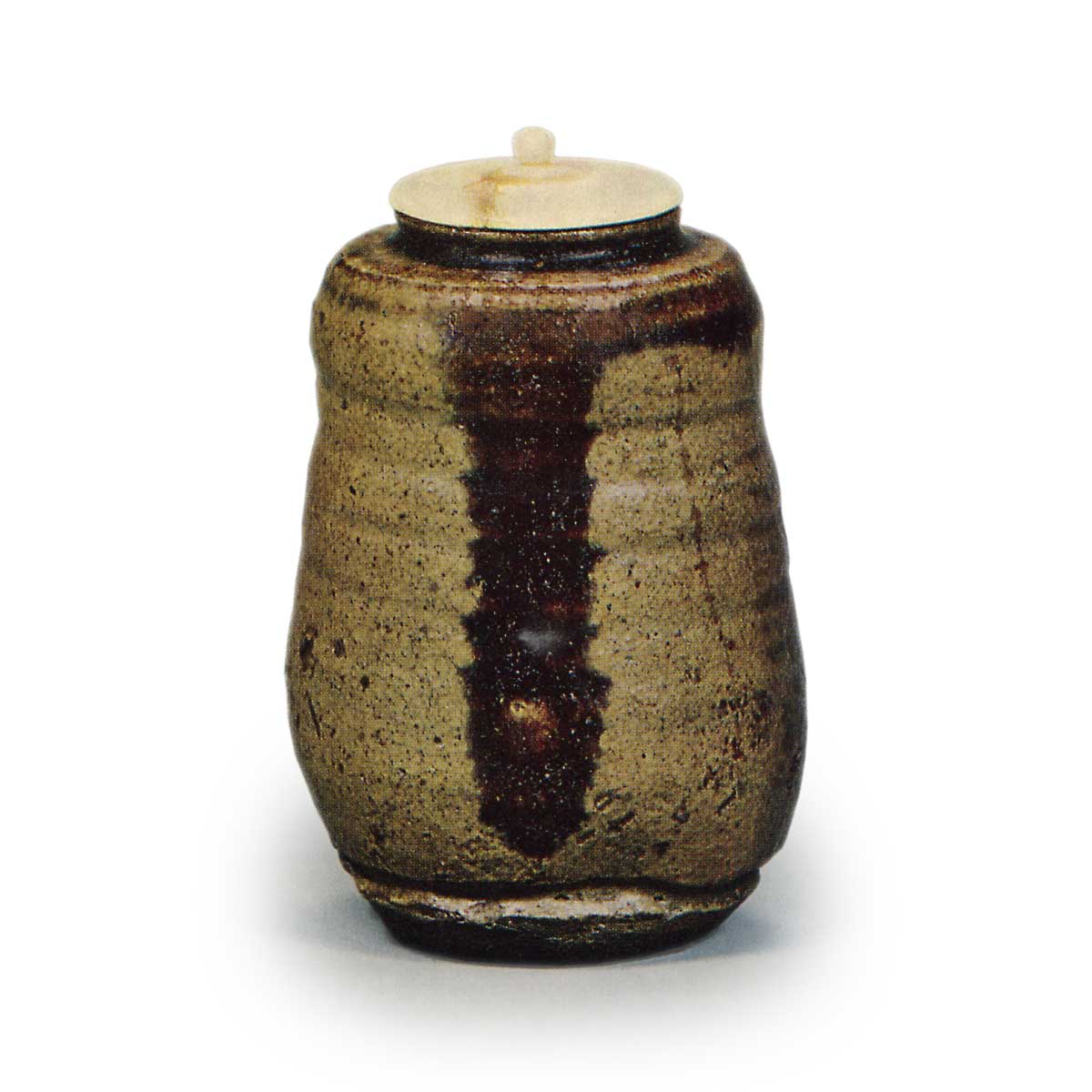
Karatsu, Meibutsu of the Middle Period
Accessories
Lid x1, Nest, Lid Box, Paulownia, Unpainted Wood, Inscription by Matsudaira Fumai
Cover x2, Cover Box, Paulownia, Unpainted Wood, Inscription by Matsudaira Fumai
Hikiya: Hanaguri
Inner Box: Paulownia, Black Lacquered, Red Lacquered, Inscription by Kobori Enshū, Same Inscription on Lid Interior, Red Lacquered, Inscription by Same Author
Outer Box: Paulownia, Unpainted Wood, Inscription
Extreme Box: Paulownia, Unpainted Wood, Inscription by Matsudaira Fumai
Transmission
Matsudaira Bizen-no-kami → Kashū Hori Heiemon → Matsudaira Fumai
Recorded
Unshū Zōchō, Kokon Meibutsu Ruishū, Chaki Mokuri Monjo, Fushimiya Nikki Meibutsu Chaki Zu, Fushimiya Kokusho, Ōsaki-sama no Dōgu Dai Ote-kuri, Daien’an Chakai Ki
Dimensions
Height: 8.6cm, Mouth Diameter: 3.3cm, Body Diameter: 5.9cm, Base Diameter: 3.7cm, Weight: 115g
It is truly rare for a Karatsu tea caddy to be selected among the revived Meibutsu, but this is likely due to the honor of meeting the preferences of Enshū.
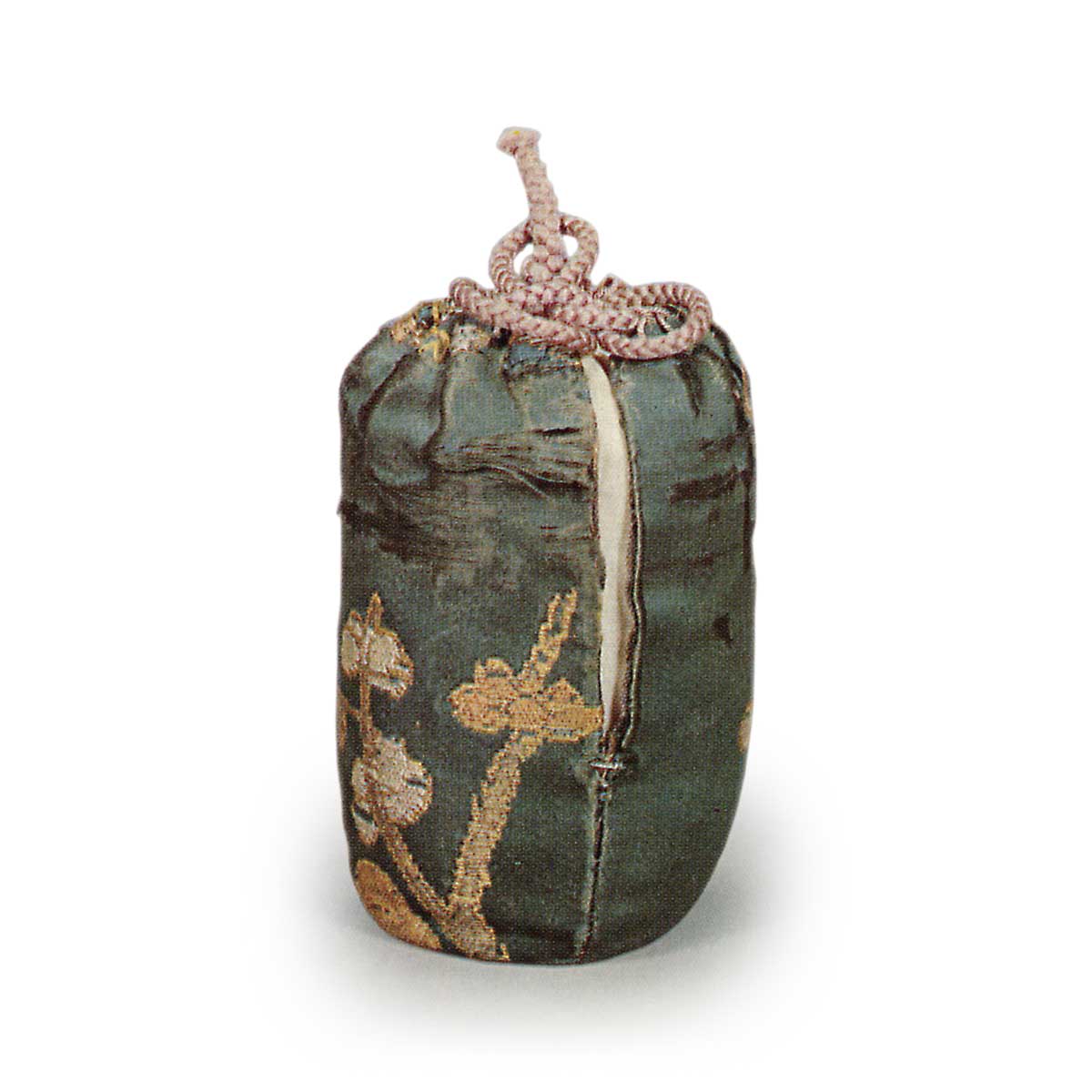
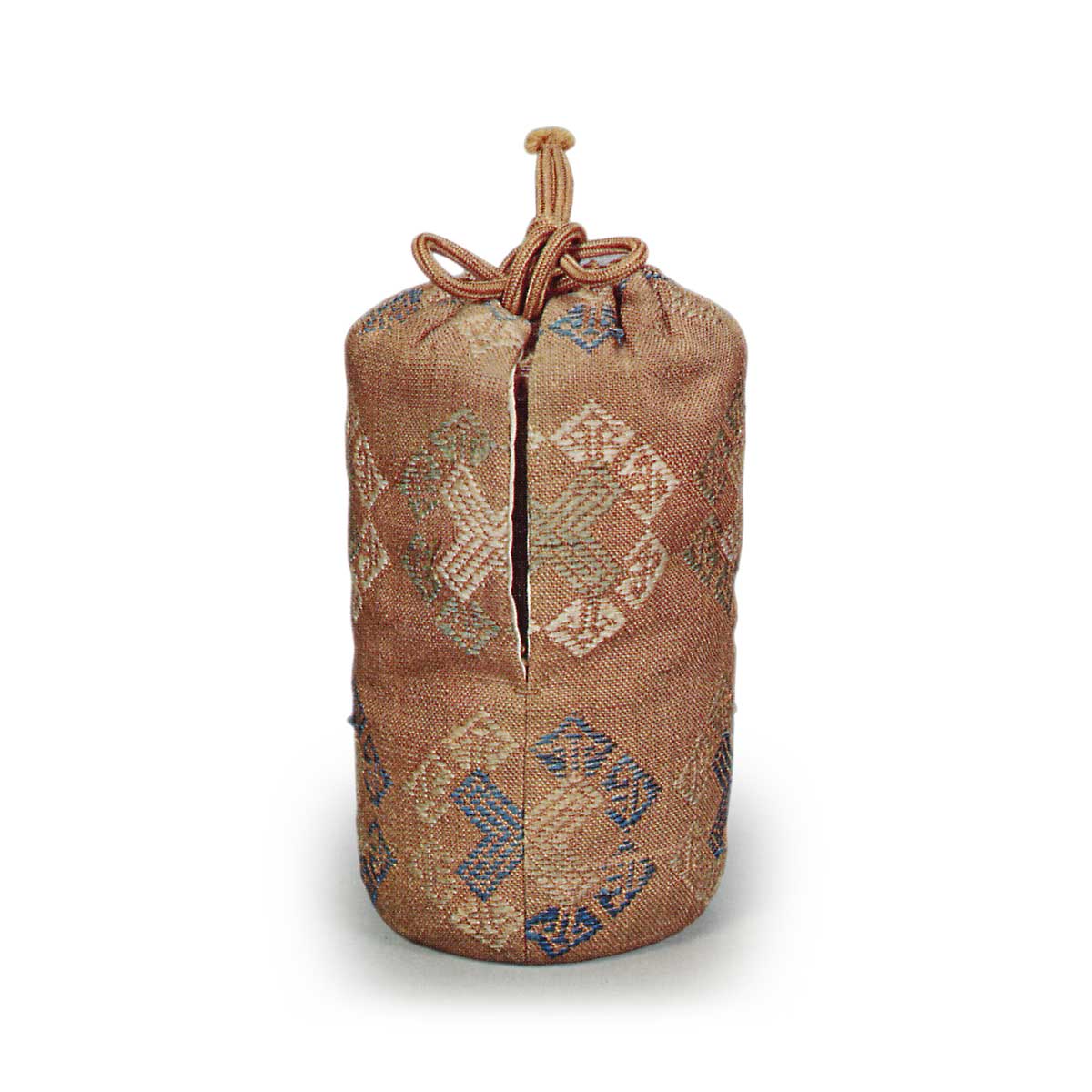
Unusually restrained for a Karatsu kiln piece, its lathe-turned form is gently rounded with a well-defined structure. The glaze color constantly shifts, overall taking on a yellowish leaf hue. Over this, a dark brown cascade glaze flows down in a single streak from the right shoulder, stopping just above the base. This is a Karatsu tea caddy without parallel. Two dust covers accompany it: one in white ground Kinran and one in Shimizu-kiru. They complement the tea caddy well, suggesting Matsudaira Fumai particularly treasured this ensemble.
The inscription “Shikawa” refers to a river in Chikuzen Province’s Chikushigun district, also known as Oshogawa or Urushi River. Ancient poems mention ‘Oshogawa’ or “Omikawa,” prompting Enshū to adopt this name for his inscription.
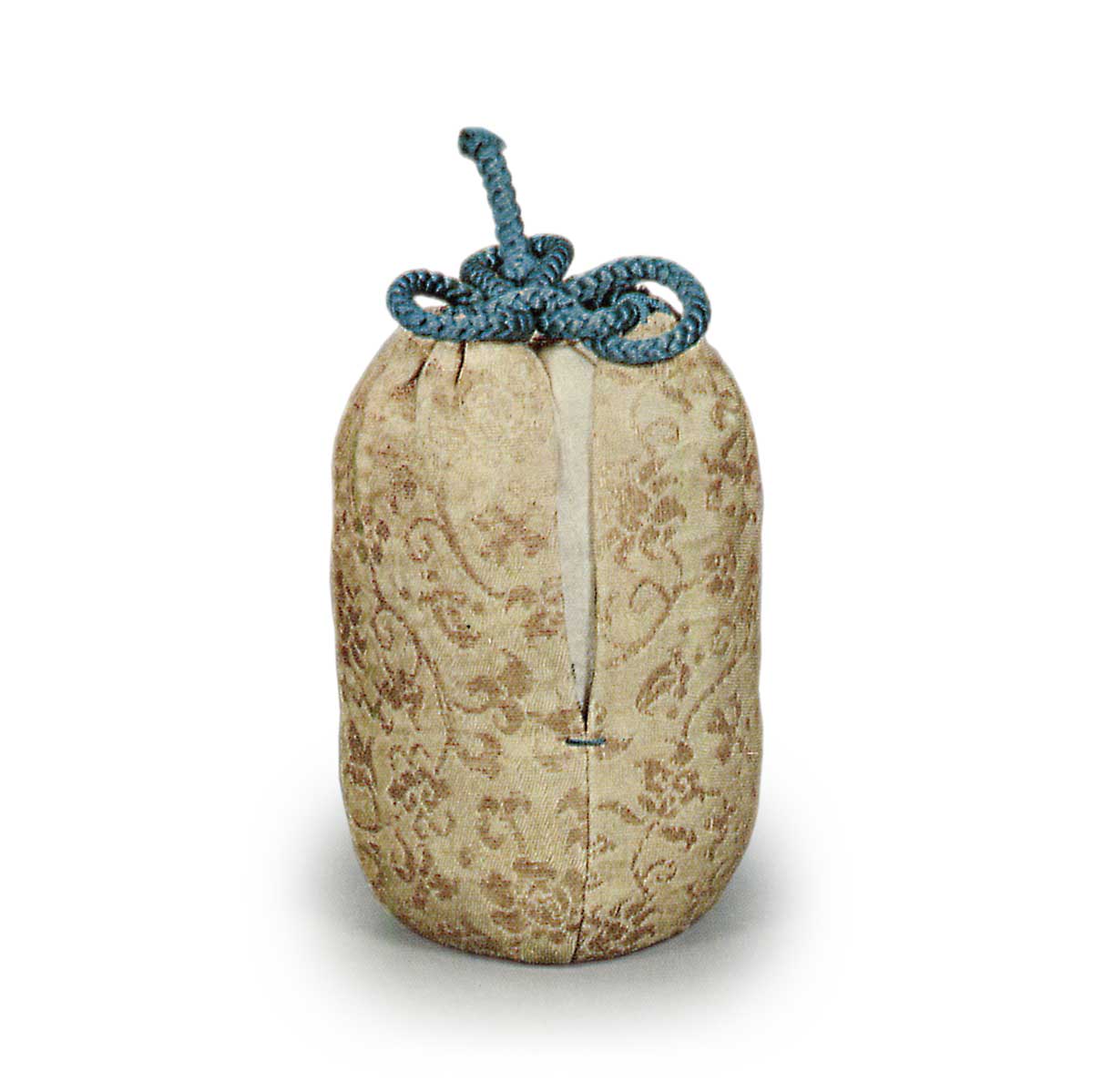
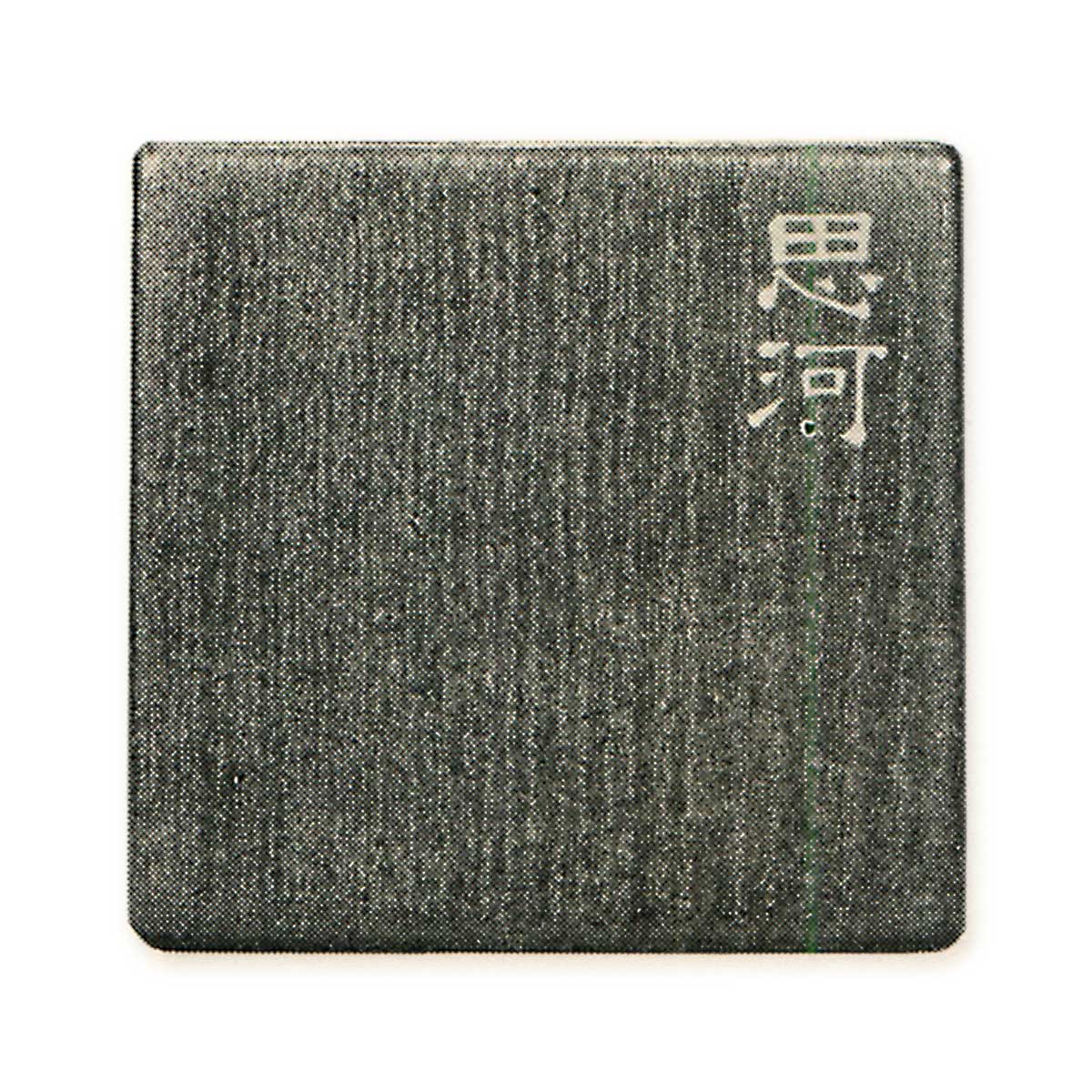
Red Lacquered, Inscription by Kobori Enshu
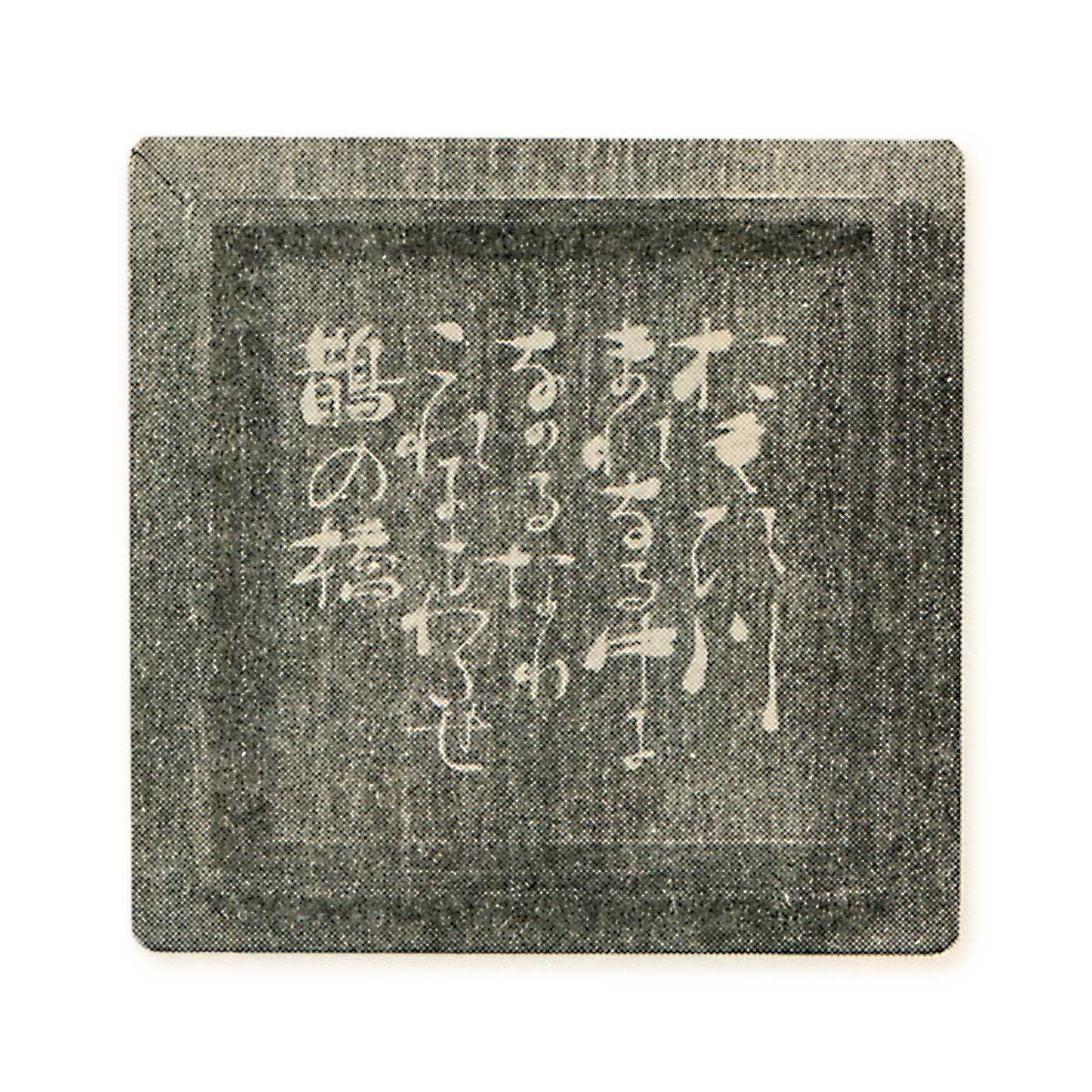
Omoigawa
Amidst the rare
It flows
Even to this
Magpie Bridge