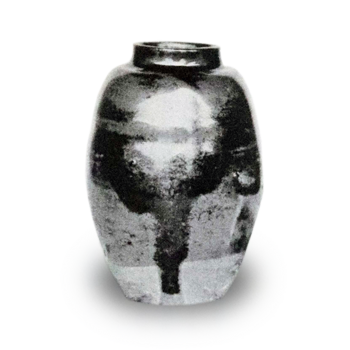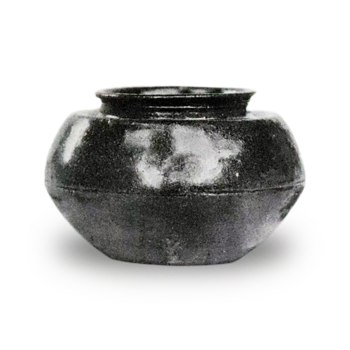
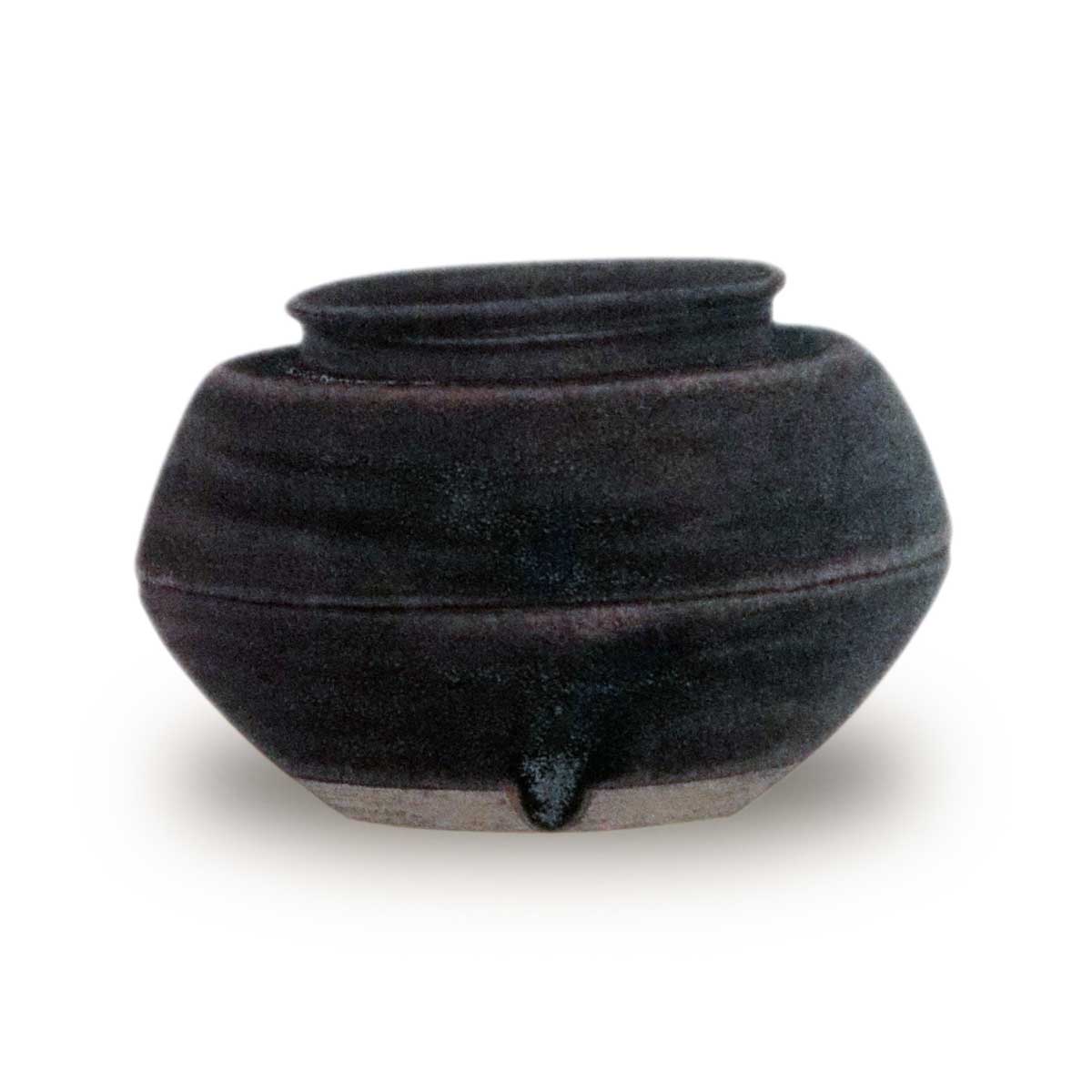
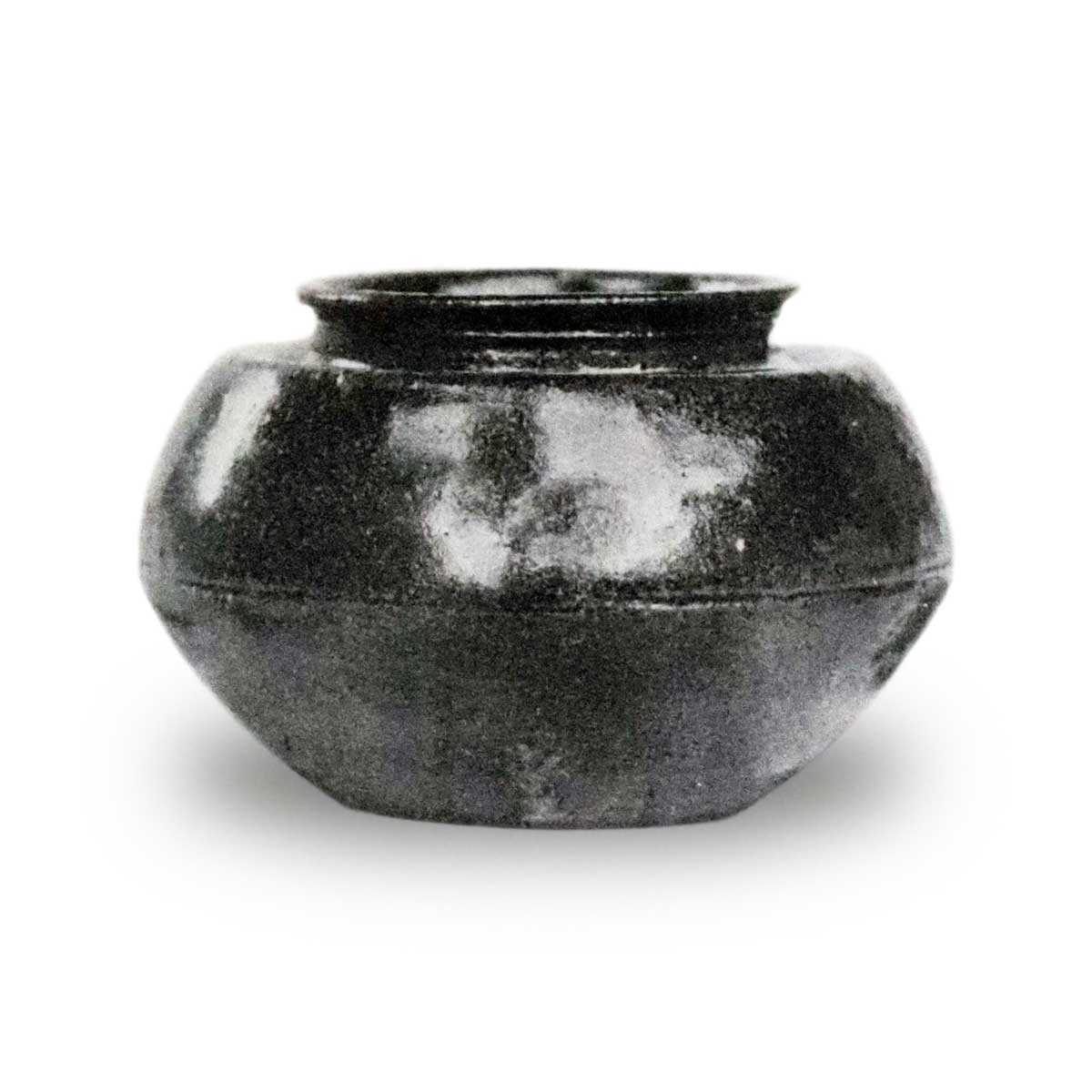



Made in China; a Daimeibutsu from the collection of Mr. Tokujiro Fujita, Osaka
Name
Named for its persimmon-like shape and because it was a tea caddy once owned by Akaneya Sōsa, a merchant in Sakai during the era of Oda Nobunaga.
Dimensions
Height: Approx. 5.6 cm (1 sun 8 bu 4 rin)
Body diameter: Approx. 8.8 cm (2 sun 9 bu)
Mouth diameter: Approx. 5.5 cm (1 sun 8 bu)
Base diameter: Approx. 4.5 cm (1 sun 5 bu)
Height of the neck (koshiki): Approx. 0.8 cm (2 bu 5 rin)
Shoulder width: approx. 0.8 cm (2 bu 5 rin)
Weight: approx. 94.9 g (25 monme 3 bu)
Accessories
・Lid: 1, with a “su” (pattern)
・Storage pouch: White silk
・Pouches: 3
Tomita-giri (lining: iridescent blue-green; tying cord: purple)
Shōō Donshu (lining: iridescent blue-green; tying cord: Enshū brown)
Yuraku-giri (lining: iridescent blue-green; tying cord: Enshū brown)
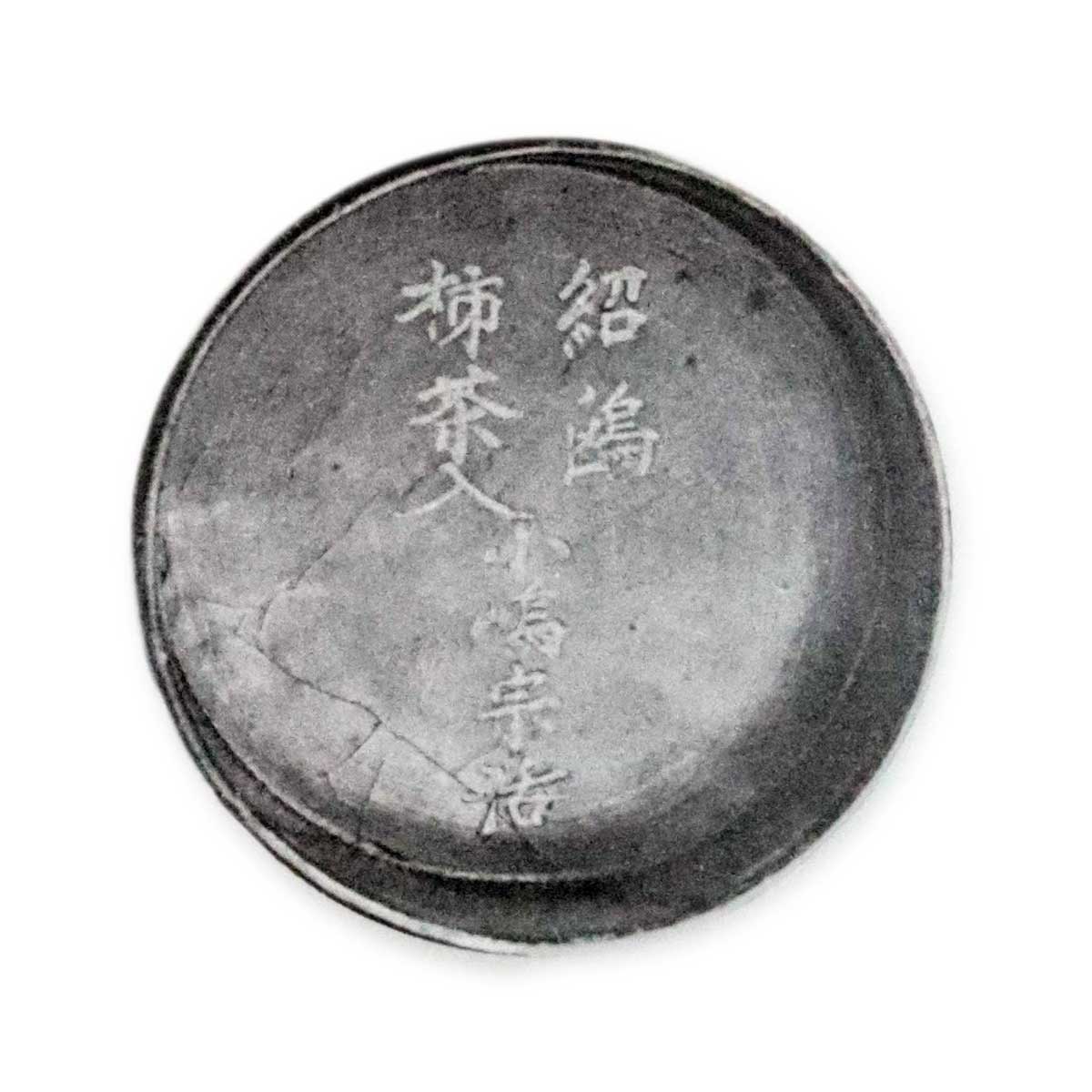
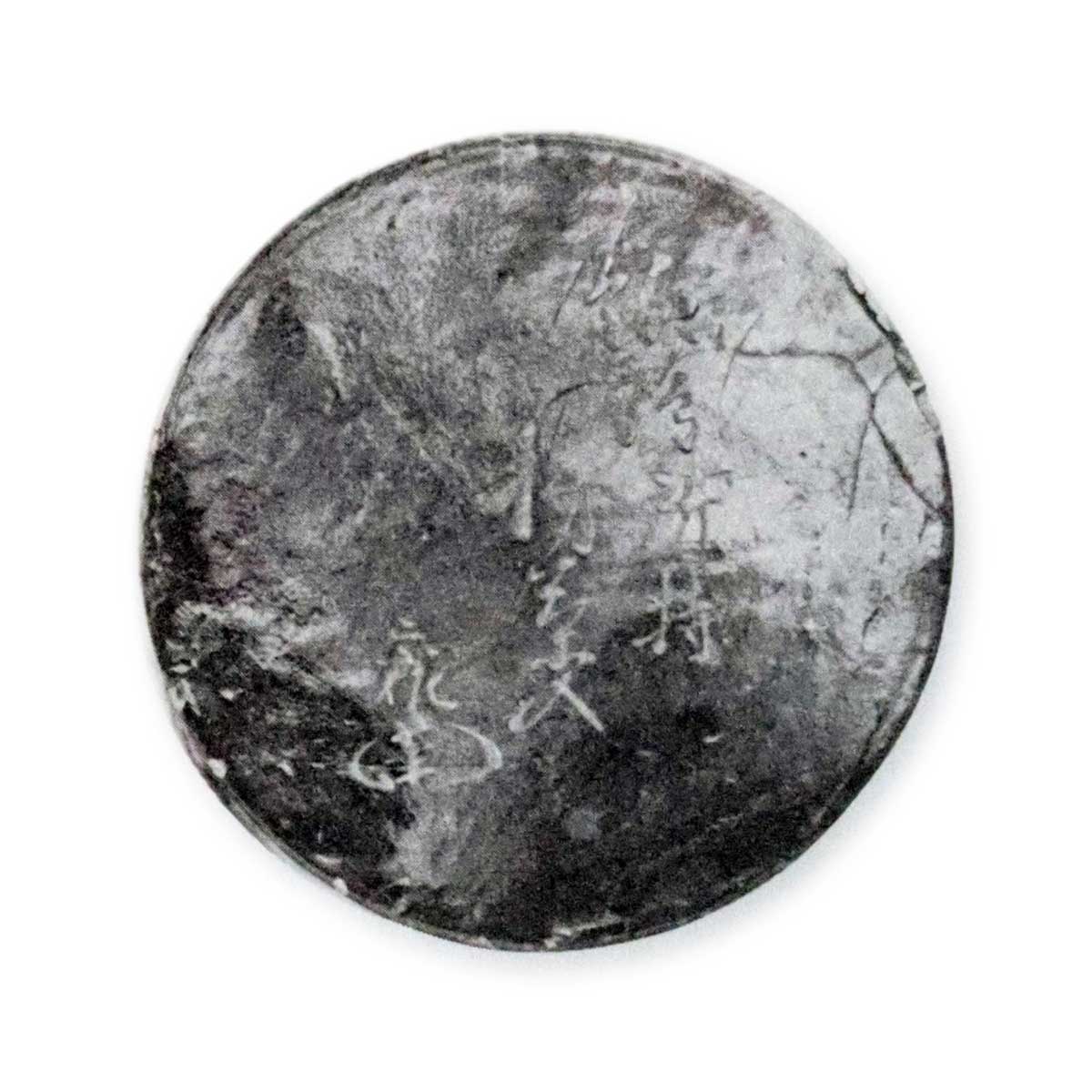
・Hikiya (tea caddy storage tube): Black lacquer; interior painted vermilion; inscription on the lid by Sen Ryusai
“Akaneya Persimmon”
(Content within the circular frame)
Front
“Owned by Shoo: Persimmon Tea Caddy, Soza (seal)”
Back
“Shoo: Persimmon Tea Caddy, Kojima Soka”
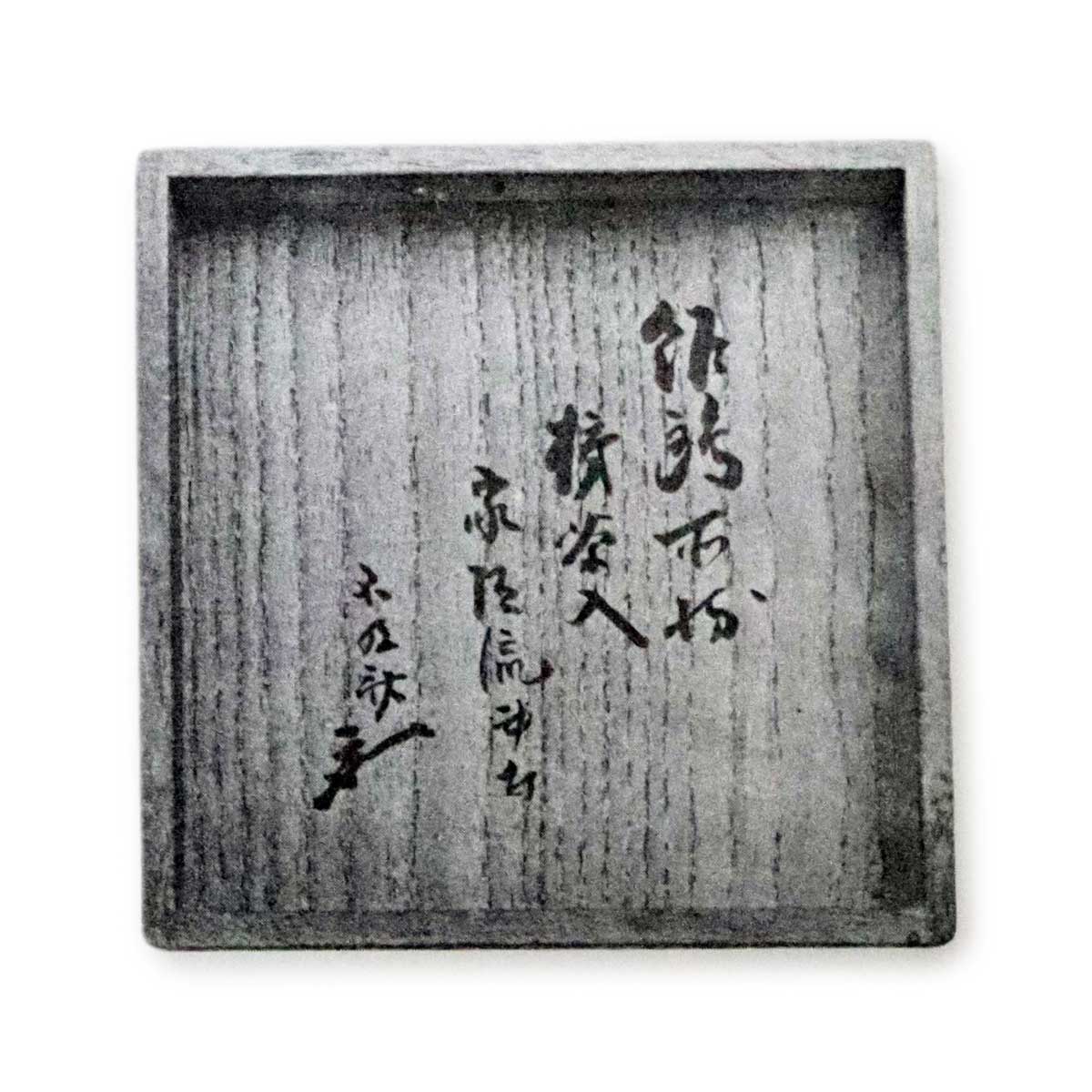
・Inner Box: Paulownia, natural wood
Front of lid: Inscription by Chizuiryu-sai
“Persimmon Tea Jar”
Back of lid: Inscription by Sen-sai
“Owned by Shōō; Persimmon Tea Jar; Inscription by Zuiryu; Sen-sai (seal)”
・Accompanying Tray: Chinese-style; exterior features a pattern of red flowers and green leaves; interior is vermilion; base is black.
Dimensions: Approx. 19.7 cm (6 sun 5 bu) on each side; Mirror (flat inner surface of the tray): Approx. 13.6 cm (4 sun 5 bu) on each side; Base: Approx. 13.6 cm (4 sun 5 bu) on each side
Pouch: Pure silk with gold-threaded Donshu stripes on a crimson ground (lining: pale yellow silk; tying cord: purple)
・Outer Box: Shunkei lacquer
Miscellaneous Notes
Regarding the persimmon-shaped tea caddy, the Nobunaga Jidai Meibutsu Ki states, “Belonged to Akaneya Sōsa; previously owned by Kojima Sōkatsu.” The Izumi Meisho Zue states, “Persimmon-shaped tea caddy: Akaneya Sōsa; originally owned by Kojimaya Sōkatsu.” The Matsuya Meibutsu-shū states: “A persimmon-shaped tea caddy belonging to Satsumaya Sōshin, a disciple of Takeno Jōō; the pouch is made of Kandou.”
(From the Fujita Family Utensil Register)
Persimmon-shaped tea caddy: Kojimaya Sōkatsu (Sōyū in some versions)
(From the Higashiyama Imperial Artifacts Supplementary Register)
Kaki (Persimmon) Tea Caddy—Sakai Division—Kojimaya Sōwa (in some versions, Sōkatsu)
(From Tenshō Meibutsu-ki)
Kaki: This name derives from the fact that the overall shape resembles a flat persimmon. However, there are two forms of the kaki tea caddy; one has rounded shoulders and tapers toward the bottom, and this is called “Koneri-gaki.”
The rim’s fold is somewhat irregular (mudo), and the thread-cut pattern on the bottom is fine and delicate. The base glaze is a light ink color, with a slight blackish tint where the glaze stops; the glaze flowing over the top is a yellow glaze with a beautiful luster.
(From Manpō Zenshū)
Persimmon: Persimmon-shaped tea caddies are fired to resemble the shape of a flat persimmon. The persimmon-shaped tea caddy owned by Iyoya of Sakai is a Meibutsu, featuring a persimmon stem fired onto the underside of the rim. The lower shape has narrower shoulders than that of a round jar. Since pieces with a fired stem are rare, those whose lower shape simply resembles a persimmon are simply called “persimmon.”
(From Sado Shoden Shū)
Akaneya Persimmon: Originally owned by Akaneya Sōsa of Sakai; it was initially held by Kojimaya Sōkatsu.
(From Senshū Meisho Zue)
History of Ownership
It was originally owned by Takeno Jōō, then passed through Kojimaya Sōkatsu of Sakai to Akaneya Sōsa, also of Sakai. It was subsequently held by the Sen family, but was later transferred from them to the Fujita family.
Record of Actual Observation
On May 8, Taishō 9 (1920), I viewed the actual piece at the residence of Mr. Tokujirō Fujita in Higashinoda-chō, Kita Ward, Osaka City.
The rim is thin, with a deep fold; the foot is extremely low, and a single raised ridge runs along half of its circumference. A blue-lapis-lazuli color appears in a slightly recessed area at the edge of the foot. Overall, a black glaze forms a sparse pattern against a persimmon-colored or purple background, and a sunken ridge runs once around the body. A cascade of black amber glaze flows down from the shoulder and stops at the base. The glaze pool is somewhat thick, and within it is a blue-lapis-lazuli hue.
From the lower rim downward, the vermilion-clay body is exposed; the base is flat, with coarse, fine wrinkles covering the entire surface. Inside, the glaze covers the rim; below that, coarse wheel marks run in a spiral pattern, forming a swirl at the center of the base. This teapot is in pristine condition, has an elegant form, and features a glaze of exceptional quality.