

Classification: Asahi-de School, Revival-Period Meibutsu; Collection: Osaka, Collection of Ryūhei Murayama
Name and Overview
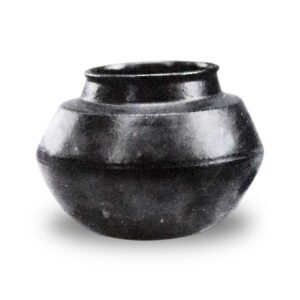
This is a slightly smaller Taikai tea caddy produced at the Setō Kiln.
Dimensions and Weight (Converted to Centimeters and Grams)
・Height: 2 sun 2 bu 3 rin [approx. 6.76 cm]
・Body Diameter: 3 sun 2 bu [approx. 9.70 cm]
・Mouth diameter: 1 sun 8 bu [approx. 5.45 cm]
・Base diameter: 1 sun 5 bu (or 1 sun 4 bu 7 rin) [approx. 4.55 cm (or approx. 4.45 cm)]
・Neck height: 3 bu 2 rin [approx. 0.97 cm]
・Shoulder width: 2 bu 7 rin [approx. 0.82 cm]
・Weight: 42 monme 8 bu [approx. 160.5 g]
Accessories
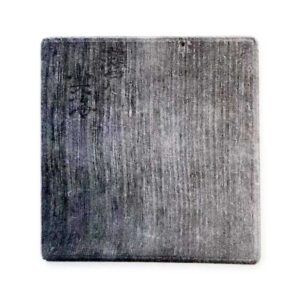
・Lid: 1 (without a nest)
・Storage pouch: Donshu Tanji, brown cord
・Cover pouches: 2
- Tsumugi-ji Kinran (textured silk), Lining: Tsuzura-kaiki (kudzu-patterned fabric), Cord: Tsugaricha (tea-colored)
- Chaji-moru (tea-colored moire), Lining: Tamamushi (iridescent), Cord: Asagi (light yellow)
・Storage Box: Paulownia, natural wood
[Box Inscription, Accompanying Note, etc.]
・Kodai-kai Bag (box inscription)
・Seto Kodai (inscribed on the box)
・One box: Paulownia, natural wood (with an inscription by Kobori Enshū)
・Pouch: Tea-colored shuchin, lining: tsuzura kai, cord: tea-colored / Seto Kodai (inscription)
Miscellaneous Notes (Descriptions from Various Sources)
・From Meibutsu-ki:
Seto Kodai. Owned by Tsuchiya Samon. Height: 2 sun 2 bu [approx. 6.67 cm]; circumference at the body: 3 sun 1 bu 5 rin [approx. 9.55 cm]; mouth diameter: 1 sun 8 bu 5 rin [approx. 5.61 cm]; base diameter: 1 sun 4 bu 5 rin [approx. 4.39 cm]. Includes one lid and two pouches (white tsumugi fabric with gold thread, kudzu lining, and Enshū-cha-colored cord / Tang silk, asagi-colored cord, and kai-ki lining). The box is made of unpainted paulownia wood and bears an inscription by Kobori Enshū reading “Seto Kōtaikai.” The pouches feature a tea-colored “Hōjin-mon” donzu pattern, kudzu lining, and Enshū-cha-colored cord. (Illustration of the tea caddy included)
・From Kokin Meibutsu Ruiju: Shui-no-bu:
Seto Kodai. Made by Fujishiro; owned by Kuchiki no Okishu. (All descriptions of dimensions and accessories are identical to those in Meibutsu-ki)
・From Enshu-ko Gosensan Juhachi-hin:
Seto Kodai. Asahi-de style. Owned by Tsuchiya Samon. (Includes dimensions, accessories, and an illustration of the tea caddy)
・From the Tsuchiya Storehouse Register:
Seto Kodai. Asahi-de style. The pouch features white ground with cord trim and white tsumugi silk with gold thread. It bears a vermilion inscription. It was presented to Lord Kinoshita at the end of Kansei 4.
History of Ownership
Originally owned by Tsuchiya Samon, it was transferred to Lord Kinoshita (Lord of the Ashikaga Domain, among other titles) in Kansei 4 (1792). It was subsequently passed down through Kuchiki Oki-no-kami to Matsudaira Iga-no-kami, lord of Ueda Castle in Shinano Province. On December 10, Taisho 1 (1912), during an auction of the Matsudaira family’s collection, the current owner (Mr. Ryuhei Murayama) purchased the item.
Field Notes (Record of Observation of the Actual Object)
On September 26, Taishō 9 (1920), the object was viewed and examined in person at the residence of Mr. Ryūhei Murayama in Mikage Village, Muko District, Hyōgo Prefecture.
The rim is thin and crafted with great precision. The area below the neck protrudes slightly, and the shoulders are sharply defined. A single, somewhat deep incised groove runs around the widest part of the body. The vessel tapers gradually from the rim downward.
Overall, a yellow glaze is applied unevenly over a chestnut-brown base, with the heaviest application of yellow glaze around the shoulders. At the base of the rim (the edge of the foot), a bluish glaze is applied somewhat thickly within the yellow.
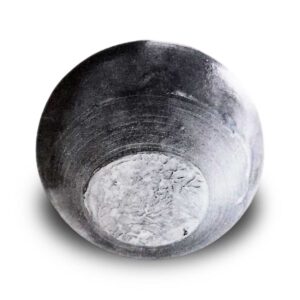
Fine wheel marks run from the rim downward, and the base is raised (a “raised base”), with individual patterns (carving marks) visible on each one.
Inside, the rim is glazed, while below that, the wheel marks are either coarse or fine. The center of the base is slightly raised, and the surrounding area is concave.
It has a charm reminiscent of the style of Asahi Shunkei and feels light in the hand. The color and luster of the glaze are beautiful, and this tea caddy is in perfect condition with no damage (chips or cracks) anywhere.
