

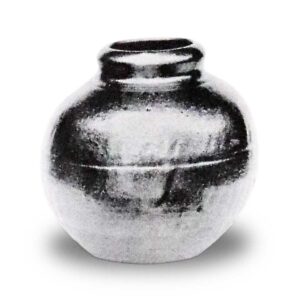
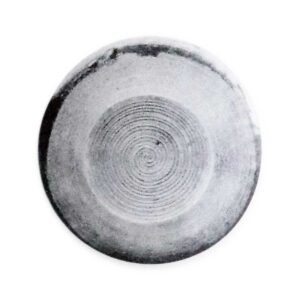
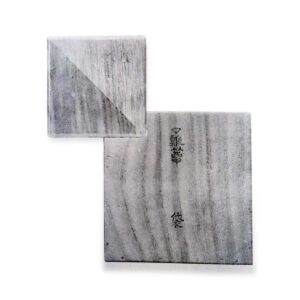
By Shunkei; a Meibutsu from the Revival Period; Collection of Count Matsudaira Naoaki
Name
This name was given because it is a tea caddy made by Shunkei whose mouth is shaped like a gourd.
Dimensions:
・Height: approx. 6.7 cm (2 sun 2 bu)
・Body diameter: approx. 7.1 cm (2 sun 3 bu 5 rin)
・Body circumference: approx. 22.4 cm (7 sun 4 bu)
・Mouth diameter: approx. 3.6 cm (1 sun 2 bu)
・Base diameter: approx. 3.7 cm (1 sun 2 bu 3 rin)
Accessories:
・Lid: 1 piece—marked on the underside as the work of Insai (carved by Insai)
・Lid box: Paulownia, natural wood (with an inscription by Matsudaira Fumai)
(Kuchihyotan with lid)
・Cover (storage pouch): Flower-patterned habutae silk, with a “Tsugari Enshu-cha” cord
・Pouches: 4 types:
- Sōsetsu-giri (Back: Kuzure Kōkai-ki / Cord: Tsugari Enshū-cha)
- Mochizuki Kantō (Back: Kuzure Kōkai-ki / Cord: Tsugari Sakae)
- Koishidatami Donshu (Back: Kuzure Kōkai-ki / Cord: Tsugari Murasaki)
- Waniwa Donshu (Back: Tamamushi Kabeto-ro / Cord: Tsugari Murasaki)
・Pouch Box: Paulownia, natural wood (with an inscription by Kobori Enshū)
(Kuchihyōtan pouch)
・Hikiya: Rosewood
・Cover: “Fursu Fukuju” characters (Back: Donshu / Cord: Tsugari Enshū-cha)
・Inner Box: Paulownia, natural wood; lid made of joined black persimmon wood (Bears an inscription in the handwriting of Kobori Enshū)
(Shunkei, Kuchihyotan, Persimmon, Black)
・Outer Box: Paulownia, natural wood (Bears an inscription by Matsudaira Fumai)
・Wrapping Cloth: Floral fabric (Lining: Onado-cha ha-ni-bu)
[Explanation and Miscellaneous Notes (Excerpts from Various Sources)]
“Miscellaneous Notes”
The Shunkei Kuchihyotan was owned by Kamio Bizen-no-kami. Height: approx. 6.7 cm (2 sun 2 bu); mouth diameter: approx. 3.6 cm (1 sun 2 bu); base diameter: approx. 3.7 cm (1 sun 2 bu 3 rin). There are two ridges below the mouth and one ridge on the body; the circumference of the body is approx. 7.1 cm (2 sun 3 bu 5 rin). The base is a thin “ito-giri” (thread-cut) finish. It comes with four pouches: “Donshu Junko” (with a small cobblestone pattern on a tea-colored ground), “Wan-chigai Donshu,” “Mochizuki Kando,” and “Sōsetsu-giri.” The handle is made by the Hikiya. The pouch features the “Fukuju-maru” crest on a Donshu background. The box is made of natural paulownia wood with black persimmon wood accents; the lid is joined with black persimmon wood in a “kaku-chigai” (off-center) pattern. The paulownia surface is inscribed with “Shunkei Kuchihōtan (as a tea caddy).”
Meibutsu-ki
Illustration included. Shunkei Kuchihyotan, a Meibutsu of the Revival period. Height approx. 6.7 cm (2 sun 2 bu), body diameter approx. 7.1 cm (2 sun 3 bu 5), mouth diameter approx. 3.6 cm (1 sun 2 bu), base diameter approx. 3.7 cm (1 sun 2 bu 3 rin). Two ridges below the rim, one ridge on the body. The cover is made of “Koishidatami” satin, similar to the Iyo-style bamboo mat.
Rinpō-Kiryū
Kuchihōtan, Ō-Shunkei. Currently in the possession of the Lord of Unshū (Matsudaira family). It has a blackish iron color with a hint of gold, a faint “ito-kiri” pattern, and a mouse-gray base (clay).
The body features a band-like design and an elegant “odori-hera” (dancing spatula). (Illustrations of accessories and the tea caddy are included.)
Enshū Meibutsu-ki
Gourd-shaped tea caddy by Shunkei. Owned by Kamio Bizen-no-kami. (A note in red ink states, “Currently in the Tsuchiya family.” Dimensions, accessories, and an illustration of the tea caddy are included.)
Sekkan-sō Chadō Wakuge
Kuchihyotan by Shunkei. Owned by Enshū; owned by Lord Tsuchiya Sagami-no-kami; previously owned by Lord Kamio Bizen-no-kami.
Detailed Record of the Kamio Family’s Utensils
Kuchihyotan. Pouches: Mochizuki, Wagai, and Nishiki. Box made of joined paulownia and black persimmon wood. (Includes illustrations of the box and tea caddy)
Tsuchiya Inventory Ledger
Kuchihyotan. 1 lid, 4 pouches (Mochizuki, Kantō, Koishidatami Donshu, Sōsetsu-kiricha-ji, Waniwa Donshu); the handle is made of rosewood; the pouches feature the “Fursu Fukuju” characters; the inscription on the box is by Sōfu (Kobori Enshū).
Hōian Bunko, Series A, No. 3
Shunkei Kuchihyotan. Owned by Tsuchiya Sōshū. The original model (the authentic, standard piece) of the Shunkei Kuchihyotan. Currently in the possession of Lord Matsudaira Sakon. The entire piece has a persimmon-glazed base and is considered excellent work by Shunkei’s standards. It features an “odori-bera” (dancing spatula). The lid was made by Insai, and the box bears an inscription by Enshū. (Dimensions, accessories, and illustration of the tea caddy included)
Gokumei Mekiri-sho Record of Tea Utensil Appraisal
Kuchihyotan. The base glaze is dark purple with traces of iron, appearing light brown. The thread cut at the base is fine, and the clay is fine-grained. The shape is based on oral tradition.
Collection of Tea Utensil Appraisals
Kuchihyotan. The base glaze has a rough, gritty texture and is a dull persimmon color. The clay is pale yellow. The rough texture of the rim indicates that it is “nakase” (unfired). The rim appears to be specifically shaped like a gourd. There are other appraisal records as well, indicating the existence of various shapes. It is believed to have been introduced from Tang China and fired at the Seto Kiln in Owari.
Fushimiya Hoki: Illustrations of Meibutsu Tea Utensils
Shunkei Guchi Hyotan. Owned by Lord Tsuchiya Sagami-no-kami; presented to the Koriyama family (the Yanagisawa clan) around the Kansei era. The thread-cut finish is as shown here. (Illustration omitted. The exposed clay is magnificent. It features a “dancing comb” pattern at the waist and is entirely covered in persimmon glaze; a masterpiece by Shunkei. Includes dimensions, accessories, and an illustration of the tea caddy.)
Meibutsu Zukikata
Kuchihyotan. Owned by Lord Tsuchiya of Sagami. Considered the supreme masterpiece among Fujishiro’s works. However, it is also known as “Shime-kiri.”
Hōki-an Bunko, Volume A, No. 9
Kuchihyotan. The overall construction and shape of the rim are generally as shown in this illustration. The craftsmanship is truly magnificent. There are three faint, large ridges on the body, and a ridge below the rim as well. The base features an “Odorikago” pattern, the clay has thread-like markings, and the thread-cut pattern consists of two raised, swirling ridges. The base glaze is a blackish persimmon color, with many areas that appear dry and flaky due to a metallic sheen.
Hōan Bunko, Series A, No. 22
Shunkei-style gourd-shaped tea caddy. Formerly owned by Tsuchiya, Matsudaira of Koshu, or the Lord of Unshu. The thread-cut pattern is spiral. The clay’s natural texture is superb. It features an “Odorikago” pattern at the waist, and the entire piece is covered in persimmon glaze—a masterpiece by Shunkei. (Dimensions, accessories, and illustration of the tea caddy included)
‘Kizane-bon Chakai-dogu Tsuki’ (November 1, Kyōhō 1—Tsuchiya of Sōshū Tea Ceremony)
Guests: Nomura, Nezuya, Shōkan
・Wall hanging: Painted by Shinryū and Iwato-kai
・Tea caddy: Shunkei gourd-shaped tea caddy (Pouch: Mochizuki Kanto; Replacement pouch: Wawai, Koishidatami, Sōsetsu-giri)
・Flower vase: Bronze (with an inscription by Enshū)
“Fushimiya Notes”
Shunkei-style gourd-shaped tea caddy. Previously owned by Sōho (Kobori Enshū), then by Kamio Bizen-no-kami, and subsequently by Tsuchiya Sōshū. Confiscated from Sumiya Sukezaburō around the Kansei era; payment: 500 ryō.
“Lord Ōsaki’s Record of Utensil Costs”
Shunkei-style gourd-shaped tea caddy: 200 ryō (a “Meibutsu” masterpiece)
The Biography of Matsudaira Fumai (A letter from Lord Fumai to Takaya Sōiku, a Kyoto art dealer)
(Excerpt) I have just acquired the Kuchihyōtan. It has been a long time since I last saw it, but this is a genuine Shunkei piece and exceptionally magnificent. Although its style differs from that of “Chogetsu,” I had previously believed they were from the same period; however, upon examining it closely this time, I suspect they may be as much as 100 years apart in age. (Excerpt)
Hōian Bunko, Series A, No. 11: Fushiya’s Notes
According to Mr. Ōsaki’s view, the mouth-shaped gourd contains a mixture of Tang-era (Chinese) clay, whereas “Chogetsu” does not contain any Tang-era clay. Therefore, one can tell by examining the clay. The fine thread-like incisions are also meticulously executed, extremely vivid and magnificent, and particularly deep.
[Provenance]
Originally owned by Kobori Enshū, it passed through Kamio Bizen-no-kami and Tsuchiya Sagami-no-kami before reaching Matsudaira Kai-no-kami, lord of the Koriyama Domain. Around the Kansei era, it passed through the hands of the Edo art dealer Sumiya Sukesaburō and became the property of Lord Matsudaira Fumai for 500 ryō. One theory suggests that it was presented to the Unshū (Matsudaira) family by Honya Sōkichi and others for a price of 200 ryō.
[Record of Actual Observation (Record of observing the actual object)]
On May 24, Taishō 7 (1918), I observed the item at the office of Count Matsudaira Naoaki in Matsue City.
The rim of this round jar is shaped like a gourd, giving it even more charm than a typical gourd-shaped piece. There are two faint incised lines around the neck and one slightly deeper incised line on the body. The entire piece is covered in a blackish purple-gold glaze, and when placed on a surface, the color appears to have dripped down in a single streak (nadare). With the groove on the body serving as a boundary, fine vertical grooves appear above and below it, forming what is known as “odori-suji” (dancing grooves). Around the waist, these grooves are carved slightly deeper to form ridges, giving the impression at first glance that the waist is bulging. From the rim downward, the body is exposed unglazed clay of a mouse-gray hue, and the thread-cut pattern on the base forms a fine, exquisite swirl. It is an exquisitely crafted piece with a sense of wabi-cha, and as suggested by the theory that “it already differs from Tang (Chinese) pottery,” it feels slightly older in style than other works by Shunkei. It is a masterpiece that makes it easy to understand why Kobori Enshū, who favored gourd-shaped vessels, cherished it so deeply.

