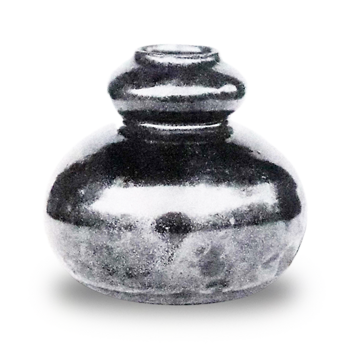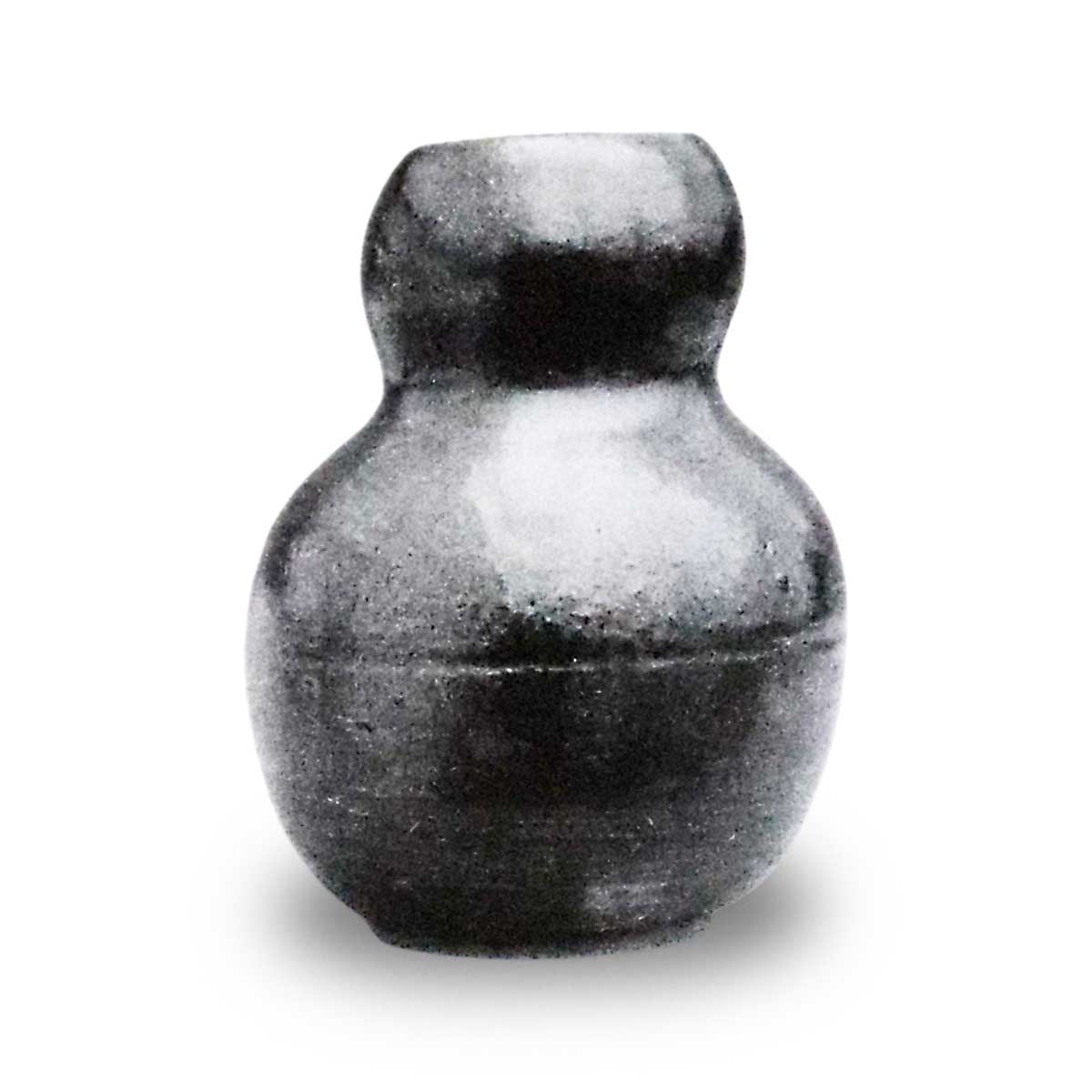
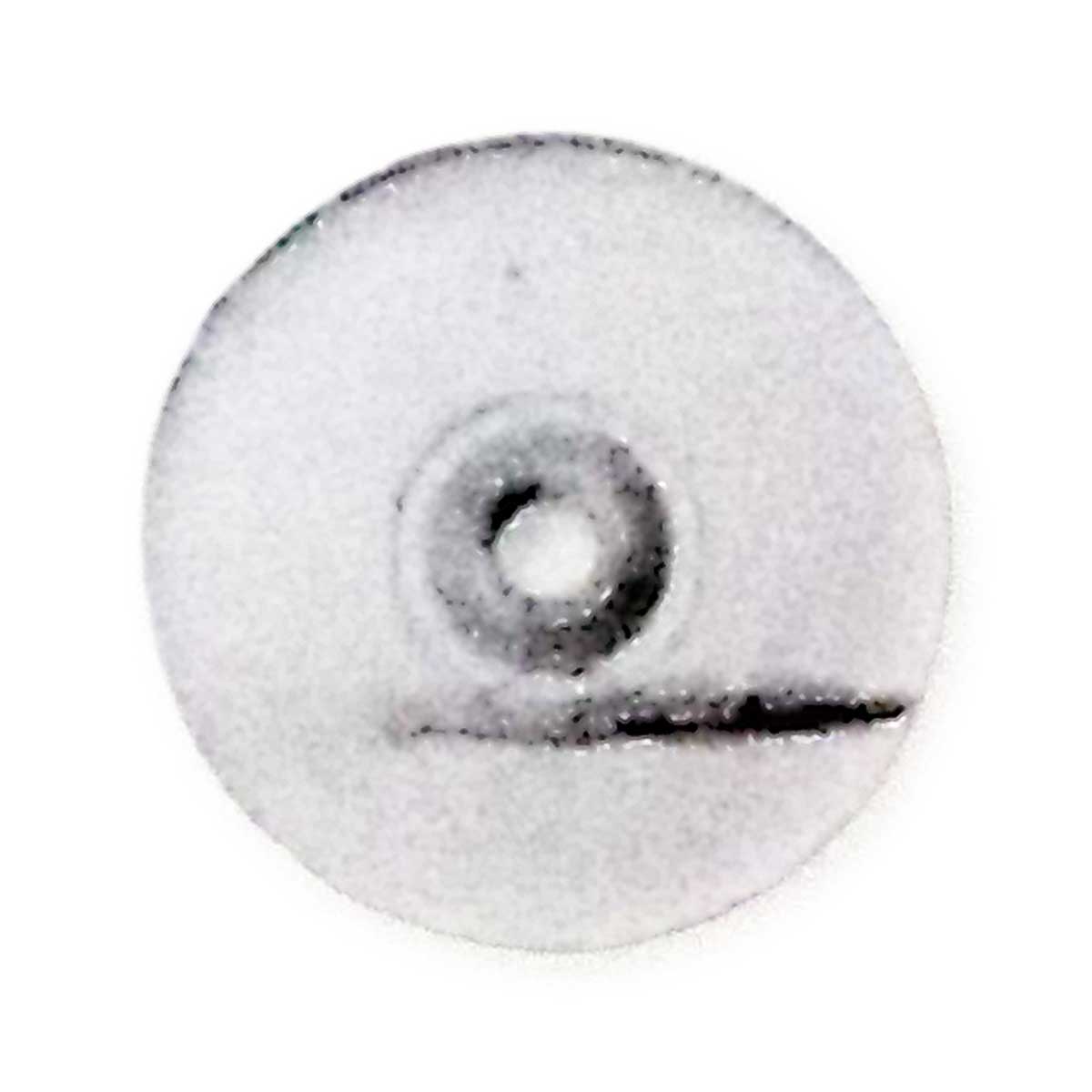
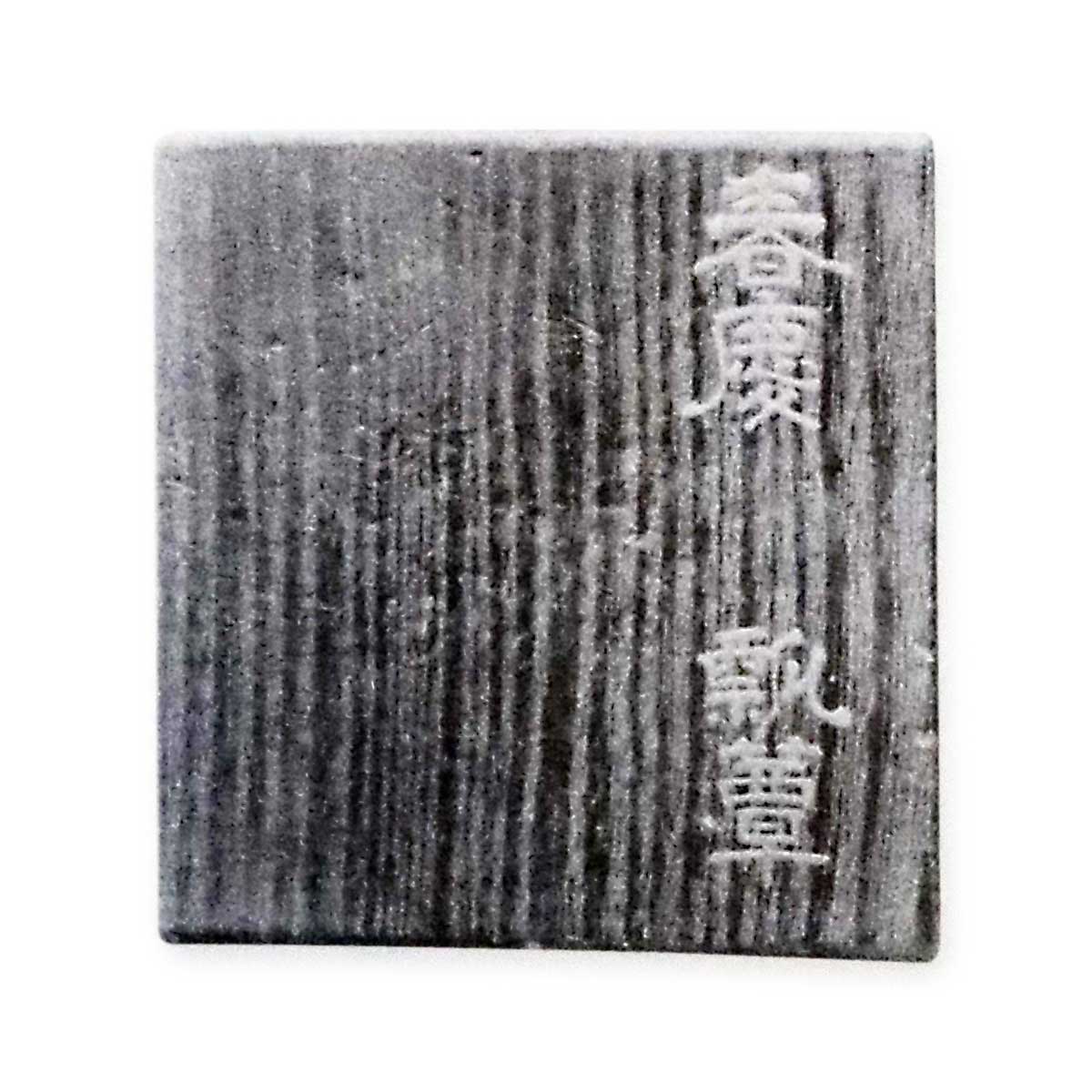
Collection of Mr. Kōkichi Ueno, Kyoto
Name
See the entry for “Shunkei Gourd” in the collection of Count Tadamichi Sakai.
Dimensions (Unit Conversion: 1 sun = approx. 3.03 cm, 1 bu = approx. 0.3 cm, 1 rin = approx. 0.03 cm, 1 monme = 3.75 g)
・Height: 2 sun 6 bu 5 rin (approx. 8.0 cm)
・Body Diameter:
- Upper Bulge: 1 sun 3 bu 2 rin (approx. 4.0 cm)
- Lower bulge: 2 sun 5 rin (approx. 6.2 cm)
・Mouth diameter: 9 bu (approx. 2.7 cm)
・Base diameter (pedestal portion): 1 sun 2 bu (approx. 3.6 cm) or 1 sun 1 bu (approx. 3.3 cm)
・Base height: 1 bu (approx. 0.3 cm)
・Weight: 20 monme 4 bu (approx. 76.5 g)
Accessories
・2 lids (with “Yatsure” finish)
・2 storage pouches (for storage and sorting)
- Nininshizuka: Cord pattern—iridescent
- Sumiyoshi Junko: Reverse cord pattern—brown / Cord—sea blue (navy blue) / Cord pattern—flower color (pale blue)
・Pouch box: Paulownia wood, black “kaki-awase” lacquer finish, red “menshu” lacquer finish
・Hikiya: Shikorodamo wood, carved frame, inscribed with calligraphy by Kobori Enshū
・Inner Box: Paulownia wood, black “kaki-awase-nuri” lacquer, characters on the lid in gold powder, inscribed with calligraphy by Kobori Enshū - Pouch: Arisugawa pattern, white ground with gold brocade lining, brown cord fasteners
- Inscription: Shunkei Hyotan
・Outer Box: Paulownia wood, Shunkei-nuri lacquer - Inscription: Shunkei Hyotan
・Outer Protective Box (outermost protective box): Paulownia wood, natural finish - Inscription: Shunkei Hyotan
Miscellaneous Notes (from the previous owner’s records)
Shunkei Hiyodori. Glazed in a subdued brown color; height: approx. 8.0 cm (2 sun 6 bu 5 rin); upper body diameter: approx. 4.0 cm (1 sun 3 bu 2 rin); lower body diameter: approx. 3.8 cm (1 sun 2 bu 6 rin); mouth diameter: approx. 2.8 cm (9 bu 4 rin); base diameter: approx. 3.7 cm (1 sun 2 bu 2 rin).
It comes with two lids and two storage pouches; the pouches are made of pure rinzu silk with a scale-pattern design and feature the “Futari Shizuka” motif. The pot was crafted by Takaya, and the name “Hyo-tan” is carved on the lid. The pouches are made of a type of egori weave, and the lining is white-ground kinran.
The box is made of paulownia wood with a black-scraped lacquer finish, and the words “Shunkei Hyotan” are written in gold powder. The outer box is made of paulownia wood.
(From the Akaboshi Family Inventory)
Famous “Shunkei Hyotan” tea caddy. Comes with a box inscription by Kobori Enshū, a tea scoop, and a pouch (featuring Junko, scales, and “Futari Shizuka” motifs).
(*Photographs of the tea caddy, pouch, tea scoop, and box are available)
(From the Akaboshi Family Second Auction Catalog)
(Note)
The dimensions of this Shunkei Hyotan do not match those listed in *Meibutsu-ki* or Kokon Meibutsu-shu. Furthermore, while its dimensions are nearly identical to the one described in Setumagusa: A Guide to the Mysteries of the Tea Ceremony, the accompanying items differ; therefore, it is inevitable that these are “same name, different objects” (different tea caddies with the same name). However, for reference, the following excerpt from Setumagusa is provided below.
From Sekikansō: A Guide to Resolving Doubts in the Tea Ceremony:
“The Shunkei Hyōtan. It was owned by Kobori Enshū, then later by Lord Abe Bungo-no-kami, and was purchased for 500 ryō in gold from the Fuyuki family in present-day Edo. It subsequently passed into the hands of Lord Mizuno Izumi-no-kami.
Height: approx. 7.9 cm (2 sun 6 bu); body diameter at center: approx. 5.3 cm (1 sun 7 bu 5); mouth diameter: approx. 2.7 cm (9 bu); base diameter: approx. 3.6 cm (1 sun 2 bu).
From Chogetsu: The work is soft in form (graceful), features a brown “nadarigle” glaze, has a glaze pool of about 6 bu, and the base is finished with a “honshikiri” cut. The pouch is made of “Imaori” fabric with gold thread. There are four lids, and the piece comes with a joint box and inscription by Kobori Enshū and Tachisa. One of the lids is associated with the late Lord Oruibe.
Provenance
The provenance prior to Mr. Yanosuke Akahoshi’s ownership is unclear. On October 8, Taishō 6 (1917), during the sale of the Akahoshi family’s collection (second auction), the current owner (Mr. Kōkichi Ueno) won the bid.
Field Notes (Record of Actual Observation)
On May 16, Taisho 9 (1920), the piece was physically inspected at the residence of Mr. Kōkichi Ueno on Matsubara Hirodō in Shimogyo Ward, Kyoto City.
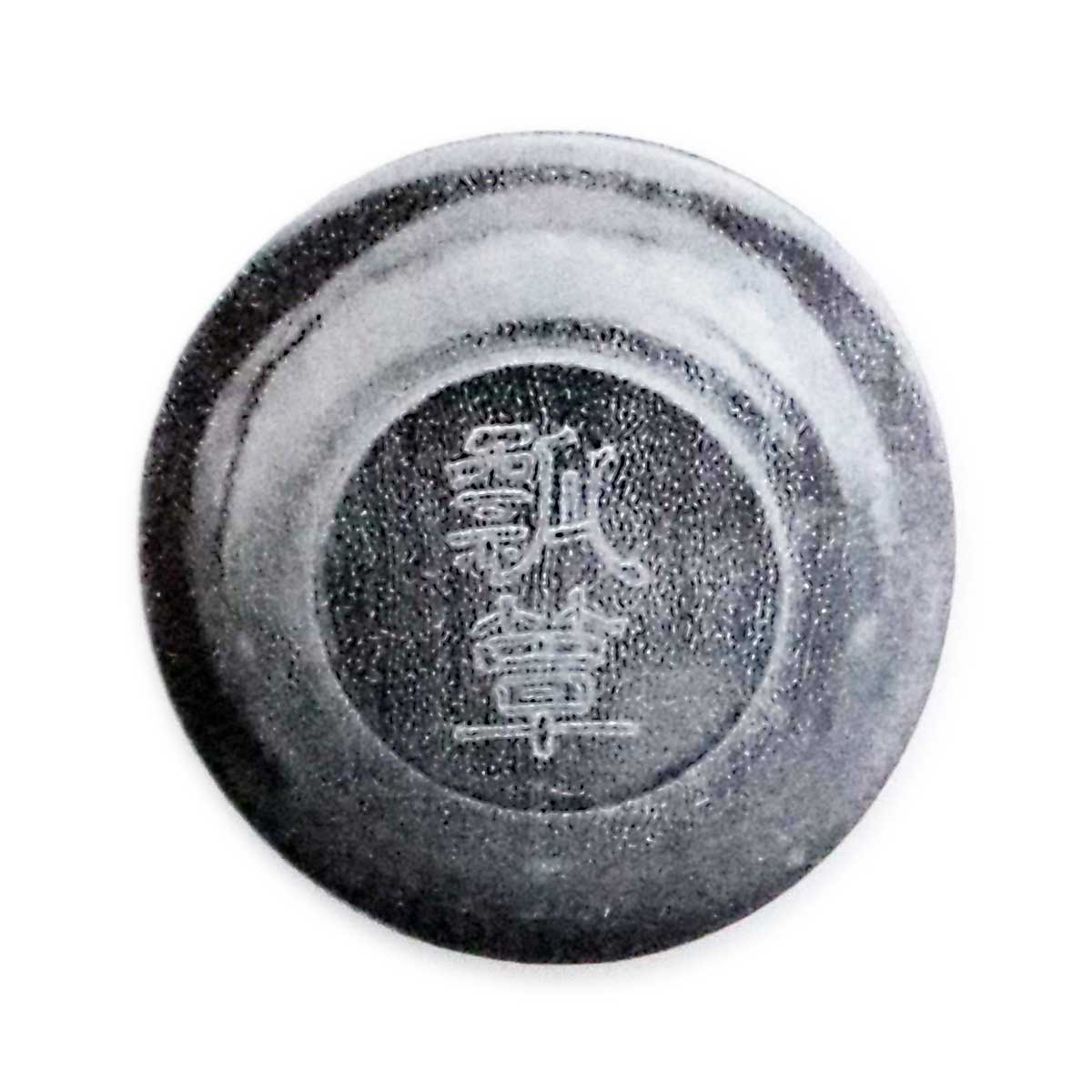
The rim is rounded inward, the middle of the body is tapered, and it bulges significantly in two tiers, top and bottom. A single indented ridge runs around the middle section. From the rim downward, the mouse-gray clay body is exposed, and four rows of wheel marks, chamfered in a stepped pattern, run around the vessel all the way to the rim. The rim is sharply cut with a bamboo spatula, and while the base shows small “hits” (kiln marks or nicks), “ki” (scratches), and indentations in the clay, the thread-cutting marks are fine and extremely distinct.
The glaze features a chestnut-gold hue (with a metallic sheen) in which patches of persimmon-gold glaze drift irregularly; there is one small “hima” (unglazed area) above the waistband and another below it.
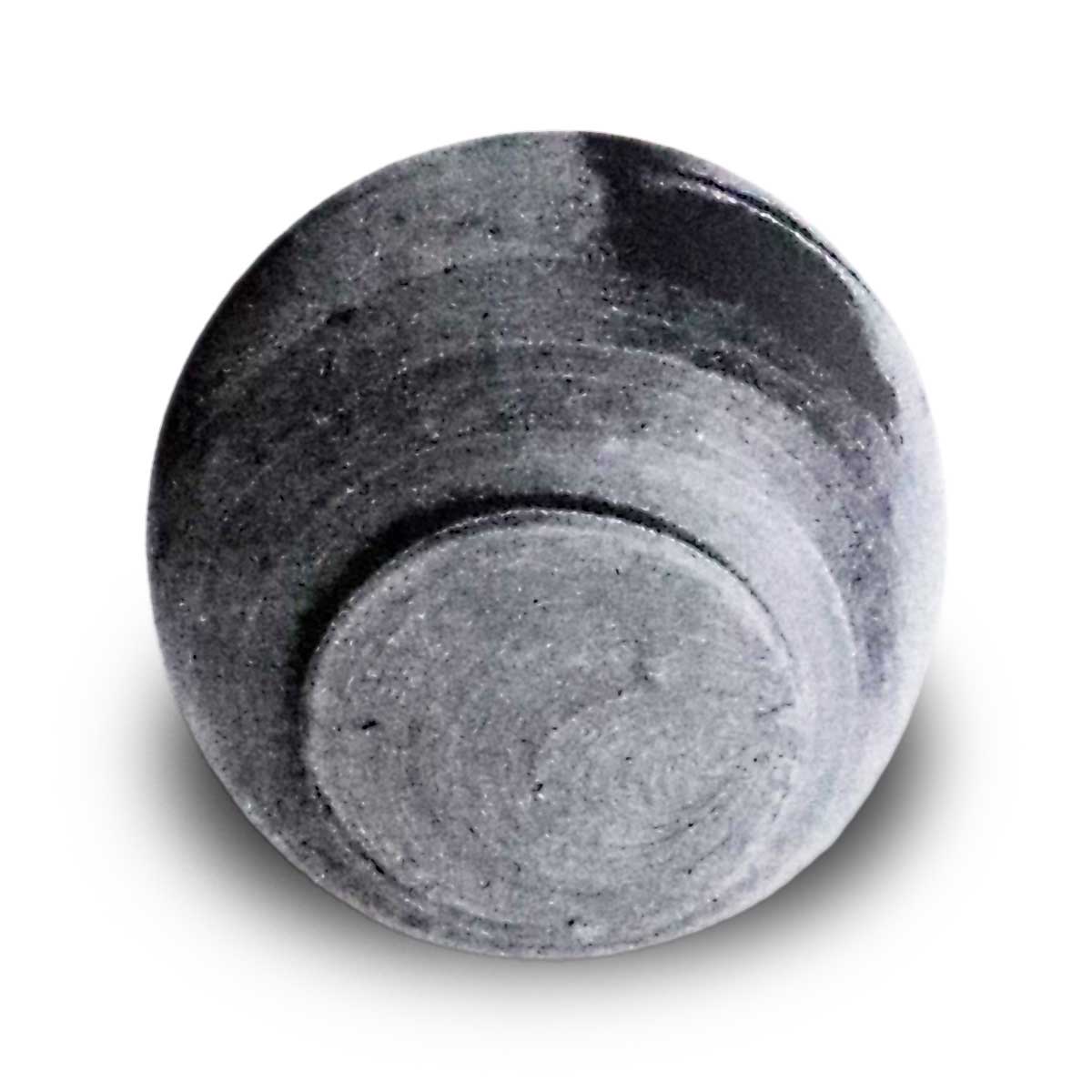
The interior is glazed only slightly along the rim; there are no wheel marks below this point, and only swirl-like wheel marks are visible on the base. There is a large repair mark (for a major crack) across the entire upper section of the gourd.
The craftsmanship is truly exquisite, and the overall form is graceful; among the many gourd-shaped tea caddies, this is a masterpiece that is most rich in “cha-mi” (the aesthetic of wabi-sabi).